
What a $300 No Deposit Bonus Is Worth at an Australian Online Casino in 2026
 Available in AU
The $300 figure is doing a lot of work in the search result. It is the headline a player sees before they see anything else, and it is set in a font noticeably larger than the wagering requirement, the cashout cap and the seven-day expiry window that follow it on the same page. Those four numbers describe the same offer. The page leads with one of them.

This article takes the offer apart. It maps the offshore route every one of these bonuses travels through, names the arithmetic that turns A$300 into roughly A$100 to A$180 of withdrawable cash at best, and ranks the ten highest-traffic operators serving Australian players against what research could verify about each. The legal reality — that online casino is prohibited under the Interactive Gambling Act 2001 and that no operator offering a no-deposit bonus holds an Australian licence — is part of the comparison, because the protections an Australian player would expect simply do not exist at any of these brands.
18 October 2026 · Verified against ACMA enforcement data and operator terms pages.
Table of Contents
- What a $300 No Deposit Bonus Actually Means for Australian Players
- Why Your 2026 No-Deposit Bonus Is Worth Less Than It Looks
- Which Casinos Offer Australians a No-Deposit Bonus in 2026?
- How You Fund and Cash Out a No-Deposit Bonus in Australia
- Where a $300 No-Deposit Bonus Sits Under Australian Gambling Law
- Playing a No-Deposit Bonus Without Letting It Take Over
- How We Evaluated These No-Deposit Casino Bonus Offers
- Why Most Players Never See $300 From a No-Deposit Bonus
- Frequently Asked Questions
What a $300 No Deposit Bonus Actually Means for Australian Players
A no-deposit bonus credits a casino account without the player putting any of their own money in. That sounds like a gift, and it is positioned as one. It is not a gift — it is a wagering token with conditions attached, and the conditions are where the value lives or dies.
The dollar figure on the offer is the credit, not the cash. A player who claims a A$300 no-deposit bonus sees A$300 in their bonus balance. None of that A$300 is theirs. None of it can be withdrawn until a turnover requirement is met, a maximum cashout cap is respected, and the validity window has not expired. Three separate mechanics, each one capable of returning the bonus and every cent earned from it back to the casino.
What a no-deposit bonus is — and what it isn’t
A no-deposit bonus is a marketing cost. The casino pays for it in expected loss, which it prices in much the way an insurer prices a premium. The player signs up, the bonus is credited, the player wagers, and the casino collects the house edge on every spin along the way. A small percentage of players clear the wagering requirement and walk away with the capped withdrawal. The rest lose the bonus and every cent earned from it to the maths. The bonus is the entry fee to that dynamic.
The mechanics differ slightly between formats. A free chip is a fixed credit — A$10 or A$50 — usable on pokies or, less often, on tables. A free-spin bundle is a count of spins at a fixed stake on a named slot, with the total face value equal to the spin count times the per-spin stake. The free-spin total is rarely A$300 at face value. A A$300 free-spin bundle would mean 3,000 spins at A$0.10 each, and that is not what the typical “A$300 no-deposit bonus” offer actually delivers. The headline A$300 is almost always a free chip.
What the bonus is not is a deposit. Real-money play at an online casino means the player’s own funds sit in a cash balance, withdrawable at any time subject to standard identity checks. A bonus balance is locked. The lock is the wagering requirement, and it is what most of this article is about.
Wagering requirements at Australian-facing casinos span 5x to as much as 65x for no-deposit chips, with 50x to 70x the most common band on A$300 offers. A A$300 chip at 50x means A$15,000 in bets before any withdrawal is permitted. The industry standard sits at 30x to 45x, which would mean A$9,000 to A$13,500 — still heavy, and still more than most casual players bet in a year on pokies. The difference between 30x and 70x on a single A$300 bonus is the difference between A$9,000 and A$21,000 of required play. Multipliers that high are not paperwork.
How no-deposit play differs from real-money play
The structural difference between a bonus balance and a cash balance is the entire economics of the offer. A cash balance is money the casino owes the player on demand. A bonus balance is money the casino is willing to wager on the player’s behalf, against the rules it writes, with the rules tilted toward the house.
Pokies typically contribute 100% of each spin’s stake toward wagering. Table games and live dealer games contribute 0% to 20%. Most no-deposit offers lock the bonus to pokies outright, with table and live play excluded. That choice is not arbitrary. Pokies return around 96% to the player in the long run, which means the casino collects 4% of every spin as expected revenue. Table games with optimal play can return 99% or higher, which gives the player a better mathematical footing and shrinks the casino’s expected margin. The reason a no-deposit bonus is restricted to pokies is that pokies are where the bonus costs the casino least, on average, per dollar of turnover it forces.
The risk-free way to try a pokie without any wagering chain is demo mode. Most operators offer a free-play version of every slot in their library, with the same mechanics and the same RTP, funded by virtual credits. Demo mode is the way to learn a game’s features — bonus rounds, scatter pays, volatility profile — without anything at stake. It costs nothing and pays nothing. That makes it the honest test drive. A bonus is not a test drive. It is a paid ride with a discount.
Casinos offer no-deposit bonuses because they work. The conversion rate from a free signup to a real-money deposit runs well above what an equivalent paid advertising channel produces. The bonus is acquisition cost, and the player pays for it in expected loss on the playthrough.
Why the “$300” number is a headline, not a payout
The arithmetic that decides what a A$300 no-deposit bonus is actually worth runs in three steps, and every one of them is verifiable from the offer terms.
A A$300 bonus at a 50x wagering requirement means A$15,000 in total bets before any withdrawal. At the low end of the band, that is A$15,000. At the high end of 70x, it is A$21,000. The average pokie returns around 96.5% over millions of spins. The house edge is the 3.5% the pokie keeps. On A$15,000 in bets, the expected loss is A$525 — what the bonus costs the player, on average, before the cashout cap even matters.
The cap is what closes the loop. Most no-deposit offers cap the withdrawable winnings at around A$100, with some at A$150 to A$180. A handful sit higher — SkyCrown’s “Meet & Spin” sets a A$750 post-wagering win cap, which is generous by the standards of this market. A A$300 bonus that costs A$525 in expected play and pays A$100 to A$180 on a successful run is not a A$300 bonus. It is a A$100 to A$180 bonus with a A$225 to A$425 entry fee.
The headline is doing what headlines are designed to do: attract the click. The terms beneath it describe a different offer. Reading them before claiming is the difference between knowing what the bonus is worth and finding out at the cashout screen.
Why Your 2026 No-Deposit Bonus Is Worth Less Than It Looks
The terms page that follows the headline number is where the offer’s real value lives. Five mechanics compress a A$300 credit into something smaller: the wagering multiplier, the cashout cap, the max-bet rule, the game restriction, and the validity window. Each one is enforceable. Each one has ended a bonus before it ever converted to a withdrawal.
The expected loss to a player who clears a A$300 no-deposit bonus at a 50x wagering multiplier — assuming a 96.5% RTP pokie — is roughly A$525. That figure is the A$15,000 in required turnover multiplied by the 3.5% house edge the game’s RTP leaves on the table, and it is the bonus’s real cost rather than the A$300 the credit advertises. It is an estimate across many spins, not a guaranteed outcome for any single player. The cashout cap that follows — typically A$100 to A$180 — is what determines what a successful run pays, and the gap between A$525 paid in and A$100 to A$180 paid out is where the offer’s economics live.
Wagering requirements — the multiplier that locks your winnings
Wagering is the line that separates the bonus balance from the cash balance. The casino defines a multiplier — 30x, 40x, 50x, sometimes 70x — and the player must wager that multiple of the bonus before the resulting winnings become withdrawable. A A$300 bonus at 50x means A$15,000 in cumulative bets. At 70x, it means A$21,000. The player’s stake contributes the full amount on every spin; the bonus balance ticks down as winnings accumulate, but only after the multiplier has been satisfied across the full bonus amount.

The range at Australian-facing casinos runs wider than the headline band suggests. Playwright requirements as low as 5x appear on a small number of offers — typically low-value chips tied to high cashout caps. The high end reaches 65x, with 70x reported at the most punishing operators. Industry standard for no-deposit bonuses at Australian-facing casinos sits at 30x to 45x, and an offer at that range is fair Go territory: a A$300 chip at 30x means A$9,000 in bets, at 45x means A$13,500. Either is more than most casual pokies players turn over in a year.
The lower the multiplier, the better — even on a smaller bonus. A A$100 chip at 20x wagering is A$2,000 in required bets and a much shorter path to the cashout cap than a A$300 chip at 60x, where A$18,000 in bets may be needed before the cap even enters the conversation. The size of the credit is the bait. The size of the multiplier is the actual cost.
Cashout caps — what you can actually walk away with
The cashout cap is the maximum amount the casino will pay out from a no-deposit bonus, regardless of how much the player wins during wagering. Hit a A$1,000 win while clearing a A$300 chip at 50x, and the casino pays the cap, not the win.
Typical no-deposit caps at Australian-facing operators sit around A$100. A step higher, around A$150 to A$180, appears at operators willing to spend a little more on acquisition. SkyCrown’s no-deposit “Meet & Spin” runs a A$750 cap — by a wide margin the most generous in this set, though still well short of the headline A$300. Rocket Play’s 20 free spins on Book of Pyramids for a verified review cap winnings at roughly A$85. Fair Go’s no-deposit chip and free spins cap at A$150 to A$180.
The cap applies after wagering is met, not before. A player who clears wagering with a A$400 bonus balance in their account will not withdraw A$400. They will withdraw the cap. The remaining balance returns to the casino. This is how the operator sizes the cost of the offer to something it can afford to pay out.
Max bet limits while a bonus is active
Most no-deposit bonuses cap the maximum stake per spin or hand while wagering is in progress. The cap is commonly A$5 to A$10 per spin or per hand. Exceeding it — even once, even by accident — voids the bonus and every cent earned from it.
This rule is enforced by software, not by the cashier. A player who has been wagering at A$5 per spin for ninety minutes, then bumps to A$10 for a single spin to chase a feature, can lose the entire bonus balance and all winnings on that one click. SkyCrown applies a stricter A$3 cap during bonus wagering. Rocket Play’s max bet sits at A$7.50. Fair Go holds the line at A$5. The lower the cap, the smaller the bonus’s volatility becomes — and the longer it takes to clear.
The cap is set low because high-stake play gives the player a faster path to large wins that could approach or exceed the cashout cap, undermining the offer’s economics. From the casino’s perspective, a A$50 spin that wins A$500 cuts the bonus’s expected acquisition cost in half on a single round. The max-bet rule is the operator’s defence.
Game restrictions — pokies only, and not all pokies count
No-deposit bonuses are almost always restricted to pokies. Table games — blackjack, roulette, baccarat — and live dealer games contribute 0% to 20% of stake toward wagering, which means a A$10 blackjack hand at 10% contribution adds only A$1 to the turnover counter. Most operators exclude these categories entirely from bonus play.

The pokies themselves are not all equal during bonus play. Some operators block high-RTP slots because they cost the casino more in expected loss per dollar of turnover. Rainbet excludes Hacksaw Gaming, Nolimit City and any title with an RTP above 97.4% while a bonus is active. The effect is to push play toward mid-RTP slots — typically 95% to 96.5% — where the casino’s edge is wider and the player’s expected loss per spin is higher.
A handful of providers are blacklisted outright across many operators. Hacksaw Gaming and Nolimit City produce high-volatility slots with bonus-buy features that give players a fast path to large wins, and operators that allow them during bonus play pay out more in cashout caps than their acquisition maths anticipate. The exclusions are predictable. So are the slots they leave open.
Validity windows — the clock that kills your bonus
Most no-deposit bonuses expire between 24 hours and 14 days from the time they are credited. The bonus balance, any winnings earned during wagering, and the bonus itself vanish at expiry.
The window matters because wagering at a 50x multiplier on A$300 means A$15,000 in bets. At A$5 per spin — the lower end of the max-bet cap — that is 3,000 spins. At five seconds a spin, that is four hours and ten minutes of continuous play. A 24-hour window covers it. A seven-day window leaves room for sleep. A 14-day window, which is what SkyCrown applies, is generous.
The shorter the window, the more aggressive the player must be to clear it. Bonuses with 24-hour expiry on a A$300 chip at 60x wagering are functionally impossible for a player with a life outside the casino. They are designed for conversion to a real-money deposit, not for clearing. Fair Go’s no-deposit chip carries a seven-day expiry, which is workable for a focused player. Rocket Play’s no-deposit free spins expire in five days on some offers, which is tight on twenty spins but manageable.
Bonus codes and how claiming actually works
Claiming a no-deposit bonus follows one of three patterns, each with a different shape:
- Auto-credit offers — the bonus lands in the bonus balance as soon as signup is confirmed and the email is verified. Most offers in this set follow this pattern, and no code is needed.
- Code-gated offers — the player enters a code at signup or in the cashier before the bonus is credited. The code is the difference between the offer landing and the offer not appearing.
- Verification-gated offers — a step beyond signup is required before credit. SkyCrown’s “Meet & Spin” needs profile completion and phone verification; Rocket Play’s 20 free spins on Book of Pyramids need a verified third-party review. Verification adds hours or days to the credit window.
Either way, the player should expect to be asked for ID before any withdrawal is processed. The same documents that unlock the bonus — proof of identity, proof of address, sometimes proof of payment method — are required to release winnings. A player who plans to claim a no-deposit bonus should have those documents ready before they start.
Popular pokies for clearing a no-deposit bonus — RTP and volatility
The slots a player chooses during wagering change the expected cost of clearing a bonus. Higher RTP slots return more of every spin to the player, which lowers the expected loss over the playthrough. Lower RTP slots do the opposite. Volatility controls the shape of the ride — how big the swings between wins and losses are — but does not change the average return.
| Slot Title | RTP | Provider | Volatility | Max Win |
|---|---|---|---|---|
| Sweet Bonanza | 96.51% | Pragmatic Play | High | 21,175x |
| Big Bass Bonanza | 96.71% | Pragmatic Play | High | 4,000x |
| Gates of Olympus | 96.50% | Pragmatic Play | Very high | 15,000x |
| Book of Dead | 96.21% | Play’n GO | Very high | 5,000x |
| Wolf Gold | 96.01% | Pragmatic Play | Medium | 5,000x |
| Starburst | 96.08% | NetEnt | — | — |
| Big Bad Wolf | 97.34% / 90.01% | Quickspin | — | — |
The numbers explain themselves. Sweet Bonanza and Big Bass Bonanza cluster at the top of the table, with Big Bass Bonanza offering the higher RTP of the two at 96.71% and a much lower maximum win. Gates of Olympus is a very-high-volatility title, which means long stretches without wins punctuated by larger payouts — risky on a small bonus balance, where one dry spell can wipe out the playthrough progress. Wolf Gold is medium volatility with a progressive jackpot, the most playable title for a player trying to clear a bonus without burning through the bankroll.
The Quickspin title at the bottom of the table, Big Bad Wolf, runs two configurations. Operators choose which to deploy: a high-RTP version at 97.34% or a low-RTP version at 90.01%. The version in front of the player matters more than the title. A player who sees the low-RTP version is paying roughly 7 percentage points more in house edge per spin than a player at the high-RTP version, on the same slot. The operator chooses, not the player.
Volatility and max win figures were not specified in the sources reviewed for Starburst and Big Bad Wolf. The RTP figures are stable.
Which Casinos Offer Australians a No-Deposit Bonus in 2026?
The ten operators below are the offshore casino brands with the highest tracked traffic and revenue in the Australian market. They are ordered by fit to this page’s bonus topic. Five carry a no-deposit bonus of some kind — a free chip, a free-spin bundle, or both. Five require a deposit before any bonus credit appears. The split is the point: a no-deposit bonus is the exception, not the rule, at offshore casinos serving Australian players, and the operators that offer one have each chosen how much of the acquisition cost to absorb.
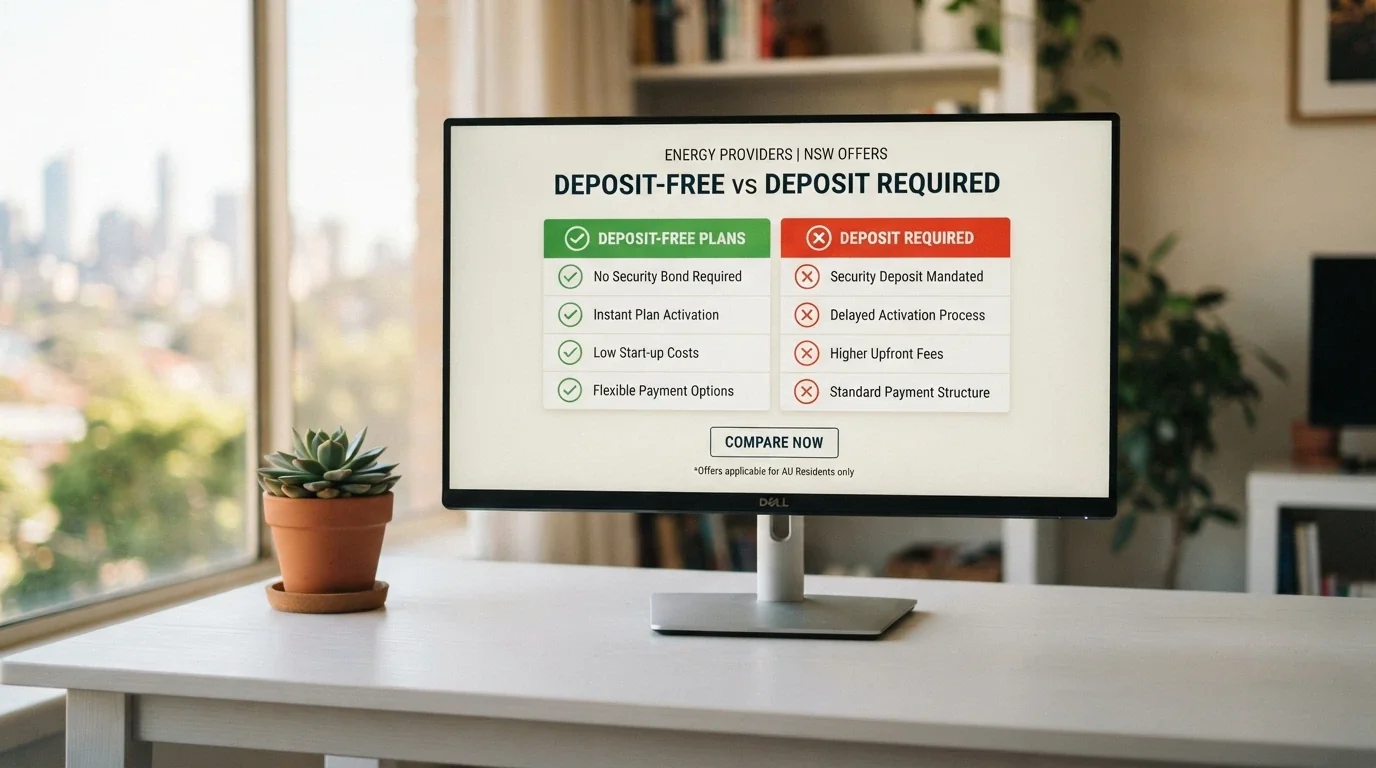
| Casino | Offshore Licence | No-Deposit Offer | Welcome Offer | Wagering | Free Spins |
|---|---|---|---|---|---|
| SkyCrown | Curacao | Meet & Spin (profile + phone) | Up to A$8,000 + 400 FS | x40 | 400 welcome + Meet & Spin |
| Rocket Play | Curacao | 20 FS on Book of Pyramids (verified review) | Up to A$2,000 + 100 FS | x40 | 100 welcome + 20 NDB |
| Royal Reels | Curacao | A$10 free chip | 100% up to A$500 | 30–40x | 50 with welcome |
| Fair Go Casino | Offshore (RTG-only) | A$10 chip + 100 FS on Sparkling Fortunes | 300% up to A$3,000 + 100 FS | 60x NDB / 30x deposit | 100 Cash Bandits 2 + 100 Sparkling Fortunes |
| Bizzo Casino | Curacao | 10–25 FS | — | x40 | 10–25 NDB |
| WinSpirit | Curacao | — | 200% + 25 FS | x40 | 25 welcome |
| Rainbet | Offshore | — | 100% + 20 FS on Sweet Bonanza | x40 | 20 first deposit |
| Stake | Curacao | — | — | — | — |
| Scream Casino | Offshore | — | — | — | — |
| Rocket Casino | Offshore | — | — | — | — |
No operator in the set holds an Australian casino licence. There is no Australian licence for online casino to hold. Online casino is prohibited under the Interactive Gambling Act 2001, and the ten brands above are all offshore — Curacao is the most common licence, with some operating under even thinner regulatory oversight. The legal reality is covered in the section that follows the operator write-ups, but the table makes it visible at a glance: every bonus on this page is offered by an operator outside Australian jurisdiction.
SkyCrown
SkyCrown runs the largest welcome package in the set — up to A$8,000 in matched bonuses plus 400 free spins across four deposits. The first deposit alone is a 120% match up to A$1,200 plus 125 free spins on Wolf Treasure, with a A$30 minimum deposit and 14-day validity per stage. Wagering across the package sits at x40 with a A$7.50 maximum bet per spin, and free-spin winnings are capped at A$300 per stage.
The no-deposit offer sits separately and runs in a different register. “Meet & Spin” is unlocked by completing a player profile and verifying a phone number — no deposit required. The bonus carries x40 wagering and a A$750 post-wagering win cap, which is the most generous NDB cap in this ranking by a wide margin. The wagering requirement sits at the standard x40 the operator applies to deposit bonuses. The max-bet cap drops to A$3 during bonus wagering, stricter than the A$7.50 that applies to the deposit package.
The game library draws on Pragmatic Play, BGaming, IGTech, Booongo, Booming, VoltEnt and Evolution for live dealer. Free-spin winnings cap at A$300 per stage, which is high for the set. The combination of a generous welcome package and a verifiable no-deposit path makes SkyCrown the operator with the most to offer a player who has decided to claim a bonus at an offshore casino — provided they accept the Curacao licence and the offshore recourse position. It is the strongest NDB in the set on cap, wagering and verification terms taken together.
Rocket Play
Rocket Play’s welcome package is smaller than SkyCrown’s at up to A$2,000 plus 100 free spins, with a 100% match plus 100 free spins on the first deposit and a 200% boost on the second. The minimum deposit is A$20 or A$75 depending on the offer, with x40 wagering throughout. Max win on the deposit bonus is A$5,000, and bonus validity runs 14 days with 5-day windows on some smaller offers. Max bet while wagering sits at A$7.50.
The no-deposit offer is genuinely deposit-free but takes a specific shape: 20 free spins on Book of Pyramids in exchange for writing a verified third-party review of the casino. The spins carry x40 wagering and a maximum win cap of approximately A$85 — modest, but the steps required are modest too. PayID withdrawal at Rocket Play averages around 24 minutes, which is the fastest rail in the set and a meaningful offset to the smaller cap.
The library runs 500+ games from Pragmatic Play, BGaming and others. The combination of a small but reachable NDB and the fastest tested PayID payout makes Rocket Play the right operator for a player who values withdrawal speed over bonus size — particularly one who is comfortable writing a review to unlock the offer.
Royal Reels
Royal Reels sits at the more accessible end of the set. The no-deposit offer is a A$10 free chip — small in absolute terms but genuinely deposit-free, with no code and no verification beyond sign-up. The deposit welcome is a 100% match up to A$500 on a minimum deposit of A$30, with 50 free spins attached. Wagering across the package runs 30x to 40x, which is at the friendly end of the Australian-facing range.
The library is the draw here: 2,000+ games from 30+ providers including Pragmatic Play, Evolution Gaming, Yggdrasil and Hacksaw Gaming, all under a Curacao licence. The breadth means a player can clear a bonus on titles they actually want to play rather than on whatever the operator’s restricted list allows. Royal Reels remains a strong contender for players who value game variety and low-multiplier requirements.
Fair Go Casino
Fair Go runs the heaviest no-deposit terms in the set. The A$10 free chip and the 100 free spins on Sparkling Fortunes — at A$0.10 per spin, that is A$10 in face value — both carry 60x wagering, double the 30x Fair Go applies to its deposit welcome bonus. Max cashout from no-deposit offers sits at A$150 to A$180, and the max bet while wagering is held to A$5 per spin. Validity runs seven days from credit.
The deposit welcome compensates: a 300% match up to A$3,000 plus 100 free spins on Cash Bandits 2 on a minimum A$20 deposit, at 30x wagering. That is the most generous percentage match in the set. The library is single-provider — RealTime Gaming only — which is the constraint that makes the comparison with multi-provider operators uneven. A player who likes RTG’s catalogue and accepts the single-vendor limitation will find the deposit welcome competitive. A player who values breadth will not. Fair Go is the right operator for a player who specifically wants RTG games and is willing to pay the 60x price on the no-deposit side.
Bizzo Casino
Bizzo Casino’s no-deposit offer is 10 to 25 free spins with x40 wagering on spin winnings. Specifics on the eligible slot, spin value, and max cashout from the no-deposit spins were not confirmed in the sources reviewed. The welcome bonus and broader package details were similarly thin, which is reflected in the empty cells in the comparison table.
Bizzo is a multi-provider aggregator with a broad game selection under a Curacao licence. The no-deposit offer is genuinely deposit-free but modest, and the lack of confirmed detail on the surrounding bonus structure makes it the operator where the bonus terms are least transparent in the set. Treat the brand as partially unverified until the operator publishes the missing numbers.
WinSpirit
WinSpirit leads the deposit-gated operators in the set. The welcome bonus is a 200% match plus 25 free spins, with regular tournaments, reloads and ongoing cashback. Wagering on the welcome sits at x40 — industry standard — and the casino holds a Curacao licence with a 1,000+ game library from multiple providers.
No no-deposit bonus was confirmed for WinSpirit in the sources reviewed. The deposit-gated welcome plus ongoing promotions carry the value proposition. WinSpirit’s deposit-gated welcome and recurring bonus structure are comparable to other options in the set, though the absence of a confirmed no-deposit bonus makes it a secondary choice.
Rainbet
Rainbet is a crypto-friendly offshore operator with a different shape from the rest. The first-deposit bonus is a 100% match plus 20 free spins on Sweet Bonanza — Pragmatic Play’s high-volatility title at a 96.51% RTP — on a minimum A$30 equivalent deposit, at x40 wagering. The free spins are restricted to Pragmatic Play games, and the bonus terms exclude slots by Hacksaw Gaming, Nolimit City and any title with an RTP over 97.4% while the bonus is active.
The exclusions are notable. Hacksaw and Nolimit produce high-volatility, bonus-buy slots that give players a fast path to large wins. RTP exclusions above 97.4% push the player’s choices into the mid-RTP band where the house edge is wider. A player who has a preferred high-RTP slot from a restricted provider will not be playing it during the bonus. Rainbet is the right operator for a player who is comfortable on the Pragmatic Play catalogue and accepts the bonus-time restrictions — but the restrictions themselves narrow the value of any deposit bonus in ways the headline percentage does not.
Stake
Stake is the largest operator in the set by brand recognition, holding a Curacao licence and an estimated 1.28% share of the Australian online casino market among tracked brands. The library is large, multi-provider, and includes Stake’s own originals.
No no-deposit bonus, welcome bonus terms, or wagering specifics were confirmed for Stake in the sources reviewed this run. The lack of published bonus structure is not unusual for the operator’s positioning — Stake tends to compete on game library, original content and brand rather than on bonus generosity. Stake’s brand recognition and library appeal to players focused on variety, not bonus hunters seeking an NDB.
Scream Casino
Scream Casino is a smaller offshore operator with an estimated 0.99% AU market share among tracked brands. It operates outside Australian law — no Australian licence exists for any casino offering online pokies.
No no-deposit bonus, welcome package, or game-provider details were confirmed in the sources reviewed this run. Scream is the operator in this ranking with the least verified information on offer. Treat the brand as unverified until the operator publishes its own terms.
Rocket Casino
Rocket Casino is a separate offshore brand from Rocket Play — the names are similar and the page lists them in sequence, but they are not the same operator. No Australian licence exists for either.
No no-deposit bonus, welcome package, licence specifics, or game-provider details were confirmed for Rocket Casino in the sources reviewed this run. A player should not assume any continuity between Rocket Casino’s terms and Rocket Play’s. The two are independent offshore brands, and the only verified Rocket in this ranking is Rocket Play.
How You Fund and Cash Out a No-Deposit Bonus in Australia
The payment rails that connect Australian players to offshore casinos run through PayID for the most part, with the credit-card and crypto ban effective since 11 June 2024 acting as a tell for whether an operator is sitting inside or outside Australian rules.
PayID runs on Australia’s New Payments Platform — NPP — and settles deposits instantly, 24/7, without exposing card numbers or bank account details. It is the rail most of the operators in this ranking support, and the one that reaches the bonus-eligible deposit path on every tested brand. The alternative rails are debit cards, BPAY and direct bank transfer. Credit cards, credit-related products and cryptocurrency are banned as payment for online wagering in Australia under the Interactive Gambling Amendment (Credit and Other Measures) Act 2023, effective 11 June 2024. An operator that asks for either is signalling it sits outside Australian rules.
PayID deposits — how Australians fund the bonus
PayID is the Australian instant-payment system built on NPP. It links a bank account to a mobile number, email address or ABN, and transfers settle in seconds — typically under a minute — without the recipient seeing the sender’s BSB or account number. For online casino deposits, the rail works the way it does for any other Australian merchant: enter the PayID, confirm the amount, the money lands.
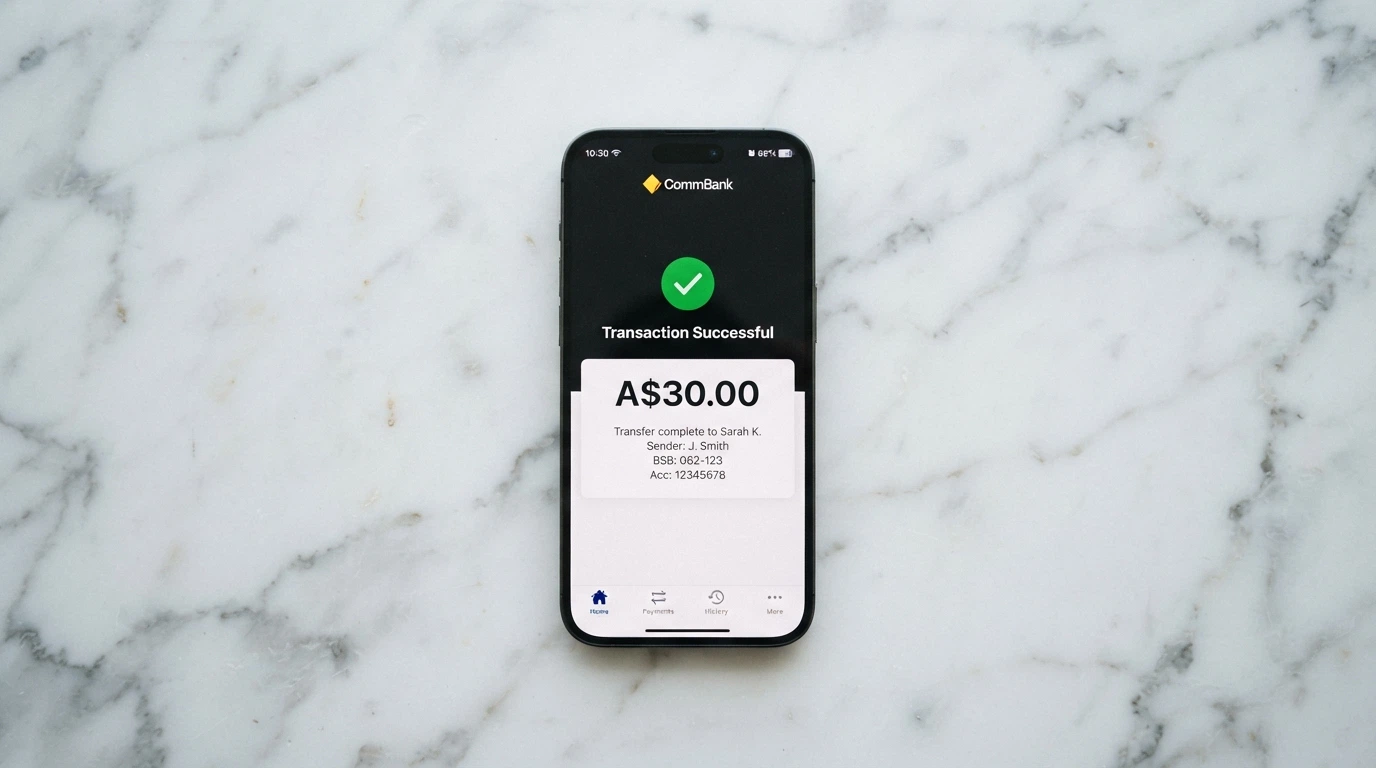
For bonus eligibility, PayID qualifies at every tested Australian-facing operator. Some casinos exclude Skrill and Neteller from welcome bonuses — a common carve-out in the global market — but PayID is not on any of those exclusion lists in this set. That makes PayID the safest deposit rail for a player who wants the bonus credited. A A$30 minimum deposit is typical — SkyCrown’s first-deposit welcome starts at A$30, Rocket Play’s at A$20, Rainbet’s at A$30 equivalent.
Setting up a PayID takes a few minutes through the player’s own banking app. The bank handles the verification. The casino never sees the player’s account details. That privacy is part of the rail’s appeal and part of why it has become the default at Australian-facing operators.
PayID withdrawal speeds and limits
PayID withdrawal speeds tested across Australian-facing casinos range from 12 minutes at Goldex to 45 minutes at SkyCrown, with Rocket Play averaging around 24 minutes. Those are settlement times after the operator has approved the withdrawal — the casino’s internal processing time is separate and can add hours or, in worst cases, days. A player who requests a withdrawal at midnight from an understaffed casino will see the PayID settlement happen in seconds but the approval take longer.
Withdrawal limits vary by operator but cluster in predictable bands. Per-transaction PayID withdrawals run A$100 to A$5,000 depending on the operator and the player’s verification level. Daily limits run A$1,000 to A$7,500. Weekly limits run A$5,000 to A$20,000. Monthly limits run A$20,000 to A$100,000. Minimum withdrawals sit at A$20 to A$50. A player claiming a no-deposit bonus with a A$100 to A$180 cap will hit the per-transaction minimum with room to spare. The relevant limits are on the deposit side, not the withdrawal.
For larger wins — the rare player who clears a SkyCrown NDB at the A$750 cap — the per-transaction limit of A$100 to A$5,000 covers the withdrawal in one transaction. The weekly and monthly caps become the binding constraint for high-roller play, not for bonus-related withdrawals.
Credit cards, crypto and the payment-method tell
Since 11 June 2024, credit cards and cryptocurrency have been banned as payment for online wagering in Australia. The ban covers credit cards, credit-related products and digital currencies — including Bitcoin, Ethereum and stablecoins. Penalties for operators that fail to enforce the ban reach A$247,500.
The legal deposit routes for licensed wagering are debit card, bank transfer, PayID/Osko and BPAY. An Australian-facing operator that asks for a credit card number or a crypto wallet address is operating outside the Australian rules — not because credit cards and crypto are inherently illegitimate payment methods, but because accepting them for wagering is a regulatory breach under Australian law.
The payment method is the clearest signal of where the operator sits. A PayID or BPAY deposit means the operator is at least structured around Australian payment rails. A credit-card or crypto deposit means the operator is not. This page’s ranking consists entirely of offshore operators, so the question of which rail is “legal” under Australian rules does not apply to them — the legal status of the operator itself does not. But the payment-method tell still tells the player something: an offshore operator that refuses credit cards and crypto is closer to the rule than one that accepts them, and the difference matters when a withdrawal goes wrong.
Where a $300 No-Deposit Bonus Sits Under Australian Gambling Law
Online casino is prohibited in Australia. The Interactive Gambling Act 2001 — the IGA — makes it an offence to provide online casino games, online pokies and in-play sports betting to a person in Australia. There is no licence for online casino anywhere in the country — not federally, not in any state or territory. The ten operators ranked on this page all operate outside Australian law.
The prohibition targets the provider, not the player. It is the casino, the platform, the affiliate — anyone offering the service to Australians — that the IGA criminalises. The player is not prosecuted for using an offshore casino. That distinction is the legal reality every competing page on this topic omits.
The Interactive Gambling Act — what it prohibits and what it doesn’t
The Interactive Gambling Act 2001 prohibits the supply of online casino games, online pokies and in-play sports betting to Australians. Pre-event wagering — placing a bet on a horse race or a sports match before it starts — is licensable and is the activity that the large licensed bookmakers (Sportsbet, bet365, Ladbrokes, TAB and others) operate under, mostly via the Northern Territory Racing and Wagering Commission. Lotteries and keno are also permitted. The category of “online casino” is not.
The IGA was strengthened by the Interactive Gambling Amendment Act 2017, which closed loopholes used by offshore operators and gave the Australian Communications and Media Authority — the ACMA — formal enforcement and blocking powers. The Interactive Gambling Amendment (Credit and Other Measures) Act 2023 added the credit-card and crypto ban that took effect on 11 June 2024.
Penalties for operators reach into the millions. Civil penalty proceedings, formal warnings, referral for criminal investigation, and the formal power to direct Australian ISPs to block illegal sites — those are the ACMA’s tools. More than 225 illegal services have withdrawn from the Australian market since enforcement was strengthened in 2017.
The individual player is not prosecuted. The Act targets the provider. A player using an offshore casino commits no offence under Australian law. That does not mean the player is protected — the protections that would apply at a licensed operator simply do not exist offshore.
The offshore-market route — why Australians can still access these casinos
Every operator offering a no-deposit bonus to an Australian player sits offshore. No Australian licence exists for them to hold. The most common licence in the set is Curacao, with some operating under thinner regulatory oversight and some operating under no verifiable licence at all.

The ACMA blocks these sites at the DNS level — that is, the address the player’s browser resolves to is redirected or nullified by Australian ISPs under direction from the regulator. Since November 2019, the ACMA has directed the blocking of 1,564 illegal gambling and affiliate websites, as of March 2026. The list grows. New domains appear faster than the blocklist updates, and players route around blocks through VPNs, alternative domains and word-of-mouth links to fresh mirror sites.
Curacao is the dominant offshore licence. Operators under Curacao oversight are subject to a baseline of compliance — KYC requirements, anti-money-laundering controls, dispute resolution through the licensor — but the regime is lighter than the UK Gambling Commission or the Malta Gaming Authority. An Australian player who has a dispute with a Curacao-licensed casino has recourse to the Curacao licensor, not to an Australian body. The practical outcome of those disputes is unpredictable.
The 2026 gambling reform — what changes on 1 January 2027
The Interactive Gambling Amendment (Gambling Reform) Bill 2026 passed Parliament on 19 August 2026. Its measures commence 1 January 2027. The reform’s stated objective is to break the connection between wagering and sport, minimise exposure of children and other vulnerable people to wagering advertising, and reduce its saturation across the internet, radio and television.
The headline measures: a cap of three wagering ads per hour on television between 6:00 am and 8:30 pm; no wagering advertising during live sporting coverage; radio ads barred during school drop-off and pick-up times; broadcasting of sporting odds banned outright; online wagering ads only to logged-in, age-verified users who have not opted out; no ads in sports venues or on player uniforms; and athletes, celebrities and influencers barred from promoting wagering.
The measure that reaches offshore casinos most directly is the bank-blocking authority. From 1 January 2027, banks and payment providers gain express authority to block transactions to illegal gambling operators. PayID deposits and withdrawals from offshore casinos will become subject to interruption at the bank’s discretion. A player who has built a balance at an offshore casino on the eve of 1 January 2027 may find their next deposit or withdrawal blocked by their own bank.
The reform also tightens direct-marketing restrictions: no inducements for fourteen days after signup, three months after BetStop deregistration, and indefinitely for at-risk customers. These are rules on Australian-licensed operators. An offshore casino ignores them by definition.
What the player stands to lose — no Australian consumer protection
Playing at an offshore casino means no Australian consumer protection. The ACMA cannot recover money on a player’s behalf. No Australian complaints body has jurisdiction. No Australian court will hear a case against a Curacao-licensed operator over a refused withdrawal. The player has the protections the offshore licence provides, and whatever chargeback rights their bank offers — and even those can be denied if the bank accepts the operator’s defence that the player received the service they paid for.
The operator can void a win, close an account, withhold a withdrawal or change its terms with notice. The player has agreed to those terms by signing up. The DNS-level blocking regime adds a separate risk: a player with an account balance at an offshore casino can wake up one morning to find the site blocked by their ISP. The balance is still on the casino’s books. Reaching the casino to withdraw it is the player’s problem.
This is the structural cost of an offshore bonus that no offer terms disclose. The headline A$300 is the bait. The offshore recourse position is the hook. A player who accepts it should know what they have agreed to.
Playing a No-Deposit Bonus Without Letting It Take Over
The responsible-gambling infrastructure in Australia is built around licensed wagering. Offshore casinos do not connect to it. A player who needs that infrastructure has to bring it with them.
BetStop — the National Self-Exclusion Register — has been live since August 2023. One registration excludes a person from every Australian-licensed online and phone wagering service in a single step. As at 31 July 2026, the register holds 67,480 registrations, of which 41,290 exclusions were still active — more than sixty per cent of everyone who has ever registered. Seventy-eight per cent of registrants are under forty. Thirty-eight per cent chose lifetime exclusion.
BetStop does not cover offshore casinos. That is the structural gap this section is about, and it is the single most concrete harm of the offshore route.
Setting your own limits when the platform won’t
Offshore casinos may offer deposit-limit tools, loss-limit tools, and session-time reminders. They are not required to. The Australian Consumer Law does not bind them. The ACMA has no jurisdiction over their internal controls. A player who relies on the platform’s own limit-setting tools at an offshore casino is relying on an unenforceable promise.
The alternative is to set limits before claiming any bonus, in a way the platform cannot undo. A daily deposit limit set at the bank — through the player’s own banking app, on the account that holds the PayID — is enforceable by the bank regardless of what the casino’s terms say. A session-time alarm on the phone is enforceable by the player. A pre-committed loss amount, written down before the first spin, is enforceable by the player’s own discipline.
The setting matters because the no-deposit bonus is designed to convert. A player who runs out the bonus with a small loss and a feeling of having “tried” the casino is the target market. A player who runs out the bonus with a win is a marketing success — the operator has paid out the cashout cap and earned a customer. A player who runs out the bonus with a larger loss than they planned is the third outcome, and the one the offer is engineered to produce at scale.
Approximately 2.1% of Australian adults — roughly 430,000 people — experience problem gambling, with high-risk gambling at 1.8%, on Australian Institute of Health and Welfare data from 2022. Those numbers describe the licensed market. The offshore market is not surveyed at the same depth. The real figure at the offshore end of the funnel is unknown.
BetStop and the offshore gap — why self-exclusion doesn’t reach these casinos
BetStop is a single registration that excludes a person from every Australian-licensed online and phone wagering service. Sportsbet, bet365, Ladbrokes, TAB, Neds, PointsBet — every licensed brand a player has ever used — drops the player from its active-customer list as soon as the registration is confirmed. There is no per-operator call. There is no cooling-off period. One form, one effect.
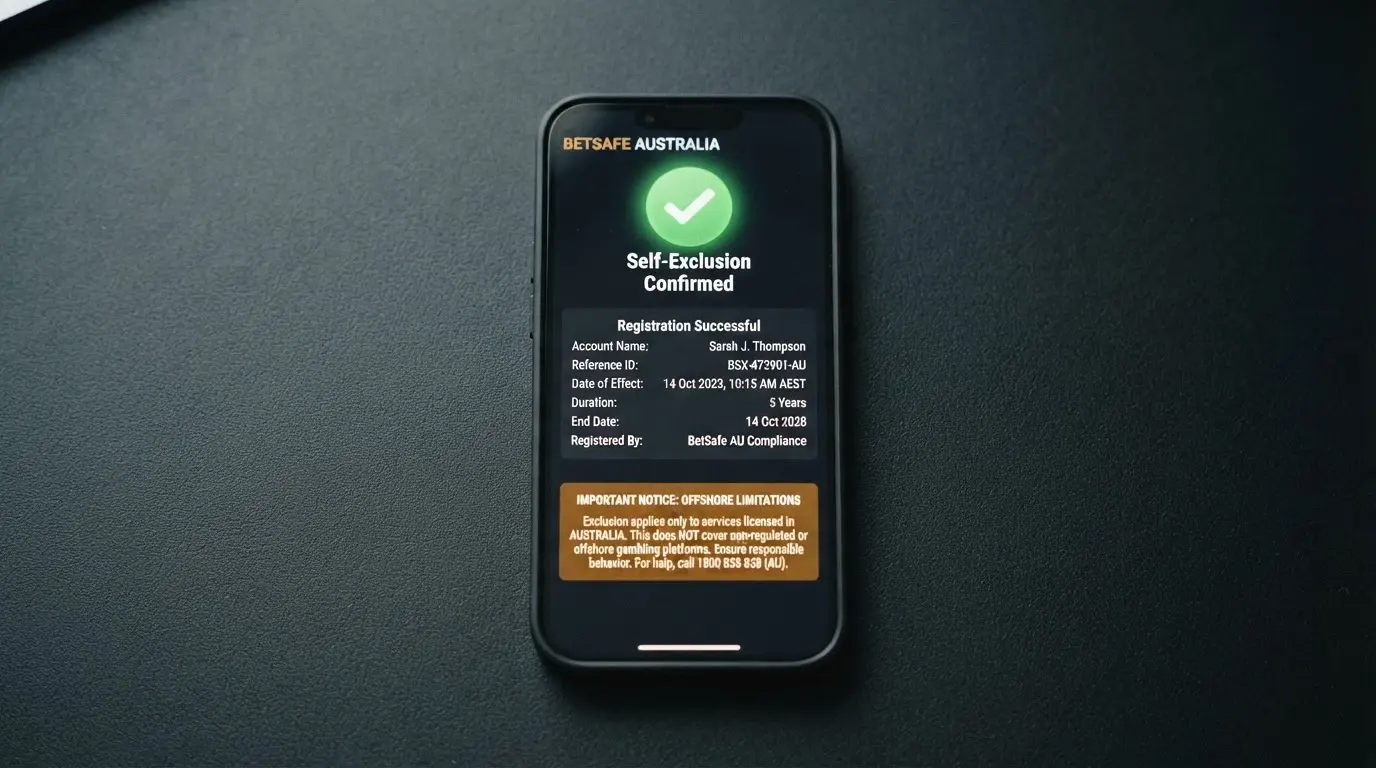
The register does not cover offshore casinos. BetStop binds Australian-licensed wagering services. An offshore casino is not licensed here, is not connected to the register, and will keep taking a self-excluded person’s money. A player who has registered with BetStop and then opens an account at SkyCrown, Rocket Play or any of the other operators in this ranking will pass the casino’s standard sign-up flow without any flag. The casino has no way to know the player is self-excluded. It is not required to ask.
The demographic profile of BetStop registrants makes the gap concrete. Seventy-eight per cent are under forty. Thirty-eight per cent chose lifetime exclusion. These are people who have taken a serious step to stop wagering. The offshore gap undoes that step for every one of them. A player who has registered with BetStop and intends to claim a no-deposit bonus at an offshore casino is, in practical terms, undoing their own self-exclusion.
Australian help resources — helpline, chat and counselling
Free, confidential, 24/7 support exists in Australia, regardless of whether the gambling happened at a licensed operator or offshore:
- The National Gambling Helpline is 1800 858 858 — free, confidential, staffed around the clock, every day of the year.
- Gambling Help Online at gamblinghelponline.org.au provides online chat and counselling, with referral to face-to-face services in every state and territory.
These services cover all gambling harm — not only gambling at licensed operators. A player who has lost more than they intended at an offshore casino, who is chasing losses, or who is worried about their own or someone else’s gambling can call or log on without providing identifying information. The services are designed for the moment a player realises they need them, and the moment that arrives does not check whether the casino was licensed.
How We Evaluated These No-Deposit Casino Bonus Offers
The ranking on this page reflects what research could verify about each operator — not a scoring system with invented weights. Three sources informed the order.

The first is operator terms. Each casino’s published bonus terms, wagering requirements, game restrictions and cashout caps were reviewed against the figures research could confirm. Where the operator’s own page did not publish a number and a third-party source was the only confirmation, that limitation is noted in the operator write-up. Where neither published terms nor third-party sources confirmed a number, the table shows an em dash.
The second is the ACMA’s enforcement data — the blocked-site register, the list of withdrawn services, the regulatory actions and the public guidance. Every operator on this page is an offshore brand with no Australian licence, and the ACMA’s published actions provide the date stamp for how the regulator has handled the offshore market.
The third is the AU market share data from operator-tracking sources. Stake at 1.28% and Scream Casino at 0.99% come from those sources. The other operators’ market positions are not published in the same form.
The ordering of the table reflects fit to the page’s bonus topic — operators with a confirmed no-deposit bonus appear first, then operators whose value proposition sits in the deposit-gated welcome. The split between the two groups is the substantive finding. Five of ten featured operators carry a deposit-free offer of some kind. The other five require a deposit before the bonus path opens.
Why Most Players Never See $300 From a No-Deposit Bonus
The arithmetic is straightforward. A A$300 no-deposit bonus at a 50x wagering requirement means A$15,000 in bets. On a pokie returning 96.5% to the player in the long run, the house keeps 3.5% of every spin. The expected loss to the player who clears the wagering is roughly A$525. The cashout cap — typically A$100, sometimes A$150 to A$180, occasionally A$750 at the most generous end — is what a successful run pays out. The gap between what the bonus costs the player and what it pays the player is the offer’s economics.
A player who claims a A$300 no-deposit bonus and clears the wagering with a A$400 bonus balance in their account will not withdraw A$400. They will withdraw A$100 to A$180, sometimes A$750. The remaining balance returns to the casino. The headline A$300 is a credit against future play, not a payout. The terms page beneath the headline describes the actual offer, and reading it before claiming is the difference between knowing what the bonus is worth and discovering it at the cashout screen.
The offshore recourse position closes the rest of the gap. A player whose bonus clears and whose withdrawal is refused has no Australian complaints body to contact. A player whose account is closed mid-wagering has no Australian court that will hear the case. A player whose site is blocked at the DNS level by the ACMA has no recourse to recover a balance. The protections that exist at licensed wagering operators — dispute resolution, account freezes, balance recovery — do not exist at any of the operators ranked on this page.
The honest read of a A$300 no-deposit bonus offer at an offshore casino is this: it is a marketing spend by an operator that competes on sign-up volume, structured around terms that return the bonus and the winnings to the house in the majority of cases, offered by an entity with no obligation under Australian law. The bet on the table is not A$300 of bonus credit. The bet is whether the player will convert to a real-money deposit at the end of the bonus period. The bonus is the bait. The deposit is the prize.
A player who claims a no-deposit bonus with eyes open — who has read the wagering requirement, the cashout cap, the max-bet rule, the game restrictions and the validity window before claiming, and who has set their own deposit and loss limits before the first spin — has made an informed choice. A player who claims on the headline alone is the target market, and the offer is built to convert them.
That is the comparison the page is built around: not which bonus to claim, but whether the chase is worth the fine print.
Frequently Asked Questions
Am I breaking the law by playing at an online casino from Australia?
No. The Interactive Gambling Act 2001 makes it an offence to provide online casino games to Australians, not to play at one. The Act targets the operator, not the individual player. The player is not prosecuted under Australian law, though the offshore recourse position means no Australian consumer protection applies either.
Are my online casino winnings taxable in Australia?
Generally no. Gambling winnings are not assessable income under section 6-5 of the ITAA 1997, and losses are not deductible under section 8-1, unless the person is running a gambling business. No Australian case has held an ordinary punter’s winnings assessable. A bonus player is not a professional gambler under the ATO’s framing.
How do I know if a casino is licensed or an unlicensed offshore site?
Check whether an Australian licence exists for the product. For online casino, none does — every casino serving Australian players with pokies or tables is offshore. Curacao is the most common; Maltese, Kahnawake and others also appear. Any licence is better than none, though the absence of an Australian licence alone is not fraud.
Why do casinos ask for my ID before I can withdraw a bonus?
KYC — know-your-customer — is a regulatory requirement on the operator’s side, not a discretionary delay. Casinos must verify the player’s identity, address and payment method before processing a withdrawal. Mismatched names or unverifiable addresses will hold the withdrawal until the documents clear.
Can I use a credit card or crypto to claim a no-deposit bonus?
No, not at any operator structured around Australian rules. Credit cards and cryptocurrency have been banned for online wagering since 11 June 2024, with penalties up to A$247,500. An operator asking for a credit card or crypto deposit is operating outside Australian rules — the payment method is itself the tell.
What is the difference between a sticky bonus and a cashable bonus?
A cashable bonus becomes real money once wagering is met — the bonus amount itself is withdrawable. A sticky (non-cashable) bonus cannot be withdrawn at all: only the winnings earned during wagering are cashable, and the bonus amount returns to the casino on withdrawal. Sticky bonuses look larger on the headline but pay less.
Prepared by the PayID Casinos AU editorial staff.