
Pocket Pokies casino in Australia: the offshore reality behind the welcome bonus
Data current as of 13 September 2026 and verified against Casino Guru’s independent casino review database, the ACMA register, and BetStop public statistics.

Table of Contents
- What Pocket Pokies offers Australian players — and what it can’t
- Can you trust an offshore casino with your money?
- How Pocket Pokies stacks up against other offshore casinos
- Pocket Pokies
- Rocket Play
- Skycrown
- Royal Reels
- WinSpirit
- Stake
- Rainbet
- Scream Casino
- FairGO
- Bizzo Casino
- Why Pocket Pokies sits outside Australian law
- Why your 2026 welcome bonus costs more than it looks
- Getting money in and out of an offshore pokies site
- Playing Pocket Pokies on your phone in Australia
- How Australians sign up and play for real money
- The safety net Australian players leave behind
- How we evaluated Pocket Pokies for Australian players
- The verdict on Pocket Pokies: weighing the risk for Australian players
- Frequently asked questions
What Pocket Pokies offers Australian players — and what it can’t
Pocket Pokies is an offshore online casino built for Australians on paper: the site is AUD-denominated from the moment it loads, the cashier leads with PayID and Visa, the games lobby opens onto pokies, and the welcome mat on the homepage dangles up to A$5,000 in bonus funds alongside 150 free spins. It looks like the kind of product a reader could open on a Tuesday afternoon and never notice anything amiss. The reality is different, and the difference is the reason this page exists.
Three things make Pocket Pokies worth treating carefully before a deposit. First, the brand operates under a Curacao eGaming licence that independent reviewers could not verify in the regulator’s register, and Casino Guru’s standing position is that the casino has not obtained a gambling licence from any regulator. Second, no Australian casino licence exists for the product it sells — the Interactive Gambling Act 2001 makes the provision of online casino games to a person physically in Australia an offence, and the player has no local consumer protection to fall back on. Third, Pocket Pokies is not connected to BetStop, the National Self-Exclusion Register, so a self-excluded Australian can still reach the site. These are not minor caveats; they are the shape of the offer.
What follows is an editor’s read of the brand: what it actually delivers, what the marketing language costs the player, where the law sits, and how it stacks up against nine other offshore brands accepting Australian players.
What Pocket Pokies actually is
Pocket Pokies is a single-brand online casino with a library of more than 800 games built around pokies, crash games, and a small selection of mini-games. The site is mobile-first by design: the games lobby, the cashier, and the bonus pages all assume a phone in the visitor’s hand, and the desktop view feels like a stretched-out version of the mobile one rather than the other way around. Game fairness is supported by TST Labs certifications covering the random number generator — a positive but limited signal, since TST Labs verifies randomness, not payout rates or operator solvency.
The brand offers no published parent-company information of any substance. Independent reviewers list ownership details inconsistently, and the only licence claim that appears in the site’s footer is Curacao eGaming No. 8048/JAZ. Whether that number corresponds to a real, current licence is the question the next section examines.
Built for Australian players — on paper
The brand is engineered to look Australian. Account balances display in AUD by default, deposit and withdrawal pages list PayID and CashtoCode alongside Visa and Mastercard, the customer support window advertises hours aligned to GMT+11, and the homepage imagery draws on pokies vocabulary rather than the European “slots” framing. The game library is curated around the formats Australian players actually search for — pokies first, then crash and instant-win formats — and the bonus structure uses four-deposit tiers rather than a single headline match.
The gap is that the surface is Australian and the legal substrate is not. Curacao licensing does not give an Australian player any of the protections Australian licensing would. PayID at the cashier is convenient, but the operator behind the cashier sits outside the Australian regulated wagering system. The casino accepts deposits that no Australian-licensed wagering operator could lawfully accept — credit cards and cryptocurrencies are banned as payment methods for online wagering in Australia since 11 June 2024 under the Interactive Gambling Amendment (Credit and Other Measures) Act 2023 — and that single fact is a more reliable indicator of the operator’s regulatory status than anything in the footer.
What you notice first: the welcome mat and the fine print
The first thing a new visitor sees is the welcome package: a four-deposit structure that, on paper, delivers up to A$5,000 in bonus funds and 150 free spins. The first deposit doubles-and-a-halves a player up to A$1,500 and adds 50 free spins; the second adds another A$1,000 plus 100 spins; the third and fourth round it out to the A$5,000 total. The site is built to convert on that headline, and the A$5,000 figure sits in large type near the top of the page.
What is not in large type: the 45x wagering requirement that applies to every dollar of bonus money, the A$5 maximum bet per spin while a bonus is being cleared, the rule that only pokies contribute 100 per cent toward wagering, and the 30 per cent commission that applies to any withdrawal attempted before the deposit has been wagered at least once. Casino Guru’s independent review gives the brand a Safety Index of 6.9 — a middling score on a 0–10 scale, dragged down primarily by the licence question. A reader sees the welcome mat; the fine print is what the welcome mat costs.
Can you trust an offshore casino with your money?
Short answer: not in the sense that “trust” means for an Australian-licensed operator. Longer answer below.

Trusting an offshore casino with real money is a different question from trusting a Curacao-licensed brand with a maths model. A reader is weighing three things: whether the licence is real, whether the games are fair, and whether the operator will pay out what it owes. Pocket Pokies looks passable on the second, gets marked “claimed, not verifiable” on the first, and leaves the third entirely in the player’s own hands — because there is no Australian regulator to complain to, no Australian ombudsman to escalate to, and no Australian court with clear jurisdiction over a Curacao-registered entity.
The review verdict in brief
Casino Guru’s Safety Index is the most cited third-party score in the offshore review space, and Pocket Pokies sits at 6.9. That is not catastrophic on a ten-point scale, but it is also not reassuring — Safety Index scores in the high sevens and above are what an AU-licensed operator with a clean complaint record tends to clear. The factors pulling Pocket Pokies down are precisely the ones this page spends time on: the unverifiable Curacao licence, the absence of recognised responsible-gambling infrastructure, and the absence of any third-party audit that an independent reader can read. No third-party audits are publicly available for the brand, which is a meaningfully different statement from “audits exist but you have not seen them.”
The contrast with what Australian licensing would provide matters because Australian licensing exists in a regulatory tradition where complaints bodies, deposit-cap obligations, and self-exclusion connectivity are statutory rather than optional. Pocket Pokies offers none of those things because none of them are required of a Curacao-licensed operator.
A licence you cannot check: what Curacao 8048/JAZ really means
The footer of Pocket Pokies carries a Curacao eGaming licence number: 8048/JAZ. The number is real-looking, the format is real-looking, and a casual reader has no obvious reason to doubt it. Casino Guru’s review explicitly flags the issue: “To our knowledge, Pocket Pokies Casino has not obtained a gambling licence from any regulator.” The licence is claimed by the operator; it is not verifiable in the Curacao register by an independent reviewer; and the brand has not produced documentation that would let a reader confirm it.
What a Curacao licence would mean in the best case is some baseline oversight of game fairness, segregation of player funds, and dispute resolution through the Curacao Gaming Authority — oversight that is real, but that an Australian player would have to engage with through a Dutch-Caribbean regulator. What it means in practice for Pocket Pokies is unclear, because the licence itself cannot be confirmed. Either way, the licence does not give an Australian player any of the protections that an Australian licence would: no ACMA complaints mechanism, no local dispute resolution, no enforceable code of conduct under Australian consumer law.
Safety signals: encryption, certifications, and what’s missing
The brand does have some of the table-stakes security features. The site applies TLS/SSL encryption, supports two-factor authentication on the account, and offers biometric unlocks on the mobile app. These are not nothing — they cover the basics of in-transit security and account access, and they are the same standards a reader would expect from any modern financial-services app. Game fairness is independently certified at the RNG level by TST Labs, which means the outcomes of spins and card draws are not being cooked at the software layer.
What the brand does not have is any of the things that would matter when a player and an operator disagree. There is no Australian consumer protection body to complain to, no ACMA complaints channel that could result in a refund, no external dispute-resolution service an Australian can use without leaving the country, and no requirement under Australian law that the operator hold player funds in segregated accounts. The encryption keeps the connection safe; it does nothing for a withdrawal the operator declines to process. That is the part a reader should weigh before any deposit.
How Pocket Pokies stacks up against other offshore casinos
The table below compares the ten operators reviewed on this page. The comparison is narrow on purpose: every one of them sits outside the Australian licensed wagering system, and every one of them is disconnected from BetStop. What the table is meant to show, by contrast, is that an Australian reader considering any of these brands is making the same category of choice rather than choosing between meaningfully different categories.

| Operator | Licence / AU legal status | BetStop connected |
|---|---|---|
| Pocket Pokies | Offshore — Curacao eGaming 8048/JAZ claimed, not verifiable | No |
| Rocket Play | Offshore — no AU licence exists | No |
| Skycrown | Offshore — no AU licence exists | No |
| Royal Reels | Offshore — no AU licence exists | No |
| WinSpirit | Offshore — no AU licence exists | No |
| Stake | Offshore — no AU licence exists | No |
| Rainbet | Offshore — no AU licence exists | No |
| Scream Casino | Offshore — no AU licence exists | No |
| FairGO | Offshore — no AU licence exists | No |
| Bizzo Casino | Offshore — no AU licence exists | No |
Two observations follow from the table. First, “no BetStop connected” is not a feature of any one operator — it is a property of the entire offshore category, and an Australian player who self-excludes from Australian wagering operators will not be stopped at any of these sites. Second, the licence column shows a category of brands that no competitor review states plainly: every brand here is offering a product that the Interactive Gambling Act 2001 makes it an offence to provide to a person in Australia. The legal framing matters more than any individual licence difference between operators.
What the table does not show is the comparison a reader might want — bonus value, game library, payout speed — because the data for those columns is not confirmed for most of these brands for Australian players on this review pass. That absence is itself informative, and the rest of this page says so where it matters.
Pocket Pokies
Pocket Pokies is the subject of this review, and it is the only one of the ten operators with a full data set behind it. The brand runs on a Curacao eGaming licence claim (8048/JAZ) that independent reviewers could not verify; it carries a Casino Guru Safety Index of 6.9; and it does not integrate with BetStop or any Australian responsible-gambling infrastructure. The site offers more than 800 games centred on pokies, crash games, and mini-games, with a fairness certification from TST Labs at the RNG level.
The welcome package is the brand’s main pitch: a four-deposit structure worth up to A$5,000 in bonus funds and 150 free spins, with a 45x wagering requirement on every bonus dollar and a pokies-only contribution rule. Free spins are valued at A$0.10 each and tied to specific titles — Caishen’s Gold on the first deposit, Mustang Gold on the second — and they expire within 24 hours of being credited. The default maximum bet while wagering a bonus is A$5 per spin, and the withdrawal limits are tight at A$500 per day, A$3,000 per week, and A$10,000 per month. Withdrawals carry a 30 per cent commission if a player cashes out before wagering their deposit at least once.
What Pocket Pokies does not build in is the responsible-gambling tooling a reader would expect from an Australian-licensed operator. There are no deposit caps set inside the account, no session timers, no in-account self-exclusion dashboard, and no connectivity to BetStop — limits are requested by emailing support, which is a categorically weaker safeguard than the live dashboard every Australian-licensed wagering operator is required by law to maintain. KYC verification is required before a first withdrawal can be processed.
The verdict on Pocket Pokies: a reader looking for a large headline bonus and a pokies-heavy library will find what the marketing promises, but they will find it through a cashier that the Australian government has effectively flagged as offshore (credit cards and crypto banned since June 2024), with no AU regulatory recourse behind it. For a player with a strict budget and a willingness to walk away at the wagering cap, the offer is workable as entertainment. For anyone who has ever wanted to file a complaint that resulted in money back, the absence of an Australian complaints body is the deal-breaker.
Rocket Play
Rocket Play is an offshore online casino that accepts Australian players without holding an Australian licence — and no Australian casino licence exists for the product it sells. The brand is recognised in international review coverage as a Curacao-licensed operator offering pokies and a sportsbook, but the specific terms available to Australian players — bonus match percentages, wagering multiples, game-provider lists, payout speeds — were not confirmed on this review pass.
The structural facts that do hold are the same ones that hold across this page: the brand is not connected to BetStop; the brand operates outside the Interactive Gambling Act 2001 prohibition; and an Australian player has no local recourse if a withdrawal is declined or a win is voided. The credit-card and crypto payment ban that took effect in Australia in June 2024 does not apply to Rocket Play as an offshore entity, but it does apply to any Australian bank or payment provider involved in funding the account.
The verdict on Rocket Play: an Australian reader looking at Rocket Play should weigh the same trade-off that applies to every offshore brand on this page — game library and bonus value against the absence of local protection — and not assume that one offshore brand’s terms meaningfully differ from another’s without checking the specific T&Cs that apply at sign-up.
Skycrown
Skycrown sits in the same category as every other brand in this comparison: offshore, Curacao-licensed in its own terms, no Australian licence because none exists, and no integration with BetStop. The brand carries an international profile as a pokies-and-live-casino operator, but the Australian-facing terms — bonus structure, game providers, withdrawal limits, KYC thresholds — were not confirmed for this review.
What does hold is the category-level reality. An Australian player funding an account at Skycrown is sending money to an entity that the Interactive Gambling Act makes it an offence to provide casino games to. The ACMA has, since November 2019, had more than 1,564 illegal gambling and affiliate websites blocked by Australian ISPs, and more than 225 illegal services have withdrawn from the Australian market since 2017. A brand can be live and accessible one week and blocked the next, and any balance on the account at the moment of blocking is the player’s problem to resolve.
The verdict on Skycrown: treat as one of a group rather than a distinct option. The data Skycrown publishes on its own site should be read alongside the legal framework covered in the next section, and the absence of Australian-licensed alternatives inside this comparison is the most important fact about the comparison itself.
Royal Reels
Royal Reels is another offshore casino that accepts Australian players without Australian licensing. The brand positions itself around pokies and jackpot games and runs on a Curacao licence claim; the specific bonus terms, game providers, and responsible-gambling features available to Australian players were not confirmed for this review pass.
The same caveats apply. Royal Reels is not connected to BetStop, so a self-excluded Australian is not stopped at the cashier. The site accepts deposits that no Australian-licensed wagering operator could lawfully accept under the credit-card and crypto ban that took effect on 11 June 2024. KYC will be required before the first withdrawal, and the operator’s complaint process is the only one available — there is no Australian body the player can escalate to.
The verdict on Royal Reels: for an Australian player, the deciding question is not which offshore brand offers the best headline bonus, because the headline bonuses are not directly comparable on this evidence — it is whether offshore play is acceptable at all, with all the protections that decision gives up.
WinSpirit
WinSpirit is an offshore casino accepting Australian players, licensed outside Australia in a regime that does not give Australian players any local protection. Specific bonus terms, wagering multiples, game-provider lineups, and responsible-gambling tooling for Australian accounts were not confirmed on this review pass.
The brand’s Australian-facing offer — like every other brand in this table — is constrained by what an offshore operator can lawfully accept from an Australian player. Credit-card deposits and crypto deposits, both banned at the Australian licensed-operator level since June 2024, remain in the cashier because the operator is not an Australian-licensed operator. That is convenient for the player and informative about the regulatory status of the brand; it is also the thing an Australian bank might decline to process under the rules taking effect from 1 January 2027.
The verdict on WinSpirit: the gap in confirmed data is itself the answer to the question of whether WinSpirit is meaningfully different from the other operators in this comparison. Until an Australian player can read a specific bonus page, a specific wagering rule, and a specific withdrawal schedule from a verified Australian-facing version of the site, the operator belongs to the same offshore category as the rest.
Stake
Stake is the most internationally recognised brand on this list — a crypto-first casino and sportsbook with a global profile, sponsorship footprint, and active player community. For Australian players it sits in exactly the same legal category as every other entry: offshore, no Australian licence, no BetStop connectivity, and the Interactive Gambling Act prohibition on providing online casino games to a person in Australia.
The crypto-first structure is worth flagging for one specific reason: Australia’s ban on digital currency as a payment method for online wagering took effect on 11 June 2024. Stake’s entire deposit stack leans on crypto, and an Australian player funding an account in BTC, ETH, LTC, or USDT is funding it through a payment channel that the Australian government has explicitly prohibited at the licensed-operator level. The brand’s international reputation does not change the Australian legal status of the transaction.
The verdict on Stake: the strongest brand name in the comparison, the weakest fit for an Australian player who wants the protections Australian licensing provides. For readers who already trade crypto and are comfortable with the offshore framing, Stake is one of the better-known offshore options; for anyone who reads the previous sections of this page and decides offshore play is the wrong trade, no brand recognition makes it the right one.
Rainbet
Rainbet is an offshore casino accepting Australian players with a Curacao licence claim in its own terms. Australian-facing specific data — bonus terms, wagering rules, game-provider lineups, withdrawal schedules, and responsible-gambling tooling — was not confirmed on this review pass.
The category-level realities are the ones that matter. Rainbet is not connected to BetStop. Rainbet is not licensed under any Australian regime, and no Australian regime licenses online casino. Rainbet’s cashier accepts payment methods that are banned at the Australian licensed-operator level. A player with a complaint has the operator’s own support team and whatever dispute process the Curacao framework provides — neither of which is an Australian complaints body.
The verdict on Rainbet: treat as part of the offshore group rather than as a standalone option. The specific comparison a reader wants to make — bonus value, game library, payout speed — cannot be made honestly until Rainbet’s Australian-facing terms are confirmed.
Scream Casino
Scream Casino is an offshore online casino that takes Australian players without an Australian licence, in a regulatory regime where no such licence exists. Specific Australian-facing terms were not confirmed on this review pass.
What does hold is the structural framing. Scream Casino is not connected to BetStop. The site accepts payment methods the Australian government has banned at the licensed-operator level since June 2024. A player with a complaint has no local regulatory escalation path — only the operator’s own support, and the limited dispute mechanisms the offshore licence framework provides. The site can be ISP-blocked at any time under the ACMA’s enforcement powers, and any balance on the account at the moment of blocking is the player’s problem to recover.
The verdict on Scream Casino: a member of the offshore group, indistinguishable on this evidence from the rest of the comparison on the dimensions that matter for an Australian player. The brand name is not a competitive advantage inside a category that has the same legal status from top to bottom.
FairGO
FairGO is an offshore online casino accepting Australian players, operating outside the Interactive Gambling Act 2001 prohibition with a Curacao licence claim in its own terms. The brand markets itself with Australian vocabulary in its name and presentation, which is a useful reminder that brand-facing Australian-ness and Australian regulatory status are different things. Specific bonus terms, game-provider details, and responsible-gambling features for Australian accounts were not confirmed on this review pass.
What matters at the category level holds: no Australian licence exists for this product; FairGO is not connected to BetStop; an Australian player funds the account through payment methods the Australian licensed system has banned since June 2024; and an Australian complaint to ACMA about a FairGO dispute would not produce an ACMA enforcement action in the player’s favour, because the regulator’s enforcement target is the operator, not the recovery of an individual balance.
The verdict on FairGO: the brand name leans Australian, the regulatory reality does not. For an Australian player weighing this brand, the trade-off is the same one every other offshore operator on this page demands, and no amount of localised branding changes it.
Bizzo Casino
Bizzo Casino is an offshore online casino accepting Australian players under a Curacao licence claim in its own terms. Australian-facing bonus structure, wagering rules, game-provider lineups, withdrawal schedules, and responsible-gambling features were not confirmed on this review pass.
The category holds. Bizzo is not connected to BetStop. Bizzo is not licensed under any Australian regime, and no Australian regime licenses online casino. The cashier accepts payment methods banned at the Australian licensed-operator level since June 2024. A player with a complaint has the operator’s support and whatever dispute mechanism the offshore licence provides, and nothing that resembles an Australian consumer-protection outcome.
The verdict on Bizzo Casino: another member of the offshore group. The honest summary for any reader comparing these ten operators is that the meaningful comparison is between the offshore category and the absence of an Australian-licensed alternative for online pokies — not between any two brands within the category.
Why Pocket Pokies sits outside Australian law
The Interactive Gambling Act 2001, in section 15, makes it an offence to provide an online casino game — including online pokies — to a person physically in Australia. No Australian licence for online casino exists, federally or in any state or territory, because the product is prohibited rather than regulated. This is the most important fact on this page, and it is the one no affiliate review of Pocket Pokies states plainly.

What follows is what that law means for an Australian reader who is considering an account.
The Interactive Gambling Act: what it actually bans
Section 15 of the Interactive Gambling Act 2001 prohibits the provision of online casino games to Australians. The operator is the target of the law, not the player — individual Australians are not prosecuted for placing bets at offshore sites. What the law does is give the Australian Communications and Media Authority (ACMA) a set of enforcement tools: formal warnings, civil penalty proceedings, and the power to direct Australian ISPs to block illegal sites.
The enforcement record is not theoretical. Since November 2019 the ACMA has had 1,564 illegal gambling and affiliate websites blocked by Australian ISPs, and more than 225 illegal services have withdrawn from the Australian market since 2017. The Interactive Gambling Amendment Act 2017 closed several loopholes the offshore sector had been using, and the Interactive Gambling Amendment (Gambling Reform) Bill 2026 — passed on 19 August 2026 with measures commencing 1 January 2027 — adds further pressure: banks and payment providers gain express authority to block transactions to illegal gambling operators, advertising is capped at three wagering ads per hour between 6:00 am and 8:30 pm with a live-sport blackout, and direct marketing of inducements is restricted for 14 days after sign-up, three months after BetStop deregistration, and indefinitely for at-risk customers.
Curacao-registered, Australia-facing: the offshore model explained
A Curacao eGaming licence is what Pocket Pokies claims to operate under. The licence number displayed on the site — 8048/JAZ — could not be verified in the Curacao register by Casino Guru’s review, and the standing position of independent reviewers is that the brand has not obtained a gambling licence from any regulator. The Curacao licensing regime itself is real but limited: it provides some baseline oversight of operator conduct and game fairness, but it does not give an Australian player any of the protections Australian licensing would.
The model works like this: the operator is incorporated and licensed outside Australia, the servers sit outside Australia, the brand markets to Australians through affiliate sites and digital advertising, the cashier accepts deposits through methods Australian banks and payment providers could lawfully refuse, and the player has no local regulator to escalate to. The credit-card and crypto payment ban that took effect on 11 June 2024 — and the A$247,500 penalty that an operator can face for breaching it — applies to Australian-licensed operators, not to offshore brands; that is the gap the offshore model lives in, and that is also the gap that closes from 1 January 2027 when banks gain explicit transaction-blocking authority.
What you give up when you play outside the licensed market
Three things, and each of them is real. First, there is no Australian consumer protection to invoke if the operator declines a withdrawal, voids a win, or closes an account without explanation. Second, there is no ACMA complaints body that will recover money on a player’s behalf; the ACMA enforces against the operator, not for the individual. Third, the site can be ISP-blocked at any moment under the ACMA’s blocking regime, and any balance left on the account at the moment of blocking is the player’s problem to recover — through the operator’s support, which may or may not be reachable from an Australian IP after the block goes in.
A reader weighing an offshore account against the alternative — not playing, given that no Australian-licensed online pokies product exists — is making a calculation that has no safe side. The mathematics of the bonus are clear; the legal and protective arithmetic is not.
Why your 2026 welcome bonus costs more than it looks
The headline figure on the Pocket Pokies welcome package is up to A$5,000 in bonus funds plus 150 free spins. The figure is real, the headline is accurate, and the headline is also the most misleading number on the page. The bonus costs more than it looks because the wagering requirement turns the headline into a clearance job before any of it becomes withdrawable cash — and because the game-contribution rules and the A$5 maximum bet rule mean the clearance job is harder than a reader might assume.

The four-deposit welcome package unpacked
The welcome package is structured across four deposits, not a single deposit. The table below sets out what each tier delivers and what it costs a player to claim it.
| Deposit | Match % | Max Bonus (AUD) | Free Spins | Min Deposit (AUD) | Wagering |
|---|---|---|---|---|---|
| 1st | 150% | 1,500 | 50 | 25 | 45x bonus |
| 2nd | 100% | 1,000 | 100 | 25 | 45x bonus |
| 3rd | 100% | 1,000 | 0 | 20 | 45x bonus |
| 4th | 150% | 1,500 | 0 | 25 | 45x bonus |
| Total | — | 5,000 | 150 | — | — |
The total headline — A$5,000 plus 150 spins — requires four separate deposits totalling roughly A$4,000 (assuming each tier is maximised at a A$1,000 deposit, since the 150% tier is capped at A$1,500 and the 100% tiers at A$1,000). The free spins are split across the first two deposits only; the third and fourth deposits add bonus funds but no spins. The minimum deposits are modest — A$20 for the third, A$25 for the rest — but the headline figure cannot be claimed at a single deposit, and that is the first thing the marketing page does not volunteer.
Free spins: what 150 spins are actually worth
The free-spin component of the welcome package is valued at A$0.10 per spin, which means the headline figure of 150 spins is worth A$15 in nominal spin value — A$5 from the first-deposit 50 spins on Caishen’s Gold and A$10 from the second-deposit 100 spins on Mustang Gold. That is the maximum cash value of the spins before any wagering requirement is applied; it is not a bonus that can be withdrawn at face value.
The free spins also expire within 24 hours of being credited, which is a tight window: a player who funds the account, makes the qualifying deposit, and does not return to the site within a day will lose the spins outright. And the winnings from those spins carry the same 45x wagering requirement as the cash bonus, so the A$15 of nominal spin value is itself a clearance job before it becomes withdrawable. The headline number is generous on its face and modest once the time pressure and the wagering rule are added in.
The wagering fine print that changes the maths
The 45x bonus wagering requirement is the single most important number in this section, and it is the one the welcome page does not put in large type. Worked against the full welcome package — A$5,000 in total bonus funds — the requirement is to wager A$225,000 through eligible games before any bonus money becomes withdrawable. At the A$5 maximum bet per spin during bonus play, that is 45,000 spins, which at five seconds per spin works out to roughly 62.5 hours of continuous play.
The game-contribution rule sharpens the picture. Only pokies contribute 100 per cent toward wagering; table games and video poker contribute less or not at all, so a player who tries to clear the bonus at blackjack or roulette will find their turnover counting at a fraction of its real value or not at all. The A$5 maximum bet cap means a player cannot speed the clearance by staking more per spin. And the 30 per cent commission that applies to withdrawals attempted before the deposit has been wagered at least once is the trap that catches anyone who tries to cash out a deposit-funded balance mid-bonus.
To put the headline A$5,000 in plain terms: a player who wants to clear the bonus needs to put roughly A$225,000 of action through pokies at the maximum bet — about 62.5 hours of uninterrupted play at five seconds per spin. The marketing calls the offer “up to A$5,000”; the arithmetic calls it a clearance job.
Getting money in and out of an offshore pokies site
Banking is where the offshore reality becomes practical. The deposit side of the cashier at Pocket Pokies is generous — too generous, in fact, since the brand accepts payment methods that the Australian government has explicitly banned at the licensed-operator level. The withdrawal side is slower, capped, and conditional, and the rules around it are the part a reader should understand before any deposit.
Deposit methods Australians can actually use
The cashier lists Visa, Mastercard, CashtoCode, PayID, bank transfer, and cryptocurrencies (BTC, ETH, LTC, USDT) as deposit options. The first two of those — Visa and Mastercard — are credit and debit card networks, and credit cards have been banned as payment for online wagering in Australia since 11 June 2024. The Interactive Gambling Amendment (Credit and Other Measures) Act 2023 makes it an offence for an Australian-licensed operator to accept credit-card deposits, and the same act imposes penalties of up to A$247,500 on operators that fail to enforce the ban.
Crypto deposits sit in the same category: digital currency is banned as a payment method for online wagering in Australia under the same regime. POLi, which used to be the AU-native instant-deposit option, shut down on 30 September 2023 after BPay withdrew support; any operator still listing POLi in 2026 is running outdated payment documentation. Casino Guru’s data shows the brand as accepting only Mastercard, which sits oddly against the brand’s own published deposit list — a discrepancy worth flagging, and one that may reflect data refresh lag rather than a real narrowing of the cashier.
In practice, the deposit methods an Australian player can use without running into the credit or crypto prohibition at the licensed-operator level are PayID, CashtoCode, and bank transfer. Each of those is also slower or less convenient than the methods the operator would prefer, which is why the cashier pushes the banned options first.
Withdrawal speed, limits, and the commission trap
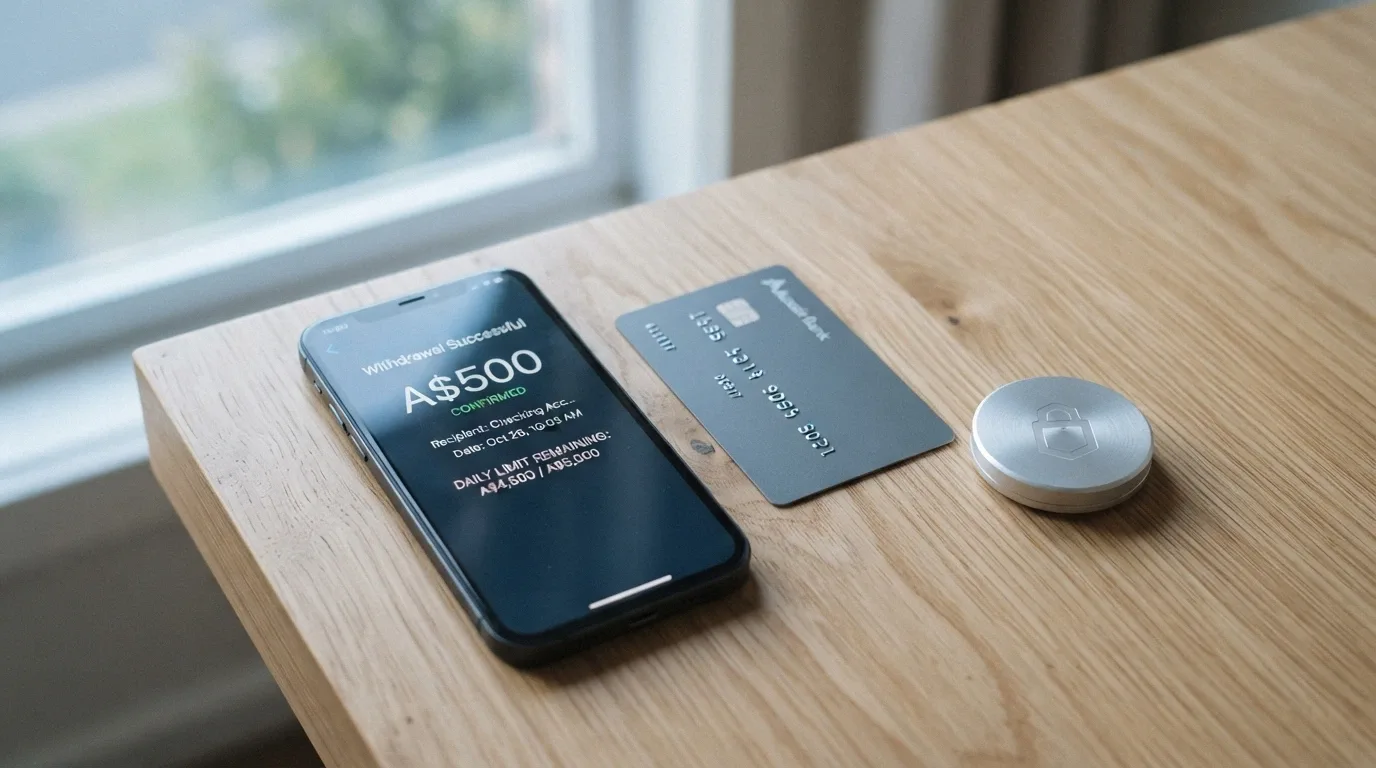
Withdrawal limits at Pocket Pokies are A$500 per day, A$3,000 per week, and A$10,000 per month — tight caps that bind quickly for a player running a balance at the higher end of the bonus playthrough. Withdrawal requests are processed in up to 48 hours, after which e-wallet and crypto withdrawals typically arrive within 0–24 hours and AUD bank transfers take a further 1–3 business days. PayID withdrawals at offshore casinos typically take 24–48 hours end-to-end, with about 12–18 hours of that being operator-side processing.
The trap is the 30 per cent commission on withdrawals attempted before the deposit has been wagered at least once. A player who deposits A$1,000 to chase the welcome bonus, builds a small balance, and tries to cash out before putting the deposit through any wagering will have A$300 deducted from the withdrawal — a structural disincentive to walking away early, and a meaningful source of complaint for readers who do not read the bonus terms. KYC verification is required before any first withdrawal, which means documents need to be on file before the cashout flow opens up.
The combined picture: up to 48 hours of operator-side processing, tight caps, a KYC gate before the first cashout, and a commission on early withdrawals. For an Australian reader comparing Pocket Pokies against any Australian-licensed operator they have used before, the difference is the difference between a regulated cashier and an offshore cashier.
Playing Pocket Pokies on your phone in Australia
The brand is mobile-first by design. The site is built to run on a phone screen rather than scaled down to one, the cashier is mobile-native, and the games lobby is laid out for thumb navigation. There are two routes into the games on a phone — one for Android, one for iOS — and they are not the routes a reader might expect from a mainstream app.

Android APK and iOS web app: what you actually get
On Android, Pocket Pokies is available via APK download from the brand’s site, with Android 9.0 and above the recommended baseline. On iOS, the brand is available as a progressive web app shortcut added through Safari to the home screen — a PWA rather than an App Store download. Neither route runs through Google Play or the Apple App Store, which is the most important single fact about how the brand distributes its mobile product, and it is the fact that distinguishes Pocket Pokies from a regulated app a reader might have installed before.
The APK path is the standard one for offshore operators that Google Play’s real-money gambling policy does not accommodate. It requires the player to allow installation from unknown sources in Android settings, download the APK file directly from the brand’s site, and run the installer. The PWA path on iOS is the standard workaround for the App Store’s restrictions on real-money gambling apps in jurisdictions where the product is regulated locally. Both paths deliver the same game library and the same cashier; the installation route is the only meaningful difference.
How Australians sign up and play for real money
Sign-up is the part of the experience that does the least work to remind a player of the offshore reality. The registration form asks for the same details an Australian-licensed operator would ask for — name, email, date of birth, address — and the early deposit experience is indistinguishable from any other online casino. The offshore framing becomes visible only later, at the KYC gate and the responsible-gambling gap.
The sign-up process from Australia
Account creation is the standard email-and-password flow: an email address, a password, a name and date of birth, and a residential address. The site does not ask for identity documents at sign-up; KYC verification is required before the first withdrawal, not at the point of registration, so a player can fund an account and start playing without having submitted documents upfront. The deposit methods available for first funding are the same Visa, Mastercard, CashtoCode, PayID, bank transfer, and crypto options covered earlier, with the same AU-context caveats attached to each.
What the sign-up flow does not surface, and what an Australian reader should know before starting it, is the absence of the responsible-gambling scaffolding an Australian-licensed operator would build in. There is no deposit cap to set during registration. There is no session-timer toggle. There is no self-exclusion dashboard — limits are requested by emailing support, which is a categorically weaker mechanism than a live account setting.
Real-money play: what changes after you deposit
The shift from browsing to betting is structural rather than cosmetic. Once the account is funded, the games lobby becomes the real-money games lobby, and the same pokie the player was spinning in demo mode is now costing real money per spin. If a welcome bonus has been claimed, the bonus funds sit alongside the cash balance in a locked state — they are not withdrawable until the 45x wagering requirement is cleared, and only pokies count 100 per cent toward that requirement.
The withdrawal-eligibility gate is the moment the offshore reality becomes practical. KYC documents must be on file before the first cashout. Bonus funds must be wagered through before they are withdrawable. Deposits that have not been wagered at least once trigger a 30 per cent commission on any attempted withdrawal. And the absence of built-in spend tracking — no deposit-cap enforcement, no session-time reality check, no in-account loss summary — is the part an Australian-licensed operator would handle by default and that Pocket Pokies leaves to the player to manage alone. The casino works as a casino; it does not work as the kind of casino an Australian player is used to.
The safety net Australian players leave behind
Responsible-gambling tooling is where the offshore framing costs the player the most, and where an Australian reader should be clear-eyed before any deposit. The brand does not build in the deposit caps, session timers, and self-exclusion dashboards that an Australian-licensed operator is required to provide by law. The help that does exist — BetStop, the National Gambling Helpline, Gambling Help Online — does not reach an offshore casino, which is the part the marketing does not mention.
Deposit limits, session timers, and the tools Pocket Pokies doesn’t build in
The brand does not offer built-in deposit-cap tools, session timers, or in-account responsible-gambling dashboards. Limits are requested by emailing support, which is a categorically weaker mechanism than the live account setting every Australian-licensed wagering operator is required to provide. The difference is not minor: an in-account deposit cap takes effect immediately and is enforced by the system; an emailed request is processed by a human at the operator’s discretion and takes effect whenever it takes effect.
The BetStop disconnect sharpens the picture. BetStop, the National Self-Exclusion Register, had 67,480 registrations as at 31 July 2026, of which 41,290 exclusions were still active; 78 per cent of registrants were under 40, and 38 per cent chose lifetime exclusion. BetStop covers approximately 150 licensed Australian wagering providers, and an offshore casino is not connected to the register. A self-excluded Australian who has used BetStop to lock themselves out of Australian wagering operators will not be stopped at the Pocket Pokies cashier. The block a player put on themselves does not travel.
Help that is actually there: BetStop, the Helpline, and the harm numbers
The help an Australian can reach regardless of where they play is real, and it is worth naming clearly. The National Gambling Helpline — 1800 858 858 — is free, confidential, and staffed 24 hours a day, seven days a week, with online chat and counselling available through Gambling Help Online at gamblinghelponline.org.au. BetStop itself offers self-exclusion periods ranging from a minimum of three months to lifetime for the ~150 licensed Australian wagering providers in its network.
The scale of the harm these services respond to is worth knowing. As of March 2026, an estimated 3.32 million Australians — 15.1 per cent of the adult population — are experiencing some level of gambling harm, according to Roy Morgan research. Problem gambling prevalence among Australian adults has increased from 1.9 per cent in 2022-23 to 2.9 per cent in 2024-25 (PGSI classification), equating to roughly 620,000 problem gamblers. The annual health loss associated with gambling-related harm in Australian adults is estimated at over 400,000 Years Lived with Disability. These numbers sit behind every responsible-gambling section on every review site in the country, and they are the numbers a reader should hold alongside any offshore bonus offer.
How we evaluated Pocket Pokies for Australian players
The review above is built on three sources: independent casino-review data (Casino Guru’s Safety Index and methodology, plus affiliate review pages covering bonus terms and banking); the brand’s own published terms pages for bonus, withdrawal, and application specifics; and Australian regulatory data (the Interactive Gambling Act 2001, ACMA enforcement figures, and BetStop statistics). The facts in the research bank were each tagged to one of these sources; the absence of a specific figure in this page usually means the figure was not confirmed for Australian players on this review pass rather than that the brand does not publish it.
Four criteria ordered the ranking within the comparison: licence verifiability, bonus-term fairness, responsible-gambling tool availability, and payment transparency. Every operator in the comparison scored identically on the first, third, and fourth of those — none verifiable, none offering AU-grade responsible-gambling tooling, all accepting payment methods banned at the Australian licensed-operator level — which is why the comparison table is narrow. The page’s job is not to pick a winner from the offshore group; it is to state the category plainly and let an Australian reader make an informed call.
The limitations are real and worth naming. Specific bonus terms, game-provider lists, and withdrawal schedules were not confirmed for nine of the ten operators on Australian accounts this review pass. Casino Guru’s Safety Index for Pocket Pokies is the most-cited third-party score but not the only one. TST Labs certification covers RNG fairness, not operator solvency or payout rates. And the ACMA enforcement figures are public but lag the live state of any given brand’s accessibility.
The verdict on Pocket Pokies: weighing the risk for Australian players
Pocket Pokies delivers what its marketing promises — 800+ games, AUD-denominated banking, a mobile-first product, and a welcome package worth up to A$5,000 plus 150 free spins. It also delivers the things its marketing does not: a Curacao licence claim that independent reviewers could not verify, the absence of any Australian consumer protection, no BetStop connectivity, no built-in responsible-gambling tooling, and a payment-method stack that the Australian government has explicitly banned at the licensed-operator level.
For an Australian reader weighing whether to play, the decision is not between Pocket Pokies and a comparable licensed alternative — no such alternative exists, because online casino is prohibited in Australia. The decision is between playing offshore and not playing. The bonus arithmetic is real: A$225,000 of turnover at the A$5 maximum bet to clear the full package, or about 62.5 hours of continuous play, with pokies the only games that count fully toward wagering. The legal arithmetic is also real: no local regulator to escalate to, no ACMA complaints mechanism that will recover a balance, and the prospect of the site being ISP-blocked at any time with money still on it.
From 1 January 2027 the offshore calculation gets tighter. The Interactive Gambling Amendment (Gambling Reform) Bill 2026 gives Australian banks and payment providers express authority to block transactions to illegal gambling operators; deposit methods that work today may not work in six months. The decision an Australian reader makes at the cashier this year is a decision made under rules that are about to change. The page does not recommend one way or the other; it lays out the offer, the cost, and the law, and it leaves the call where it belongs.
Frequently asked questions
How long do Pocket Pokies withdrawals take?
Withdrawal requests typically process in up to 48 hours, after which e-wallet and crypto withdrawals usually arrive within 0–24 hours and AUD bank transfers take a further one to three business days. PayID withdrawals at offshore casinos generally run 24–48 hours end-to-end, with around 12–18 hours of that being operator-side processing. KYC verification must be completed before the first withdrawal, and a 30 per cent commission applies if the player cashes out before wagering the deposit at least once.
What payment methods does Pocket Pokies accept in Australia?
The cashier lists Visa, Mastercard, CashtoCode, PayID, bank transfer, and cryptocurrencies (BTC, ETH, LTC, USDT). Under Australian law, credit cards and crypto have been banned as payment for online wagering since 11 June 2024, so the practical options for an Australian player are PayID, CashtoCode, and bank transfer. POLi shut down on 30 September 2023 and should not appear on any current payment list.
Does Pocket Pokies integrate with BetStop?
No. Pocket Pokies is not connected to BetStop, Australia’s National Self-Exclusion Register. BetStop covers approximately 150 licensed Australian wagering providers, and an offshore casino is not part of that network. A self-excluded Australian who has registered with BetStop can still reach Pocket Pokies, and the block does not travel.
What are the Pocket Pokies withdrawal limits?
The withdrawal limits are A$500 per day, A$3,000 per week, and A$10,000 per month. These are tighter than the limits at many Australian-licensed operators, and they bind quickly for players running larger balances. A 30 per cent commission applies to withdrawals made before the deposit has been played through once.
Does Pocket Pokies have a mobile app for iPhone and Android?
Pocket Pokies is available on Android via APK download from the brand’s site (Android 9.0 and above recommended) and on iOS as a progressive web app shortcut added through Safari. Neither route runs through Google Play or the Apple App Store, which is standard for offshore operators outside Google’s real-money gambling policy. The mobile product carries the same security layer — TLS/SSL encryption, two-factor authentication, biometric unlocks — as the desktop site.
App versus mobile browser: does the gap matter?
The practical gap between the installed app and the mobile browser is small. The game library, the cashier, and the bonus pages all run through the same account, and the security layer — TLS/SSL encryption, two-factor authentication, biometric unlocks — applies across both. The home-screen icon is more convenient than a bookmark; the APK sideload is more invasive than a Play Store install. Neither difference changes the regulatory reality underneath: the mobile product connects to the same offshore operator, the same unverifiable licence claim, and the same absence of Australian consumer protection.
For an Australian reader, the choice between APK and PWA is a choice between two installation paths to the same offshore product, not a choice between a regulated and an unregulated experience.