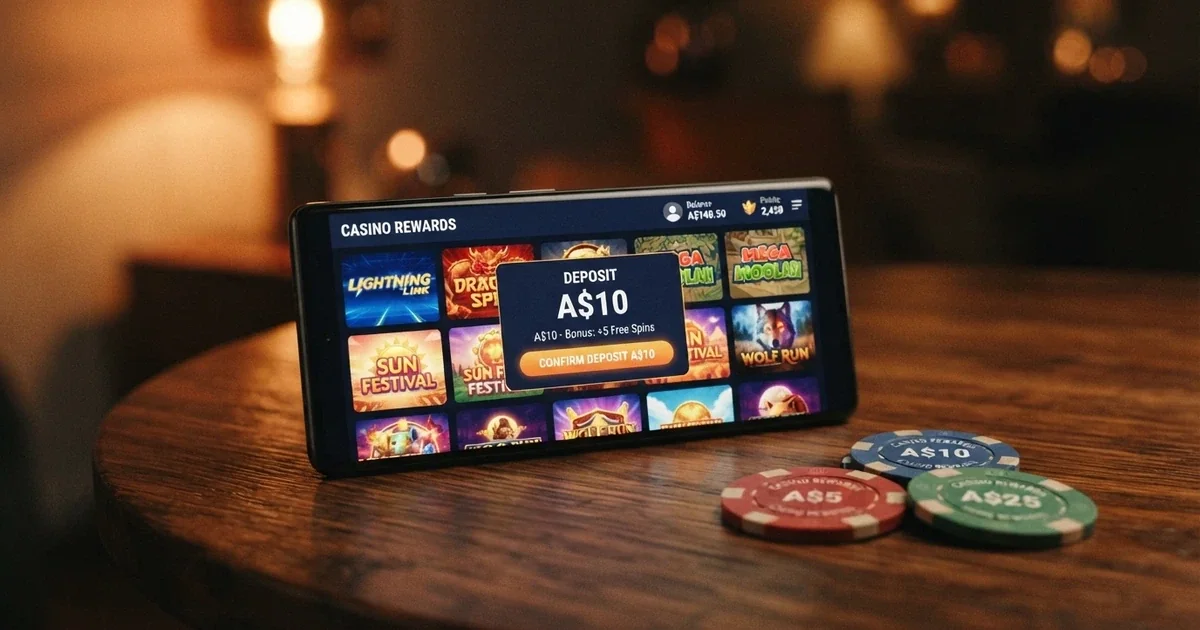
The $1 Deposit Pokies Promise — and What Actually Happens When You Try It
 Available in AU
The “deposit a dollar, play pokies” pitch shows up everywhere in affiliate rankings for the Australian market, but the cashier at most of those casinos tells a different story. This guide pulls that pitch apart — what a single dollar buys in real spins, which payment rails actually allow it, which offshore sites Australians can reach, and where the legal line sits. The short answer: a $1 deposit is real but narrow, and the rest of the page is the long version of why.
Data current as of 18 October 2026 · Licence claims cross-checked against the ACMA register.

Table of Contents
- What a $1 Deposit Actually Gets You at Australian Online Pokies in 2026
- Why Your $1 Deposit Lives and Dies on the Payment Rail
- The Offshore Pokies Sites Australians Are Using for Low-Stake Play in 2026
- Playing $1 Deposit Pokies on Your Phone: What Works in 2026
- New Low-Deposit Pokies Sites Worth a Look in 2026
- The Legal Reality: No Online Pokies Are Licensed in Australia
- Staying in Control When the Deposit Floor Is This Low
- How We Evaluated These $1 Deposit Pokies Sites
- Is a $1 Deposit Worth It? What the Numbers Say
- Frequently Asked Questions
What a $1 Deposit Actually Gets You at Australian Online Pokies in 2026
The reality behind the $1 deposit claim
The affiliate pages stack up neatly: ranked casino, “$1 minimum deposit” badge, a green play button, a wink at the reader. The story they sell is simple — drop a dollar, claim a welcome bonus, spin the pokies. The Australian-facing market in 2026 does not actually work that way. A genuine $1 deposit casino where a player picks any payment method, drops one dollar, and starts playing barely exists.
What those pages leave out is the deposit floor at the cashier. Card processing alone costs an offshore casino between A$0.30 and A$0.50 per Visa or Mastercard transaction. A one-dollar deposit after those fees leaves the operator with somewhere between fifty and seventy cents — less than the cost of running a pokies session for the few minutes the bankroll lasts. No commercially healthy business sets that as its standard floor, which is why card and e-wallet minimums at offshore casinos serving Australians commonly sit between A$10 and A$20. PayID, despite being marketed across Australian affiliate pages as the natural low-deposit answer, follows the same pattern: typical minimums of A$10 to A$20 at most sites.
The $1 deposit genuinely exists in one corner of the market: where a payment rail with negligible variable cost — certain cryptocurrencies, prepaid vouchers like Neosurf at participating operators — meets an operator willing to set a low floor as a player-acquisition hook. Anywhere else, the “$1” headline is marketing dressed up as a feature.
The pattern has a name. AU$1 is not a reliable standard minimum for ordinary Australian payment methods. Current AU-facing casino pages show that genuine ultra-low deposits are more often tied to a particular payment rail, especially cryptocurrency, while conventional card and e-wallet minimums are commonly higher. The headline across the affiliate industry flattens that distinction because the affiliate pages have an incentive to make the offer sound more accessible than it is.
What a single dollar buys you at the pokies
A dollar sounds substantial until you divide it by the minimum stake on the kind of pokies Australians actually reach. Most online pokies at offshore casinos running Pragmatic Play, Play’n GO, BGaming, NetEnt and the rest of the mainstream catalogue start at A$0.10 to A$0.20 per spin. Drop a dollar at the bottom of that range and you get ten spins. At the top end, five. That is the entire session.
The arithmetic on what that session is worth is short. At a typical 96.5% RTP build — comfortably inside Pragmatic Play’s published range of 94.0% to 97.5% — ten spins at A$0.10 against a pokies title returning 96.5% to the player carries an expected loss of A$0.035, or about three and a half cents. The expected balance after the session is roughly A$0.965. Those are statistical averages across many such sessions; any individual ten-spin run will land anywhere from zero to a few dollars, with most runs producing less than the dollar that went in. The session itself does not last long — a reel spin runs in seconds, so ten spins is a couple of minutes at most.
The value of the $1 deposit is not the duration. It is the chance of catching a multiplier round inside a handful of spins and walking away with anything above a dollar. Most sessions will not. A handful will. That is the entire entertainment proposition the dollar buys, and it is what the marketing promise actually reduces to in practice.
Pokies return-to-player percentages vary by title. Pragmatic Play’s published RTP range spans 94.0% to 97.5%, with most titles sitting between 96.0% and 96.7%. That range looks tight on paper but it means the difference between a 96.7% build and a 94.0% build over ten spins is the difference between an expected loss of A$0.033 and A$0.060 — small in absolute terms, but almost double the house take. Once the dollar is in, the player’s choice of which title to spin is the only variable they control.
Book of Dead (Play’n GO) carries a published RTP of 96.21%, a high-volatility profile, a maximum win of 5,000x the bet and a stake range starting at A$0.10. Sweet Bonanza (Pragmatic Play) sits at 96.51% RTP with the same minimum stake and a 21,100x maximum. Both are standard offshore pokies catalogue fixtures and both fit a one-dollar bankroll comfortably. Whether the dollar returns anything depends on what the reels decide, not on the operator’s marketing.
Why the AUD market reads differently from the marketing
The reason the $1 deposit pitch persists in the Australian SERPs even though it barely works in practice is partly regulatory, partly economic, and partly structural. Online pokies are prohibited in Australia under the Interactive Gambling Act 2001 — every site reaching Australian players is offshore, none holds an Australian licence, and the ACMA actively blocks them. As at March 2026, the ACMA had blocked 1,564 illegal gambling and affiliate sites since November 2019. More than 220 illegal services have withdrawn from the Australian market entirely since enforcement strengthened in 2017.
That landscape produces a peculiar competitive economy. The operators the affiliate pages link to are in legal limbo, the user the pages target is signing up for a service that is unlawful to provide inside the country, and the search results for “best $1 deposit casino Australia” are dominated by affiliate listicles with a clear financial interest in ranking for that term. The $1 minimum is the headline hook. It works because it matches a real user question: many Australians genuinely want to test an offshore pokies site without committing real money, and the affiliate pages reach them with the right search term even when the operational reality is that the only consistent $1 deposit path is via a specific payment rail, not “any payment method”.
The marketing flattens that distinction because the distinction is harder to monetise.
Why Your $1 Deposit Lives and Dies on the Payment Rail
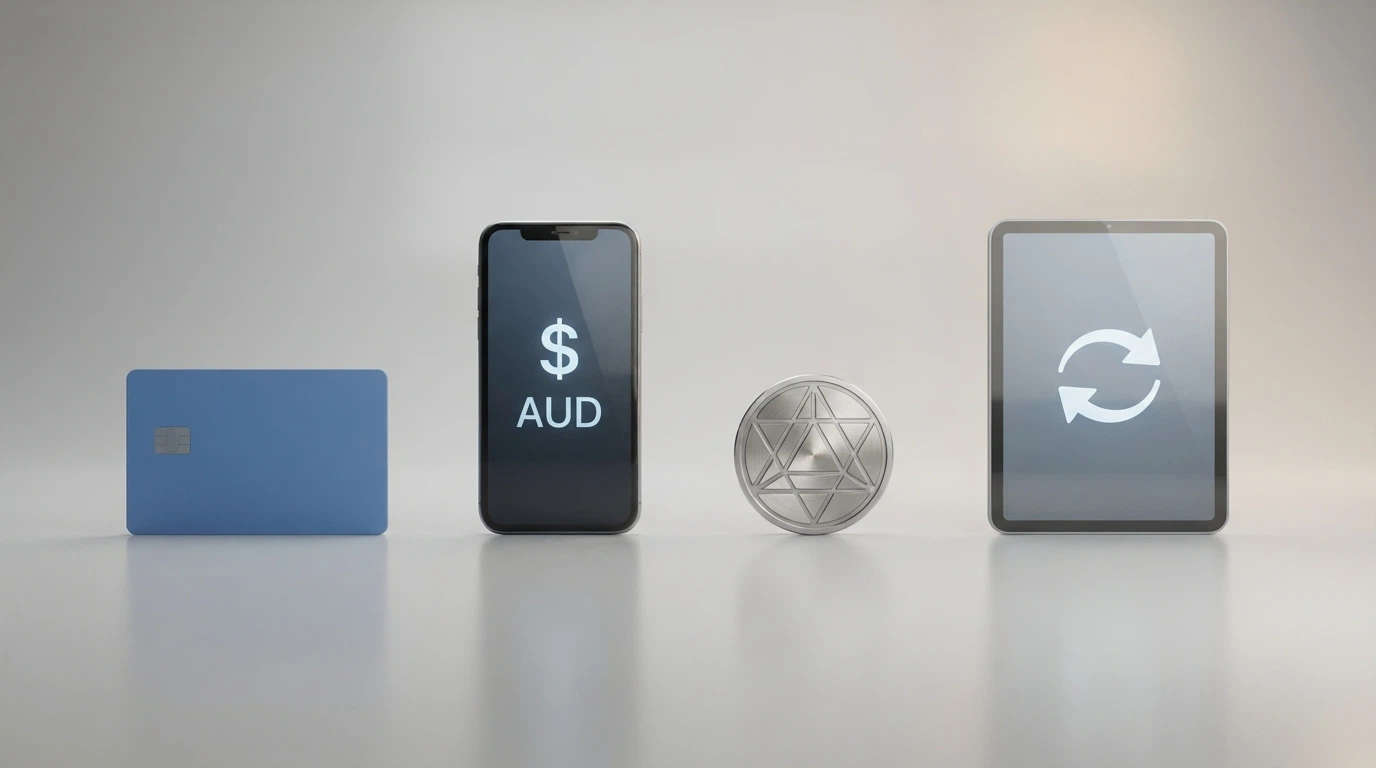
The deposit floor is set by the payment method, not by the casino brand. Two players depositing at the same operator with two different rails will see two different minimums, and only one of them will be able to land a $1 deposit at all. The rail that allows it is the narrow one.
The real deposit floors: what each payment method actually requires
| Payment Method | Typical Minimum Deposit | $1 Deposit Possible? | Processing Speed | Fees |
|---|---|---|---|---|
| Visa / Mastercard | A$10–A$20 | No — A$0.30–A$0.50 processing fee eats the deposit | Instant on confirmation | A$0.30–A$0.50 per transaction to the operator |
| PayID | A$10–A$20 at most sites | No at most offshore casinos | Instant to 15 minutes | Free to the player |
| E-wallets (Skrill, Neteller, MiFinity) | A$10–A$20 | No | Varies by provider | Varies |
| Bank Transfer / Wire | A$20 or more | No | Slower — same day to several days | Varies |
| Bitcoin | A$5–A$10 typical floor | Sometimes — at sites that explicitly allow it | 10 minutes to 1 hour | A$1.50–A$3.00 average per transaction in 2026 |
| USDT (Tether) | A$1 at some sites | Yes — at operators running $1 free-spin offers | Minutes | Lower than Bitcoin, varies by network |
| Neosurf (prepaid voucher) | Voucher denomination | Yes — vouchers issued at A$1 and above | Instant | Voucher purchase fee at retail |
The table makes the rail question clear. A genuine $1 deposit exists at the intersection of a payment method with low fixed cost and an operator willing to set the floor there. That intersection is small. Cards and PayID are the most familiar rails to Australians and both move the floor to A$10 or higher at most offshore casinos. Crypto is where the floor genuinely drops, but the fees eat into a small deposit fast.
PayID: the closest thing to a genuine $1 rail
PayID sits in an awkward position between the marketing claim and the cashier reality. On paper, PayID is the natural Australian answer to the low-deposit problem — it is instant, free, runs through the player’s own bank, requires no card details to be shared with the casino, and works through the New Payments Platform (Osko). For Australian players who already have a PayID set up through their bank, the deposit process is a one-tap transfer with no card numbers, no third-party processor, and no currency conversion when transacting in AUD.
In practice at offshore casinos, PayID minimum deposits sit at A$10 to A$20 at most sites. That is not a $1 rail. The reason is the same economics that pushes card minimums up — the operator wants a deposit large enough to be worth processing and to make the welcome bonus worthwhile to offer. PayID withdrawals have their own ceiling: minimum withdrawal of A$50, daily maximum of A$9,000 at offshore casinos. The withdrawal floor in particular matters for a $1 deposit player because even if they win, they cannot cash out the same dollar they put in — they need to reach A$50 before the withdrawal button activates.
PayID’s real advantage over cards at offshore sites is not the minimum deposit, it is the friction profile. Deposits process in seconds to fifteen minutes, no card details are shared with a third party, and the player is not running a credit card transaction that may flag with their bank as gambling-related. For a low-stake player who plans to deposit A$10 or A$20 and play with that bankroll, PayID is a sensible default. For a player chasing an actual $1 deposit, PayID at most offshore casinos does not get them there.
The honest summary is that PayID is the only rational route to a $1 pokies deposit for most players — but only on the small number of sites that have explicitly set a $1 PayID floor, and most have not.
Crypto and Bitcoin: low floors, high fees
Crypto is where the $1 deposit genuinely happens. Bitcoin transaction fees in 2026 average around A$1.50 to A$3.00 per transaction. That sounds like a deal-breaker for a $1 deposit, and it is — the fee alone exceeds the deposit. The practical workaround is not Bitcoin itself but the cheaper cryptocurrencies layered on similar rails: USDT (Tether) on a low-fee network, Litecoin, or similar assets where the network fee is a fraction of a cent.
Crypto casinos do typically set lower minimum deposits than card-accepting sites — A$5 to A$10 is standard, and some operators explicitly advertise a $1 floor for specific coins. The trade-off is the exchange-side cost. Buying A$1 of Bitcoin through an Australian exchange means the exchange fee will likely exceed the deposit itself; an Australian exchange typically charges a percentage fee per buy, plus the spread, plus the network fee when sending it onward. The player can easily pay A$2 in fees to move A$1 to the casino, and they have not spun a single reel yet.
The structural argument for crypto on a $1 deposit is that the on-chain settlement cost is independent of the deposit amount — sending A$1,000 costs the same fee as sending A$1. That is why crypto-friendly operators can offer the $1 floor at all. The catch is that the fee-to-deposit ratio is brutal at the bottom of the range. For a player depositing A$100, the A$2 fee is two percent of the deposit. For a player depositing A$1, the A$2 fee is two hundred percent. The deposit is uneconomical to make, not to send.
That is why the $1 deposit in the wild is usually USDT on a low-fee network, bought through an exchange that absorbs the network cost, and deposited through an operator that accepts it at a $1 floor. Bitcoin’s brand recognition does not translate to $1 deposits in practice.
Real-money play vs demo mode: what your dollar unlocks
Every offshore pokies site that matters offers a free-play or demo mode. Most of the major providers — Pragmatic Play, Play’n GO, BGaming, NetEnt, Push Gaming — build the demo version into the game client itself, which means the casino does not need to do anything to enable it. The player lands on the pokies page, opens a title, and the game loads with a play-money balance running into the millions. No deposit, no signup, no wagering requirement.
The difference between demo mode and a $1 real-money deposit is not the game. It is the engagement. A real-money spin pays real money when it lands, which is why offshore casinos bother processing $1 deposits at all — the dollar is the price of admission to a session where a bonus round multiplier actually means something. The psychological stake of having a single dollar on the line is the entire product, even though the dollar will almost certainly be lost within ten spins.
A genuine $1 deposit still counts as real-money play, and at most offshore sites that qualifies the player for any welcome bonus that runs on a deposit trigger. The wagering requirements then apply to whatever bonus is unlocked, and the dollar the player deposited is gone before they finish the first ten spins in most cases. Demo mode is free, but it does not give the player a shot at real winnings. The $1 deposit gives them a shot. That is the trade the dollar is buying.
The deeper question — whether the $1 deposit is worth the loss of Australian consumer protection, BetStop coverage, and the option of an ACMA complaint if the operator refuses the withdrawal — is the question the rest of this guide is built around.
The Offshore Pokies Sites Australians Are Using for Low-Stake Play in 2026
Every operator on this list is offshore. None holds an Australian licence. The ACMA has issued formal warnings to or blocked several of them. Players using them have no Australian consumer-law protection, no BetStop coverage, no recourse if the operator refuses a withdrawal, and the site can be blocked at any time with a balance still on it. With that stated, here is what each one actually offers.

| Operator | Licence | Welcome Bonus | Wagering | Game Library |
|---|---|---|---|---|
| RocketPlay | Curaçao 8048/JAZ2020-013 (Antillephone N.V.) — ACMA formal warning Q2 2025 | 100% up to A$300 + 100 FS on Aztec Magic Deluxe | 40x bonus + 40x FS winnings | Dama N.V. multi-provider (BGaming, Pragmatic Play, Play’n GO, others) |
| SkyCrown | Curaçao OGL/2023/176/0095 (Gaming Control Board) | 100% up to €100 (~A$160) + 100 FS | 40x bonus + 40x FS winnings | 7,000 titles from 138 providers |
| Royal Reels | Curaçao (specific number not confirmed) | — | — | Multi-provider |
| WinSpirit | Claimed MGA (Malta Gaming Authority) — not confirmed from official register | 100% up to AU$500 + 50 FS | 30x bonus | Multi-provider |
| Stake | Curaçao (specific number not confirmed) | — | — | Multi-provider (Stake Originals + third-party) |
| Rainbet | Curaçao (not confirmed) | — | — | Multi-provider |
| Scream Casino | Curaçao (not confirmed) | — | — | Multi-provider |
| Fair Go | Curaçao (rooted licence) — first site ACMA blocked (November 2019) | 100% up to A$200 (×5 redemptions) + $15 no-deposit free chip | 30x deposit+bonus; 60x on NDB chip | RTG (RealTime Gaming) single-provider |
| Bizzo Casino | Curaçao (TechSolutions Group N.V.) — launched 2021 | Up to A$7,250 + 175 FS over 4 deposits; 10 FS no-deposit for PWA install | 40x; A$8 max bet | 8,000+ games from 70+ studios |
| Rocket Casino | Curaçao (not confirmed) | — | 45x | Multi-provider |
The table tells the offshore story at a glance. Ten operators, all Curaçao-licensed with one claiming Malta, none confirmed at the official register beyond what is noted, and welcome bonus terms confirmed for fewer than half. That thin confirmation is itself part of the picture — the affiliate pages rank these operators confidently while the underlying terms documentation is patchy.
RocketPlay — ACMA-Warned With a Solid Welcome Package
RocketPlay runs under Curaçao licence 8048/JAZ2020-013 through Antillephone N.V., and Dama N.V. (the operator behind the RocketPlay brand) received a formal warning from the ACMA in Q2 2025 for providing a prohibited interactive gambling service to Australian customers. The ACMA formal warning is a public, dated entry on the regulator’s enforcement record, not an accusation anyone else can verify independently, but it is there on the ACMA’s own page.
The welcome offer is a 100% match up to A$300 plus 100 free spins on Aztec Magic Deluxe, delivered at 20 per day across five days. The wagering requirement is 40x on the bonus amount and 40x on free-spin winnings. The minimum deposit to trigger the offer is A$30, and the maximum bonus bet is A$7.50 per spin. A player depositing the minimum and clearing the bonus at the maximum bet would need roughly four hours of continuous play to work through the A$300 bonus — and that assumes a 96.5% RTP build, which Aztec Magic Deluxe’s specific RTP was not confirmed in the research for this page.
Dama N.V. runs a multi-provider library under RocketPlay that includes BGaming, Pragmatic Play and Play’n GO among others, which is the catalogue backbone for most modern offshore pokies sites. The brand is one of the better-known Curaçao-facing operators for Australian traffic. The combination of a credible welcome offer, a confirmed wagering multiple, and a regulator-documented warning is what makes RocketPlay a useful case study for this page — it is the offer shape and the offshore reality in the same product.
Verdict: a solid welcome package on a regulator-flagged operator, with the A$30 minimum putting it out of reach for a $1 deposit player entirely.
SkyCrown — The 7,000-Title Library With a Curaçao Licence
SkyCrown holds Curaçao Gaming Control Board licence OGL/2023/176/0095 and runs a 7,000-title library across 138 providers — the largest catalogue in the set by both count and provider breadth. Pragmatic Play, Evolution and the rest of the major studios are represented, and the breadth is what SkyCrown’s pitch rests on.
The welcome offer is 100% up to €100 (approximately A$160) plus 100 free spins. The wagering is 40x on the bonus amount and 40x on free-spin winnings. The bonus validity is five days; the free spins expire after one day. The minimum deposit to trigger is €20.
The 7,000-title library is SkyCrown’s real draw, and the breadth matters for a low-stake player because it gives them somewhere to spin a dollar beyond the welcome-bonus slot. The five-day bonus validity is short — most players will clear the bonus or lose it well inside the window. The one-day free-spin expiry is even shorter and effectively forces the player to log in and use the spins the day they land. That constraint is a feature for the operator and a friction point for the player.
Verdict: the catalogue is the strongest in the set, the bonus terms are ordinary for this market, and the €20 minimum means a $1 deposit player is on the wrong rail from the start.
Royal Reels — A Curaçao Operator With Limited Public Data
Royal Reels operates offshore from Curaçao, the specific licence number was not confirmed at the time of review, and the bonus terms publicly available did not allow a clean confirmation of a welcome offer, wagering multiple, or maximum bet. The brand presents as a multi-provider pokies and casino site serving Australian traffic, and that is what can be stated cleanly.
The honest position is that without a confirmed licence number against the Curaçao register, a confirmed welcome package, or a confirmed wagering multiple, there is not much to evaluate beyond “another offshore Curaçao site”. That is itself information. The set of operators with publicly verifiable terms is small, and operators that fall outside it should be approached accordingly — the player is buying access to a multi-provider library but not a published deal.
Verdict: a Curaçao-backed offshore pokies site whose terms were not confirmable in the time available, which is the kind of operator where the player takes on more risk than the marketing suggests.
WinSpirit — Claimed MGA Licence and the Lowest Wagering in the Set
WinSpirit is the only operator in the set claiming a Malta Gaming Authority (MGA) licence rather than Curaçao. The MGA is generally considered a stricter regulator than Curaçao, with stronger player-dispute mechanisms. The licence was not confirmed from the official MGA register at the time of review — only the operator’s claim of holding it could be verified.
The welcome offer is a 100% match up to AU$500 plus 50 free spins with 30x wagering on the bonus amount and a 30-day bonus validity. The 30x wagering rate is the lowest confirmed in this set — RocketPlay and SkyCrown sit at 40x, Fair Go at 30x on the deposit+bonus combined basis, Rocket Casino at 45x. A 30x rate on a pure bonus basis (no deposit included) is meaningfully easier to clear than 40x on the same basis.
The 30-day validity is also generous relative to SkyCrown’s five-day window. WinSpirit’s offer is structurally the easiest welcome package to clear in this set if the licence holds. The licence is the qualifier that the player has to evaluate for themselves.
Verdict: the best wagering terms in the set, but the licence is the operator’s claim rather than an independently verified fact, which is the central risk for a player weighing this brand.
Stake — The Crypto-Native Giant With No Australian Oversight
Stake is one of the larger crypto-native casino and sportsbook brands globally, operating under a Curaçao licence (specific number not confirmed at review time) and built around its own “Stake Originals” suite of in-house games alongside third-party pokies. The platform is fundamentally a crypto operator — deposits and withdrawals run in Bitcoin, Ethereum, Litecoin, USDT and other coins, with no card or PayID rails in the standard offering.
The Australian-facing welcome offer was not confirmed at the time of review, which is consistent with Stake’s positioning as a crypto platform that does not run a conventional deposit-match welcome bonus in most markets. The brand’s draw is the in-house games (Dice, Crash, Plinko, Mines) and the brand recognition — Stake has mainstream visibility through sponsorships that exceed what most Curaçao brands reach.
For an Australian low-deposit player, the practical issue is the payment rail. Stake is a crypto platform; a $1 AUD deposit has to be converted to crypto first, which means the Australian-exchange fee problem applies. For a player who already holds crypto and wants to deposit in that currency, the platform is functional. For a player who wants to deposit A$1 from a bank account, Stake is not the right venue.
Verdict: a global-scale crypto-native brand with serious brand recognition, but the welcome offer and AUD deposit path make it a poor fit for the $1-from-a-bank-account reader.
Rainbet — A Curaçao Operator With Minimal Public Terms
Rainbet operates offshore from Curaçao, the specific licence number was not confirmed at the time of review, and the welcome offer, wagering multiple and bonus terms were similarly not confirmable in the research available. The brand presents as a multi-provider pokies and casino platform.
Like Royal Reels, the honest read here is that the operator has not published terms that can be independently verified, which is information rather than a recommendation. The multi-provider library is the visible value proposition. The absence of a verifiable bonus structure is the trade.
Verdict: no distinguishing feature to outweigh the standard offshore-risk premium.
Scream Casino — Offshore and Light on Detail
Scream Casino operates offshore from Curaçao with the specific licence number not confirmed at the time of review. The welcome bonus structure, wagering multiple and maximum bonus bet were not publicly available in a form that could be cleanly verified. The site positions itself as a multi-provider offshore casino.
The pattern across several entries in this set is the same: Curaçao-licensed offshore operator, multi-provider library, no clean confirmation of the welcome terms that affiliate pages typically quote. The absence is itself a data point.
Verdict: catalogue only, no confirmed offer to compare against.
Fair Go — The ACMA-Blocked Pioneer With a No-Deposit Free Chip
Fair Go Casino holds a Curaçao-rooted licence and was the first site the ACMA ever ordered blocked, back in November 2019. The ACMA blocking history is well documented; the site continues to operate and accept Australian players through alternative routing.
The welcome offer is a 100% match up to A$200 redeemable up to five times consecutively, with 30x wagering on the deposit and bonus combined and an A$20 minimum deposit. The maximum cashout on the deposit bonus is unlimited, which is unusual for this set — most operators cap the bonus conversion at some multiple of the bonus or deposit. Fair Go also offers a $15 no-deposit free chip with 60x wagering and an A$180 maximum cashout. The free chip does not require a deposit to claim, which is the closest thing in the set to a true “play for free” entry point.
The game library is the constraint. Fair Go runs RealTime Gaming (RTG) exclusively — a single-provider library that is narrower than the multi-provider catalogue at most competitors. RTG pokies are functional and well-known but the catalogue is small relative to the multi-provider operators. For a player who wants range, Fair Go is the wrong site. For a player who specifically wants RTG, Fair Go is one of the few places to find it.
Verdict: the deepest ACMA enforcement history in the set, a strong no-deposit offer, and a single-provider library that limits the catalogue.
Bizzo Casino — The Biggest Bonus Package and an 8,000-Game Library
Bizzo Casino runs under a Curaçao licence through TechSolutions Group N.V. and launched in 2021. The welcome package is the largest in the set by total bonus value: up to A$7,250 plus 175 free spins across four deposits, with a 125% first-deposit tier requiring A$250 or more to activate. The wagering requirement is 40x with an A$8 maximum bonus bet. Bizzo also runs a no-deposit offer of 10 free spins for installing the casino’s progressive web app (PWA), with 40x wagering and an A$75 win cap.
The A$250 minimum on the first-deposit tier is the catch. The headline figure of A$7,250 is the four-deposit total; the first-deposit entry point starts much higher than the welcome bonuses at RocketPlay or Fair Go. A player depositing A$20 gets the second-tier structure rather than the headline 125% first tier.
The game library is the draw: 8,000-plus games from 70-plus studios, PayID supported for both deposits and withdrawals, and a Casino.Guru Safety Index of 8.4 — the only score in this set. Casino.Guru’s index weighs licensing, complaints, terms fairness and responsible gambling tools; 8.4 is a respectable score for a Curaçao operator, not a guarantee of anything. PayID support is also significant because most of the Curaçao multi-provider operators lean on cards and crypto rather than the Australian instant-rail.
Verdict: the largest bonus package and the deepest catalogue in the set, behind an A$250 first-deposit tier the $1 player cannot reach.
Rocket Casino — 45x Wagering and a Curaçao Backing
Rocket Casino runs under a Curaçao licence with the specific number not confirmed at review time. The wagering requirement of 45x is the highest confirmed in the set. Welcome bonus amounts were not confirmed in the research available, and the game library is multi-provider without a specific title count to point at.
The 45x wagering rate is the single most important number for any player considering this brand. At a typical bonus size, a 45x requirement means a player wagers forty-five times the bonus amount before any winnings become withdrawable. For a player with a modest bankroll, the requirement effectively locks the bonus balance until a long play-through at the maximum bet limit — or until the balance hits zero first.
Verdict: 45x wagering with no confirmed bonus to offset it is the worst verified wagering proposition among operators with a checkable term.
The Pokies You Can Actually Play: RTP and Volatility Data for 2026
The bonus is one half of the proposition. The other half is what the player is actually spinning. Eight popular pokies titles available across the offshore casinos serving Australians have confirmed per-title RTP data in 2026.
| Slot | RTP | Provider | Volatility | Max Win |
|---|---|---|---|---|
| Sweet Bonanza | 96.51% | Pragmatic Play | High | 21,100x |
| Book of Dead | 96.21% | Play’n GO | High | 5,000x |
| Big Bass Bonanza | 96.71% | Pragmatic Play | Medium-high | 2,100x |
| Gates of Olympus | 96.50% | Pragmatic Play | High | 5,000x |
| Razor Shark | 96.70% | Push Gaming | High | 50,000x |
| Starburst | 96.09% | NetEnt | Low | ~500x |
| Temple Tumble | ~96.25% | Relax Gaming | Very High | 7,767x–9,600x |
| Piggy Riches | 96.38% | NetEnt | Medium | 7,500x |
The table shows the RTP band is tight — every title sits between 96.09% and 96.71%, a 0.62 percentage-point spread across eight major releases. For a player depositing a single dollar at A$0.10 per spin, the expected-loss difference between the highest and lowest RTP title is fractions of a cent per ten spins. The volatility column matters more than the RTP column at this stake.
Volatility determines the shape of the session. A low-volatility title like Starburst pays small wins frequently — the dollar is likely to bleed out gradually across fifty to a hundred small payouts. A high-volatility title like Razor Shark or Temple Tumble holds the bankroll for long dry stretches and pays larger lumps when a bonus round lands. For a $1 bankroll, low volatility means more time on the reels. High volatility means almost no time on the reels at all unless a bonus round hits in the first ten spins, which is statistically rare.
The max-win column is mostly irrelevant at a $1 stake. Razor Shark’s 50,000x maximum is theoretically A$50,000 on a single spin, but the bonus round that delivers that win lands in a tiny fraction of sessions. The realistic outcome across ten spins at A$0.10 is a small win, a near-miss, or nothing. The 21,100x on Sweet Bonanza is the same proposition at the same scale.
The provider column is the strategic piece. Pragmatic Play, Play’n GO, BGaming, NetEnt and Push Gaming are the major studios whose games dominate the offshore pokies catalogues. Pragmatic Play’s published RTP range of 94.0% to 97.5% — with most titles between 96.0% and 96.7% — sets the typical build the player will encounter. Nolimit City sits at 96.0% to 96.2% default builds with max wins up to 500,000x, which is the upper end of the catalogue.
Playing $1 Deposit Pokies on Your Phone: What Works in 2026
Instant-play mobile access: no app required
Every offshore pokies site that matters runs on the browser. There is no Australian-licensed pokies app because the product is prohibited under the Interactive Gambling Act 2001 — Apple’s App Store and Google Play do not carry licensed real-money pokies apps for the Australian market, and the offshore brands that serve Australian players operate outside both stores.
That is structurally good for the player. Instant-play browser access works on iOS and Android through Safari, Chrome, Firefox or the default browser without an install, an update cycle, or a sandbox restriction. The full game library is available on mobile because the games are HTML5 and JavaScript, not native binaries. The deposit flow — PayID, crypto, card — works the same way on mobile that it does on desktop because the cashier is also browser-based.

The user experience is responsive design with a mobile-optimised lobby. Touch-spin replaces click-spin. The game loads in seconds on a modern handset. The only friction is the mobile data cost of a live casino session, which is real but modest — a typical pokies session consumes a few hundred megabytes of data. The mobile experience at the offshore sites serving Australian players is, in practical terms, as good as the desktop experience. The absence of an app is not a loss.
App availability for low-deposit staking
The few casino apps that exist at the offshore operators serving Australians are progressive web apps (PWAs), not native apps. A PWA is a website that installs to the home screen and behaves like an app — full-screen, an icon, a launcher — but it is still a browser-rendered site underneath. Apple and Google do not police PWAs the way they police App Store listings, which is why offshore casinos use them.
Bizzo Casino runs a PWA installation flow that triggers a no-deposit offer of 10 free spins with 40x wagering and an A$75 maximum win cap. That is the only PWA-triggered no-deposit offer confirmed in this set. Other operators may run similar flows but they were not confirmed at review time.
The security trade-off of a sideloaded app is real. A PWA from an offshore casino carries whatever security posture the casino itself maintains, which is outside any Australian regulatory framework. For a player installing PWAs from operators in this set, the standard cautions apply — the casino has access to whatever data flows through the PWA, the operator’s terms govern how that data is used, and the Australian consumer protection regime does not apply.
Payment speed on mobile
Deposits and withdrawals on mobile run through the same rails they do on desktop. PayID deposits at offshore casinos process in seconds to fifteen minutes; crypto deposits settle in minutes once the network confirms; card deposits are instant on the cashier side, with the operator’s processing window layered on top. The mobile flow does not add meaningful friction beyond touch-typing the deposit amount.
The withdrawal side is the bottleneck for a $1 deposit player. PayID withdrawals at offshore casinos carry a minimum of A$50 and a maximum of A$9,000 per day. A player who deposits a dollar, wins a few dollars on a bonus round, and tries to withdraw faces the A$50 minimum — they cannot cash out until they accumulate fifty dollars in withdrawable balance. The crypto path has the same structural problem at smaller operators: minimum withdrawal thresholds tend to be set higher than the deposit, and the player has to grind through enough spins to clear the bonus wagering and accumulate the threshold before the withdrawal button activates.
The $1 deposit player should expect a long road to any actual payout, even when they win. That is the structural reality of the offer shape.
New Low-Deposit Pokies Sites Worth a Look in 2026
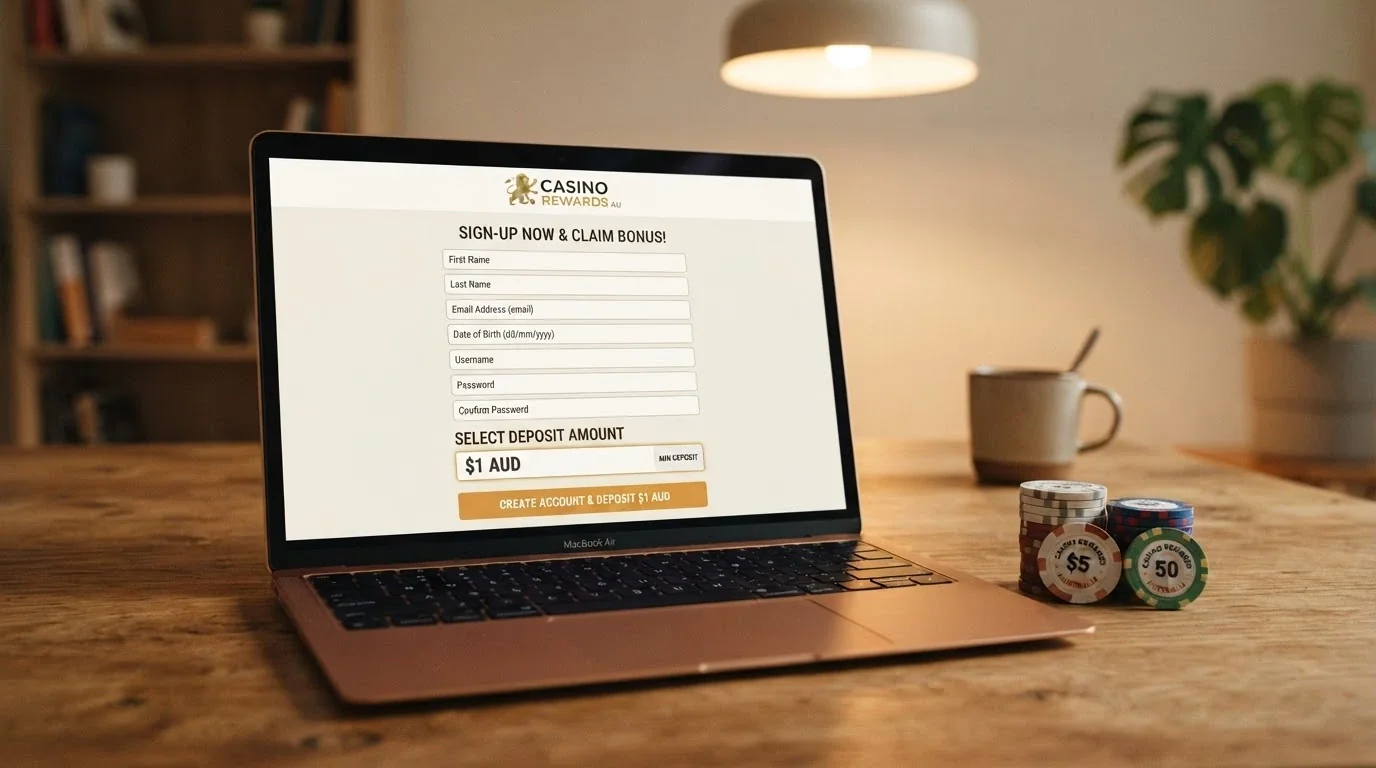
A handful of newer offshore sites accept a genuine $1 deposit through specific payment rails. The terms are tight, the offers are small, and the operators are typically small enough that they have not yet generated the affiliate footprint that the larger Curaçao brands enjoy. They are the closest thing in the market to the “$1 deposit” promise the affiliate pages sell.
Freshly opened low-floor sites
Two sites in the current crop explicitly allow a $1 deposit and use the low floor as a player-acquisition hook. One offers 20 free spins on Big Bass Splash at A$0.10 per spin for an A$1 deposit via PayID, with 35x wagering on free-spin winnings and a maximum cashout of A$50. The library sits at 4,200 pokies across Pragmatic Play, Hacksaw Gaming, Play’n GO and Push Gaming, with an A$20 minimum withdrawal. The other offers 30 free spins on Sweet Bonanza at A$0.20 per spin (an A$6 theoretical play value) for an A$1 deposit, with 40x wagering and an A$100 maximum cashout. PayID, Neosurf and USDT all work at A$1 on this site, and the minimum withdrawal is A$30.
The pattern is the same at both. The $1 deposit unlocks free spins, not a deposit-match bonus. The free-spin value is small (A$2 to A$6 of theoretical play). The wagering requirement is steep (35x to 40x on the winnings). The maximum cashout is capped far below what a hypothetical big win would pay (A$50 to A$100). And the minimum withdrawal sits well above the deposit itself.
These are discovery offers from operators trying to sign up Australian players against an entrenched competitor set. The offers work because they target that search term exactly — even though the operational reality is a tight bundle of free spins on a popular game with capped winnings and a high withdrawal threshold.
First-deposit entry stakes and what they unlock
Most of the established offshore welcome bonuses in this set require A$20 to A$30 to activate. RocketPlay’s welcome bonus needs a minimum deposit of A$30; SkyCrown’s needs €20; Fair Go’s deposit-match offer needs A$20. None of these is reachable with a $1 deposit. The bonus structure for a low-stake player is therefore the free-spins-for-$1 model rather than the deposit-match model.
That split matters because the two offers work very differently. A deposit-match bonus unlocks a percentage match on whatever the player deposits — typically 100% up to a cap. The player controls the deposit size (subject to the minimum) and the bonus scales with it. A free-spins-for-$1 offer unlocks a fixed number of spins on a fixed game at a fixed stake. The player cannot scale the offer; the operator has set the bundle.
For a $1 player, the only sensible offer shape is the fixed free-spin bundle. For a player willing to deposit A$20 to A$30, the deposit-match welcome bonuses at the established brands are accessible. The two offers are not competing against each other; they address different deposit tiers and different player intentions. The mistake is treating them as substitutes.
The Legal Reality: No Online Pokies Are Licensed in Australia
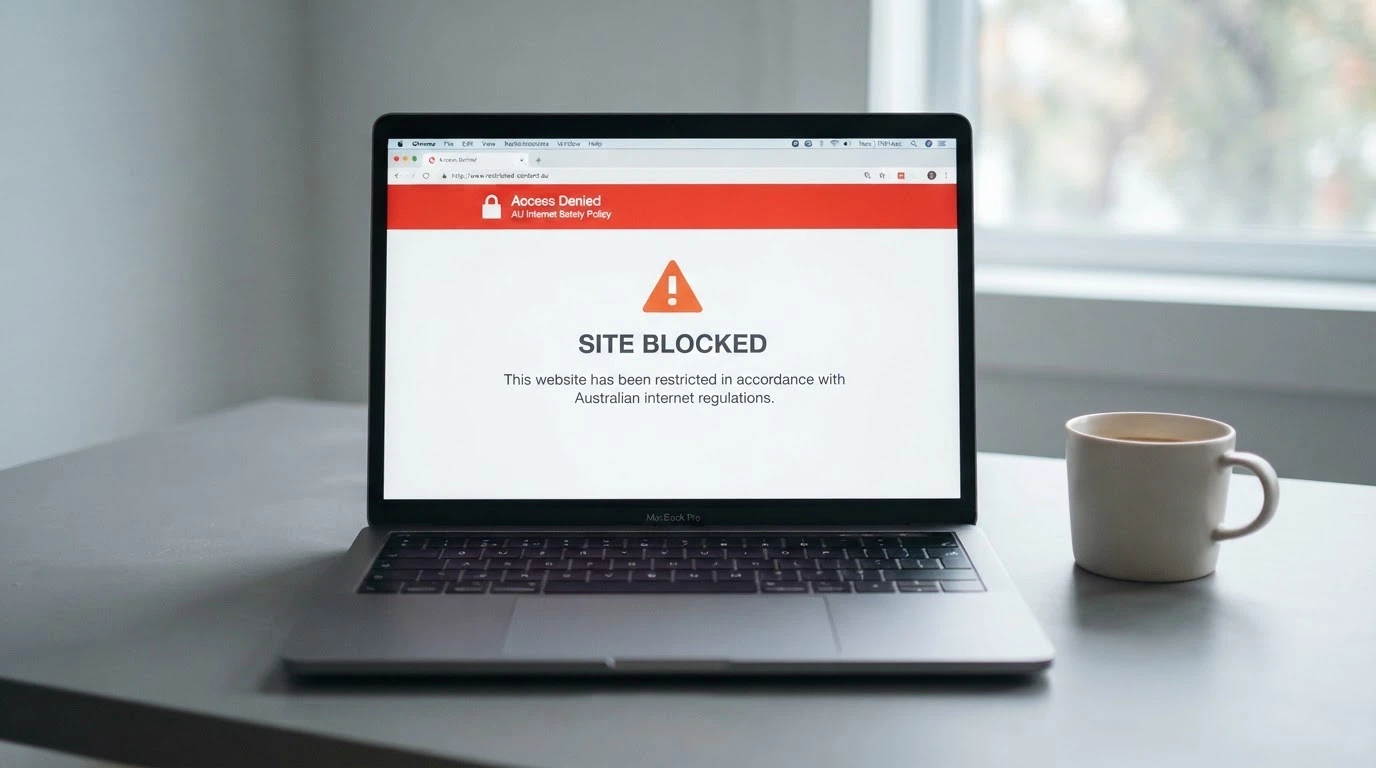
Online pokies are prohibited in Australia. That is not a grey area and the marketing never quite admits it. Every site on this page is offshore; the ACMA blocks them; the players using them have no Australian consumer protection. The legal position is the most important fact on the page, and it is the fact that is least visible to the player at the cashier.
What the Interactive Gambling Act 2001 actually prohibits
The Interactive Gambling Act 2001 (IGA) makes it an offence for a provider to supply a “prohibited interactive gambling service” to a customer in Australia. The service is defined at section 5 of the IGA as a gambling service provided in the course of carrying on a business, to customers using the internet. The Australian-customer link is established at section 8. The provider offence sits at section 15(2A). The individual player is not prosecuted under the IGA — the statute targets the supply side, not the demand side.
The 2001 Act was the original prohibition. The 2017 amendment gave the ACMA the power to direct ISPs to block illegal sites. The Interactive Gambling Amendment (Credit and Other Measures) Act 2023 banned credit cards, credit-related products and digital currency (crypto) as payment for online wagering from 11 June 2024; an operator that fails to enforce it faces penalties of up to A$247,500.
The Interactive Gambling Amendment (Gambling Reform) Bill 2026 passed Parliament on 19 August 2026 and its measures commence on 1 January 2027. The reform imposes federal wagering-advertising restrictions — no more than three ads per hour on TV between 5am and 8:30pm, a live-sport blackout from fifteen minutes before to five minutes after the event, a ban on athletes, celebrities and influencers promoting wagering, and a Wagering Advertising Opt-out Register (AdStop) administered by the ACMA. Direct marketing of inducements becomes prohibited for fourteen days after a customer signs up, for ninety days after a person deregisters from BetStop, and indefinitely for customers identified as at risk of gambling-related harm.
The most consequential clause for offshore operators serving Australian players is the bank-blocking power. From 1 January 2027, banks and payment providers gain express authority to block transactions to illegal gambling operators. A player using a major Australian bank to deposit at an offshore casino from January 2027 onwards may find the transaction declined by their bank rather than processed by the casino.
Licensed vs offshore: the two worlds of Australian play
What is licensed in Australia: wagering on races and sporting events placed before the event begins, lotteries, keno, through operators licensed by a state or territory. The de facto national licensor is the Northern Territory Racing and Wagering Commission (NTRWC), administered through Licensing NT. Northern Territory licences run for up to twenty years and carry a 5% wagering tax on wagers minus payouts plus a 0.05% racing levy. State point-of-consumption taxes typically sit between 10% and 15% of net wagering revenue.
What is not licensed: online casino games, online pokies, in-play betting. The de facto national licensor does not license these products because the IGA prohibits their supply. No online casino anywhere holds an Australian licence. Every site on this page — RocketPlay, SkyCrown, Royal Reels, WinSpirit, Stake, Rainbet, Scream Casino, Fair Go, Bizzo, Rocket Casino — is an offshore operator running under a Curaçao licence, a claimed MGA licence, or an unverified licence basis, with no Australian authorisation.
The licensed/offshore split is the architecture of the Australian online gambling market. The licensed side covers sports and racing; the offshore side covers everything the licensed side does not. The player’s protection follows the licence: a licensed wagering operator is bound by Australian consumer law, state and territory responsible-gambling conditions, and the BetStop self-exclusion register. An offshore operator is bound by its Curaçao licence terms (or whatever licence it holds), which do not include Australian consumer protection, BetStop coverage, or any local dispute-resolution mechanism.
The 2024 ban on credit cards and crypto for online wagering applies to licensed operators, not to offshore ones — the offshore operators do not see Australian card rails or Australian-bank-monitored crypto rails, so the ban does not constrain their deposit stack. From 1 January 2027 the bank-blocking power changes that: Australian banks will be able to decline transactions to illegal operators outright, which is the first time the licensed/offshore split will produce a transaction-level consequence for the player.
What you give up when you play at an offshore casino
The loss is structural, not rhetorical:
- No BetStop coverage — BetStop covers approximately 150 licensed wagering providers in Australia (the numbers and what they mean are covered in the section on self-exclusion below). Offshore casinos are not connected to the register. A player who has self-excluded through BetStop can still open an account and deposit at any offshore casino serving Australians, because the offshore operator does not check the Australian register.
- No Australian consumer-law protection — the Australian Consumer Law, the ePayments Code, and the Australian Privacy Principles do not apply to an operator domiciled in Curaçao. If the operator voids a winning spin, refuses a withdrawal, or closes an account, the player has no Australian regulator to complain to and no Australian court with straightforward jurisdiction.
- No recourse if the operator refuses a withdrawal — offshore casino disputes are typically resolved through the Curaçao licensing authority or the operator’s own complaint process, both of which favour the operator. There is no Australian equivalent of the UK Gambling Commission’s adjudicator function.
- The site can be blocked with a balance on it — the ACMA’s blocking list covers 1,564 sites since November 2019. When the ACMA directs ISPs to block a site, the block applies at the ISP level. Australian players with balances on a blocked site can find their access cut off overnight. Several of the operators on this page (Fair Go, RocketPlay) have already been the subject of ACMA warnings or blocking orders.
- From 1 January 2027, banks may decline the deposit itself — the bank-blocking power introduced by the 2026 reform takes the consumer-protection gap and applies it at the payment rail. An Australian player whose bank exercises the new power may find deposits to offshore casinos declined outright.
Staying in Control When the Deposit Floor Is This Low
A $1 entry point looks harmless. The risk is in the loop, not the single deposit — the ability to top up another dollar, then another, with no Australian register monitoring the cumulative spend and no licensed operator’s deposit-limit tool constraining the flow.

Deposit limits and low-stake guardrails
Licensed wagering operators in Australia must offer customer-set deposit limits and activity statements under state and territory conditions. Those are the everyday responsible-gambling tools: a player can set a daily, weekly or monthly deposit cap; they receive activity statements summarising their play; they can request a “take-a-break” period. The tools exist because licensed operators are bound by Australian responsible-gambling codes.
Offshore casinos serving Australians are not bound by the same codes. Most offer their own internal deposit-limit tools — a player can typically set a cap inside the casino’s cashier — but the limits are voluntary, the operator can change them, and there is no Australian regulator checking that the operator is enforcing the cap the player set. The 2026 reform’s inducement-marketing prohibitions (covered above) bind licensed operators but do not extend to offshore ones.
For a player using an offshore site, the practical advice is to set a hard personal deposit limit before the first deposit, treat it as immovable, and stick to it. The site’s internal limit is a starting point. The player’s own discipline is the actual constraint.
Self-exclusion, BetStop, and the offshore gap
BetStop — the National Self-Exclusion Register — launched on 21 August 2023 and covers approximately 150 licensed wagering providers. As at 31 March 2026, 59,830 people had registered to self-exclude; 37,247 of those registrations were active and 22,583 had been completed or cancelled. The demographics skew young: 78% of registrants are under 40, and 38% chose lifetime exclusion over the minimum exclusion period.
The register works through a data feed — every licensed wagering provider must check BetStop before opening a new account, and must close existing accounts held by registered individuals. Six licensed wagering providers — Tabcorp, LightningBet, Betfocus, TempleBet, Picklebet and BetChamps — were found by the ACMA in January 2026 to have breached BetStop rules in 2024, including allowing registered individuals to open accounts and marketing to them. Tabcorp paid a penalty of A$112,680 for the breach. The breaches show that the register is enforced, but only against the licensed market.
For offshore casinos, the register does not apply. A player who has self-excluded through BetStop can still open an account at any offshore casino in this set, deposit money, and play pokies. The BetStop registration will not stop them. As Carolyn Lidgerwood, ACMA Member, has put it, “self-exclusion only works if wagering providers follow the rules” — and the offshore providers do not follow the rules because the rules do not reach them.
The gap is the most concrete harm of using offshore sites. A player who has decided to stop gambling and has taken the strongest step available to them — BetStop registration — has stopped at licensed operators but is still exposed at every Curaçao site they can reach. The decision to play offshore is, for someone who has registered with BetStop, an active decision to undo their own exclusion.
Bankroll cautions: when a $1 stake becomes a loop
A single dollar does not look like a problem. Ten dollars does not look like a problem either. The pattern that gets people in trouble is the repeat: another dollar, another dollar, another dollar, until the cumulative spend is hundreds. The mental accounting of micro-deposits treats each one as trivial; the aggregate is not.
About 2.1% of Australian adults — roughly 430,000 people — experience problem gambling. The Australian Institute of Health and Welfare put high-risk gambling at 1.8% in 2022. The figures are not specific to offshore casinos; they cover the population. The offshore market simply removes the tools — BetStop, deposit limits enforced by Australian regulators, activity statements, the cooling-off period — that help manage the risk.
The National Gambling Helpline is 1800 858 858 — free, confidential, twenty-four hours a day, seven days a week. Gambling Help Online (gamblinghelponline.org.au) offers online chat and counselling. Both are run outside the offshore market; both are accessible to anyone in Australia, including players using offshore casinos. The first practical step for a player who notices the loop forming is to call the helpline.
The structural bankroll advice for low-stake play is straightforward: decide before the session how many dollars you will deposit; deposit them in a single transaction; close the cashier when the bankroll is spent; do not top up. The $1 floor is exactly what makes top-ups easy — one more dollar, just one more. The discipline that prevents the loop is the discipline that decides, in advance, that there will be no top-up.
How We Evaluated These $1 Deposit Pokies Sites
The ranking on this page is built on five criteria, applied in order.
Licence status. Each operator’s stated licence was checked against the publicly available Curaçao Gaming Control Board register or the Malta Gaming Authority register. Where the licence number was not confirmable from the official register at review time, the operator’s own claim of holding it is the only available evidence, and that is stated as such in the write-up. The ACMA’s enforcement record against each operator — formal warnings, blocking orders — was checked against the ACMA’s published quarterly action summaries.
Bonus value. Where a welcome offer was confirmable from the operator’s own terms page, the bonus size, free-spin count, wagering multiple, minimum deposit, bonus validity, and maximum bonus bet were recorded. Where the offer was not confirmable, the write-up states that and does not estimate.
Wagering fairness. The wagering multiple is the single most important number on a welcome bonus. The set’s wagering rates range from 30x (WinSpirit, Fair Go’s deposit+bonus basis) to 45x (Rocket Casino). A lower multiple is a friendlier bonus; a higher multiple is harder to clear and reduces the conversion rate of bonus balance to withdrawable cash.
Game library breadth. The number of titles and providers is a direct measure of what the player can actually play. SkyCrown’s 7,000 titles from 138 providers and Bizzo’s 8,000-plus from 70-plus studios are the largest catalogues in the set. Fair Go’s single-provider RTG library is the narrowest.
ACMA enforcement record. The ACMA’s formal warnings, investigations and blocking orders against each operator were checked. Operators with formal warnings or blocking orders on the public record are flagged accordingly in the write-up.
What the evaluation does not include: trust scores from third-party review sites (one Casino.Guru Safety Index of 8.4 for Bizzo is noted but not weighted); payout-speed benchmarks from non-affiliated sources; user-review aggregates. The data sources are the operator’s own terms pages, the ACMA’s published enforcement record, and the Curaçao Gaming Control Board’s licence register.
Is a $1 Deposit Worth It? What the Numbers Say
The arithmetic says no, for most players, on most offers.
A dollar buys ten spins at the minimum stake, on a pokies build returning 96.5% to the player, with an expected loss of about three and a half cents. That is the entire entertainment proposition. It is not a session; it is a moment. The “value” of the $1 deposit is the chance of catching a multiplier round inside ten spins and walking away with a few dollars. Most runs produce less than a dollar back. A handful produce more.
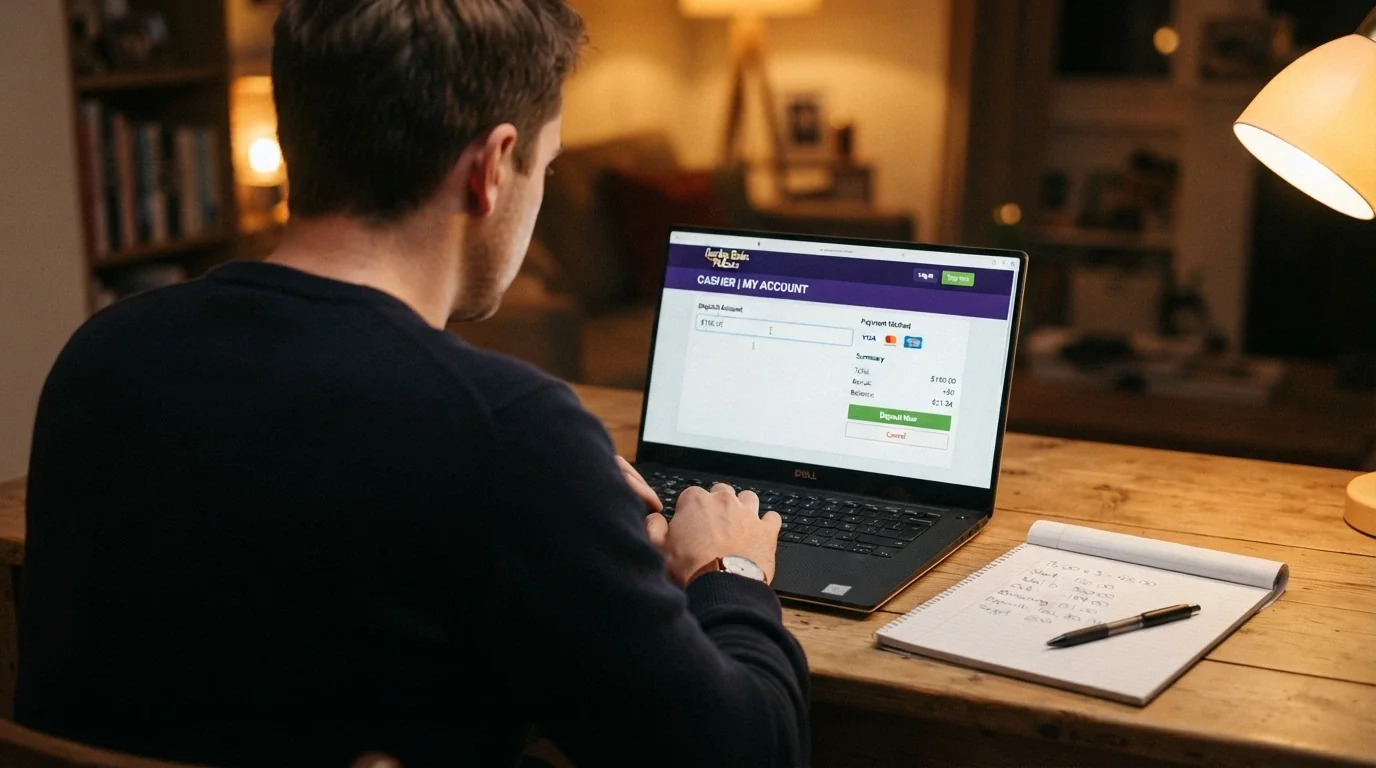
The bonus side makes the proposition worse, not better. A 100% match welcome bonus up to A$300 with 40x wagering requires A$12,000 of turnover to clear. A player with the A$1 bankroll has no path to that turnover. The bonus is structurally unreachable from the deposit floor that the same operator advertises. The free-spins-for-$1 offers carry 35x to 40x wagering on the winnings with A$50 to A$100 maximum cashout caps — meaning the best-case payout from the entire $1 deposit is somewhere around the price of a decent lunch.
The payment rail compounds the cost. A $1 deposit via PayID at most offshore casinos is not possible — the floor is A$10 to A$20. A $1 Bitcoin deposit is possible at some operators but the network fee alone is A$1.50 to A$3.00, larger than the deposit. The only rail that consistently allows a $1 deposit at a meaningful number of operators is USDT on a low-fee network through an exchange that absorbs the network cost — and that requires the player to already hold crypto.
The legal side is the cost that does not show up at the cashier. Online pokies are prohibited under the Interactive Gambling Act 2001. The operators on this page are offshore, unregulated in Australia, and subject to ACMA blocking. Players using them have no BetStop coverage, no Australian consumer-law protection, no recourse if the operator refuses a withdrawal, and the site can be blocked with a balance still on it. From 1 January 2027, banks may decline the deposit itself.
The $1 deposit is worth it for a player who wants to test a specific offshore platform with minimal exposure, who has already decided that the offshore risk profile is acceptable, and who will treat the dollar as the entire session rather than a stepping stone to a larger deposit. For that player, the calculus is simple: the dollar buys ten spins, the bonus is unreachable, the offshore protection gap is accepted, and the entertainment value of a ten-spin session at A$0.10 is what the dollar is buying.
For a player who wants a real session at a reasonable stake, the math points elsewhere: deposit A$20 via PayID at an operator with confirmed terms, claim the welcome bonus, accept the wagering, and play the catalogue at a stake the bankroll actually supports. The dollar stops being the right unit once the player wants more than ten spins.
For a player who is concerned about the protection gap — the lack of BetStop coverage, the offshore dispute-resolution weakness, the bank-blocking power coming in 2027 — the answer is the licensed Australian market, which covers sports and racing wagering and lotteries but does not cover online pokies. There is no Australian-licensed pokies site. That is the structural answer to the question the page is built around.
Frequently Asked Questions
Do $1 deposit casinos offer free spins and welcome bonuses?
The genuine $1 deposit sites offer free-spin bundles rather than deposit-match bonuses. Twenty to thirty spins on a specific high-profile pokies title, with thirty-five to forty times wagering on the winnings and cashout caps of A$50 to A$100. Established-operator deposit matches all need A$20 or more to activate.
What are the wagering requirements on $1 deposit casino bonuses?
The $1 free-spin offers carry thirty-five to forty times wagering on winnings, capped at A$50 to A$100 cashout. Established-brand deposit matches run from thirty times the bonus (WinSpirit) to forty-five times (Rocket Casino), with Fair Go’s thirty times on the deposit plus bonus combined. The multiple is the most important number on any offer.
What happens if I win at an offshore online casino — do I pay tax?
Gambling winnings are not assessable income for the ordinary Australian punter under section 6-5 of the ITAA 1997, and losses are not deductible under section 8-1, unless gambling is the person’s business. The ATO does not collect gambling tax at this scale; the casino pays wagering tax in its own jurisdiction, not the player.
Does BetStop cover offshore pokies sites?
No. BetStop covers approximately 150 licensed Australian wagering providers. Offshore casinos are not connected to the register, so a player who has self-excluded through BetStop can still open an account, deposit and play at any offshore casino serving Australians. The protection stops at the licensed market border.
Are $1 deposit online pokies sites safe for Australian players?
On game integrity and data security, established Curaçao-licensed operators use mainstream tested providers. On consumer protection, no — no Australian consumer-law coverage, no BetStop check, no local dispute mechanism, and the ACMA can direct ISPs to block the site at any time. From January 2027, banks may also decline the deposit.
Published by the PayID Casinos AU team.