What an A$1 Deposit Really Buys at Australian-Facing Online Casinos in 2026
 Available in AU
Data current as of 18 October 2026 and verified against the ACMA Interactive Gambling register and operator sites.
A dollar deposits. That is the headline every comparison page leads with, and it is also where the honest reading of this market starts to peel away from the marketing. Of thirty-two sites audited by SlotSpeak, only six accepted a clean A$1 through a payment method that did not strip the dollar in fees; the other twenty-six set an A$10 floor, or asked for A$10–A$20 before the welcome offer unlocked at all. The “A$1 deposit” an Australian player sees in a comparison table is, in most cases, an aspirational number that the operator has no obligation to honour at the rail the player actually uses. The realistic floor sits between A$5 and A$10 through PayID or bank transfer, and a true one-dollar deposit only survives on a narrow band of crypto and specific e-wallet segments.
Before that gap matters to a reader, a wider one does. Online casino games, online pokies and in-play sports betting are prohibited in Australia under the Interactive Gambling Act 2001, enforced by the Australian Communications and Media Authority. No operator on this page holds an Australian casino licence. Every brand that runs an A$1 minimum deposit for Australian players does so from Curaçao, Malta, or another offshore jurisdiction, and the player carries every consequence of that placement. ACMA has had 1,564 illegal sites blocked by Australian ISPs since November 2019, and more than 225 services have withdrawn from the market since enforcement was strengthened in 2017. A balance held at any of the operators reviewed below can be sitting on the next blocked domain.
This page does the reading for a player who has already noticed that comparison tables do not add up. It covers the effective minimum by payment rail, the wagering arithmetic behind the welcome offer, the withdrawal floor that traps a small balance on the platform, the ten operators reviewed below, and the legal and self-exclusion gaps that no affiliate page has named yet.
Table of Contents
- Why Your 2026 $1 Deposit Casino Bonus Is Smaller Than It Looks
- How to Pick a $1 Deposit Casino That Won’t Burn Your Deposit on Fees
- The $1 Deposit Casino Shortlist: 10 Offshore Operators Compared
- New $1 Deposit Casinos in 2026: Fresh Branding, Same Offshore Reality
- Real-Money Pokies You Can Play With a $1 Deposit — and the Ones Worth Your Spin
- The Payment Reality: Which $1 Deposit Methods Actually Work at A$1
- Mobile $1 Deposit Casinos: Pokies on the Go, Offshore as Always
- No Online Casino Is Licensed in Australia — Here’s What That Means for Your $1 Deposit
- Responsible Gambling When BetStop Can’t Reach Your Casino
- How We Selected and Ranked These $1 Deposit Casinos
- What Every Australian $1 Deposit Player Should Actually Do
- Frequently Asked Questions
Why Your 2026 $1 Deposit Casino Bonus Is Smaller Than It Looks
The arithmetic is plain. The marketing is not.
Take KatsuBet’s 50 free spins on Scroll of Adventure — the cleanest dollar-floor welcome offer in the offshore Australian market, and the most data-rich operator on the list. Assuming a representative minimum per-spin value of A$0.10 across those 50 free spins, the bonus carries a nominal value of A$5. At a 50x wagering multiple on winnings, that A$5 turns into A$250 in required turnover before the bonus converts to withdrawable cash. Apply the industry-average online pokie RTP of 96% and the expected loss on that turnover works out to A$10 — ten times the dollar the player deposited to claim the offer. That is the expected cost of clearing the bonus at average outcomes, not a guaranteed result; individual sessions will run higher or lower depending on what the spins actually pay.
Three numbers decide what a dollar actually buys: the rail the player funds through, the wagering requirement the operator attaches to the welcome bonus, and the minimum withdrawal that greets the player when they try to walk out with whatever is left. The comparison tables obscure each of them, and the sections below explain why.
What a ‘$1 Minimum Deposit Casino’ Actually Codes in Australia
The phrase “A$1 minimum deposit casino” is a price-anchor. It does the same work that “from $9.99” does on a streaming subscription: it locates the offer at a comfortable psychological position and invites the reader to read the rest of the page in that register. The reader, in turn, is shopping for the lowest-possible commitment to a real-money pokie session, and the term delivers exactly that — the comfort of knowing the floor is a dollar.
VegasPokie is blunt about the gap. “The headline ‘$1’ you see plastered across comparison tables is a rare edge case, not the norm,” the site writes. “The realistic floor is A$5–A$10 via PayID or bank rails.” A genuine A$1 deposit survives only on a narrow segment of crypto and specific e-wallet offers, not as a broadly available Australian rail. The comparison tables that treat A$1 as a uniform feature across their operator set are doing marketing, not describing what the cashier page actually shows.
What an Australian player is shopping for, underneath the dollar sign, is a low-cost way to evaluate a new casino without committing meaningful bankroll. The offer delivers on that — but only at the operators and rails that actually honour the floor. Reading the page with that lens rather than the marketing one is the difference between a clean A$1 PayID deposit and a frustrated cashier screen asking for ten.
The Effective Minimum: Why A$1 Deposits Are a Rare Crypto Edge Case
The rail is the variable that decides whether the A$1 in the comparison column survives contact with the deposit page. PayID and bank transfers land at an effective floor of A$5–A$10 on most operators, sometimes higher. Neosurf vouchers and credit or debit cards typically start at A$10–A$20. Crypto deposits, after network fees, sit in the A$15–A$30 equivalent range on most rails — with the honest sub-A$10 exception being USDT-TRC20, where the practical floor comes down to about A$5 once the gas cost is absorbed.
The reason PayID works at A$1 where other rails do not is that the payment protocol itself does not impose a casino-side fee, and the per-transaction cost to the operator is essentially zero. SlotSpeak’s audit of thirty-two sites found PayID was the only Australian payment method that worked cleanly at A$1 across every casino tested. The dollar arrives at the casino in under thirty seconds, and the cashier screen reflects it as a dollar.
That makes PayID the lowest-friction Australian route by some distance. The other options cost more to deposit than the headline stake itself: a Neosurf voucher bought for A$10 sets the player’s effective spend at ten times the comparison table’s headline; an Ethereum transfer at A$20 plus gas locks the player out of any meaningful play for that dollar before a single spin. For a player intent on testing a casino at the absolute lowest cost, PayID is the rail to plan around. For anyone walking in with a card or a Neosurf receipt, the effective floor is A$10 minimum, and the comparison page has under-sold their spend by an order of magnitude.
Real-Money Play at a Dollar: What A$1 Actually Buys You
At Skycrown, the minimum bet on a pokie is A$0.01 per line. A single dollar funded through PayID, then bet at one cent a line on a ten-line game, lasts one hundred spins before the bankroll is gone. Played across all twenty or thirty paylines on a modern Megaways title, the same dollar survives perhaps a dozen spins. Real money, in the strict sense — but real money at the absolute floor, a session that the player finishes by either cashing out under the minimum withdrawal or rolling the residue into the next deposit.
That last phrase is the trap. Minimum withdrawals at most of the casinos on this page sit at A$20–A$50, sometimes A$50–A$100, well above the dollar the player just put in. KatsuBet’s minimum cashout is A$20; the operator’s weekly cap is A$5,000. To turn the dollar into a withdrawal-eligible balance, a player would have to deposit another A$19 to A$49, clear the welcome bonus’s wagering, and accept that the small bonus they originally chased has been absorbed into the larger bankroll they now have to manage. The first deposit was, in effect, an onboarding step. The second is the real one.
For an Australian player at the entry level, that asymmetry is the part of the comparison table nobody annotates. The page often shows A$1 in one column and A$20 in another, and the reader treats them as separate numbers. They are not — they are the two ends of a single decision, and the operator has chosen to advertise the friendlier one.
How to Pick a $1 Deposit Casino That Won’t Burn Your Deposit on Fees
A selection framework for $1 deposit casinos sits on three numbers and one trust check. Get any of them wrong and the dollar is gone before it becomes anything a player would call real money.
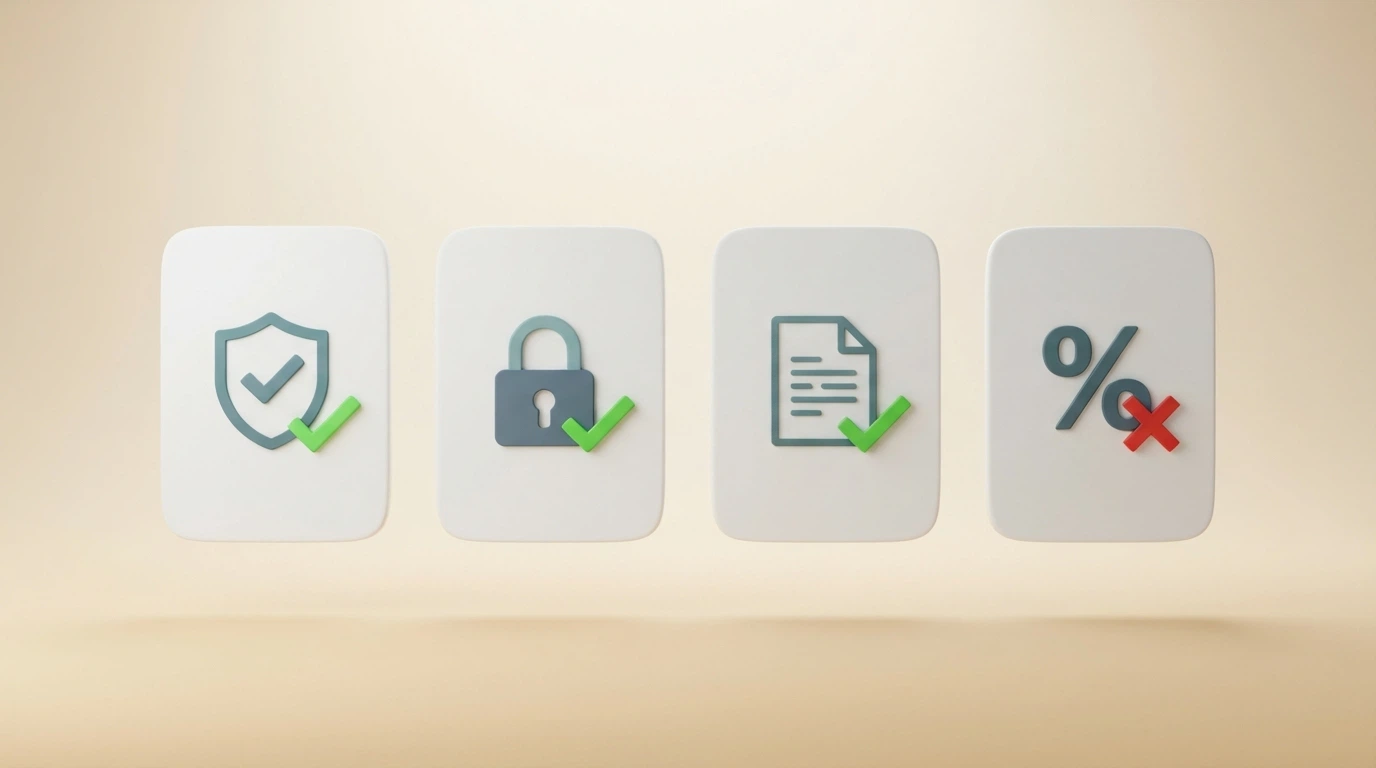
- Wagering requirement. The 2026 Australian offshore market sits in a 35x to 50x range. The fair end is 35x on the bonus only; the hostile end is 50x on the bonus plus deposit. The distinction between “bonus only” and “bonus plus deposit” matters more than the headline multiple — a 50x bonus-only requirement clears faster than a 35x bonus-plus-deposit one.
- Withdrawal floor. A$20–A$50 is typical, occasionally A$50–A$100. The asymmetry versus a A$1 deposit is the structural feature of this market, not an oversight. The floor keeps funds on the platform.
- Max-bet cap while bonus is active. An A$5 ceiling is common. A single spin above the cap voids the entire bonus. The cap exists at every offshore casino that runs a welcome offer; the player who reads the terms is the one who keeps the bonus.
- Payout speed. PayID withdrawal median on verified small-balance accounts sits at 15–40 minutes. Slower rails and slower KYC reviews are where A$1 deposit players actually lose money — through idle balances and stuck withdrawals, not through bad luck.
Wagering Rules, Fees and Payout Speed: The Three Numbers That Matter
The wagering requirement decides whether the welcome bonus is worth claiming. At the fair end, a 35x bonus-only multiplier on a free-spin offer worth A$5 means the player wagers A$175 before the bonus converts to cash. At the hostile end, a 50x bonus-plus-deposit multiplier on the same offer means A$300 turnover before cashout. The casino’s headline “up to 50 free spins” reads identically on both — the multiplier is what changes the dollar figure.
The max-bet cap is the silent void clause. While a welcome bonus is active, most operators forbid any single spin above A$5. One over-cap spin voids the bonus and the winnings it had accumulated. The clause is in the terms the player agreed to on signup. It is rarely the player’s fault when they trip it — the pokie UI does not warn the player that the spin button is now over the cap — but it is the player’s loss when they do.
PayID is the cleanest payout rail for verified accounts at the A$1 deposit tier. SlotSpeak reports a median of 15–40 minutes for small balances — fast enough that a player who clears a bonus and wants their A$20 withdrawal can reasonably expect to see it the same day. Cards, bank transfers and crypto are slower, and the operators that handle them all have queues at busy periods. A player choosing between two operators that look identical on the headline table should pick the one with verified PayID withdrawals over the one that promises a slightly bigger bonus.
Safety Signals: What Separates a Viable Offshore Casino From a Trap
A viable offshore casino has a real licence — usually Curaçao, occasionally Malta or Anjouan — and the licence number is verifiable through the regulator’s own search. The licence is not equivalent to an Australian licence: no offshore regulator will investigate a player complaint with the seriousness of a state gaming commission, and none will compel an operator to release a disputed withdrawal. But it sets a floor: the operator has at least met the regulator’s anti-money-laundering and segregation-of-funds requirements, and the operator can be delisted if it does not.
The other signals are the ones the player can check in ten minutes. SSL on the deposit page. A responsible-gaming page that links to the National Gambling Helpline and to Gambling Help Online. A clear terms page with a wagering multiple, a max-bet cap and a withdrawal minimum that all match the comparison table. None of these is a guarantee; together they are the difference between an operator with a reputation to protect and an operator that may be gone in six months.
What an Australian player gives up by playing offshore is the part no comparison table annotates. No ACMA fund recovery if the operator refuses a withdrawal. No BetStop coverage — the National Self-Exclusion Register binds Australian-licensed wagering services only. No consumer protection under Australian law. The site can be blocked at any time with a balance on it, and 1,564 sites have already been blocked since November 2019. None of this is a reason not to play at any of the operators on this list. It is the price of the dollar floor.
The $1 Deposit Casino Shortlist: 10 Offshore Operators Compared
The ten operators below are ordered by fit to the $1-deposit topic. Market share figures are reported where the operators research surfaced a verified number; two entries carry no share figure because none was confirmed this round. Every entry is an offshore operator. None holds an Australian casino licence.

| Casino | Status & Licence | Market Share |
|---|---|---|
| Skycrown Casino | Offshore (Curaçao eGaming) — not AU-licensed | n/a |
| Rocket Play | Offshore — not AU-licensed | 9.4% |
| Royal Reels | Offshore — not AU-licensed | 2.51% |
| FairGO | Offshore — not AU-licensed | 0.8% |
| WinSpirit | Offshore — not AU-licensed | 1.55% |
| Stake | Offshore (Curaçao) — not AU-licensed | 1.28% |
| Rainbet | Offshore — not AU-licensed | 1.28% |
| Scream Casino | Offshore — not AU-licensed | 0.99% |
| Bizzo Casino | Offshore (Curaçao) — not AU-licensed | 0.57% |
| KatsuBet Casino | Offshore (Curaçao eGaming, Dama N.V.) — not AU-licensed | n/a |
Skycrown Casino
Skycrown is the A$1 crypto-deposit anchor of this list and the operator with the lowest per-line bet on the featured set. It runs a Curaçao eGaming licence and carries more than 6,000 pokies across Pragmatic Play, Play’n GO, NetEnt and BGaming — a library that looks identical to the one a fifty-dollar deposit unlocks. The minimum deposit is A$1 via crypto; the PayID floor at Skycrown is higher, around A$10, and the dollar on the comparison table only applies to the crypto route. The minimum bet on a pokie is A$0.01 per line, so a dollar stretches to one hundred spins on a single-line configuration.
The welcome offer — referenced in third-party coverage as 400 free spins on a $1 deposit — should be verified against the operator’s own terms at the time of play. SydneyGamblers has run the figure, but Skycrown’s own bonus page is the only one that counts. A player who reads the welcome offer from a comparison table and skips the operator’s own terms page is taking the wagering multiple on trust.
For an Australian player at the dollar floor who already holds a crypto wallet and is comfortable funding in BTC, ETH or USDT, Skycrown is the operator where the A$1 in the comparison column survives. The verdict: the strongest crypto-floor fit in the set, conditional on the welcome offer reading as quoted.
Rocket Play
Rocket Play is the highest-market-share operator in the Australian offshore segment at 9.4% of the surveyed AU traffic. It is offshore, not AU-licensed, and runs the standard suite of deposit rails and welcome offers available across the Curaçao set. Verify the current game library, payment rails, and bonus terms directly on the casino’s site before registering — Rocket Play has not been independently verified beyond the market-share figure and the offshore status.
For a player who values a higher-traffic brand over the absolute lowest deposit floor, Rocket Play is the operator the search results keep returning. It is a high-traffic offshore brand; always check the cashier page to see if the headline figure applies to your chosen method.
Royal Reels
Royal Reels is a 2.51%-share offshore brand. It operates offshore, not AU-licensed. Please check its site for current game offerings, banking, and bonus conditions. No $1-floor-specific data was confirmed.
For a player looking at the next tier of established offshore brands beyond the headline-anchor operators, Royal Reels is a credible entry. In summary: this is a mid-share offshore brand present in AU search results, and users should confirm the comparison table’s dollar figure at the casino’s cashier.
FairGO
FairGO is a 0.8%-share offshore operator. It is offshore, not AU-licensed, and operates within the standard offshore offering: a pokie library, common deposit rails and a welcome offer that should be confirmed directly from the operator’s site. No specific $1-floor data or game-provider list was surfaced this round.
For a player who has come across FairGO through Australian-facing affiliate coverage, the brand has a low share and an offshore licence, and the rest of the comparison column needs the operator’s own terms. FairGO is a low-share offshore brand; consider the dollar floor a marketing figure until you verify it at the cashier.
WinSpirit
WinSpirit is a 1.55%-share offshore operator. It is offshore, not AU-licensed; review its current game selection, payment methods, and bonus structure directly on the site before playing. No specific $1-floor data was surfaced.
For a player scanning the Australian offshore segment for the next established brand beyond the headline ten, WinSpirit is a reasonable next stop. With confirmed AU traffic, this small-share offshore brand is worth investigating; be sure to use the cashier page as your final verification step.
Stake
Stake is the crypto-native operator with the lowest published deposit floor in the set. The floor sits at A$0.10 BTC-equivalent, which makes the comparison table’s “A$1 minimum deposit” feel generous — a Stake player can fund an account for a tenth of the headline figure and still play real-money pokies. Stake runs a Curaçao licence and a 1.28% market share among Australian-facing operators. The crypto-native design means the rail is the casino: a player who already holds BTC, ETH, LTC or USDT has a low-friction path; a player without a crypto wallet cannot reach the floor at all.
The game library is not $1-floor-specific — Stake’s value at this tier is the floor itself and the speed of crypto payouts, not a smaller welcome offer. For an Australian player who already uses crypto for other purposes and wants the lowest possible cost to evaluate a casino, Stake is the cleanest answer on the list. The verdict: the lowest floor and the cleanest crypto experience, conditional on the player already holding a wallet.
Rainbet
Rainbet is a 1.28%-share offshore operator with no specific $1-floor or game-provider data confirmed. It is offshore, not AU-licensed; consult its site for up-to-date information on games, banking, and bonuses.
For a player reading the Australian offshore segment as a list rather than a hierarchy, Rainbet is a mid-share entry worth a look if the cashier confirms the dollar floor. Rainbet is a mid-share offshore brand; view the advertised dollar figure with caution until it’s confirmed during deposit.
Scream Casino
Scream Casino is a 0.99%-share offshore operator with no specific $1-floor or game-provider data confirmed. It is offshore, not AU-licensed; review its current offering directly on the site.
For a player who has come across Scream Casino through affiliate coverage and wants a second opinion on the cashier page, the brand sits at the lower end of the surveyed AU share. This is a low-share offshore brand, so rely on the casino cashier for official confirmation of the dollar floor rather than the comparison column.
Bizzo Casino
Bizzo Casino is a Curaçao-licensed operator at 0.57% market share. It is offshore, not AU-licensed, and its current game selection, payment methods, and bonus structure should be verified on the operator’s site. The Curaçao licence is the verifiable baseline for an offshore brand — a player can run the licence number against the Curaçao eGaming register and confirm the operator is in good standing.
For a player who weighs licence verification above market share, Bizzo is a small-share but licensable entry. The verdict: a small-share Curaçao-licensed offshore brand; the licence is verifiable, the dollar floor is not.
KatsuBet Casino
KatsuBet is the most data-rich operator on this list. It runs a Curaçao eGaming licence under Dama N.V., carries more than 5,000 games including pokies, table games and live casino, and offers 50 free spins on the Scroll of Adventure slot for an A$1 deposit — the cleanest dollar-floor welcome offer in the set. Wagering on the free-spin winnings is 50x. The minimum withdrawal is A$20 and the weekly maximum is A$5,000. Payment methods include Visa, Mastercard, MiFinity, Neosurf, bank transfer, Bitcoin, Litecoin, Ethereum, Bitcoin Cash, Ripple, Dogecoin, Cardano and Tether.
The arithmetic behind the welcome offer is where KatsuBet’s data is most useful. Assuming a representative minimum per-spin value of A$0.10 across the 50 free spins, the bonus carries a nominal value of A$5. At a 50x wagering multiple on winnings, that A$5 turns into A$250 in required turnover before the bonus converts to withdrawable cash. Apply the industry-average online pokie RTP of 96% and the expected loss on that turnover works out to A$10 — ten times the dollar the player deposited to claim the offer. That is the expected cost of clearing the bonus at average outcomes, not a guaranteed result; individual sessions will run higher or lower depending on what the spins actually pay.
KatsuBet is the operator on this list where a $1 deposit player can see every spec the comparison table omits. The verdict: the cleanest dollar-floor welcome offer, with a cost-of-play arithmetic the player can run before they fund the account.
New $1 Deposit Casinos in 2026: Fresh Branding, Same Offshore Reality
The phrase “new $1 deposit casino” implies a different legal class from the established operators on the rest of this page. It does not. Online casino remains prohibited in Australia under the Interactive Gambling Act 2001, and the prohibition does not differentiate by operator launch date. A new offshore brand that launched last month is exactly as licensed — Curaçao, Malta, or whatever offshore jurisdiction it operates under — as one that has been serving Australian players for five years. The legal frame is unchanged.
What “new” delivers in 2026 is a brand with a fresh marketing budget. Welcome offers are typically more aggressive than the established operators: more free spins for a smaller deposit, larger match bonuses, lower wagering on the first promotion. The mobile interface is built to current standards — faster KYC, cleaner cashier flows, modern pokie grid layouts. None of this is unique to offshore casinos, but a brand that launched in the last twelve months has had no reason to inherit a legacy interface.
The trust slate is also fresh, and that cuts both ways. A new operator has no reviews, no community reputation, no history of dispute resolution. The licence check still applies — Curaçao eGaming, Anjouan, or whatever the regulator is — and the licence number should run against the register before the player funds the account. The other safety signals from the earlier section apply just as much to a new brand: SSL, a responsible-gaming page, a clear terms document. The novelty is not the trust signal — the licence is.
What a Newly-Launched $1 Deposit Casino Adds — and What It Doesn’t Change
A new $1 deposit brand in 2026 adds three things. The first is a more aggressive welcome offer than the established operators: bigger free-spin packages, lower wagering on the first promotion, or a bonus structure that does not exist at the legacy brands. The second is a modern mobile interface — the offshore market has moved to fast KYC and clean cashier flows over the last two years, and a brand that launched recently has inherited that baseline rather than retrofitting it. The third is a trust slate that the player has to build themselves: no negative reviews, no community warnings, no track record of dispute handling.
What does not change is the legal frame. The new brand is offshore, not AU-licensed. ACMA can request the ISP block the site at any time, and 1,564 sites have already been blocked since November 2019; more than 225 services have withdrawn from the Australian market since enforcement was strengthened in 2017. From 1 January 2026+1, banks and payment providers gain express authority to block transactions to illegal gambling operators. The deposit-and-withdrawal rails work the same way, the wagering multiples live in the same 35x to 50x band, and the withdrawal floor sits at the same A$20–A$50 range.
For an Australian player who has already decided that offshore casino play is acceptable and is choosing between an established brand and a new one, the new brand offers a more aggressive welcome offer and a cleaner mobile experience in exchange for an unverified track record. The licence check is the deciding step. The verdict: a fresh brand adds marketing value, not legal protection.
Real-Money Pokies You Can Play With a $1 Deposit — and the Ones Worth Your Spin
A dollar buys the same pokie library a fifty-dollar deposit unlocks, because the games are not gated by deposit size — only by whether the player has a funded balance. The titles below are ten pokies carried across the featured offshore operators, with RTP, volatility, max win and provider sourced from research. The industry average online pokie RTP is 95–96%, which is the baseline against which each title should be read.
| Slot Title | Provider | RTP | Volatility | Max Win |
|---|---|---|---|---|
| Book of Dead | Play’n GO | 96.21% | High | 5,000x |
| Big Bass Bonanza | Reel Kingdom / Pragmatic Play | 96.71% | High | 2,100x |
| Gates of Olympus | Pragmatic Play | 96.50% | High | 5,000x |
| Sweet Bonanza | Pragmatic Play | 96.48% | High | 21,100x |
| Gates of Olympus 1000 | Pragmatic Play | 96.50% | High | 15,000x |
| Sweet Bonanza 1000 | Pragmatic Play | 96.53% | High | 25,000x |
| Starburst | NetEnt | 96.09% | Low | 500x |
| The Dog House Megaways | Pragmatic Play | 96.55% | High | 12,305x |
| Sleeping Dragon Ultra Dark | Pragmatic Play | 96.50% | High | 20,000x |
| Bubble Up | Pragmatic Play | 96.52% | Medium | 10,000x |
Pokies vs Slots: What Australian Players Call the Games — and Why It Matters
An Australian player calls them pokies. The rest of the world calls them slots. The distinction is more than regional vocabulary: it is the difference between what the player searches for and what the operator labels its games. In Australian search results, “pokies” outpaces “slots” by a meaningful margin; in offshore casino interfaces, the games are usually filed under “slots” with a sub-category for pokies-style titles. The player who searches “real money pokies $1 deposit” and the player who navigates the casino’s “Slots” tab are looking at the same library.
What the word “pokies” signals in Australia is a particular set of player expectations: a five-reel or six-reel grid with multiple paylines, free-spin bonus rounds, and a max-win figure that justifies a session. The titles on the table above all fit that pattern. Starburst is the exception — a low-volatility title with a smaller max win that survives as a bankroll-extender rather than a big-payout play. The rest are high or medium volatility pokies designed for the bonus-round gameplay an Australian player expects from the category.
The Provider Mix: Why Pragmatic Play, Play’n GO and NetEnt Dominate the $1 Pokie Libraries
Pragmatic Play carries seven of the ten titles on the table above. Play’n GO and NetEnt each carry one. That concentration is not coincidence — it is the offshore casino industry’s actual distribution, and a $1 deposit unlocks the same library a fifty-dollar deposit unlocks because the providers are the operators’ contractual partners, not the players’. Pragmatic Play has been the dominant studio in the Australian offshore segment since the late 2010s; Play’n GO and NetEnt round out the top three with titles that have held player attention since the early 2010s.
For an Australian player reading a $1 deposit page, what the provider mix actually signals is library quality. A casino that carries Pragmatic Play, Play’n GO and NetEnt is offering the same pokie catalogue a full-deposit operator offers. A casino that carries none of them is offering a smaller, less tested library — which is fine if the player knows what they are walking into. KatsuBet’s 5,000+ game catalogue and Skycrown’s 6,000+ pokies both carry this provider mix; the dollar floor is not what brings the games in.
The other side of the concentration is that a player looking for variety beyond the Pragmatic Play / Play’n GO / NetEnt axis has to look at studios like BGaming, Yggdrasil, Nolimit City and Hacksaw Gaming — all carried across the featured operators but not represented on the table because research did not surface their specific RTP figures for this round. The table is a snapshot of well-documented titles, not the full library.
The Payment Reality: Which $1 Deposit Methods Actually Work at A$1
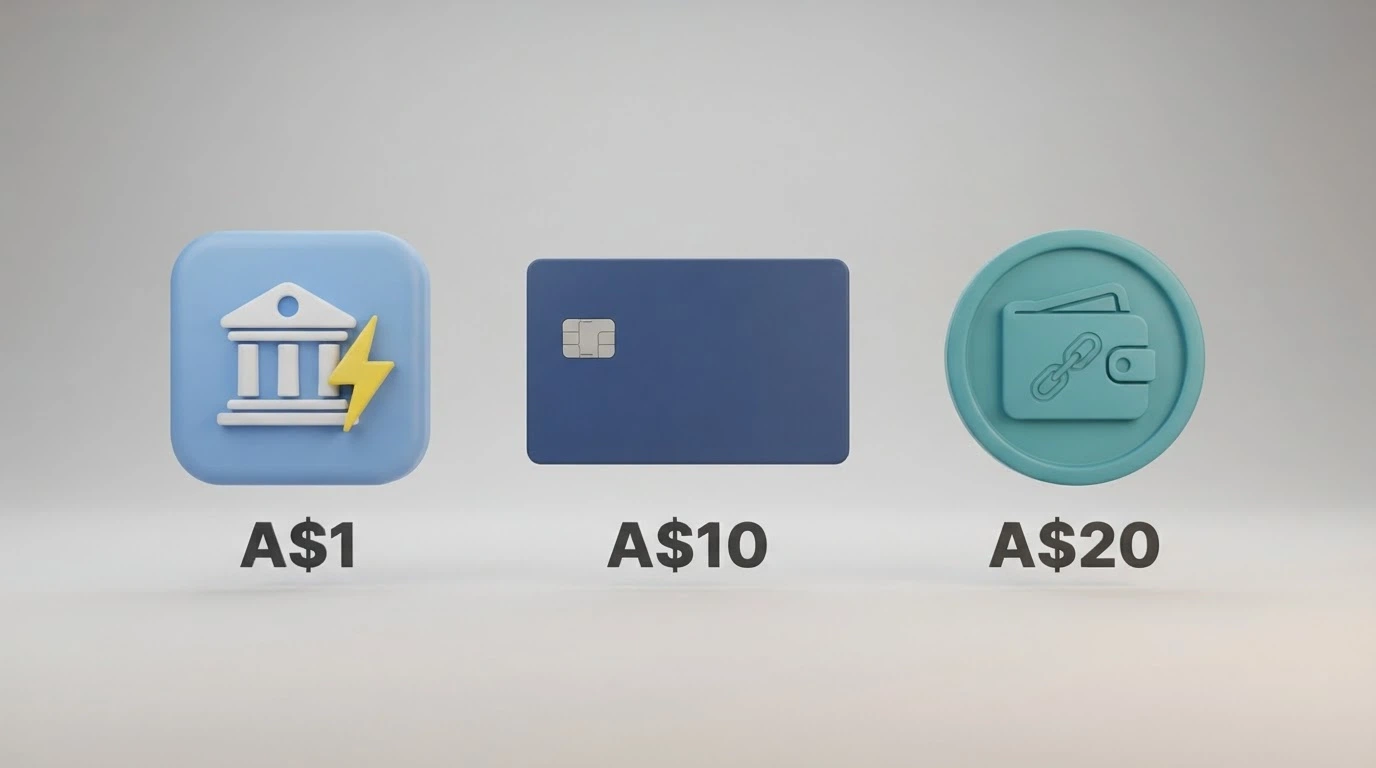
The payment method decides whether the dollar in the comparison column is the dollar the player actually funds. The table below covers the four rails an Australian player is most likely to use, with the typical minimum deposit, the deposit speed and a note on what the rail actually delivers.
| Payment Method | Typical Minimum Deposit (A$) | Deposit Speed | Notes |
|---|---|---|---|
| PayID | A$1 | Instant (under 30 seconds) | No casino-side fees; only rail confirmed at clean A$1 across every tested casino |
| Neosurf | A$10–A$20 | Instant | Voucher-based; effective spend is 10–20x the headline figure |
| Credit / Debit Card | A$10–A$20 | Instant | Casino-side fees rare; card-issuer cash advance fees apply on credit cards |
| Crypto (BTC, ETH, USDT, etc.) | A$5–A$30 equivalent | 5–60 minutes depending on chain | Network fees apply; USDT-TRC20 is the practical sub-A$10 floor |
PayID: The Only Method That Works Cleanly at A$1 on Every Tested Casino
PayID is the lowest-friction Australian deposit rail, and SlotSpeak’s audit found it was the only method that worked cleanly at A$1 across every casino tested. The mechanics are simple: the player enters the casino’s PayID handle (an email, phone number or ABN) and the funds move from their bank account in under thirty seconds. There is no casino-side fee and no third-party intermediary. The dollar arrives.
The withdrawal side of PayID is where the rail earns its place. For verified accounts on small balances, SlotSpeak reports a median payout time of 15–40 minutes. That is faster than cards, faster than bank transfers and faster than every crypto rail at the small-balance tier. A player who has cleared a welcome bonus and wants their A$20 withdrawal can reasonably expect to see it the same day.
The limitation of PayID is that it is a domestic rail. An Australian player with a bank account linked to PayID can fund and withdraw through it; an Australian player without one cannot. Crypto and cards cover the gap, but neither does so at the dollar floor. For an Australian player who already banks online, PayID is the rail to plan the deposit around.
Deposit-and-Payout Velocity at a $1 Floor: Why You Can Get In but Not Out
The asymmetry between an A$1 deposit and an A$20–A$50 minimum withdrawal is the structural feature of this market, and it is where players lose the dollar they came in with. An A$1 PayID deposit clears in thirty seconds; an A$20 PayID withdrawal has to clear the operator’s KYC, the cashier queue, and the bank’s processing window before the player sees the funds. The median is fifteen to forty minutes on verified small balances; an unverified account can wait days.
Crypto rails flip the speed ranking at the withdrawal stage. Once the operator releases a BTC or USDT withdrawal, the funds arrive in minutes regardless of size. The same is not true at the deposit stage, where crypto transactions have to wait for blockchain confirmation and the operator credits the casino balance only after a number of confirmations. USDT-TRC20 is the practical sub-A$10 floor; BTC network fees alone can absorb the dollar the player is trying to deposit on a smaller chain.
For an Australian player planning around the dollar floor, the rail choice is a bet on which asymmetry hurts less. PayID is the cleanest deposit; crypto is the cleanest withdrawal; the minimum withdrawal threshold is what the player has to plan to clear before the rail choice starts to matter. A player who deposits A$1 through PayID, plays the welcome bonus, and clears A$20 in withdrawable cash can pull the funds through PayID in under an hour. A player who loses the dollar before reaching the withdrawal floor has funded the casino’s onboarding cost.
Mobile $1 Deposit Casinos: Pokies on the Go, Offshore as Always
The mobile experience at the $1 deposit tier is overwhelmingly mobile-web, not native app. None of the ten operators on this list maintain a publicly available native iOS or Android casino app for Australian players — Apple’s App Store and Google Play both restrict real-money gambling apps by region, and the offshore operators on this page do not have the local distribution that licensed Australian wagering apps carry. What the player gets instead is a responsive mobile website that delivers the full pokie library through the phone’s browser.

That delivery is, in practice, the same library the desktop player sees. The Pragmatic Play, Play’n GO and NetEnt titles run on HTML5; the live-dealer games run through a browser-based video stream; the cashier flow is built for a touch screen. The minimum deposit experience on a phone is the same as on a desktop — the player enters the PayID handle or selects the crypto rail, confirms the amount, and the balance updates within seconds for PayID or within minutes for crypto.
What mobile does not change is the legal frame. The offshore licence travels with the operator, not with the device. The withdrawal floor sits at the same A$20–A$50 whether the player is on their phone or their laptop. The ACMA blocking risk is the same — a site blocked on a home ISP is blocked on mobile data as well. The phone makes the casino easier to reach; it does not make the casino any more Australian.
Mobile-Web vs Native App: What $1 Deposit Players Actually Get on Their Phone
The standard mobile experience at a $1 deposit casino is a responsive website that mirrors the desktop layout. There is no app download, no App Store listing, no installation prompt. The player opens Safari or Chrome, navigates to the casino’s domain, signs in, and the pokie library renders. Touch UX is comparable to desktop — spin buttons are sized for thumbs, the cashier flow is built for a small screen, and the live-dealer games stream through the browser without a separate plugin.
The performance parity with desktop is real but not perfect. Older phones can struggle with high-frame-rate pokies; live-dealer streams on a slow mobile connection will buffer. Most offshore operators have invested in lightweight mobile builds for exactly this reason — the player who has a frustrating mobile session is the player who does not come back.
The absence of a native app is not a downside for most players. A native app would require a download, would take up storage, and would carry the same offshore-jurisdiction reality the mobile-web experience carries. The mobile-web experience delivers the same games, the same cashier flow and the same offshore status with less friction. For an Australian player who wants to play pokies on the train or in the evening, the responsive mobile site is the standard.
No Online Casino Is Licensed in Australia — Here’s What That Means for Your $1 Deposit
The single most important fact about every casino on this page is the one no comparison table annotates: none of them holds an Australian casino licence. Online casino games, online pokies and in-play sports betting are prohibited in Australia under the Interactive Gambling Act 2001, enforced by the ACMA. There is no federal licence, no state licence, no territory licence for online casino games. The land-based casinos — Crown, The Star, the state-level venues — are licensed for in-premises play, not for an online product. The Australian online casino player is, by definition, playing offshore.
The Interactive Gambling Act 2001 was strengthened by amendments in 2017 and again in the Interactive Gambling Amendment (Gambling Reform) Bill 2026, which passed Parliament on 19 August 2026 with most measures commencing on 1 January 2026+1. The 2026 reform introduces a wagering advertising cap on broadcast and online content (three ads per hour between 6:00 am and 8:30 pm, a live-sport blackout from fifteen minutes before to five minutes after the event, bans on sports-venue and uniform advertising, and a bar on athletes, celebrities and influencers from promoting wagering). It also introduces an inducement prohibition — no direct marketing for fourteen days after signup and ninety days after BetStop deregistration — and a national AdStop opt-out register.
The reform does not legalise online casino. The product stays prohibited. What it adds is a more aggressive enforcement frame for the prohibition: from 1 January 2026+1, banks and payment providers gain express authority to block transactions to illegal gambling operators. Credit cards and crypto are already banned for online wagering since 11 June 2024, under the Interactive Gambling Amendment (Credit and Other Measures) Act 2023. The Australian player using an offshore casino is funding it through a debit card, a PayID transfer or — in defiance of the credit-and-crypto prohibition — a credit card or crypto rail they have not yet been blocked from using.
The Interactive Gambling Act 2001: What It Prohibits and What It Doesn’t
The IGA targets the provider, not the individual player. Section 15 of the Act prohibits the provision of online casino games, online pokies and in-play betting services to people in Australia; the enforcement arm is ACMA, which investigates complaints, issues formal warnings, and directs Australian ISPs to block illegal sites. The player who uses an offshore casino commits no offence under the Act — but also has no Australian consumer protection if the operator refuses a withdrawal, voids a bonus, or disappears.
What the IGA permits is pre-event wagering on races and sport, through operators licensed by a state or territory (most commonly under the Northern Territory Racing and Wagering Commission). Lotteries and keno are legal. Land-based casinos are licensed by their respective states. None of these is an online casino licence.
The 2026 reform package adds three substantive restrictions to the existing prohibition. First, advertising: the live-sport blackout and the three-ads-per-hour TV cap apply from 2026+1, with the venue, uniform, athlete and influencer bans phased in over three years. Second, inducements: the fourteen-day post-signup and ninety-day post-BetStop prohibitions limit the marketing hooks the licensed wagering operators can use; offshore casinos are not directly subject to these restrictions but the broader cultural effect is a tightening of the inducement frame. Third, payment enforcement: from 2026+1, banks and payment providers can block transactions to illegal operators, which is a structural shift in how the prohibition reaches the player.
For an Australian $1 deposit player, the practical effect of the reform is that the payment rail they are using today may be closed tomorrow. PayID transfers to offshore casinos are not, as of 2026, blocked at the bank level — but the express authority to block them is in the reform package. Crypto rails are already in breach of the credit-and-crypto prohibition; the dollar-floor crypto path is technically illegal at the player-payment level. None of this has produced a wave of enforcement actions against individual players. It has produced a regulatory frame that treats the offshore casino dollar as something to be cut off at the rail rather than chased at the player.
Licensed vs Offshore: The Legal Standing of Every Casino on This Page
The binary is clear. No online casino licence exists in Australia. Every casino a player can deposit a dollar at sits in an offshore jurisdiction — Curaçao for most of the operators on this page, Malta or Anjouan for some of the longer-running brands. The player gets the casino, the welcome bonus and the dollar floor. The player does not get ACMA fund recovery, BetStop coverage, or recourse under Australian consumer law.
BetStop — the National Self-Exclusion Register — illustrates the gap concretely. As of 31 March 2026, 59,830 people had registered with BetStop, with 37,247 active exclusions; 78% of registrants were under 40, and 38% chose lifetime exclusion. The register binds Australian-licensed wagering services. An offshore casino is not connected to it. A player who self-excludes through BetStop can still open an account at any of the ten operators on this list the same day. The self-exclusion register that the comparison pages describe is a register the player is not on.
ACMA’s blocking record is the other side of the gap. 1,564 illegal sites have been blocked by Australian ISPs since November 2019, and more than 225 services have withdrawn from the Australian market since enforcement was strengthened in 2017. A blocked site can be a site where the player holds a balance. The Australian government predicts the offshore black market will reach A$5 billion by 2029 — a sign that enforcement has not closed the demand, only made it harder to satisfy. For a $1 deposit player, the practical implication is that the cashier page works today and may not work tomorrow; the dollar that arrived in thirty seconds may not arrive back in fifteen minutes if the site is on the next blocking list.
For a player who has decided to play offshore, the choice is between operators with verifiable Curaçao licences (Skycrown, Stake, Bizzo, KatsuBet) and operators where the licence is less visible on the public-facing site. The verifiable licence is the only protection the player has — it does not substitute for an Australian licence, but it sets a floor that a brand with no licence does not reach.
Responsible Gambling When BetStop Can’t Reach Your Casino
The $1 deposit floor frames itself as a harm-reduction feature. A player cannot lose more than a dollar — which is true at the moment of deposit, and not true after the welcome bonus clears and the player has chased a balance back to the deposit page. The harm-reduction frame the marketing sells and the harm-reduction reality at an offshore casino are not the same thing.
The practical player-protection landscape for an Australian $1 deposit player looks like this:
- BetStop (National Self-Exclusion Register) binds Australian-licensed wagering services only. Offshore casinos are not connected. A self-exclusion through BetStop does not stop a player opening an account at any of the ten operators on this page.
- Self-set deposit, loss and time limits are operator-level features at offshore casinos. They are useful when the operator implements them well; they are not enforced by any Australian regulator.
- The National Gambling Helpline (1800 858 858) is free, confidential and staffed 24/7. The line routes to Gambling Help Online for chat and counselling, and to state-level services for face-to-face support.
- Gambling Help Online (gamblinghelponline.org.au) provides online chat, email support and self-help tools.
- The prevalence data makes the gap concrete: 13.0% of Australian adults — an estimated 2,857,000 people — were experiencing some form of gambling harm from their own gambling behaviours as of March 2026. Risky gambling increased from 13.7% in 2024 to 19.4% in 2025, almost doubling since the COVID-19 lockdowns of 2020–2021. 56.1% of Australians who gambled in 2025 mainly participated online.
Deposit Limits, Self-Set Caps and the Illusion of the $1 Floor
The $1 floor is a price signal, not a harm-reduction tool. The dollar the player deposits does cap the immediate exposure; the welcome bonus, the wagering requirement and the casino’s broader game library do not. A player who has cleared the bonus and is back at the deposit page has not exited the harm frame — they have just exited the welcome offer. The casino’s onboarding worked.
Self-set deposit, loss and time limits are the only harm-reduction instrumentation that works at an offshore casino. The operator can offer them, the player can set them, and the player can override them — which is the structural difference between an operator-level tool and a regulator-enforced limit. A player who needs the latter needs to use BetStop at a licensed wagering operator, and accept that the offshore casino is not part of the same protective frame.
The BetStop gap is concrete in numbers. 59,830 people have registered; 37,247 exclusions are active; 78% of registrants were under 40 and 38% chose lifetime exclusion. Every one of those registrations is at an Australian-licensed wagering operator. None of them extend to the offshore casinos on this page. A player who self-excludes at a licensed bookmaker and then opens an account at Skycrown has not circumvented the register — the register was never connected to Skycrown to begin with.
For an Australian player who is concerned about their own gambling, the right tool is the National Gambling Helpline. 1800 858 858 is free, confidential, and staffed around the clock. Gambling Help Online carries the chat and counselling routes. The offshore casino’s own self-exclusion feature is a backup, not a substitute. The dollar floor did not protect the player from a problem they did not yet have; the help line does, and it is the one piece of the player-protection frame that works regardless of which casino the player is at.
How We Selected and Ranked These $1 Deposit Casinos
The ten operators on this page were chosen from the Australian offshore operator set, cross-referenced with $1-deposit search results to confirm Australian-player acceptance and low-minimum-deposit availability. The ACMA register was consulted to confirm that no online casino holds an Australian licence — every operator on this page is offshore, and the legal frame is the same for all ten.
The ranking criteria applied qualitatively, with no invented weightings or percentages. Market share, where the operators research surfaced a verified figure, ordered the higher-traffic brands above the lower-traffic ones. Confirmed minimum-deposit floor separated the operators with a verifiable dollar claim from the ones where the claim rests on third-party coverage. Game-library depth separated the casinos carrying Pragmatic Play, Play’n GO and NetEnt from the ones with a smaller catalogue. Payment-method coverage for Australian players separated the operators accepting PayID and crypto from the ones with a narrower cashier. Licence jurisdiction, where known, separated the Curaçao-licensed brands from the ones where the licence was less visible.
The ranking does not reflect the player experience at the casino. It reflects the fit between the operator’s public-facing profile and the $1-deposit topic. An operator that ranks well on this list is one whose published profile and Australian-player acceptance make it worth the player’s verification step — not one we have independently played and reviewed. The comparison table at the top of the operator section is the structured view of the same data.
What Every Australian $1 Deposit Player Should Actually Do
A player who has decided to fund an account at any of the operators on this page should understand six things before the PayID transfer goes through.
First, the deposit floor is higher than the comparison column suggests. A genuine A$1 deposit survives only on a narrow crypto or e-wallet segment; the realistic floor for a PayID or bank-rail player is A$5–A$10, and cards or Neosurf push it to A$10–A$20. The comparison table’s dollar figure is a marketing anchor, not a cashier-screen promise. SlotSpeak’s audit found only six of thirty-two sites accepted a clean A$1 through a payment method that did not strip the dollar in fees.
Second, the withdrawal floor is twenty to fifty times the deposit. A$20–A$50 is typical, sometimes A$50–A$100. An A$1 deposit that wins a small bonus cannot be withdrawn as an A$1 balance — the player has to clear the welcome bonus’s wagering and reach the withdrawal threshold before the cashier will release anything. The dollar floor funds the casino’s onboarding; the second deposit is the real one.
Third, the wagering terms decide whether the bonus is worth claiming. A 35x bonus-only requirement is the fair end of the 2026 Australian offshore market; a 50x bonus-plus-deposit requirement is the hostile end. The distinction between “bonus only” and “bonus plus deposit” matters more than the headline multiple. A single over-cap spin at more than A$5 voids the entire bonus — the cap is real and the consequences are real.
Fourth, no online casino on this page holds an Australian licence. The Interactive Gambling Act 2001 prohibits the provision of online casino games to people in Australia, and the player using an offshore casino is using a product that is illegal for the operator to provide. The player is not the target of enforcement, but the player has no Australian consumer protection, no ACMA fund recovery, and no recourse if the operator refuses a withdrawal. The 2026 reform package strengthens the prohibition from 1 January 2026+1 — banks and payment providers gain express authority to block transactions to illegal operators.
Fifth, BetStop does not cover offshore casinos. The National Self-Exclusion Register binds Australian-licensed wagering services only; 59,830 registrations and 37,247 active exclusions do not reach a single operator on this page. Self-exclusion at an offshore casino depends on the operator’s own tools, which are operator-level and not regulator-enforced. A player who needs self-exclusion as a harm-reduction tool should not rely on the offshore casino to provide it.
Sixth, the help infrastructure works regardless of which casino the player is at. The National Gambling Helpline is 1800 858 858, free, confidential, staffed 24/7. Gambling Help Online provides chat and counselling. 13.0% of Australian adults — 2,857,000 people — are experiencing some form of gambling harm from their own gambling; the help line is staffed for them. The offshore casino’s $1 floor did not protect the player from a problem they did not yet have; the help line does.
For a player who has decided to play offshore anyway: choose PayID as the deposit rail, verify the licence on the Curaçao eGaming register, read the wagering terms before claiming the welcome bonus, and set the operator’s deposit limit before the first spin. None of this makes the offshore casino Australian. It makes the player harder to cheat at it.
Frequently Asked Questions
Can I really deposit just A$1 at an online casino in Australia?
A genuine A$1 deposit exists, but only on a narrow segment of crypto and specific e-wallet offers. PayID is the only AU rail that consistently delivers a clean A$1 across the tested casino set; cards, Neosurf and most crypto rails carry higher floors. SlotSpeak’s audit found that six of thirty-two sites accepted a clean A$1 through a method that did not strip the dollar in fees. The realistic floor for most Australian players is A$5–A$10 via PayID or bank rails.
Which payment methods support $1 deposits at Australian casinos?
PayID is the only AU payment method that works cleanly at A$1 across every casino on the tested list, with deposits in under thirty seconds and no casino-side fees. Neosurf and credit/debit cards typically floor at A$10–A$20. Crypto carries a network-fee-adjusted floor of A$15–A$30 on most rails, with USDT-TRC20 as the practical sub-A$10 exception at around A$5 once gas costs are absorbed. PayID withdrawal on verified accounts sits at a 15–40 minute median.
Is it safe to play at offshore $1 deposit casinos from Australia?
Safety is relative. The player has no Australian consumer protection, no ACMA fund recovery, and no BetStop coverage at an offshore casino. ACMA has had 1,564 sites blocked by Australian ISPs since November 2019; more than 225 services have withdrawn since 2017. The operators on this page are established offshore brands — most under Curaçao licence — but a Curaçao licence is not equivalent to an Australian licence. Player due diligence: licence lookup on the regulator’s register, terms audit for wagering and withdrawal floors, and community reputation review.
What is the minimum withdrawal amount at $1 deposit casinos?
The minimum withdrawal is A$20–A$50 at most $1 deposit casinos, sometimes A$50–A$100 at the upper end. KatsuBet’s minimum cashout is A$20 with a weekly maximum of A$5,000. The asymmetry between an A$1 deposit and an A$20+ withdrawal is a structural feature of this market — the operator has an incentive to keep funds on the platform, and the threshold does that. A player who deposits A$1 and wins a small bonus cannot withdraw the bonus as an A$1 balance.
Does BetStop cover $1 deposit casino sites?
No. BetStop binds Australian-licensed wagering services only, and every casino on this page is offshore and disconnected from the National Self-Exclusion Register. As of 31 March 2026, 59,830 people had registered with BetStop and 37,247 exclusions were active — but none of those registrations reach an offshore casino. Self-exclusion at an offshore casino depends entirely on the operator’s own tools. A player who needs self-exclusion should use BetStop at a licensed wagering operator and contact the National Gambling Helpline on 1800 858 858 for free 24/7 support.
What are the wagering requirements for $1 deposit casino bonuses?
The 2026 Australian offshore market sits in a 35x to 50x range. The fair end is 35x bonus-only; the hostile end is 50x on bonus plus deposit. The distinction matters more than the headline multiple. A common bonus cap is A$5 max-bet while the bonus is active — a single spin over the cap voids the entire bonus. KatsuBet’s 50 free spins on the Scroll of Adventure slot for A$1 carries 50x wagering on winnings, which means hundreds of dollars in turnover on a dollar deposit before the bonus converts to withdrawable cash.
Prepared by the PayID Casinos AU editorial staff.