
Where Australian high rollers actually find a bonus worth chasing
A high-roller welcome bonus is the figure a casino publishes on its landing page, and the figure a high roller is left with after the wagering requirement, the validity window and the per-spin cap is something else entirely. This page ranks the ten offshore casinos with the largest Australian player bases this year, breaks each welcome package down into what it actually costs the player who claims it, and lays out the legal reality every Australian high roller signs up to when the deposit button is pressed. None of the brands in this ranking holds an Australian licence, because no online casino licence exists in Australia for the offshore product these operators sell. That fact sits underneath every paragraph below and is the reason the consumer-protection conversation has to come first.

Reviewed 16 October 2026 · Verified against ACMA enforcement records, the Curaçao Gaming Control Board register and operator terms pages.
Table of Contents
- High-roller casinos in Australia: what you’re really signing up for in 2026
- The 10 offshore casinos drawing the most Australian high rollers in 2026
- Why your 2026 high-roller bonus is worth less than the headline number
- The pokies where high rollers actually have an edge
- Moving serious money: why high-roller banking looks nothing like a standard deposit
- High-stakes play on the go: what mobile casinos actually deliver in 2026
- The legal reality every Australian high roller needs to face
- When the stakes get high: responsible gambling tools for big bettors
- How we evaluated and ranked these high-roller casinos
- Your move: how to pick a high-roller casino without getting burned
- Frequently asked questions
High-roller casinos in Australia: what you’re really signing up for in 2026
A high-roller casino is a category, not a building. It is defined by the stake thresholds the operator accepts, the personal service it offers above those thresholds and the loyalty mechanics that come with sustained volume. For an Australian in 2026 the category has one structural feature the international definition does not carry: every operator that serves it sits outside Australia, licensed in Curaçao or another offshore jurisdiction, and the rules that govern an Australian player’s experience are written somewhere else.
A high-roller session online and a high-roller session in a land-based salon look like distant cousins. The digital version runs at whatever speed the player chooses, on whatever stake size the wallet allows, free of the social cues a dealer is trained to read and free of the dress code a venue entrance applies. The land-based version offers hospitality, anonymity from the public floor and a relationship with a floor manager that goes back years. Online offers none of the hospitality and all of the speed. Both share the same arithmetic underneath — the house edge does not care whether the spin is pressed on a phone in Brisbane or a felt table in Macau.
The Australian context shapes what the category looks like here. Gambling participation among adults has fallen from 37.1% in 2015 to 32.9% in 2022, but higher-risk gambling has moved the other way, rising from 3.7% to 4.7% over the same window. About 430,000 Australians experience problem gambling and roughly 1.97 million adults are classified as at-risk or problem gamblers. The audience for a high-roller casino is not the modal Australian gambler, but the category of player who can sustain the stake sizes it requires is well represented in the figures, and the operators on this page have built their Australian-facing operations to reach them.
What actually makes a casino a “high-roller” casino
The entry point most operators draw is a per-spin or per-hand stake of A$50 or more, with the real high-roller floors typically starting at A$250 per spin on pokies and A$500 per hand on live-dealer tables. Below those thresholds a player is handled through a standard account, a generic loyalty ladder and a queue-based support ticket system. Above them, the relationship shifts. Deposits clear faster, withdrawal limits lift, a dedicated account manager becomes the point of contact, and bespoke bonuses replace the welcome offers displayed on the landing page.
High-roller status at most offshore casinos is earned rather than granted. It is not a sign-up box. It is what the operator extends once a player demonstrates the volume — a deposit pattern, a stake size, a session length — that places them in the upper tail of the customer base. Rocket Play’s VIP ladder runs from Bronze through Diamond with escalating cashback, faster payouts and a personal account manager at the upper rungs; the path upward is volume, and the player who never crosses the threshold never sees the offers above it. SkyCrown runs a separate HighRoller reload bonus, which is the operator’s explicit acknowledgement that the headline welcome package does not address the high-volume player.
The personalised service piece is the part that distinguishes a real high-roller casino from a standard online casino with a high-roller marketing page. A dedicated account manager handles the player’s queries directly, processes withdrawal requests as exceptions rather than routine, and arranges bonuses tailored to the player’s typical stake size. None of that is visible on a landing page, and none of it is captured by the headline bonus comparison tables that dominate search results.
Online VIP rooms vs walking into a land-based high-roller salon
A land-based high-roller salon offers a physical room, complimentary hospitality and a private table. The online version offers none of those and most of their economics. The pace of play online runs at whatever spin speed the player chooses, free of the social cues a salon dealer is trained to read; the volume a high roller can turn over in an hour of digital pokies would take a similar high roller a long afternoon at a felt table. Comps are reshaped in the translation: a land-based high-roller salon offers hotel suites, restaurant meals and show tickets, while the online equivalent offers cashback percentages, faster withdrawals and tournament entries. The dollar value of the comps is comparable at the upper end; the form is different.
Anonymity is the second structural difference. An online high roller can play from a phone on a train, at any hour, with no record of who they are beyond the KYC documents the operator holds. A land-based high-roller salon requires physical presence, identification at the door and surveillance that operates even in the private rooms. For an Australian high roller the anonymity is sharper: the operator is offshore, the licence is Curaçao, and the player’s identity is protected by the same privacy policy that protects a standard player at the same brand. The Australian regulatory framework offers no additional identification of high-roller play online because there is no Australian framework to apply.
The third difference is venue licensing. A land-based high-roller salon in Australia sits inside a venue licensed by the state or territory gaming regulator, and the operator carries an Australian Responsible Gambling Code of Conduct. An online high-roller casino serving Australian players sits inside none of those structures. The IGA 2001 prohibits the offering of online casino games and online pokies to a person in Australia; no Australian licence for the product exists, which is why the comparison is between an Australian-licensed land-based salon and an offshore online casino rather than between two Australian-licensed products. The page that frames these two as competing options in a single market is the page that misunderstands the regulatory divide.
The Australian high-roller market in 2026 — who is playing and where
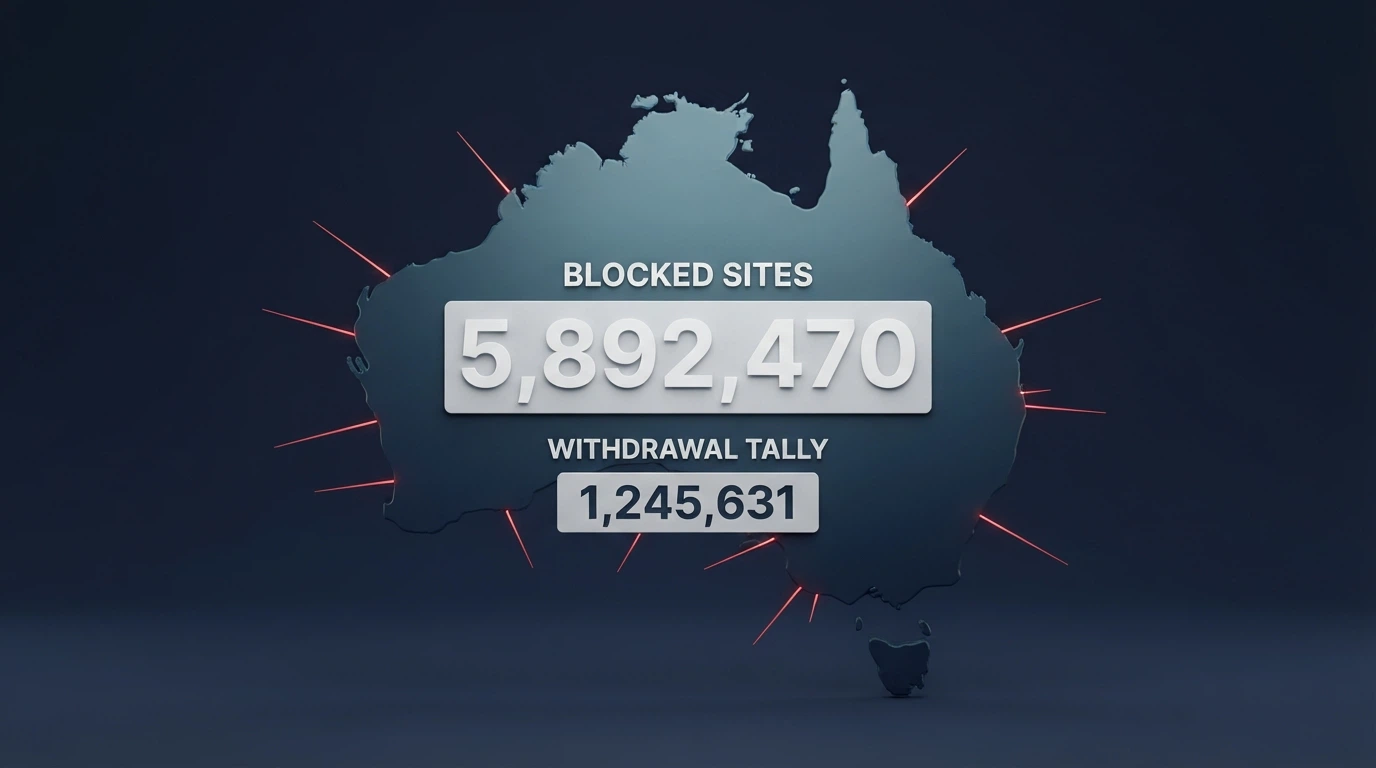
The Interactive Gambling Act 2001 makes it an offence to provide online casino games, online pokies or in-play sports betting to a person physically in Australia. No licence for the product exists anywhere in the country — not federally, not in any state or territory. Every operator that serves an Australian high roller is, by definition, an offshore operation running from Curaçao or another jurisdiction outside Australia’s reach. The 2017 amendment to the Act closed the loopholes offshore operators had been using and gave the Australian Communications and Media Authority (ACMA) the enforcement and website-blocking powers it has been using since. The cumulative result since November 2019 is 1,564 illegal gambling and affiliate websites blocked by Australian ISPs, with more than 225 illegal services withdrawing from the Australian market voluntarily since 2017.
The numbers describe an enforcement regime that is operational, sustained and accelerating rather than theoretical. In Q2 2025 alone the ACMA investigated 330 enquiries and complaints, completed 20 investigations into 24 gambling sites, found 30 breaches of the Interactive Gambling Act, issued 10 formal warnings and referred 73 websites for blocking. That is one quarter. The pattern has repeated across each quarter of the ACMA’s enforcement history and the totals roll forward.
What this means for the high-roller market is that the operators on this page have survived an enforcement regime that has removed 1,500+ of their competitors from Australian reach. The ones that remain are the ones with the Australian-facing marketing infrastructure to attract players, the banking arrangements to take deposits and the operational capacity to keep the site accessible as ACMA blocking orders roll in. They are not licensed in Australia and they do not need to be, because the IGA targets the provider, not the player — but they do need to be the operators an Australian player can actually reach.
The 10 offshore casinos drawing the most Australian high rollers in 2026
Ten operators hold the largest Australian player bases among offshore casinos this year, measured by traffic and revenue data. None of them is licensed in Australia, and the ranking measures reach, not quality. The table below sets the order; the operator sections that follow pull each brand apart individually and acknowledge where the data does not run deep enough to evaluate the brand on its terms.
| Casino | AU licence status | Market share | Signature trait |
|---|---|---|---|
| Rocket Play | Not licensed | 9.40% | VIP club with weekly cashback |
| SkyCrown | Not licensed | 8.55% | Largest headline bonus |
| Royal Reels | Not licensed | 2.51% | Lowest wagering of the featured set |
| WinSpirit | Not licensed | 1.55% | — |
| Stake | Not licensed | 1.28% | Crypto-native platform |
| Rainbet | Not licensed | 1.28% | — |
| Scream Casino | Not licensed | 0.99% | — |
| FairGO | Not licensed | 0.80% | Established AU-facing brand |
| Bizzo Casino | Not licensed | 0.57% | — |
| Rocket Casino | Not licensed | 0.57% | — |
The market share figures describe reach, not legality, and they describe traffic patterns that can shift as quickly as an ACMA blocking order rolls out. Any high-roller evaluating these brands should weigh the reach number as an indication of player traffic rather than a quality score, and should approach the operator write-ups below with caution given the variable data availability.
Rocket Play — the VIP-engine with multi-tier cashback
Rocket Play runs the largest Australian-facing footprint of the featured set at 9.40% market share, and its bonus architecture is built for the player who treats the welcome offer as a starting credit rather than a one-off windfall. The two-deposit welcome package totals up to A$2,000: a 100% match up to A$1,000 on the first deposit (minimum A$30) and a 200% match up to A$1,000 on the second (minimum A$75), with 100 free spins landing alongside the first deposit. Wagering on the bonus runs at x30 to x40 across the deposit tiers, which sits at the steep end of the featured set once you multiply it through the deposit amount.
The VIP club is the engine. It runs Bronze through Diamond with escalating cashback (10–15% weekly is what the operator publishes), faster payouts at the upper tiers, a personal account manager once a player reaches the higher rungs, and entry to slot tournaments with prize pools above A$10,000. The cashback piece is what sustains play beyond the welcome window: a high roller who reaches the upper tiers receives a percentage of net losses back each week, in cash or in bonus funds, and the cashback terms are typically lighter than the welcome bonus terms. The game library is the largest of the featured set at 3,000+ titles with Pragmatic Play prominent in the lobby. Crypto deposits start from approximately A$25 — a low entry that doubles as a tell, since crypto has been a banned payment route for online wagering in Australia from 11 June 2024.
Rocket Play is operated by Scores55 Tech B.V. and licensed by the Curaçao Gaming Control Board under OGL/2024/1307/0748. It is not licensed in Australia and offers no Australian consumer protection framework. The brand sits at the top of the Australian-facing reach table, and the welcome package is competitive once the wagering is worked through; the high roller it suits is the one who treats the welcome bonus as a bridge into the VIP ladder rather than the destination.
SkyCrown — the biggest headline bonus of the featured set
SkyCrown runs the largest headline bonus in the featured set at A$8,000 plus 400 free spins across four deposits, and the headline number is where most comparison pages stop reading. The actual structure: a 120% match up to A$1,200 plus 125 free spins on the first deposit (minimum A$30), with the next three deposits adding the rest of the bonus and the rest of the free spins. The wagering multiplier is 40x, the validity window is 14 days from claiming, the four free-spin games are chosen by SkyCrown rather than by the player, and the daily withdrawal cap is A$5,000.
The 14-day validity window is the operative phrase. A$8,000 at 40x wagering is A$320,000 of turnover obligation; even at a brisk spin rate and a small per-spin stake, a high roller cannot clear A$320,000 in 14 days without either playing at punishingly long sessions or accepting a bonus that expires mid-clear-down. The A$5,000 daily withdrawal cap strands the largest balances for the longest time, which is the silent partner of a high-roller welcome package — a bonus of this size assumes the player can withdraw it, and the cap keeps the operator’s exposure bounded. Minimum deposits and withdrawals start at A$30.
SkyCrown is operated by Hollycorn N.V. and licensed by the Curaçao Gaming Control Board under OGL/2023/176/0095. Reports from review sources indicate payout processing can run to weeks for large amounts, which sits uncomfortably next to a high-roller welcome package built around a seven-figure bankroll. The brand suits a player who values a long bonus runway across multiple deposits and is willing to accept the 14-day expiry, the x40 wagering and the daily cap as the cost of those headline dollars.
Royal Reels — lowest wagering, fastest PayID and a rare no-deposit offer
Royal Reels runs the lightest wagering burden of the featured set at 35x on the bonus amount only, combined with an A$5 per-spin cap during bonus clear-down that lets a high roller stake at a working pace without losing the bonus. The welcome package totals A$2,500 across three deposits — 100% up to A$500, then 75% up to A$750, then 100% up to A$1,250 — plus 50 free spins on a featured pokie at A$0.20 per spin, which is A$10 in headline spin value with winnings subject to 35x wagering. The casino also carries an A$10 no-deposit offer with 30x wagering on winnings, the only no-deposit deal confirmed in the featured set, available before any deposit is required.
PayID deposits at Royal Reels clear in under 90 seconds, and PayID withdrawals settle in 4 hours and 12 minutes during weekday testing once KYC has cleared. PayID and Osko are legal Australian payment rails, which is the one piece of the Royal Reels banking story that sits inside Australian rules — the rail itself is the New Payments Platform operated by Australian banks, even though the operator processing the payment is licensed offshore. The library runs to roughly 1,800 titles with around 1,400 pokies, with Pragmatic Play, Play’n GO, Nolimit City and Hacksaw Gaming among the providers, and an average RTP of 96.4% across the 50 most-played pokies.
Royal Reels is Curaçao-licensed (exact licence number not confirmed in current sources). The combination of 35x bonus-only wagering, an A$5 per-spin cap and a working PayID rail is the sharpest bonus architecture in the featured set for a high roller who actually intends to clear it. The A$10 no-deposit offer is the kind of small risk-free entry that lets a player test the operator’s withdrawal flow before committing a deposit.
Stake — the crypto-native outlier in the AU high-roller mix
Stake is the crypto-first brand in the featured set, Curaçao-licensed and operating on a model that accepts no fiat deposit at all. Its 1.28% Australian market share places it well behind Rocket Play and SkyCrown but ahead of half the featured list, and the player profile skews toward cryptocurrency users who treat the operator as a primary wallet rather than a promotional casino. The brand’s design — sleek, sports-betting adjacent, no bonus banners on the landing page — sits in deliberate contrast to the welcome-package-driven operators above it on this list.
The bonus and term data this run did not surface for Stake is a real gap. Welcome bonus amount, free-spin count, wagering multiplier, validity window, max cashout — none is confirmed against operator terms in the sources this page draws from. What is confirmed is the crypto-native positioning, the Curaçao licence and the AU market reach. Stake runs a sportsbook and a casino on the same wallet, and the casino side is built around the same crypto balances rather than a separate bonus balance.
A player evaluating Stake needs to verify the current welcome offer, the wagering structure and the KYC requirements directly with the operator before depositing. The brand sits outside Australian rules entirely, and crypto as a deposit route has been illegal for online wagering in Australia since 11 June 2024. Banks and payment providers will gain express blocking authority from 1 January 2027, and a crypto exchange sitting between a player and a casino is a clearer audit trail than some readers assume.
WinSpirit
WinSpirit holds 1.55% market share among Australian players in the featured set and the operator-sweep data this run did not return. The brand is offshore and unlicensed in Australia; specific licence number, game providers, welcome bonus, wagering structure, validity window, max cashout and game library are not confirmed in the sources this page draws from. The 1.55% reach figure is the only verified data point.
A high-roller evaluating WinSpirit needs to confirm the current terms — bonus amount, wagering multiplier, validity window, game weighting, max cashout and withdrawal caps — directly with the operator before any deposit. The reach figure suggests Australian players are finding and using the brand, but current terms remain unverified.
Rainbet
Rainbet holds 1.28% Australian market share, though specific operator-sweep data was unavailable this run. Like WinSpirit, this is an offshore, unlicensed brand without confirmed bonus, game, wagering or banking specifications in current sources. The 1.28% reach figure represents our only verified data point.
The verification step applies: confirm bonus terms, wagering, game weighting, withdrawal limits and KYC requirements directly with the operator before depositing. Our data reflects only the 1.28% reach figure for Rainbet.
Scream Casino
Scream Casino holds 0.99% Australian market share, though specific operator-sweep data was unavailable. It is an offshore, unlicensed brand; confirmed bonus, game, wagering or banking specifications remain absent from current sources. This 0.99% reach figure is the only confirmed data point.
Verification before depositing is the only responsible step. For Scream Casino, the reach figure alone is our verified data point.
FairGO — the established AU-facing offshore brand
FairGO holds 0.80% market share and is the longest-running AU-facing offshore brand in the featured set. The brand recognition among Australian players is the result of years of targeting the AU market, with AU-friendly banking options, AU-dollar denominations and AU-themed marketing — the AU-facing positioning is the brand’s signature. Operator-sweep data did not return this run; specific licence number, game providers, current welcome bonus, wagering structure and game library are not confirmed in current sources.
Brand familiarity is not a substitute for confirmed current terms. The verification step applies: bonus amount, wagering multiplier, validity window, game weighting, max cashout, withdrawal caps and KYC requirements must be confirmed with the operator directly. The long AU-facing run is a meaningful signal in a market where most operators come and go under ACMA pressure, but it is not a quality score.
Bizzo Casino
Bizzo Casino holds 0.57% market share, with no operator-sweep data returned this run. It operates offshore and is unlicensed in Australia, with no confirmed bonus, game, wagering or banking specifications in current sources. The 0.57% reach figure is our only verified data point.
Verification before depositing is the only responsible step. We cannot vouch for any metrics for Bizzo Casino beyond the reported 0.57% market reach.
Rocket Casino
Rocket Casino holds 0.57% market share and the operator-sweep data did not return this run. Offshore, unlicensed in Australia, with no confirmed bonus, game, wagering or banking specifications in current sources. The 0.57% reach figure is the only verified data point.
Verification before depositing is the only responsible step. The reach figure is what this page carries for Rocket Casino, and it is the only figure this page can vouch for.
Why your 2026 high-roller bonus is worth less than the headline number
The headline number on a high-roller welcome bonus is the figure the operator leads with. The real number is the figure left when the wagering multiplier, the validity window, the game weighting and the per-spin cap have done their work. For an Australian high roller the gap between the two is where most of the offer’s actual cost lives, and the page that names only the headline number has skipped the part that decides whether the offer is worth claiming.
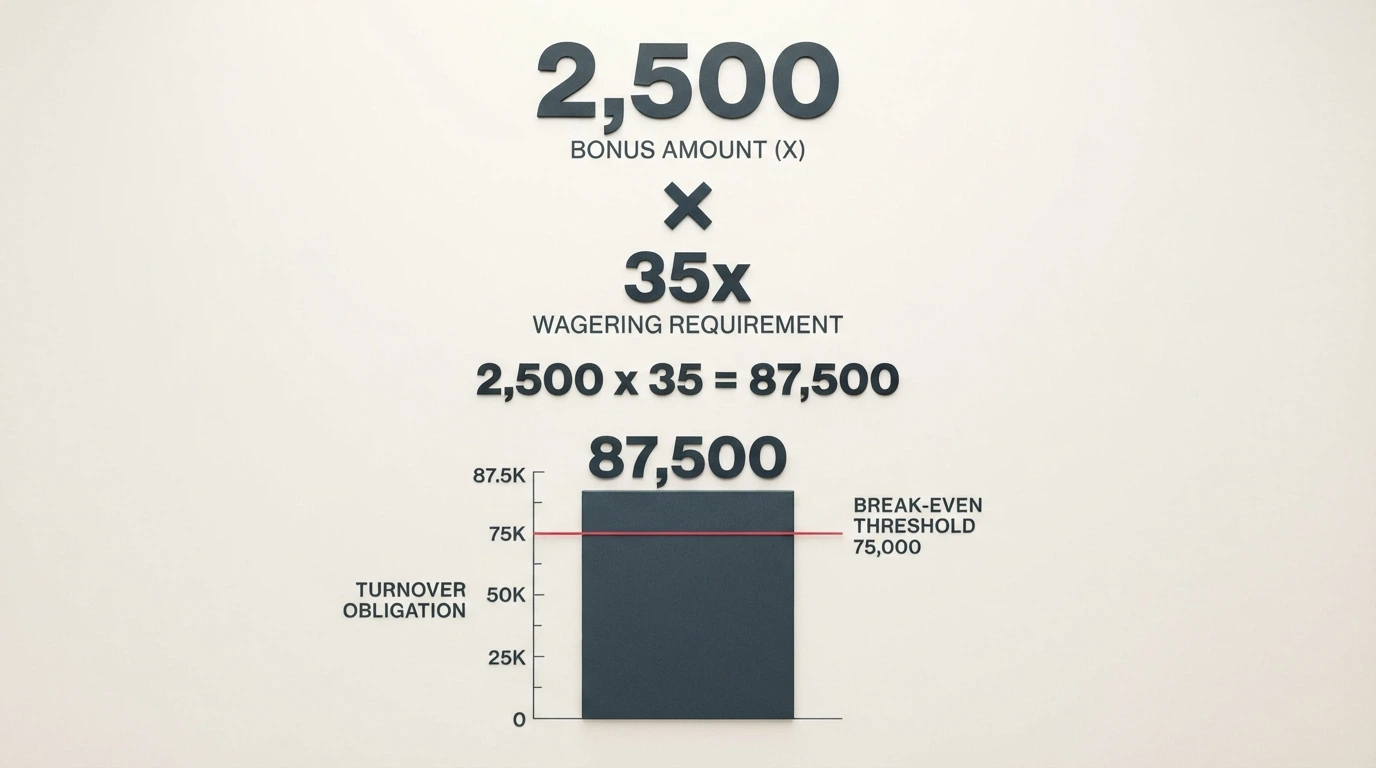
A wagering multiplier is the number of times the bonus (and sometimes the deposit as well) must be turned over before any of the bonus balance converts to withdrawable cash. Royal Reels offers 35x on the bonus only — the lightest burden in the featured set. SkyCrown offers 40x on the deposit plus bonus across all four tiers — the heaviest headline multiplier. Rocket Play runs x30 to x40 across its deposit tiers. The difference between bonus-only and deposit-plus-bonus is the single largest swing in real cost: a 35x bonus-only requirement on a A$1,000 bonus is A$35,000 of turnover; the same 35x on deposit-plus-bonus would be A$70,000.
The worked example below uses Rocket Play’s two-deposit welcome package — up to A$2,000 in match bonus — with a wagering multiplier of 35x (the midpoint of the operator’s published x30–x40 range) and a representative 96.4% RTP (the average across the 50 most-played pokies at Royal Reels, used here as an illustrative high-RTP target). Assuming only the bonus amount is wagered, the required turnover is A$2,000 multiplied by 35, which is A$70,000. Applied to a 96.4% RTP pokie, the expected loss is approximately A$70,000 multiplied by the 3.6% house edge, which comes to A$2,520. Clearing the bonus is statistically expected to cost the player around A$2,520 — more than the headline bonus itself.
Validity windows decide whether the requirement can actually be met inside the offer’s terms. SkyCrown’s 14-day window is the tightest in the featured set, and it is the operative constraint on the A$8,000 headline. A$320,000 of turnover in 14 days is roughly A$23,000 per day of required play, which is a punishing volume even for a high roller. Rocket Play and Royal Reels do not publish explicit bonus validity windows in the sources this page draws from, which is itself a piece of information: a missing validity window should be confirmed with the operator before claiming.
Game weighting is the third mechanic that decides real cost. Most pokies contribute 100% of each spin toward wagering clearance; table games and live-dealer titles often contribute 10–20%, which means a player who switches from pokies to blackjack to vary the session will clear the requirement at one-tenth the speed. High rollers planning to clear a bonus across a mix of titles should review the specific weighting table before playing.
Welcome packages vs reload bonuses: what a high roller actually gets
A welcome package is front-loaded: it pays out across the first one, two, three or four deposits and then it is gone. A reload bonus is what comes next, and it is usually smaller in headline value but lighter in wagering. SkyCrown publishes a HighRoller reload bonus specifically named for the category, and Rocket Play sustains player value through its 10–15% weekly cashback rather than a single reload number. Cashback is the reload that compounds: a 10% weekly cashback on net losses over a sustained high-roller session is a recurring value stream that does not expire at the end of a welcome window.
Welcome bonuses tend to carry heavier wagering requirements because they are designed to attract new deposits; reload bonuses carry lighter requirements because they are designed to retain existing players; cashback often carries no wagering at all because it is a return on net losses rather than a forward-looking credit. The progression of a high roller through an offshore casino’s bonus structure typically runs welcome → reload → VIP cashback, and the value of the relationship at the upper end of the VIP ladder is where the operator’s real cost lives.
No-deposit bonuses and free spins for high rollers — what exists and what is missing
Royal Reels carries the only confirmed no-deposit offer in the featured set: A$10 with 30x wagering on winnings, available before any qualifying deposit. The A$10 is a small headline figure, but the no-deposit structure lets a player test the operator’s withdrawal flow with the operator’s own money rather than their own. SkyCrown’s 400 free spins are split across four deposits and assigned to four games the operator chooses, with no published spin value; the headline number is what it is, and the player has no control over which games carry the spins. Royal Reels’ 50 free spins are fixed at A$0.20 per spin, giving them an A$10 headline value and 35x wagering on winnings.
The wider absence of substantial no-deposit high-roller bonuses across the featured set is the more telling fact than the rare exceptions: no checked operator offers a high-roller welcome package built around a no-deposit entry. The structure that does exist is a small no-deposit test entry followed by a multi-deposit welcome package, and the high-roller value lives in the welcome package rather than the no-deposit entry.
AU-eligible bonuses: what the credit and crypto ban means for claiming offers
Credit cards and cryptocurrency are banned as payment for online wagering in Australia from 11 June 2024 under the Interactive Gambling Amendment (Credit and Other Measures) Act 2023. An operator that asks for either is operating outside the Australian rules — the payment method is the tell. The penalty for an Australian-facing operator that fails to enforce the ban is up to A$247,500 per breach. Legal deposit routes for licensed wagering are debit card, bank transfer, PayID/Osko and BPAY.
For an Australian high roller claiming a bonus at one of the offshore casinos on this page, the deposit route is one of the few pieces of the offer the player controls. If the operator accepts only credit card and crypto, the player cannot deposit through the offer at all without breaching the Australian payment rules; if the operator accepts PayID, debit card or BPAY, the deposit sits inside Australian rules even though the operator does not. Royal Reels’ PayID support is the cleanest example in the featured set: the operator is offshore, but the deposit rail is the New Payments Platform. Rocket Play’s crypto-from-A$25 entry sits at the other end: a low-friction deposit route that is illegal for licensed wagering and a tell that the operator is serving Australian players from outside the Australian framework.
From 1 January 2027, banks and payment providers gain the authority to block transactions to illegal gambling operators — a payment-side enforcement lever for the 2026 reform. This does not change the offshore status of these casinos, but it does increase the cost of capital movement, and high rollers should anticipate rising deposit friction over the coming year.
The pokies where high rollers actually have an edge
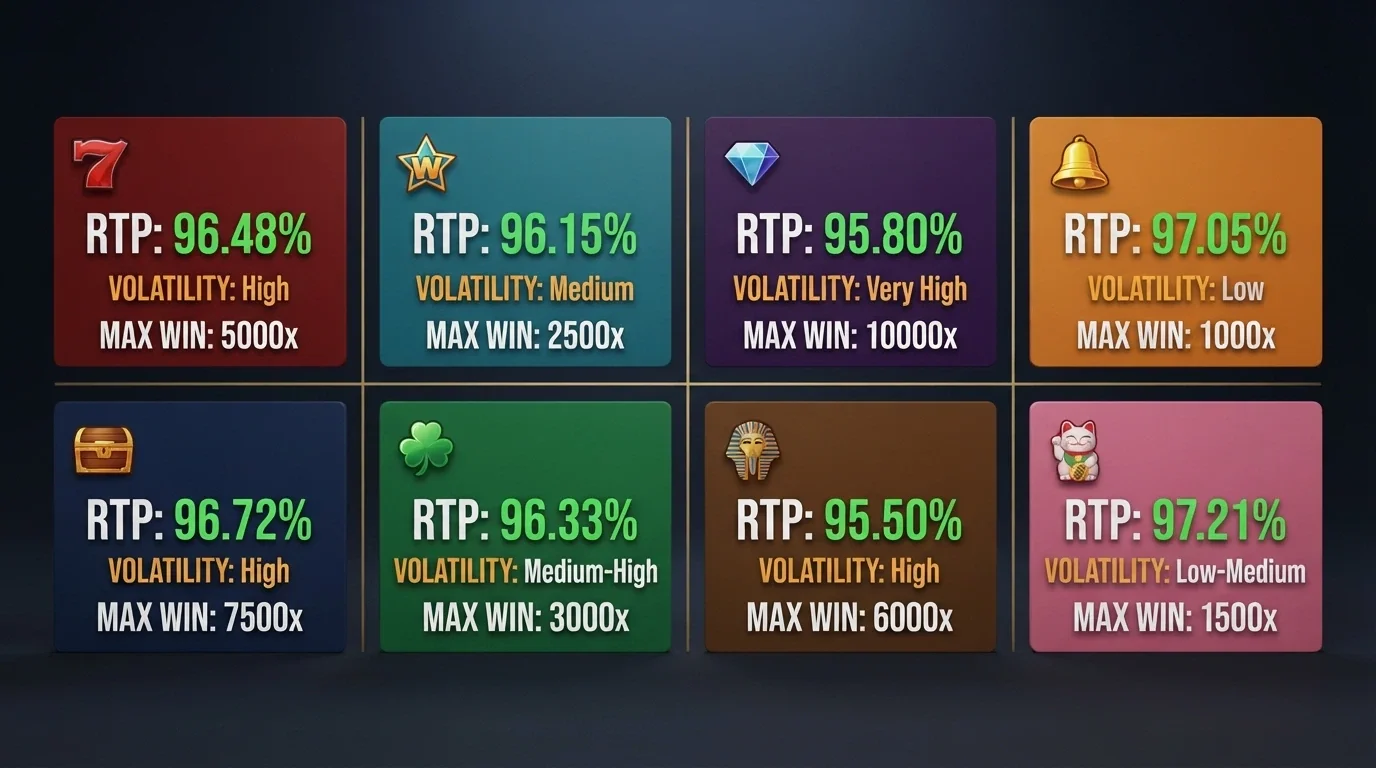
A high roller does not reduce the house edge; no stake size does. What a high roller can do is choose pokies where the edge is narrowest and where the volatility profile matches the bankroll, then size the spins so a single bad run does not exhaust the session before the bonus is cleared. The table below sets out eight high-RTP titles with verified data from providers carried by the featured operators.
| Pokies title | RTP | Provider | Volatility | Max win |
|---|---|---|---|---|
| Dead or Alive 2 | 96.82% | NetEnt | Very high | 111,111x |
| Big Bass Bonanza | 96.71% | Pragmatic Play | Medium-high | 2,100x |
| Sweet Bonanza | 96.51% | Pragmatic Play | High | 21,100x |
| Gates of Olympus | 96.50% | Pragmatic Play | High | 5,000x |
| Sugar Rush | 96.50% | Pragmatic Play | High | 5,000x |
| Wolf Gold | 96.50% | Pragmatic Play | Medium-high | 2,500x |
| Money Train 3 | 96.40% | Relax Gaming | Extreme | 100,000x |
| San Quentin xWays | 96.03% | Nolimit City | Extreme | 150,000x |
NetEnt carries the highest arithmetic mean RTP among tracked providers at 96.39% across 392 qualifying games, with 83% of those games at 96% or above and a max win potential up to approximately 50,000x. Pragmatic Play runs a published RTP range of 94.0–97.5% across 600+ slot titles, with most titles in the 96.0–96.7% band, medium-weighted volatility and max wins from 5,000x up to 50,000x. Nolimit City runs an extreme-volatility portfolio with proprietary mechanics (xWays, xNudge, xBomb, xSplit), an RTP range of 96.0–96.2% and max win potential up to 500,000x in titles like Tombstone Slaughter. The provider averages give a high roller a sense of where the edge is narrowest; the per-title numbers give the edge at the specific game the player is choosing.
High-limit pokies: what changes when you spin at A$50 a press
Stakes of A$50 or A$100 per spin move the bankroll math faster than the stake-by-stake edge changes it. The house edge on a 96.5% pokie is 3.5% regardless of stake size, but a A$100 spin costs A$3.50 in expected value per press against an A$0.35 cost on a A$10 spin. A high roller presses the same percentage edge at ten times the absolute cost, which is why bankroll sizing matters more at high limits than RTP does. A A$10,000 bankroll at A$100 per spin gives 100 spins of headroom against a 3.5% edge; the same bankroll at A$10 per spin gives 1,000 spins, and the variance profile is identical on a percentage basis but very different on a session-length basis.
Royal Reels’ A$5 per-spin cap during bonus clear-down is the structural exception. It exists to prevent a player from racing through the wagering requirement at high stakes, and for a genuine high roller it forces a slower clear-down than the bankroll could otherwise sustain. The cap is published in the bonus terms, which is itself a sign of a serious operator: the alternative is an unpublished cap or a max-bet rule buried in the fine print, both of which the player only discovers when the operator refuses to honour a withdrawal because a single spin exceeded the limit.
Provider volatility profiles shape what the high-limit experience feels like in practice. Nolimit City’s extreme volatility means long runs of dead spins punctuated by feature rounds that can return the entire session’s stake in a single bonus trigger; Pragmatic Play’s medium-to-high volatility means more frequent features at smaller relative returns. A high roller with a smaller bankroll relative to the stake size benefits from the more frequent feature profile; a high roller with the bankroll to absorb a long quiet stretch benefits from the rarer-but-larger payout profile. Neither is mathematically superior to the other; both convert the same house edge into a different session experience.
Jackpots and the high-roller chase: what the max-win ceilings actually mean
A max-win cap is a per-spin multiplier on the stake. A progressive jackpot is a pooled prize that grows as players feed it. The two mechanics behave differently at high stakes, and the high-roller chase tends to confuse them. San Quentin xWays pays up to 150,000x at 96.03% RTP with extreme volatility, which is a single-session payout ceiling of A$15,000,000 on a A$100 spin. Dead or Alive 2 caps at 111,111x. Money Train 3 at 100,000x. Gates of Olympus caps at 5,000x — a A$500,000 ceiling on a A$100 spin, which is large by ordinary standards and modest next to a Nolimit City title.
The max-win cap is the upper bound of what a single spin can return on the title’s normal paytable. A progressive jackpot sits outside that paytable, fed by a percentage of every spin across every casino carrying the title, and the prize pool can run to seven or eight figures for the largest network progressives. The max-win cap describes what the title’s design allows; the progressive jackpot describes what the network has built up. Chasing one is not chasing the other, and a high roller who conflates them is paying a low-RTP progressive entry fee for a prize the game itself does not offer.
The volatility interaction matters at high stakes. An extreme-volatility title with a 150,000x cap delivers the headline payout to one player in tens of millions of spins; a medium-volatility title with a 5,000x cap delivers smaller wins to one player in tens of thousands. A high roller with a large bankroll and a long session profile benefits from the higher-ceiling, lower-frequency profile; a high roller with a smaller bankroll and a shorter session profile benefits from the lower-ceiling, higher-frequency profile. Chasing a jackpot on a low-RTP title undoes the high roller’s mathematical advantage, because the house edge on a progressive-eligible spin is typically 2–4 percentage points higher than the same title’s base-game RTP.
Demo mode and free play: testing high-limit pokies before you stake
Demo or fun-mode play lets a player test a pokie’s volatility, feature triggers and bonus-round frequency without risking real money. For a high roller evaluating a title at A$50 or A$100 per spin, the demo phase is the cheapest way to find out whether a session will be a high-variance grind or a flat-bonus chase before committing a balance. Most major providers carry demo versions of their titles on their own websites, independent of the casino, which means a player can test the game without registering at the offshore operator.
Demo mode has one structural limit a player should remember: it does not replicate the psychological pressure of a real-money high-stakes session. A volatility profile that looks comfortable at A$0.10 per spin in demo can look very different with five figures of real balance behind it, and the tilt that comes from a real-money losing streak is not reproducible in a session where the only thing being lost is a counter on the screen. The per-operator availability of demo mode across the featured set is not confirmed in the sources this page draws from; players should test it directly on the operator’s site or on the provider’s own demo platform before staking.
Moving serious money: why high-roller banking looks nothing like a standard deposit
High-roller banking is fundamentally different from a standard deposit: it is a capital movement where withdrawal friction is most common. PayID, crypto, debit cards and bank transfers carry distinct speeds, ceilings and regulatory positions. High rollers treating the deposit rail as a secondary consideration risk discovering its limitations during a withdrawal request.
PayID and instant deposits: what the speed actually buys a high roller
Royal Reels’ PayID performance is the benchmark the rest of the featured set is measured against. PayID deposits clear in under 90 seconds and PayID withdrawals settle in 4 hours and 12 minutes during weekday testing once KYC has cleared. PayID and Osko are legal Australian payment rails, which means a deposit by PayID at an offshore casino is being routed through the Australian banking system by a brand licensed elsewhere; the rail itself is Australian, even though the operator processing the payment is Curaçao-licensed.
The speed buys two things. The first is operational: a high roller with a working PayID rail can move money into play almost immediately and move winnings out within hours, which compresses the bankroll cycle to a same-day loop rather than a multi-day wait. The second is auditability: PayID transactions leave a clear record at the Australian bank, which is part of why the Australian banking system tolerates the rail for use at offshore casinos even though the product those casinos sell is prohibited. The legal deposit routes for licensed Australian wagering — debit card, bank transfer, PayID/Osko and BPAY — are the routes that keep an Australian deposit inside Australian rules even when the receiving operator sits outside them.
For the rest of the featured set, PayID availability is not confirmed in current sources. A high roller planning a deposit at any of the other nine operators should verify the PayID option directly with the operator before relying on the rail. A bank transfer from an Australian account will reach any of them, but the processing time is measured in days rather than seconds, and the operator’s withdrawal queue for bank transfers is typically longer than for PayID or e-wallet routes.
Crypto and bitcoin: the anonymous route that sits outside Australian rules
Rocket Play accepts crypto deposits from approximately A$25 equivalent, and Stake runs a crypto-native platform with no fiat deposit option at all. From 11 June 2024, cryptocurrency has been banned as a payment method for online wagering in Australia under the Interactive Gambling Amendment (Credit and Other Measures) Act 2023. An operator that asks for crypto is operating outside the Australian rules by definition, and the penalty for an Australian-facing operator that fails to enforce the ban is up to A$247,500 per breach.
From 1 January 2027, banks and payment providers gain the authority to block transactions to illegal gambling operators. Crypto exchanges share the payment-rails framework with banks and e-wallets, and the audit trail for a crypto deposit is often more traceable than users assume. A high roller using crypto to bypass the credit/crypto ban should consider the legal implications before assuming anonymity. Every crypto transaction is recorded on a public ledger; both the on-ramp from an Australian bank and the casino’s off-ramp are similarly recorded.
The crypto route is also the route most exposed to the 2026 reform’s bank-blocking authority. A bank that identifies a customer’s crypto exchange deposits as funding offshore gambling transactions has the express authority to refuse the transaction from 1 January 2027. The reform does not retroactively change existing transactions, but it does change the forward path.
High-stakes play on the go: what mobile casinos actually deliver in 2026
A mobile casino at high stakes is the same product as a desktop casino at high stakes, run through a smaller screen with a less stable connection. The differences that matter at high stakes are screen real estate, session continuity and the availability of a dedicated app versus a browser-only path. None of the featured operators in this comparison publishes detailed per-device data in the sources this page draws from, so the section below addresses the structural rather than the brand-specific.

Installing and setting up a high-roller casino on your phone
Casino apps are typically downloaded from the operator’s site rather than from a national app store, since AU-facing offshore casinos are not listed on the Apple App Store or Google Play in Australia. The setup process on mobile is the same as on desktop: account creation with email and password, KYC document upload (driver’s licence or passport, proof of address, sometimes a payment-method screenshot), first deposit, play. KYC verification on mobile tends to run faster than on desktop at operators with automated document checks, because the phone camera is a better document scanner than a desktop webcam.
Geolocation and connection considerations are sharper on mobile than on desktop. An Australian playing from a phone on a hotel Wi-Fi network in Bali is still served by an offshore casino, but the operator’s geolocation check may treat the connection differently from a hotel Wi-Fi in Sydney. The IGA prohibition is keyed to whether the player is “in Australia” at the time of play, which is a fact the operator can verify through IP and payment-method signals but cannot guarantee. A high roller planning mobile play should treat the geolocation question as the operator’s problem and the connection question as their own.
The legal reality every Australian high roller needs to face
The legal reality is the first fact this page was built on and the one most comparison sites bury. Online casino is prohibited in Australia. The Interactive Gambling Act 2001 makes the provision of online casino games, online pokies or in-play sports betting to a person in Australia an offence, and no licence for online casino exists anywhere in the country — not federally, not in any state or territory. Every operator on this page sits outside that line, and the player who uses one sits outside the protections the line would otherwise offer.
What the Interactive Gambling Act actually prohibits — and what it does not
The IGA draws three lines. Prohibited: online casino games, online pokies and in-play sports betting. Licensed: pre-event wagering on sports and racing, lotteries, keno, through state and territory licence holders. Unregulated: offshore operators targeting Australian players, which is the category every casino on this page sits in. The lines are not blurred; the distinction is structural. A Sportsbet or TAB account sits inside the licensed column. A Stake or Rocket Play account sits inside the unregulated column. They are not competing options in a single market.
The Northern Territory Racing and Wagering Commission (NTRWC) and Licensing NT issue the longest-running wagering licences in the country, with licence terms up to 20 years. The licensed operators that hold them — Sportsbet, TAB, bet365, Ladbrokes and others — serve a legal product, and they are a separate market from the offshore casinos on this page. Minimum age for all commercial gambling in Australia is 18.
The 2017 amendment to the IGA closed the loopholes offshore operators had been using and gave the ACMA its enforcement and website-blocking powers. The 2023 amendment added the credit-and-crypto payment ban. The 2026 reform, passed by Parliament on 19 August 2026, layers on the advertising and inducement restrictions that commence 1 January 2027. None of these amendments changes the offshore status of the operators on this page; each one changes the cost of operating them from the Australian end.
The ACMA enforcement machine: 1,564 blocks and counting
The Australian Communications and Media Authority is the federal regulator for the online prohibition. It investigates complaints, issues formal warnings, pursues civil penalty proceedings and directs Australian ISPs to block illegal sites. The cumulative result since November 2019 is 1,564 illegal gambling and affiliate websites blocked by Australian ISPs, with more than 225 illegal services withdrawing from the Australian market voluntarily since 2017.
A representative quarter tells the operational story. In Q2 2025 alone, the ACMA investigated 330 enquiries and complaints, completed 20 investigations into 24 gambling sites, found 30 breaches of the Interactive Gambling Act, issued 10 formal warnings and referred 73 websites for blocking. The pattern repeats each quarter with the totals rolling forward. The ACMA’s enforcement pathway runs from complaint through investigation, formal warning, civil penalty and finally ISP blocking direction, and the Q2 2025 figures show all four levers in active use within a single three-month window.
The 1,564 blocks since November 2019 are removals: once an ACMA blocking direction is in force, Australian ISPs prevent their customers from reaching the site. A player with a balance on a blocked site has no Australian consumer protection to rely on. From 1 January 2027, banks and payment providers may also block these transactions, providing an additional enforcement layer.
What you lose when you play offshore: the consumer-protection gap
The gap is not a small one. An Australian playing at an offshore casino has no BetStop coverage (the National Self-Exclusion Register binds only Australian-licensed wagering services), no ACMA complaints mechanism for fund recovery, no Australian consumer-law recourse if the operator refuses a withdrawal or closes an account, and no guarantee the site will be online tomorrow. ACMA has blocked 1,564 sites since November 2019 and the pace has not slowed.
The 2026 reform strengthens BetStop from 1 January 2027 and introduces inducement marketing bans — a 14-day post-sign-up ban on inducements, a three-month post-deregistration ban after BetStop exit, and an indefinite ban for customers identified as at risk of gambling-related harm. None of these provisions reach offshore operators. The AdStop register, an opt-out from wagering advertising administered by the ACMA, sits inside the same gap: the register governs advertising from licensed wagering operators, and offshore casinos are not part of the system.
The offshore status also affects advertising. Wagering advertising is legal but restricted by state for licensed operators; offshore operators face no Australian advertising restrictions because they are not within Australian jurisdiction, which is part of why the AU-facing marketing that surrounds the brands on this page does not appear in any Australian regulatory file. The reform’s advertising restrictions cap wagering ads at 3 per hour between 6am and 8:30pm, extend the live-sport blackout to 15 minutes before kick-off, ban advertising in children’s programming and on player uniforms, bar athletes and influencers from promoting wagering, and require online ads to be shown only to logged-in, age-verified users. None of this reaches the offshore casino an Australian high roller is depositing at tonight.
When the stakes get high: responsible gambling tools for big bettors
A high-roller session is the highest-variance gambling an Australian can do, and it is the gambling with the thinnest responsible-gambling infrastructure in the country. The reason is the same reason every other section of this page keeps returning to: offshore casinos are not bound by Australian player-protection rules, and the tools that exist for Australian-licensed wagering do not extend to the operators on this page.
The tools you actually have: deposit limits, self-exclusion and cooling off
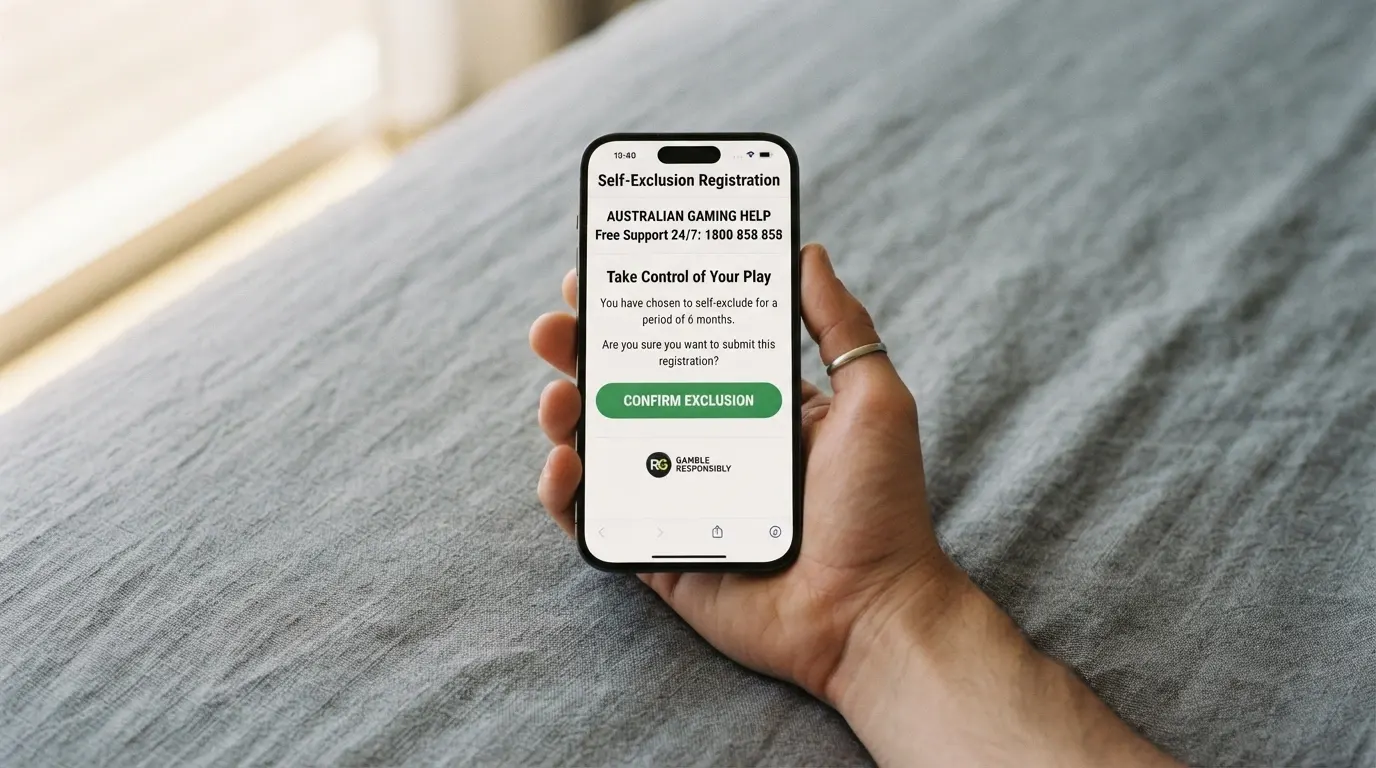
Licensed Australian wagering operators are required to offer customer-set deposit limits under state and territory conditions, and the specific limits differ between jurisdictions. Offshore casinos offer deposit-limit tools voluntarily, and the specific tools available vary by operator. BetStop, the National Self-Exclusion Register, launched on 21 August 2023 and excludes a person from every Australian-licensed online and phone wagering service in a single step — but the register does not bind offshore operators.
To 31 March 2026, 59,830 people had registered with BetStop and 37,247 exclusions were active. Only about a third of wagerers (33.5%) are aware the register exists, and only around one in four Australian adults (26.5%) know about it. The coverage gap is sharper at the high-risk end of the population: only about 30,000 individuals had active BetStop exclusions at the time of the most recent AGRC reporting, which represents just 7.5% of the estimated 400,000 high-risk gamblers in Australia. A safeguard exists for licensed wagering; the players who need it most are not yet reaching it.
Cooling-off and take-a-break functions are available at most licensed Australian wagering operators and at most offshore casinos on a voluntary basis, but the enforceability differs sharply. A licensed operator’s take-a-break function is monitored by the state regulator; an offshore operator’s take-a-break function is monitored by the offshore operator’s own customer service team. The 2026 reform strengthens BetStop’s operation from 1 January 2027 and adds the three-month post-deregistration direct-marketing ban, but the offshore gap remains.
Help when you need it: the Australian support lines that actually work
The National Gambling Helpline is 1800 858 858 — free, confidential and staffed 24 hours a day, with online chat and email counselling available through Gambling Help Online at gamblinghelponline.org.au. The line operates regardless of where the person plays: licensed Australian wagering, offshore casino, lotteries, poker, race. It is the one responsible-gambling resource on this page that does not draw a line between the offshore and the licensed markets, because the harm it addresses does not draw one either.
The annual health loss associated with gambling-related harm in Australian adults is estimated at over 400,000 Years Lived with Disability, a measure that captures both the years lived with a gambling-related disability and the broader health-system impact of gambling harm. The figure sits alongside the population-level data on at-risk and problem gambling — roughly 1.97 million Australian adults in 2025, around 430,000 of them classified as problem gamblers — to describe a public-health burden the responsible-gambling tools reach only a fraction of.
An ACMA survey of BetStop registrants found 77% report better quality of life after registration, 79% report improved mental health, and 96% stopped or decreased their betting. The numbers describe a population already inside the licensed-wagering orbit; for an Australian playing at an offshore casino, the equivalent interventions are operator-by-operator self-exclusion requests and the helpline itself. BetStop does not reach the offshore operator, but the helpline does.
How we evaluated and ranked these high-roller casinos
The ten operators on this list are the offshore casinos with the largest Australian player bases this year, measured by traffic and revenue data. The ranking reflects reach, not quality, and it is not an endorsement. The evaluation applied qualitative criteria across licence status and regulatory transparency, bonus architecture (headline value, wagering multiplier, validity window, per-spin caps and game weighting), game library depth and provider quality, payment-method speed and withdrawal limits, and the responsible-gambling infrastructure each operator publishes.
The figures this page carries are sourced from operator terms pages, ACMA enforcement records and the Curaçao Gaming Control Board register. The harm-prevalence statistics are drawn from the Australian Institute of Health and Welfare, the Australian Gambling Research Centre at the Australian Institute of Family Studies, the HILDA panel study published in Addictive Behaviours and the Browne et al. model published in the Journal of Gambling Studies. The legal framework is the Interactive Gambling Act 2001 with the 2017, 2023 and 2026 amendments.
The limits of this evaluation are real. Operator data is self-reported or third-party sourced and can change without notice. For half the featured set, the operator-sweep data did not return a current terms sheet, which is reflected in the operator write-ups above and in the signature-trait column of the comparison table. Market share figures measure reach, not quality. The ranking does not endorse any operator and is not financial advice. Any high-roller bonus is a marketing offer with terms that can be revised by the operator, and any decision to deposit is the player’s alone.
Your move: how to pick a high-roller casino without getting burned
Three numbers decide whether a high-roller welcome bonus is worth claiming: the wagering multiplier, the validity window and the per-spin cap. The wagering multiplier tells you how much must be turned over before any of the bonus balance becomes withdrawable; the validity window tells you how long you have to do it; the per-spin cap tells you the maximum stake you can press during the clear-down. A high roller who runs the three numbers before depositing knows the offer’s real cost before committing the bankroll. The worked example above — Rocket Play’s A$2,000 at 35x wagering with an illustrative 96.4% RTP — produces an expected loss of around A$2,520. That is more than the headline bonus. It is the number that decides whether the offer is worth claiming.
The legal reality shapes the second decision. Every operator on this page is an offshore casino outside any Australian licensing framework. There is no BetStop coverage, no ACMA complaints mechanism for fund recovery, no Australian consumer-law recourse and no guarantee the site will be online tomorrow. The 1,564 blocks the ACMA has directed since November 2019 are not warnings, they are removals, and the 2026 reform gives banks the power to block the deposit path from 1 January 2027. A high roller who plays at one of these brands carries the entire risk.
The third step is verification. Terms change. The data this page draws from is a snapshot; the operator’s terms page is current. Confirm the wagering multiplier, the game weighting, the max cashout, the withdrawal caps and the KYC requirements directly with the operator before any deposit, and assume that any figure you cannot verify is a figure you should not bet on. For half the featured set on this page, the verification step is also the only step that produces confirmed bonus terms — reach is the only figure the public sources carry.
Set a loss limit before depositing. Never chase a bonus clear-down past the bankroll you set. Know the help line: 1800 858 858, free and confidential, 24 hours a day.
Frequently asked questions
What is the best high roller casino bonus available to Australian players right now?
The largest headline figure in the featured set is SkyCrown’s A$8,000 + 400 free spins across four deposits, but the highest real value once wagering is applied is harder to call. Royal Reels’ 35x bonus-only wagering is the lightest in the featured set, and Rocket Play’s two-deposit A$2,000 plus VIP cashback sustains play beyond the welcome window. Every operator is offshore and unlicensed in Australia.
How do wagering requirements work on high roller casino bonuses?
A wagering multiplier is the number of times the bonus (and sometimes the deposit) must be turned over before the bonus balance becomes withdrawable. A 35x bonus-only requirement on a A$1,000 bonus is A$35,000 of turnover; a 40x deposit-plus-bonus requirement on the same offer is A$80,000. Validity windows and per-spin caps decide whether the requirement can actually be met inside the offer’s terms.
What is BetStop and does it cover offshore casino players?
BetStop is the National Self-Exclusion Register, launched 21 August 2023, with 59,830 registrations and 37,247 active exclusions to 31 March 2026. A single registration excludes a person from every Australian-licensed online and phone wagering service. It does not cover offshore casinos — those operators are not bound by the register and will keep taking a self-excluded player’s money.
How do VIP programmes at offshore casinos compare for Australian high rollers?
Rocket Play runs the most structured VIP programme in the featured set, with a Bronze-through-Diamond tier ladder, 10–15% weekly cashback, faster payouts at the upper tiers, a personal account manager at the higher rungs and entry to slot tournaments with prize pools above A$10,000. SkyCrown offers a HighRoller reload bonus. Most other featured operators do not publish detailed VIP terms, and verification with the operator is required.
What happens if an offshore casino refuses my withdrawal or blocks my account?
An Australian playing at an offshore casino has no ACMA complaints mechanism for fund recovery and no Australian consumer-law recourse. BetStop does not bind the operator. The site can be blocked by ACMA at any time, including with a balance still on it, and payment-side blocking for these transactions is scheduled to commence 1 January 2027. The risk is the player’s alone.
Are my gambling winnings taxable in Australia?
No — gambling winnings are not assessable income under section 6-5 of the ITAA 1997, and gambling losses are not deductible under section 8-1, unless the person is carrying on a business of betting. The rule applies regardless of the operator’s licence status; an Australian playing at an offshore casino pays no tax on winnings and receives no deduction for losses.
Dedicated app vs mobile browser: does it matter at high stakes?
A native casino app offers push notifications, biometric login and account access even when the browser session has closed. A mobile browser session offers zero install, immediate access and the same game library in most cases. At high stakes the practical difference is session continuity: a dropped connection during a real-money spin can be the difference between a winning round and a balance discrepancy the operator must investigate. Browser sessions on mobile networks drop more often than native app sessions, partly because the browser is one more layer of state the operating system can choose to evict, and partly because the browser session refreshes more aggressively on background.
Game-library differences between an app and a browser at the same operator are typically small at the major studios and significant at the long tail. The flagship Pragmatic Play, NetEnt and Nolimit City titles run on both paths; smaller studios and live-dealer titles sometimes appear only on the browser path. For a high roller whose library is built around the majors, the app-versus-browser distinction is operational rather than catalog-driven; for a high roller who plays the long tail, the distinction matters.