
Casino payment methods for Australian players: how to fund and cash out in 2026
 Available in AU
18 October 2026 · Checked against the ACMA register and individual operator cashier pages
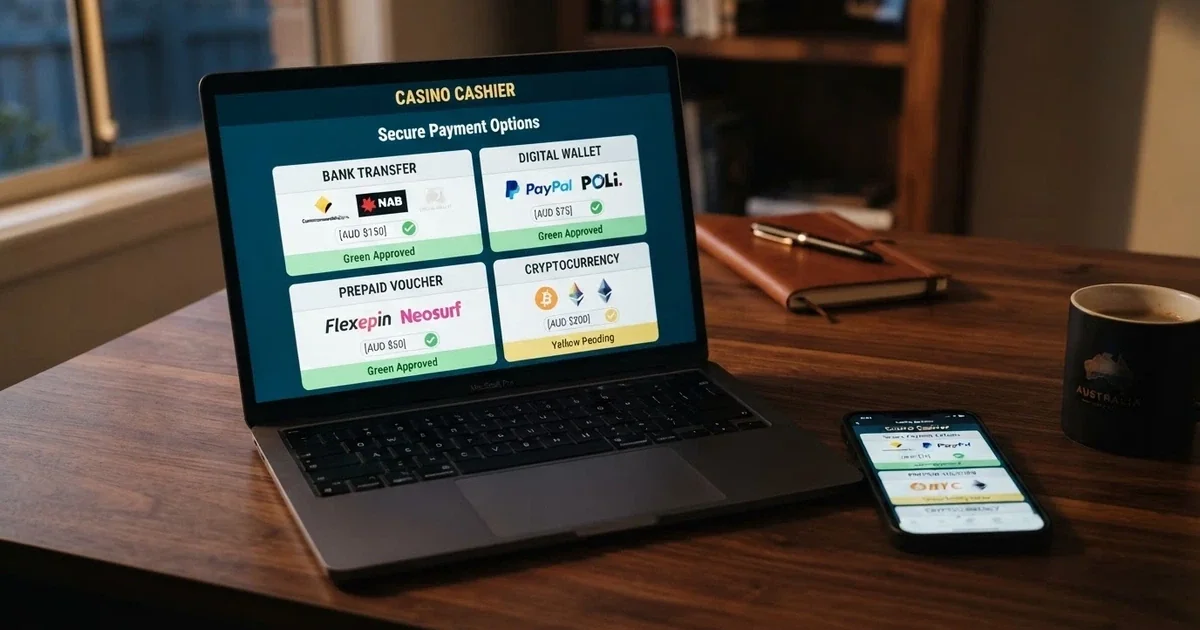
The cashier page is where an Australian player’s experience of an online casino actually starts. Everything before it is marketing; everything after it is a function of which rail carried the money. PayID lands in under a minute. Crypto clears in fifteen. Bank transfer takes the rest of the working week. A card deposit fails more often than it succeeds, not because the casino declined it but because the bank did. None of this is what a welcome bonus tells you, and the difference is the one a sharp player plans around.
This page is a working guide to the payment rails an Australian player will meet at AU-facing casino cashiers in 2026 — what each method costs in time, what it gives up in protection, and which one fits a particular kind of session. It ranks the strongest options method by method, then by operator, and finishes with the legal and consumer-protection reality that sits underneath every deposit on the page: no online casino is licensed in Australia, and every brand reviewed here is offshore.
Table of Contents
- How Australian casino payments actually work in 2026
- The payment methods Australian players actually use
- Crypto casino payments: the fastest rail with the fewest safeguards
- Mobile casino payments: tap, text, or digital wallet
- How to pick a casino payment method that won’t let you down
- Top 10 online casinos for Aussies ranked by payment strength in 2026
- Are online casino payments even legal in Australia?
- Responsible gambling: payment limits and the tools you actually have
- How we evaluated these casino payment methods
- What your casino payment choice actually costs you
- Frequently asked questions
How Australian casino payments actually work in 2026
A casino payment gateway is the plumbing between a bank account or wallet and an operator’s cashier. The player’s side is straightforward: pick a method, enter an amount, authorise the transaction. The operator’s side is less visible. A payment gateway aggregates deposit and withdrawal requests, routes them through acquirers and processors, reconciles the funds against the player’s account, and in the case of withdrawals, runs a series of compliance and anti-fraud checks before releasing money. Every rail on this page moves through a gateway, and the speed the player perceives is the speed the gateway — combined with the bank, the network, and the operator’s own internal queue — is willing to clear in.
Three features shape the experience for Australian players in particular. First, a hard split between deposits and withdrawals: the same method rarely works both ways, and POLi and Neosurf do not work for withdrawals at all. Second, a regulatory frame that bans credit cards and crypto for licensed Australian wagering — which means the rails an Australian player encounters at a licensed sports book are different from the rails the offshore casino they actually use accepts. Third, an industry-wide claim that a deposit has cleared in seconds, when the matching withdrawal will take hours or days once KYC, bonus terms and an internal “pending” period have been considered.
What a casino payment gateway actually does
- Routes the deposit from a bank, card, e-wallet or crypto wallet into the operator’s merchant account.
- Holds funds in an in-game balance once the deposit clears, so a player can wager immediately.
- Applies anti-fraud and AML checks on the way in, which can pause a deposit for a few minutes or a few hours.
- Reverses the flow on withdrawal, with KYC verification, source-of-funds checks, and the operator’s own approval queue added on top.
- Reconciles each transaction against the player’s bonus status, so a bonus-eligible deposit can change shape by the time it is withdrawn.
The gateway is not the brand a player sees at the cashier. It is the layer underneath. Different gateways clear at different speeds, hold funds for different periods, and have different appetites for risk — which is why the same deposit method behaves differently at two different casinos.
Deposits vs withdrawals: why the same method rarely works both ways
The deposit half of the equation is built for speed. The operator wants the player’s money in the balance and the wagers flowing, so a deposit is engineered to clear as fast as the rail allows. PayID lands in under sixty seconds. POLi completes a bank-account authorisation almost as fast. Neosurf and a crypto transfer both clear in minutes. Even Visa and Mastercard, which fail outright at most Australian banks, complete in seconds when they do succeed.
The withdrawal half is built for control. The same operator that paid a deposit in under a minute can take forty-eight hours to “process” the matching withdrawal, and a further one to seven business days to deliver the money to a card. The reason is not technical. A withdrawal is the point at which a casino’s fraud team, its KYC vendor, its payments team, and its terms-and-conditions enforcement all touch the transaction. The “pending” period is where most of that work happens. Bank transfer is the slowest end of the spectrum, at one to three business days even at operators that process instantly. POLi is not available at all, and Neosurf requires the myNeosurf account variant, which charges 4.5% on the way out.
The split exists for the operator’s benefit, not the player’s. A fast deposit and a slow withdrawal locks the player’s bankroll in the operator’s balance for as long as possible. The method on this page that resists the asymmetry most completely is crypto, where the operator cannot reverse a transaction once it has been sent and has no practical hold on the funds after they leave the wallet.
Why Australian players have different payment options
The rails an Australian player meets at a casino cashier are a product of what the local banking system offers, what the offshore operator is willing to integrate, and what the law permits. PayID and Osko are the country’s instant bank-to-bank rail, built on the New Payments Platform, and they appear at almost every AU-facing operator because no integration is more useful. POLi is the legacy Australian option, an online banking payment that took the place of the now-closed BPay-funded POLi flows, and is still widespread at offshore brands that targeted Australia when PayID did not exist. Neosurf sells paper vouchers at Coles and 7-Eleven, and the offshore casinos that integrate it want the privacy-conscious or unbanked player.
European rails are absent because the Australian market has its own equivalents. iDEAL, the dominant Dutch instant bank rail, has no Australian counterpart and no presence. Trustly, which routes Scandinavian open-banking payments, operates in a different regulatory and banking environment. Klarna, Zimpler and the cluster of European mobile-first providers are not integrated at AU-facing operators in any meaningful way. The Australian player, in payment-method terms, is a domestic market served by domestic rails plus the international crypto and card networks, with POLi and Neosurf filling the older niches.
The payment methods Australian players actually use
The table below covers every rail an Australian player will see at an AU-facing cashier in 2026, with the deposit and withdrawal speed research supports and the one caveat each method carries.
| Method | Deposit speed | Withdrawal speed | Fees | Key caveat |
|---|---|---|---|---|
| PayID | Under 60 seconds | Under 1 hour (fastest fiat) | Zero on the rail | A$10 minimum, A$5,000–A$10,000 max per transaction; not at every operator |
| Visa / Mastercard | Instant where accepted | 24–48 hr processing + 1–7 business days delivery | Usually none | 60–70% success from Australian banks due to gambling merchant blocks |
| POLi | Instant (online banking) | Not supported | None | Deposit-only, no chargeback, shares bank account name with the casino |
| Neosurf | Under 1 minute | Not supported on the voucher; 4.5% on myNeosurf | 4.5% on myNeosurf withdrawals | Deposit-only on the voucher; myNeosurf variant needed for any cashout |
| BPAY | 1 business day | 3–5 business days | None | Slowest end of the legacy rails; not a withdrawal fast-path |
| Bank transfer | 1–3 business days | 1–3 business days (slowest) | Possible bank fees | Slowest method, but always available and always clears |
| Skrill / Neteller | Instant | 0–24 hours at supporting operators | Possible e-wallet fee | Some Australian accounts restricted for gambling |
| MiFinity | Instant | 0–24 hours at supporting operators | Possible e-wallet fee | More reliable AU support than Skrill or Neteller |
| Crypto (BTC, ETH, LTC, DOGE, USDT) | 15 min–2 hours | 15 min–2 hours, often under 30 min | Network fee, usually small | No chargeback, no AU consumer protection, banned at licensed operators |
| Apple Pay / Google Pay | Instant where accepted | Not supported at most operators | None | Credit-linked wallets banned for AU licensed wagering; debit-linked at offshore only |
The method that gives the most balanced Australian experience in 2026 is PayID, because it is the only rail that is fast in both directions, free on the rail, and treated identically to any other deposit for bonus eligibility. The fastest rail, by a margin, is crypto. The most convenient, if the bank cooperates, is still the card in the wallet — and the most reliable by raw availability is bank transfer, which is also the slowest.
Visa and Mastercard: the familiar route with a catch
The cards in an Australian wallet are still the most common way to deposit at a casino, partly out of habit and partly because every cashier offers them. The catch is that most Australian banks now block gambling merchant category codes on Visa and Mastercard, so a deposit that should clear in seconds fails outright. The practical success rate at offshore casinos sits at sixty to seventy per cent — meaning a player who hits “deposit” three times will, on average, see the third attempt blocked.

The legal shape of the card rail matters. Credit cards have been banned for online wagering in Australia since 11 June 2024, which means a credit card deposit at a casino is a transaction with an offshore operator outside Australian rules. Debit cards are a legal rail for licensed wagering and remain a common rail at offshore brands, with the merchant-block issue still applying. Prepaid Mastercard products sit in a grey zone: a prepaid card funded from a bank account looks like a debit transaction to the merchant but a closed-loop prepaid to the issuer, and the bank-level gambling block does not always apply. That is the workaround some Australian players use when their primary card keeps failing.
E-wallets: Skrill, Neteller and MiFinity under Australian restrictions
The e-wallet triad that used to be a reliable answer for casino deposits has thinned out. Skrill and Neteller now apply gambling restrictions to some Australian accounts, blocking deposits and withdrawals alike; the result is a player who funded an e-wallet specifically for casino use and finds the operator path closed. The accounts that do work are usually the ones funded through a workaround, and the friction is the point of the restriction.
MiFinity is the more reliable alternative when an operator supports it. It is not universal — Bizzo Casino, for one, does not accept any e-wallets at all — but where MiFinity is integrated the deposit clears instantly and the withdrawal usually clears within twenty-four hours. eZeeWallet appears at a handful of operators, including Neospin, where withdrawals are documented as instant once approved. The withdrawal speed from a working e-wallet is competitive with PayID and faster than any bank-rail method, which is the reason the e-wallet cluster still matters despite the Australian friction.
PayID: the instant bank rail that works both ways
PayID is the strongest all-round rail for an Australian player in 2026. It runs over the New Payments Platform, the country’s open-banking infrastructure, and uses the Osko settlement layer for instant transfers. A PayID deposit at an AU-facing operator clears in under sixty seconds, with zero transfer fees and a transaction range that covers almost any player’s session: a ten-dollar minimum at most operators and a maximum somewhere between A$5,000 and A$10,000 per transaction. That ceiling is set by the operator and the bank, not by the rail, and the strongest operators in the ranking below push it to the top of the range.

What makes PayID distinctive is that it is the only instant rail that works for withdrawals as well as deposits. PayID withdrawals at operators like Goldenbet have been tested at around twenty-eight minutes; at Neospin, the documented window is around two hours; at Ricky Casino, zero to twenty-four hours. Across the set, a PayID withdrawal that has been approved by the operator’s payments team will reach the bank account inside an hour in most cases. The same operator offering instant deposits and slow bank-transfer withdrawals is, with PayID, offering a withdrawal that matches the deposit in speed.
PayID deposits are also treated identically to any other method for bonus eligibility. There is no PayID-specific exclusion at the operators in this ranking, and no lower bonus cap applied because a player used a bank rail instead of a card. The combination of speed in both directions, zero cost on the rail, and clean bonus treatment is what makes PayID the rail a player should default to where it is available.
POLi: the veteran Aussie option that only goes one way
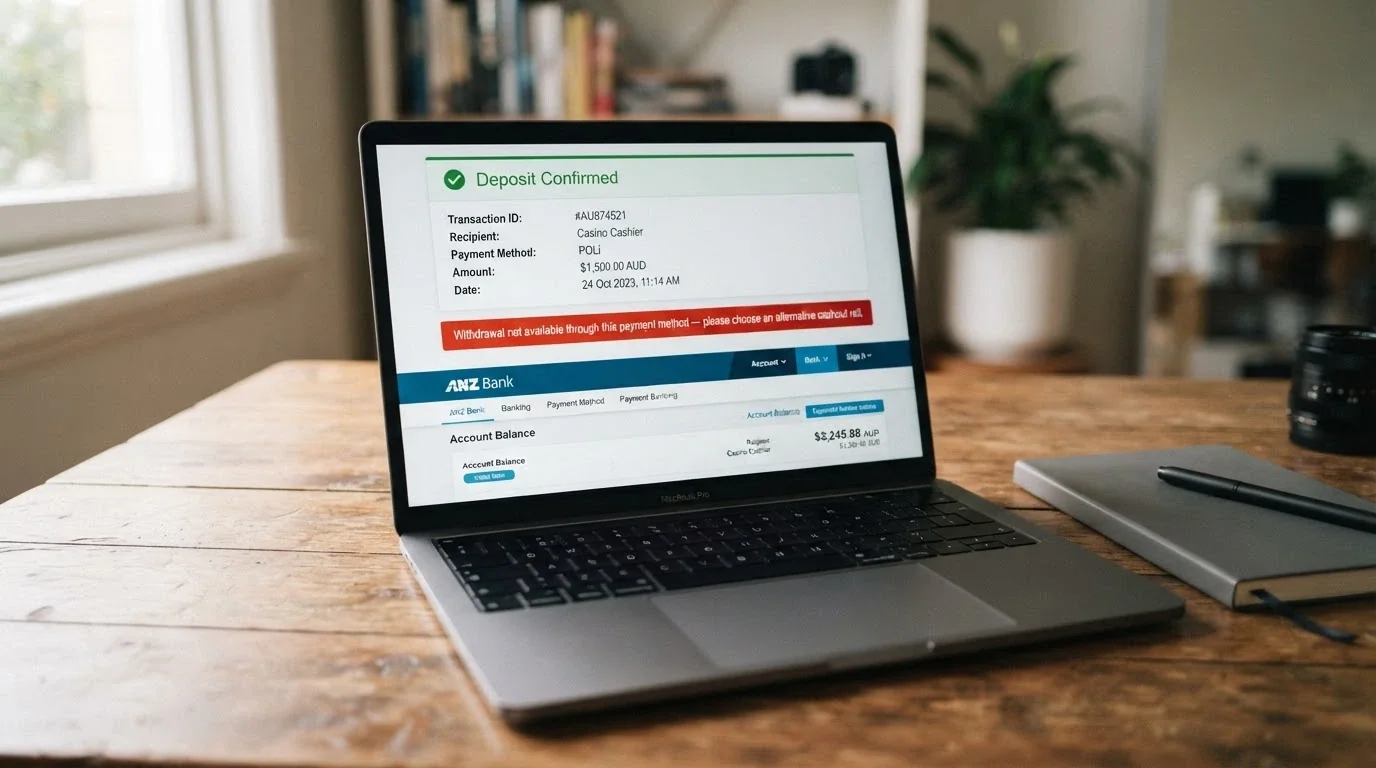
POLi is the Australian-built payment service that lets a player authorise a casino deposit directly from a bank account without a card. It was the dominant AU-specific rail before PayID existed, and it still appears at almost every AU-facing cashier. The problem is the asymmetry: POLi is deposit-only at every Australian-facing casino, with no operator supporting direct POLi withdrawals. A cashout has to go by bank transfer, e-wallet or crypto — and the bank account POLi drew from is not the same channel as the withdrawal, which adds a verification step the player did not need to think about on the way in.
POLi’s market share among Australian casino depositors is smaller in 2026 than it was five years ago. PayID has eaten the rail for players who want instant settlement. Crypto has eaten the rail for players who want fast withdrawals. Prepaid cards and Neosurf have eaten the rail for players who want their bank kept out of the casino entirely. POLi is the rail for the player who is depositing from a bank account that does not have PayID enabled, or for the operator who has not yet integrated PayID, which is a shrinking set.
The two structural problems with POLi are privacy and chargeback. POLi shares the depositor’s bank account name with the casino, and in some cases transaction history — not full login details, but enough to make a privacy-conscious player think twice. POLi does not offer chargebacks, so a player who disputes a deposit has no recourse through the payment service; the only path is the casino’s own complaints process, which for an offshore operator has no Australian endpoint. The bank itself may offer a dispute process for unauthorised transactions, but a deposit the player authorised is not unauthorised, and that is the gap.
Neosurf, BPAY and bank transfer: prepaid privacy vs slow-and-steady
Neosurf is the paper-voucher prepaid method that lets a player fund a casino account without a card, a bank account or a wallet. Vouchers come in A$10, A$50 and A$100 denominations, are sold at Coles, 7-Eleven and other retailers, and are also available from online resellers. A Neosurf deposit clears in under a minute, and the welcome offer at most operators is triggered from a minimum deposit around A$30. The privacy story is the appeal: no bank account is exposed to the casino, and the deposit cannot be traced back through the banking system.
The matching withdrawal is the problem. Neosurf is deposit-only on the standard voucher. The myNeosurf account-based variant supports withdrawals, and carries a 4.5% fee on the way out, but it is not at every operator. A Neosurf-only player has to register a second method for cashouts, which is a step the marketing copy tends to leave out. For a small-stakes player who never withdraws, the voucher is a clean rail. For anyone expecting to cash out, it is half a solution.
BPAY is the legacy Australian bill-payment rail, and it sits at AU-facing casinos as a deposit and withdrawal option almost out of habit. BPAY deposits take one business day to clear, which is slow by 2026 standards, and BPAY withdrawals take three to five business days, which is slower still. The appeal is the same as for bank transfer: it always works, it always reconciles, and the bank statement is unambiguous. For an Australian player who has set a hard rule to use only domestic bank rails, BPAY is a method, not a fast one.
Bank transfer is the slowest withdrawal method at AU-facing casinos regardless of operator, at one to three business days. It is also the most universal — every operator that takes fiat cashes out by bank transfer, and the player’s bank will accept the deposit without the merchant-block problem that hits cards. For a player who is happy to wait three days for a withdrawal, bank transfer is the rail that will not fail. For a player who wants the withdrawal to match the deposit in speed, it is the wrong rail.
Crypto casino payments: the fastest rail with the fewest safeguards
Cryptocurrency is the rail that has eaten the most share of the Australian market in the last three years. Research puts crypto at around 22% of total AU pokies deposit volume in 2026, with withdrawals clearing in fifteen minutes to two hours, and most transactions settling in thirty minutes or less. The combination of speed in both directions, no operator-side “pending” queue, and no chargeback rights is what makes crypto the rail of choice for the player who treats the casino as a high-throughput service.
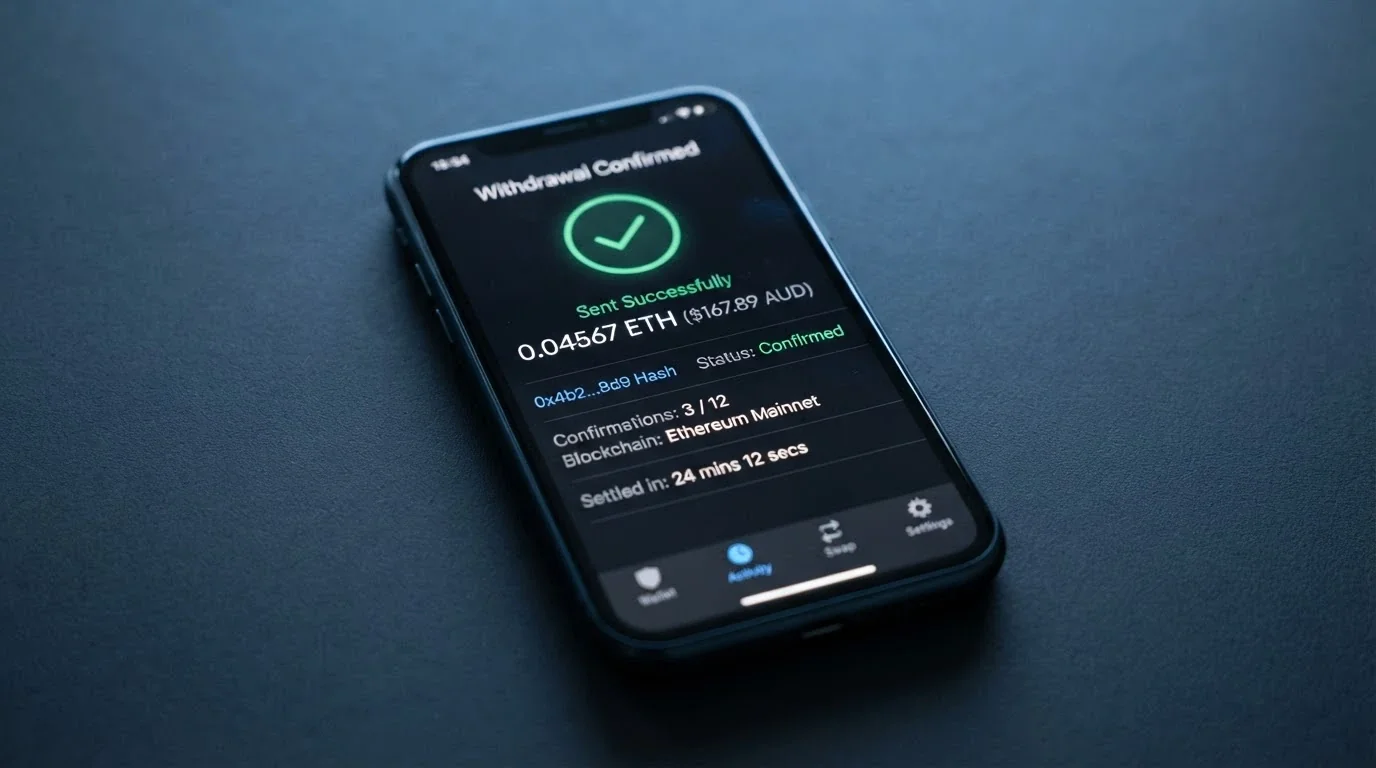
The same combination is what strips the player of the consumer protections a card or a regulated bank rail would have given. A crypto deposit cannot be reversed. A crypto withdrawal cannot be clawed back. The blockchain ledger is public, and the wallet-to-wallet trail is permanent. A player who sends funds to a casino that refuses to pay out has no chargeback, no Australian consumer law, and no complaints body — only a private dispute with an operator outside Australian jurisdiction. The speed is real; the safety net is not.
Crypto is also banned as a payment method for licensed Australian wagering since 11 June 2024, alongside credit cards. The ban is part of the same legislative package, and a casino that accepts crypto from an Australian player is, by definition, an offshore operator. The legal status of the deposit is the player’s problem, not the casino’s, but the practical implication is that the regulatory infrastructure that protects a debit card holder does not exist for the crypto holder.
Bitcoin, Ethereum and the altcoins Australian casinos accept
The coin set at AU-facing casinos in 2026 is a narrow one. Bitcoin and Ethereum are universal; Litecoin, Dogecoin and Tether (USDT) are common; a handful of operators add Solana, USDC, Bitcoin Cash and Tron. BitStarz is the most crypto-native operator in the ranking, accepting BTC, ETH, LTC, DOGE and USDT with a minimum withdrawal of A$10 and no maximum, and a verified withdrawal speed of ten minutes. Bizzo, SkyCrown and Rolling Slots accept the same core set, with each operator adding or removing a coin or two.
A crypto deposit works on a different timeline to a card or a bank transfer. The casino generates a wallet address or, in the case of a Bitcoin deposit, a fresh address per transaction. The player sends funds from their wallet, the network confirms the transaction, and the casino’s payment system credits the balance. Confirmation times vary by coin — Bitcoin averages around ten minutes per confirmation, with most operators requiring one to three confirmations; Ethereum is faster, with a confirmation window under a minute on most networks; Litecoin and Dogecoin are near-instant. The “fifteen minutes to two hours” figure is the operator’s overall window, which includes its own processing queue.
The minimum and maximum limits on a crypto deposit are set per coin, per operator, and often per transaction. BitStarz’s A$10 minimum applies to its crypto rail overall; other operators have higher crypto-specific minimums. The advantage of crypto over a card or a bank transfer is the absence of a third-party intermediary who can block the transaction — the bank, the card network, the acquirer. A crypto deposit that has been sent has been sent.
What crypto deposits give up in exchange for speed
The trade is direct. Crypto gives the player the fastest deposit and the fastest withdrawal available, and takes away the chargeback rights a card would have offered, the consumer protection a bank would have offered, and the regulatory recourse an Australian law would have offered. The same logic that made POLi the rail of choice for a player who did not want a chargeback applies to crypto, except that POLi at least has a domestic operator behind it. Crypto has no operator, no rail owner and no Australian endpoint.
The practical consequence is that a crypto player at an offshore casino is operating without any of the safety nets a card deposit would have offered. If the operator refuses a withdrawal, voids a win or closes the account, the player has no Australian complaints body, no Australian consumer law, and no BetStop coverage. The bet was made and the funds were sent; the dispute is between the player and an entity outside any jurisdiction the player can reach cheaply. The speed of the rail is the value; the absence of the rail is the cost.
Mobile casino payments: tap, text, or digital wallet
Paying from a phone at an AU-facing casino in 2026 is a smaller subset of the same payment-method set, not a different one. Apple Pay and Google Pay sit at some offshore cashiers, credit-card-rail cards sit at almost all of them, and the mobile deposit experience is dominated by what the operator’s mobile site or app exposes. SMS and carrier-billing deposits exist as a niche, supported through providers like Boku and limited to small per-transaction amounts.
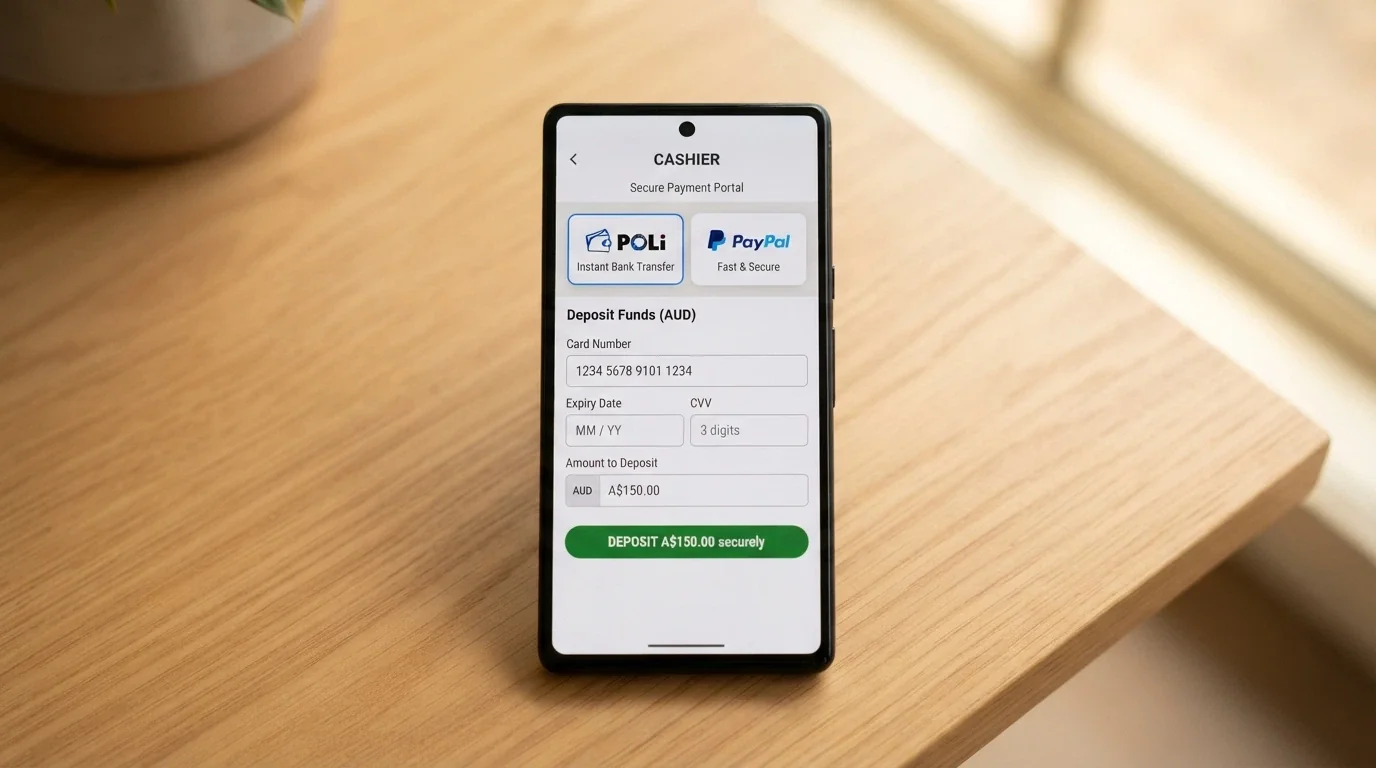
The legal frame applies on mobile the same way it does on desktop. Credit cards and credit-linked wallets (Apple Pay or Google Pay funded from a credit card) are banned for Australian licensed wagering since 11 June 2024. The ban does not reach a debit card funded Apple Pay transaction at an offshore operator, but it does mean the operator accepting the deposit is, by definition, offshore. A mobile player is making the same legal exposure as a desktop player, through a different interface.
Apple Pay and Google Pay at the casino cashier
Apple Pay and Google Pay appear at a small but distinct set of AU-facing offshore operators. Bizzo Casino is the clearest example in the ranking below: the operator accepts both wallets, alongside PayID, Visa/Mastercard and crypto, but does not accept e-wallets at all. Other operators in the ranking either accept one of the two wallets or neither, and the gap is not random — it tracks the operator’s target market and the integration work the operator has done.
The credit-card ban’s impact is the practical detail. An Apple Pay or Google Pay transaction funded from a credit card is a credit transaction, and is therefore banned for Australian licensed wagering. A transaction funded from a debit card or a prepaid card is a debit transaction, and is permitted at the same offshore operators that accept the underlying card. The wallet itself does not carry the legal status; the funding source does. The player who has set up Apple Pay with a debit card can deposit at an offshore casino; the player who has set up Apple Pay with a credit card cannot, and the cashier will not tell the player which one they are using.
SMS deposits and carrier billing: the small-screen niche
SMS and carrier-billing deposits work by charging a casino deposit to the player’s mobile phone bill, via a provider like Boku or Zimpler. The mechanics are a one-tap confirmation followed by a charge that appears on the next bill. The transaction caps are low — typically A$10 to A$30 per deposit, with a daily limit around A$50 — which keeps the rail inside the discretionary-spend range and out of the high-roller segment.
The uptake at AU-facing offshore casinos in 2026 is low. None of the operators in the ‘Top 10 online casinos for Aussies ranked by payment strength in 2026’ section list SMS or carrier billing as a primary deposit method, and the providers themselves are not part of the standard AU-facing cashier. The rail sees more use at casual mobile-first operators in other markets, where the absence of a bank account is more common. For an Australian player with a bank account and a phone, the option exists as a fallback, not as a primary path.
How to pick a casino payment method that won’t let you down
The right rail depends on the player. A session-sized deposit on a Friday night asks for speed; a four-figure cashout on a Sunday morning asks for reliability. A privacy-conscious player asks for a rail that does not expose the bank account; a player chasing a welcome bonus asks for a rail that does not exclude them from the offer. The five questions below are the ones to answer before funding a casino account in 2026.
The first is speed. A PayID deposit that clears in under sixty seconds and a PayID withdrawal that clears in under an hour is the right rail for a player who is moving money in and out on the same weekend. Crypto is faster on the withdrawal, slower on the deposit, and the right rail for a player who has set up a wallet and is comfortable with the on-chain mechanics. Cards are the wrong rail from an Australian bank in 2026 at a sixty to seventy per cent success rate. Bank transfer is the wrong rail for a player who is not happy to wait three days for a withdrawal.
The second is reliability. Bank transfer never fails. PayID fails when the operator has not integrated it. Cards fail when the bank has blocked the merchant category. POLi fails when the player tries to withdraw, because it cannot. MiFinity fails when the operator has not integrated it. The reliable rail is the one the operator’s cashier has actually wired up, and the way to check is to look at the operator’s payments page before funding the account.
The third is privacy. POLi shares the bank account name with the casino. PayID transactions show the casino’s payment processor on a bank statement. Cards expose the card number through the gateway. Crypto exposes the wallet, but not the player’s identity behind it. Neosurf exposes nothing, because the deposit is paid in cash at a retailer. The privacy-conscious player is choosing between the casino’s merchant name on a bank statement (PayID), a permanent public ledger (crypto) and zero paper trail (Neosurf).
The fourth is bonus eligibility. PayID is treated identically to any other deposit method at AU-facing casinos — no exclusion, no lower bonus cap. Some operators exclude specific e-wallets (Skrill, Neteller) from welcome offers. Crypto bonuses are offered by some operators and excluded by others. The detail is on the operator’s bonus terms, and the player who skips the terms page is the player who finds the bonus void at the withdrawal.
The fifth is recourse. A card deposit has a chargeback right. A PayID deposit has the bank’s dispute process. A POLi deposit has neither. A crypto deposit has neither. An offshore casino has no Australian complaints body to escalate to, so the recourse question is really “what does my bank or my card issuer do if I dispute this transaction”, and the answer for crypto and POLi is “very little”. The player who values the safety net is choosing between the rails that still have one.
Security signals every payment method sends
- POLi shares the bank account name with the casino, and sometimes transaction history. The deposit is no longer private from the operator’s side.
- POLi offers no chargebacks. The player cannot dispute a transaction through the payment service.
- Credit cards offer chargebacks where accepted offshore, but credit cards are banned for AU licensed wagering, so a credit-card-accepting site is an offshore site by definition.
- A site accepting crypto or credit cards from an Australian is operating outside Australian law. The legal status of the deposit is the player’s, not the operator’s.
- Offshore casinos provide no AU complaints body, no AU consumer protection, and no BetStop coverage. The safety net stops at the border.
Speed, reliability and when each one matters
The fastest rail for a deposit is PayID at under sixty seconds, followed by cards where they succeed, followed by POLi and Neosurf, followed by BPAY at one business day. The fastest rail for a withdrawal is crypto at fifteen minutes to two hours, with most transactions clearing in under thirty minutes. The fastest fiat rail for a withdrawal is PayID at under one hour, followed by e-wallets at zero to twenty-four hours, followed by BPAY at three to five business days, with bank transfer at one to three business days at the bottom.
The fastest deposit method and the fastest withdrawal method are rarely the same, and the player who wants both is choosing PayID, where the operator has integrated it. The player who only cares about the withdrawal and is happy with a slower deposit is choosing crypto. The player who only cares about the deposit and does not plan to withdraw is choosing Neosurf or POLi, and accepting the asymmetry. The reliability question is the gap between “the rail can clear in this time” and “the rail actually clears in this time at this operator”, and the way to close that gap is the operator’s cashier page.
Top 10 online casinos for Aussies ranked by payment strength in 2026
The table below ranks the ten operators by payment strength — the width of the rail set, the presence of PayID, the speed of the withdrawal — using the verified facts in the operator rows below the table. Welcome bonus is included as a single column for orientation, not as a recommendation. A “✓” means the operator has integrated the method; a “—” means no information is available or the method is not supported. A dash is a missing fact, not a negative claim.
| Operator | Licence | Payment methods | PayID deposit | PayID withdrawal | Welcome bonus |
|---|---|---|---|---|---|
| SkyCrown | Curaçao (Hollycorn N.V.) | Visa, Mastercard, Neosurf, MiFinity, PayID, crypto | ✓ | ✓ | Up to A$8,000 + 400 FS |
| Bizzo Casino | Curaçao | PayID, Visa, Mastercard, Apple Pay, Google Pay, crypto (no e-wallets) | ✓ | ✓ | Up to A$7,250 + 175 FS |
| RocketPlay | Curaçao | PayID/Osko, Visa, Mastercard, crypto | ✓ | — | — |
| Neospin | Curaçao | PayID, bank transfer, eZeeWallet, crypto | ✓ | ✓ (A$50–A$5,000, ~2 hr) | — |
| Ricky Casino | Curaçao | PayID, Visa, Mastercard, crypto | ✓ | ✓ (0–24 hr) | Deposit match + FS |
| BitStarz | Curaçao | Crypto only (BTC, ETH, LTC, DOGE, USDT) | — | N/A (crypto only) | — |
| Goldenbet | Curaçao | PayID, crypto, bank transfer | ✓ | ✓ (~28 min tested) | A$100 cash ×3, 0× wagering |
| Fair Go Casino | Curaçao | Visa, Mastercard, Bitcoin, bank transfer (no PayID, no e-wallets) | ✗ | ✗ | — |
| WinSpirit | Curaçao | Visa, Mastercard, e-wallets, several crypto | — | — | — |
| Rolling Slots | Curaçao | Bank transfer, PayID, crypto, e-wallets | ✓ | ✓ | 310% up to A$6,400 + 570 FS |
SkyCrown leads on raw rail coverage — six method families, A$30 minimum deposit, A$6,000 to A$7,500 maximum per transaction and a withdrawal ceiling of A$5,000 daily, A$10,000 weekly, A$15,000 monthly. BitStarz is the strongest on withdrawal speed, with a verified ten-minute crypto cashout and a zero-maximum withdrawal. Goldenbet is the cleanest bonus, with zero wagering on a cash welcome. Fair Go is the narrowest, with no PayID and no e-wallets at all.
SkyCrown
SkyCrown is the widest AU-facing payment-method net in the ranking, run by Hollycorn N.V. under a Curaçao licence. The operator takes Visa, Mastercard, Neosurf, MiFinity, PayID and cryptocurrency — six method families, with the same operator clearing a PayID deposit in under a minute and a PayID withdrawal inside an hour. The minimum deposit is A$30, the maximum per transaction is A$6,000 to A$7,500, and the withdrawal ceiling is A$5,000 daily, A$10,000 weekly and A$15,000 monthly, which is at the higher end of the AU-facing set.
The welcome offer is up to A$8,000 plus 400 free spins at 40× wagering, a structure that is competitive with the rest of the Curaçao-licensed cluster but not unusual within it. The bonus terms — 40× on the bonus amount, free spins subject to a per-spin cap, a finite validity window — are standard for the offshore market. Where SkyCrown differs is the rail set: a player with a PayID-only bank can deposit and withdraw from the same account, a player with a Neosurf voucher can fund a small-stakes session without exposing a bank account, and a player with a MiFinity wallet has a working e-wallet path. The trade-off is the offshore status — Curaçao licence, no AU consumer protection, and the BetStop gap that follows.
Verdict: SkyCrown is the strongest generalist rail in the ranking, and the right pick for an Australian player who wants PayID for both directions and a fallback at the cashier if PayID is not enough.
Bizzo Casino
Bizzo is the mobile-wallet outlier: it takes Apple Pay and Google Pay alongside PayID, Visa, Mastercard and crypto, and does not take e-wallets at all. The exclusion of MiFinity, Skrill and Neteller is unusual, and it is paired with a strong showing on the rails the operator does support. The welcome bonus is up to A$7,250 plus 175 free spins at 40× wagering, with a 14-day validity window that is tighter than SkyCrown’s and demands a faster playthrough.
The rail mix tells a story about target player. A player who deposits from a debit card and a mobile wallet, who is comfortable with crypto, and who does not use a traditional e-wallet, is the player Bizzo is built around. The welcome bonus’s 14-day validity is the cost: a player who cannot clear 40× in two weeks is leaving bonus value on the table. The Apple Pay and Google Pay support is a real convenience on a phone, and the legal status of the wallet is the same as a debit card at an offshore site, so a debit-funded wallet deposit is a clean transaction.
Verdict: Bizzo is the right pick for a mobile-first Australian player who wants the wallet options, and the wrong pick for an e-wallet user or a player who needs a longer bonus validity window.
RocketPlay
RocketPlay is the lower-friction PayID/Osko play, with a minimum deposit of A$25 — the lowest in the ranking, a point for a player with a small bankroll. The operator takes PayID/Osko, Visa, Mastercard and crypto (BTC, ETH, LTC, DOGE and USDT-USDC), and the wagering is up to 40× on the welcome offer. The PayID withdrawal status is not confirmed for this operator; the deposit is verified, and the withdrawal is a gap a player should confirm with the cashier before committing a larger bankroll.
The rail set is a focused one, missing Neosurf and missing e-wallets, which makes the operator a poor fit for a player who wants a voucher path or a wallet path. For a player with a Visa card and a PayID setup, RocketPlay is a clean two-rail operator with a low minimum. The offer shape is not confirmed in the research, so the player should read the bonus terms before claiming.
Verdict: RocketPlay is the right pick for a low-stakes Australian player with a PayID account, and the wrong pick for a player who needs a confirmed PayID withdrawal path or a non-card rail.
Neospin
Neospin is the withdrawal-speed specialist in the ranking, with a documented timeline for every cashout rail. PayID withdrawals are A$50 to A$5,000, usually within two hours. Bank transfer is A$200 to A$10,000, in one to three business days. eZeeWallet is A$20 to A$4,000, instant once approved. Crypto is A$100 equivalent, in one to thirty minutes. The four-rail withdrawal set is the deepest in the ranking, and the published time windows are unusually specific for the offshore cluster.
The deposit side is smaller. PayID is the primary fiat rail, with bank transfer as a slower alternative. The welcome offer is not confirmed in the research, which is a gap; a player comparing offers on the basis of bonus shape will not find a Neospin number to compare against. The welcome offer is not the operator’s strongest point; the withdrawal speed and the rail set are.
Verdict: Neospin is the right pick for an Australian player who is moving money out regularly, and the right pick for a player who wants the cashout timeline in writing before they fund the account.
Ricky Casino
Ricky Casino is the PayID-both-ways generalist, with PayID deposits instant and PayID withdrawals in zero to twenty-four hours. The operator takes Visa, Mastercard and crypto alongside PayID, and the welcome package is a deposit match plus free spins — a structure that is standard for the offshore market, with a bonus amount not confirmed in the research. The wagering is not confirmed either, and the player should read the bonus terms before claiming.
The PayID withdrawal window of zero to twenty-four hours is wider than Neospin’s around two hours, and is similar to Goldenbet’s tested twenty-eight minutes. The point is that the operator has the rail integrated, and the player has a working fiat withdrawal path. The e-wallet set is missing, which is a gap for a player who deposits with MiFinity. The credit-card path is also missing for a player who prefers to fund a card rather than a bank rail.
Verdict: Ricky Casino is the right pick for a player who values a working PayID withdrawal at a standard deposit match structure, and the wrong pick for a player who needs an e-wallet or a specific bonus figure.
BitStarz
BitStarz is the crypto-only speed machine at the top of the withdrawal-speed ranking, with a verified ten-minute crypto cashout and an A$10 minimum withdrawal with no maximum. The operator takes BTC, ETH, LTC, DOGE and USDT and does not take fiat. There is no PayID, no Visa, no Mastercard, no bank transfer, no e-wallet. The rail set is the narrowest in the ranking, and the specialisation is the point.
The player BitStarz is built for is the player with a funded crypto wallet and no expectation of a fiat rail. The ten-minute withdrawal is verified, which is unusual in a market where most “instant” claims are unverified marketing. The unlimited maximum is a strong feature for a high-stakes player who would otherwise hit an operator-level withdrawal ceiling. The trade-off is the rail exclusivity: a player who needs to deposit a small fiat amount from a bank account has no path at BitStarz.
Verdict: BitStarz is the right pick for a crypto-native player who values the verified ten-minute withdrawal over the rail breadth of SkyCrown or the PayID path of Goldenbet.
Goldenbet
Goldenbet is the zero-wagering anomaly in the ranking, with a cash welcome bonus at 0× wagering and no maximum cashout. The structure is unusual: A$100 cash ×3, with no turnover requirement, which means the bonus funds are withdrawable on receipt rather than after a playthrough. The PayID withdrawal has been tested at around twenty-eight minutes, which is the fastest in the ranking among the fiat-withdrawal operators. The rail set is PayID, crypto and bank transfer, with no Visa, no Mastercard, no e-wallets and no Neosurf.
The welcome offer is the operator’s strongest point, and the wagering structure is the cleanest in the ranking. A 0× bonus with no cashout cap is a different category from a 40× bonus with a capped free-spins payout, and a player who values a clean bonus will weight Goldenbet heavily. The trade-off is the rail set: a player who needs a card path or an e-wallet path has to go elsewhere.
Verdict: Goldenbet is the right pick for a player who values the cleanest bonus in the ranking, and the right pick for a player who has a PayID account and a tolerance for the smaller rail set.
Fair Go Casino
Fair Go is the narrowest operator in the ranking, and the only one of the ten without a PayID path. The operator takes Visa, Mastercard, Bitcoin and bank transfer, with no PayID, no e-wallets, no Neosurf, and no mobile wallets. The welcome bonus is not confirmed in the research, and the rail set is the operator’s defining feature — or its defining limitation, depending on the player.
The page’s subject is payment methods, and Fair Go is the operator that has the fewest of them. A player who funds from a card and is happy to withdraw to a bank account has a working path. A player who wants PayID has no path. A player who wants a voucher or a wallet has no path. The brand is Australian-facing in tone, but the cashier is not Australian-built.
Verdict: Fair Go is the right pick for a card-and-bank-transfer player who is not looking for a PayID path, and the wrong pick for any player who has decided PayID is the default rail.
WinSpirit
WinSpirit is the operator with the widest rail shape in the gap row: Visa, Mastercard, e-wallets and several cryptocurrencies, with the PayID status not confirmed in the research. The operator has e-wallets, which is a feature Fair Go and BitStarz do not have, and several crypto options, which is a feature most of the ranking shares. The PayID gap is the relevant one: a player who wants to default to PayID cannot rely on WinSpirit having the rail integrated without checking the cashier.
The welcome bonus is not confirmed in the research. The rail breadth is the operator’s main point of comparison, and the PayID uncertainty is the relevant caveat. A player choosing WinSpirit over Fair Go is choosing e-wallets and crypto; a player choosing WinSpirit over SkyCrown is choosing a wider crypto set against a wider fiat set.
Verdict: WinSpirit is the right pick for a player who has a working e-wallet and several crypto wallets and is happy to confirm PayID availability at the cashier, and the wrong pick for a player who needs a confirmed PayID path before funding.
Rolling Slots
Rolling Slots is the high-percentage welcome package in the ranking, with a 310% match up to A$6,400 plus 570 free spins — the largest free-spin count in the ranking and the highest percentage match. The rail set is bank transfer, PayID, crypto and e-wallets, with the crypto withdrawal documented at zero to twelve hours (ten to sixty minutes after approval), e-wallet at zero to twenty-four hours, bank transfer at twenty-four to forty-eight hours processing plus one to five business days, and cards at twenty-four to forty-eight hours plus one to seven business days. The withdrawal timeline is the most detailed in the ranking, and the rails cover the full fiat-to-crypto spectrum.
The bonus structure is the operator’s strongest point. A 310% match is high by offshore standards, and the 570 free spins are at the top of the ranking. The wagering is not confirmed in the research, which is a gap a player should close before claiming. The rail coverage is broad, and the withdrawal timeline is the most transparent in the ranking.
Verdict: Rolling Slots is the right pick for a player who wants the largest free-spin package in the ranking alongside a fully documented withdrawal timeline, and the right pick for a player who is happy to read the bonus terms before claiming.
Are online casino payments even legal in Australia?
No online casino is licensed in Australia. The Interactive Gambling Act 2001 makes it an offence for any provider to offer online casino games, online pokies or in-play sports betting to a person physically in Australia. There is no federal licence for online casino and no state or territory licence. Every brand reviewed on this page is offshore, holding a Curaçao e-gaming licence, and the legal status of the deposit is the player’s, not the operator’s.
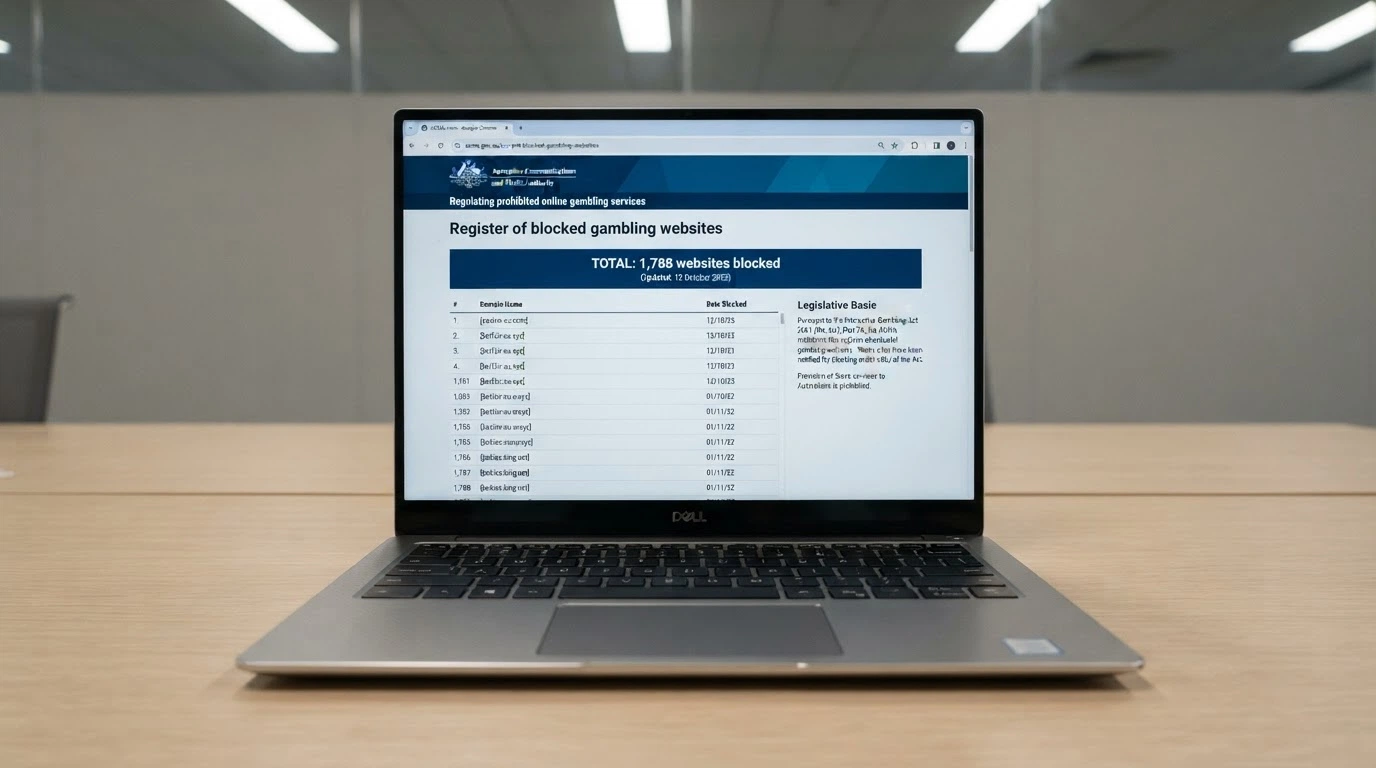
The Australian Communications and Media Authority (ACMA) enforces the prohibition. Since its first blocking request in November 2019, the ACMA has had 1,788 illegal gambling and affiliate websites blocked by Australian ISPs, and over 230 illegal services have withdrawn from the Australian market since 2017. The blocks are imperfect, the withdrawals are not public, and the offshore market continues to grow — the government’s own projection is that the illegal Australian online gambling black market will be valued at A$5 billion by 2029.
The individual player is not prosecuted. The IGA targets the provider, not the consumer. A player who deposits at an offshore casino has not committed an offence, but has given up every Australian consumer protection that would have applied at a licensed operator. The “not illegal for you” is not “safe”: no BetStop coverage, no Australian consumer law, no complaints body, and no recourse if the operator refuses a withdrawal, voids a win or closes the account.
What the Interactive Gambling Act actually says
The Interactive Gambling Act 2001 is the federal prohibition. It was amended in 2023 by the Interactive Gambling Amendment (Credit and Other Measures) Act 2023, which took effect on 11 June 2024 and banned credit cards, credit-related products (including Apple Pay and Google Pay when linked to a credit account) and digital currency as payment for online wagering in Australia. Penalties for non-compliance are up to A$247,500 per breach, levied on the provider, not the consumer.
The Interactive Gambling Amendment (Gambling Reform) Bill 2026 passed Parliament on 19 August 2026 and commences 1 January 2027. The headline measure is express authority for banks and payment providers to block transactions to illegal gambling operators, which is the change that arms the banks with the legal cover they did not have under the merchant-block regime. The reform also caps wagering advertising at three per hour between 6am and 8:30pm, bans wagering ads during live sport, in sports venues and on uniforms, bars athletes, celebrities and influencers from promoting wagering, and bans direct marketing of inducements for fourteen days after signup, three months after BetStop deregistration, and indefinitely for customers identified as at risk of gambling harm. Online keno “pocket pokies” and foreign-matched lotteries are also prohibited under the new rules.
The offshore-to-legal mix: what is actually licensed in Australia
Licensed wagering in Australia exists for sport and racing only. The Northern Territory Racing and Wagering Commission, administered through Licensing NT, is the de facto national licensor; large online bookmakers (Sportsbet, Tab, bet365, Ladbrokes, and around fifty others) hold NT licences. The licences run for up to twenty years. The legal deposit routes for these licensed wagering operators are debit card, bank transfer, PayID/Osko and BPAY — a four-method set, deliberately narrow, and the basis for the comparison a player makes when choosing between a licensed bookmaker and an offshore casino.
The tax structure shapes the licensed market. Licensed wagering operators pay a 5% wagering tax on wagers minus payouts in the Northern Territory, plus a 0.05% racing levy. Each state sets its own point-of-consumption tax, typically 10–15% of net wagering revenue. The licensed market is regulated, taxed, and prohibited from offering the product the offshore market exists to sell: online casino games. Any site offering online pokies, blackjack or roulette to an Australian is, by definition, operating outside the Australian licensing frame. The 5% NT tax, the 10–15% state point-of-consumption tax, and the IGA prohibition together are why the licensed bookmaker’s deposit rail set is four methods and the offshore casino’s is twelve.
Responsible gambling: payment limits and the tools you actually have
The responsible-gambling infrastructure in Australia is built around licensed wagering operators and is partially disconnected from the offshore casinos reviewed above. The headline number is BetStop, the National Self-Exclusion Register, which has recorded 67,480 registrations since launching in August 2023, with 41,290 exclusions still active as at 31 July 2026. 78% of registrants were under 40, and 38% chose lifetime exclusion. The register binds the licensed operator; it does not bind the offshore casino.
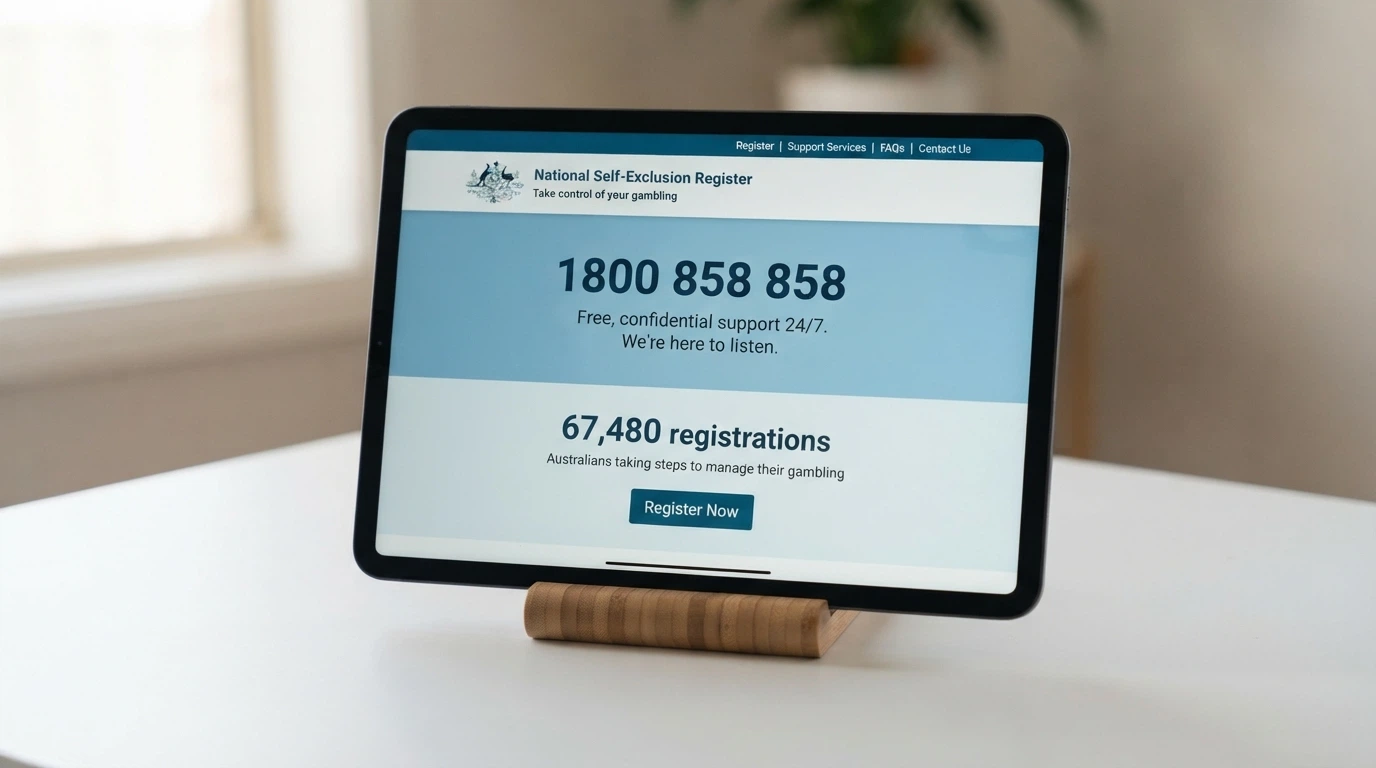
The National Gambling Helpline (1800 858 858) is free, confidential and staffed 24/7, with online chat and counselling through Gambling Help Online. The Australian Institute of Health and Welfare puts problem gambling at around 2.1% of Australian adults — roughly 430,000 people — with high-risk gambling at 1.8% in 2022. The figures are the population baseline against which any self-exclusion or limit tool is measured, and the reason the tools exist.
BetStop, deposit limits and the tools that work
BetStop works for the licensed wagering market. A registered user is excluded from opening new accounts with every Australian-licensed wagering operator, and the operator is required to close existing accounts and forfeit balances according to the registered term. Customer-set deposit limits and activity statements are mandatory on licensed wagering accounts, with the precise mechanics varying by state and territory. The 78% under-40 figure and the 38% lifetime-exclusion figure tell the same story: the people using the tool are using it decisively, and a third of them are not coming back.
BetStop’s limitation is the offshore market. An offshore casino is not connected to the register, and the exclusion does not propagate. A self-excluded Australian can still fund an offshore account from a different email address, and the offshore operator has no signal that the player has self-excluded. The same is true of customer-set deposit limits: a licensed operator enforces them, and an offshore operator does not have to. The player who wants the tool to work is choosing the licensed market, and the player who is choosing the offshore market is choosing without the tool.
What offshore casinos cannot give you
The list is short and absolute. No BetStop coverage. No Australian consumer protection. No Australian complaints body. No guaranteed payout. No recourse if the operator refuses a withdrawal, voids a win or closes the account. The card chargeback is the only protection that survives the offshore move, and it survives only for the card-funded deposit and only at the card issuer’s discretion. A POLi deposit has no chargeback. A crypto deposit has no chargeback. A Neosurf voucher has no chargeback. A bank transfer has the bank’s dispute process, which is not the same as a chargeback and is harder to win.
The “player not prosecuted” distinction is the line the IGA draws, and it is a real legal protection — the player is not committing an offence. It is not a consumer protection. The legal frame around the IGA targets the provider, and the consumer protection frame around the Australian Consumer Law targets the Australian-licensed provider. The offshore casino is outside both. A player who reads the IGA exemption as a safety net is reading past what the Act actually says, and the casino they are playing at has no obligation to correct the read.
How we evaluated these casino payment methods
The data behind this page comes from the ACMA public register, the operator cashier pages and bonus terms, and the affiliate audit sources cited in the research. The PayID figures, the operator-specific withdrawal times, the bonus shapes and the wagering multiples are taken from those sources directly, and the methodology is qualitative rather than weighted: the operators were compared on rail coverage, PayID support, withdrawal speed, bonus fairness and licence transparency, without an invented numerical weighting that would imply a precision the underlying data does not support.
The legal facts come from the Interactive Gambling Act 2001, the Interactive Gambling Amendment (Credit and Other Measures) Act 2023, the Interactive Gambling Amendment (Gambling Reform) Bill 2026 and the ACMA’s published blocking data. The responsible-gambling figures come from the ACMA, the Australian Institute of Health and Welfare, and Gambling Help Online. Where a fact was not confirmed in the research, the page has either omitted it or marked the absence as an absence, and the gaps in the operator table are gaps the data carries.
The thing the page does not do is assign a single composite score to an operator. The payment-method comparison is a multi-axis one: a fast withdrawal is worth a different amount to a small-stakes player than to a high-stakes one, a clean bonus is worth a different amount to a bonus-chaser than to a casual player, and a PayID path is worth a different amount to a card-funded player than to a bank-funded one. The ranking is the order the operators are presented in, not a score a player should take as a verdict.
What your casino payment choice actually costs you
The trade-off the page has documented method by method is the speed-versus-safety one, and it does not collapse. The fastest withdrawal rail is the one with no chargeback, no Australian consumer protection, and no complaints body. The most private rail is the one with the slowest withdrawal and the fewest operators. The most universal rail is the slowest. The rail with the best bonus treatment is also the one the operator can block at any time by changing a setting in the cashier. The page is not a recommendation for one rail over another, and the choice is the player’s, made on the basis of which trade-off the player is most willing to accept.
The offshore-reality gap is the trade-off no rail closes. A PayID deposit at a Curaçao-licensed operator is still a deposit at an offshore operator. A crypto withdrawal at BitStarz is still a withdrawal at an offshore operator. The card chargeback, the bank’s dispute process and the operator’s own reputation are the only consumer protections in play, and all three are weaker than the Australian Consumer Law that would have applied at a licensed operator. The IGA’s exemption from prosecution is a real legal protection for the player, and it is not a safety net. The 1,788 blocked sites and the projected A$5 billion black market by 2029 are the scale of the offshore market, and the consumer protection that does not reach it is the cost the player is paying for the rail that does.
The most useful move a player can make is to understand what each rail gives up before funding an account. PayID gives up the operator’s optionality to delay a withdrawal, but takes the bank’s merchant-block risk. Crypto gives up the chargeback right, but takes the operator’s “pending” queue out of the equation. Cards give up a 30–40% failure rate at the deposit step, but take the chargeback right at the withdrawal step. POLi gives up the withdrawal altogether, but takes the merchant-block risk out of the deposit step. The decision is which trade-off the player can live with, made with the understanding that the offshore legal frame is the same one for every rail on the page.
Frequently asked questions
What payment methods can I use at online casinos in Australia?
Offshore casinos accepting Australian players in 2026 typically offer PayID, Visa, Mastercard, POLi, Neosurf, BPAY, bank transfer, selected e-wallets (MiFinity, eZeeWallet), and cryptocurrency. The legal deposit routes for Australian-licensed wagering operators are narrower — debit card, bank transfer, PayID/Osko and BPAY only — because credit cards and crypto are banned for licensed wagering since 11 June 2024.
Can I use a credit card to deposit at an online casino in Australia?
No, not at any Australian-licensed operator. Credit cards, credit-related products and credit-linked mobile wallets (Apple Pay or Google Pay funded from a credit account) have been banned for online wagering in Australia since 11 June 2024 under the Interactive Gambling Amendment (Credit and Other Measures) Act 2023. Some offshore casinos still accept credit cards, but a site accepting one from an Australian is, by definition, operating outside Australian law.
Is Neosurf a good deposit option for online casinos in Australia?
Neosurf is a good deposit option for a small-stakes player who values privacy and is not planning to withdraw to the same method. Vouchers are sold at A$10, A$50 and A$100 at Coles, 7-Eleven and other retailers, and the deposit clears in under a minute with no bank account exposed. The catch is that the standard voucher is deposit-only, and a player who wants to cash out has to register the myNeosurf account variant and accept a 4.5% withdrawal fee.
Why do some casinos block certain payment methods from bonus eligibility?
Operators exclude specific deposit methods from welcome offers to limit bonus abuse on payment rails where chargebacks or reversals are easy, and to push players toward deposit methods that are harder to reverse. Skrill and Neteller are commonly excluded for this reason. PayID is treated identically to any other method at the operators in this ranking, with no PayID-specific exclusion.
What is the minimum deposit at Australian online casinos using PayID?
The PayID minimum at most AU-facing operators in 2026 is A$10, with the maximum per transaction typically between A$5,000 and A$10,000. The deposit clears in under sixty seconds with zero transfer fees, and the same operator’s PayID withdrawal usually clears in under an hour. The minimum is set per operator and the maximum is set per operator and per bank.
Is it safe to use my bank account for casino deposits in Australia?
It is safe in the sense that the player is not committing an offence — the Interactive Gambling Act 2001 targets the provider, not the consumer. It is unsafe in the sense that an offshore casino offers no Australian consumer protection, no BetStop coverage, and no complaints body if the operator refuses a withdrawal or closes the account. The bank may offer a dispute process for unauthorised transactions, but a deposit the player authorised is not unauthorised, and the recourse is the operator’s own terms.
Written by the editors at PayID Casinos AU.