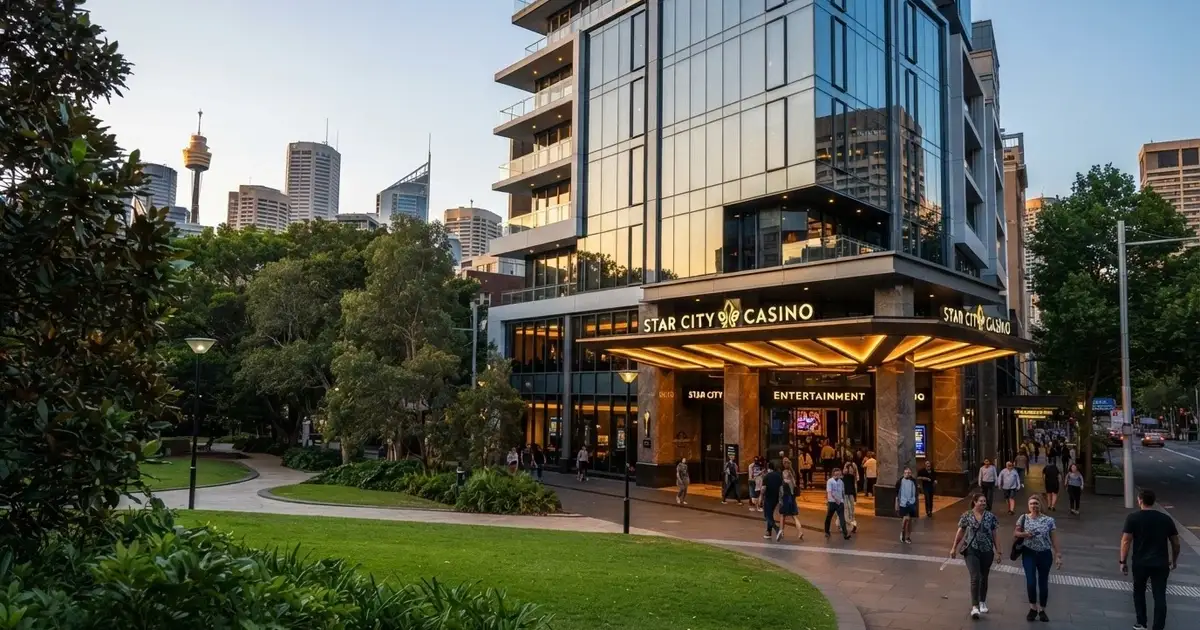
Brisbane Has Exactly One Casino. Here Is What That Means in 2026.
 Available in AU
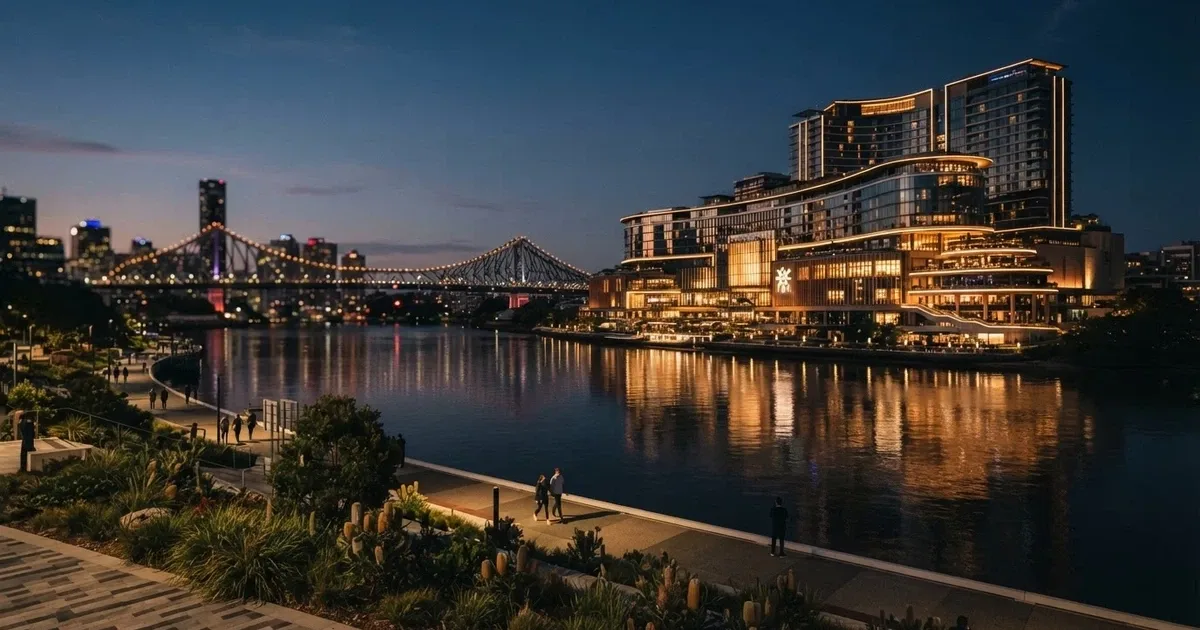
Brisbane has one casino. It is called The Star Brisbane, it sits inside the Queen’s Wharf precinct on the river, and it opened on 29 August 2024 after the old Treasury Casino shut its doors for the last time. There is no second venue across town, no competing operator a visitor can bargain against, and no licensed online casino anywhere in Australia — the Interactive Gambling Act 2001 makes that product illegal to provide to a person physically in this country, no matter who is offering it or where they are based. So the question “best casino in Brisbane” has a narrower answer than the same question would have in Sydney or Melbourne, and the rest of this page is about unpacking what that answer actually delivers, what it costs, and what the alternatives Australians search for online really are.
Current as of 18 October 2026 · verified against the Office of Liquor and Gaming Regulation public register, the Australian Communications and Media Authority register of blocked services, Star Entertainment’s ASX disclosures and annual report, and The Star Brisbane’s own published information.
Table of Contents
- The Star Brisbane: Brisbane’s only casino, built for a new era
- One real casino floor, and the sites Brisbane punters actually use
- The games you can actually play at Brisbane’s casino
- The rules every Brisbane casino visitor needs to know
- Where to get help: Queensland’s responsible gambling safety net
- How we chose Brisbane’s best casino options
- What you should actually do: is Brisbane’s only casino worth visiting?
- Frequently asked questions
The Star Brisbane: Brisbane’s only casino, built for a new era
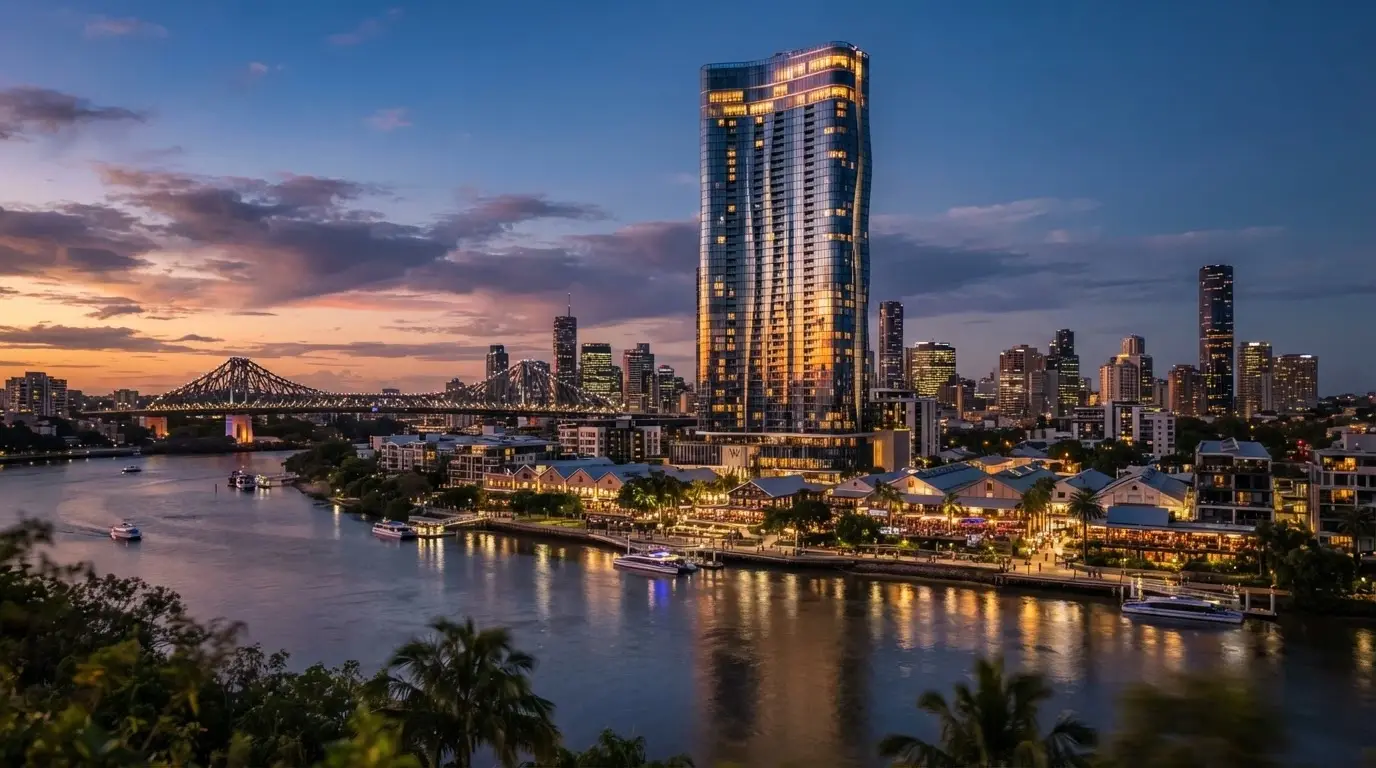
The Star Brisbane is not just a casino. It is a casino inside a precinct — one building that takes up less than 5% of the overall Queen’s Wharf development, sitting between the Brisbane CBD and South Bank on the river. That proportion matters, because the way the precinct has been sold to the city is as a riverside destination in its own right, with the casino as a single feature among many rather than the whole point of a visit. Locals searching for “best casino in Brisbane” will not find a comparison of three or four venues. There is one venue, one licence holder, and one set of rules. The rest of this section walks through what that one venue actually is.
Where The Star Brisbane sits and how to get there
The address is 33 William Street, Brisbane City, Queensland 4000. William Street runs north from the river end of the CBD, and the casino sits at the bottom of it, hard against the Brisbane River. From the South Bank Parklands it is a short walk across one of the pedestrian bridges; from the central train and bus hubs at Roma Street and Central Station it is close enough to walk in fifteen minutes; from Brisbane Airport it is a taxi or rideshare of twenty to thirty minutes, depending on traffic. Public transport runs through the bus corridors on George Street and the CityCat ferry stops at the river end of the precinct. There is no specific casino-only transport — visitors arrive as visitors to the Queen’s Wharf precinct do, on whatever route suits them.
Opening hours and the Queen’s Wharf story
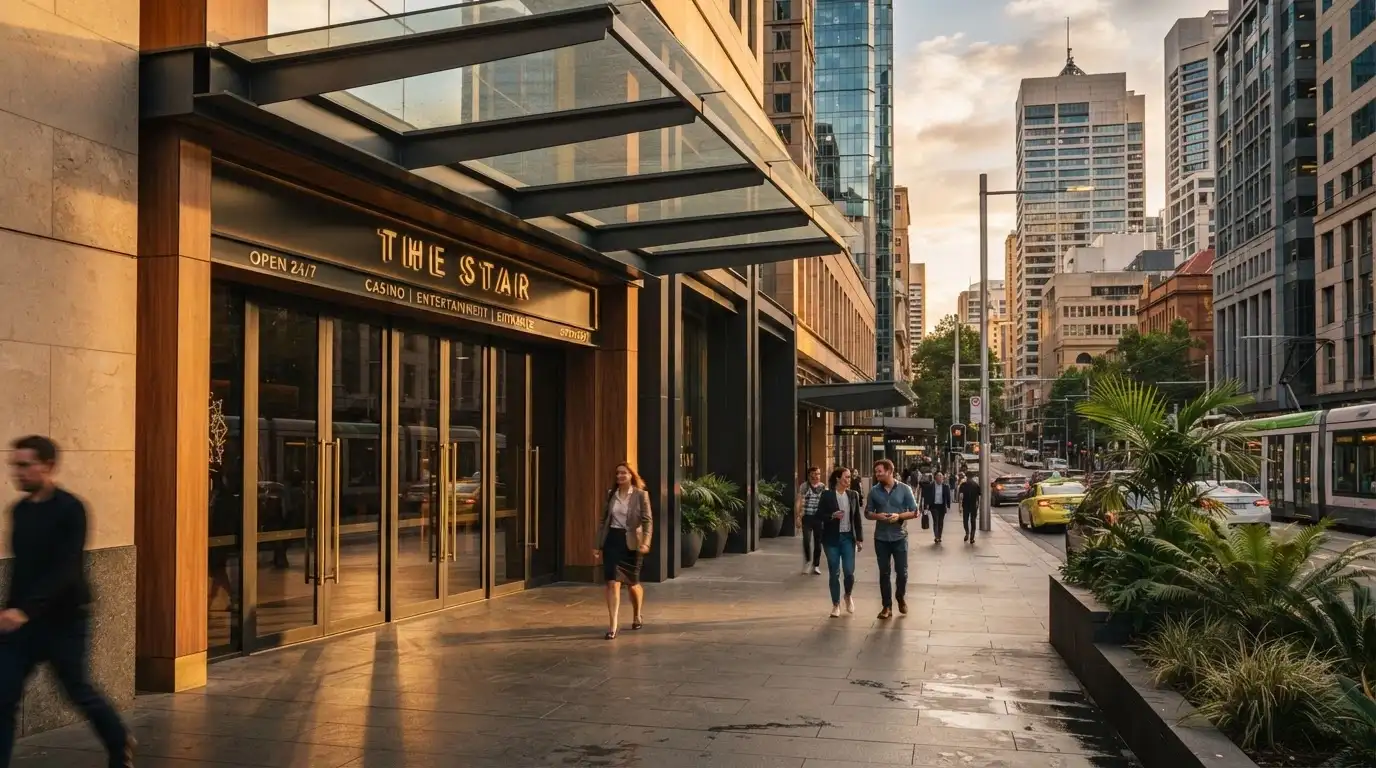
The Star Brisbane runs around the clock. Every day, every week, no closure window. The casino opened on 29 August 2024 and replaced the Treasury Casino, which had occupied a different site in the CBD and closed that same month. Treasury had been Brisbane’s casino for years; its heritage building is being repurposed — parts for tertiary educational use, parts for a heritage hotel — but the gambling licence moved with the operator to Queen’s Wharf. The new home was framed by the Queensland Government as a multi-billion-dollar precinct investment, the kind of figure used for whole-of-district redevelopments rather than for a single building, and the casino is the smallest piece of that precinct by floor area. The shape of Queen’s Wharf is the shape of a riverside mixed-use district with a casino slotted into it, not the shape of a casino with a district built around it.
Dining and restaurants at the casino
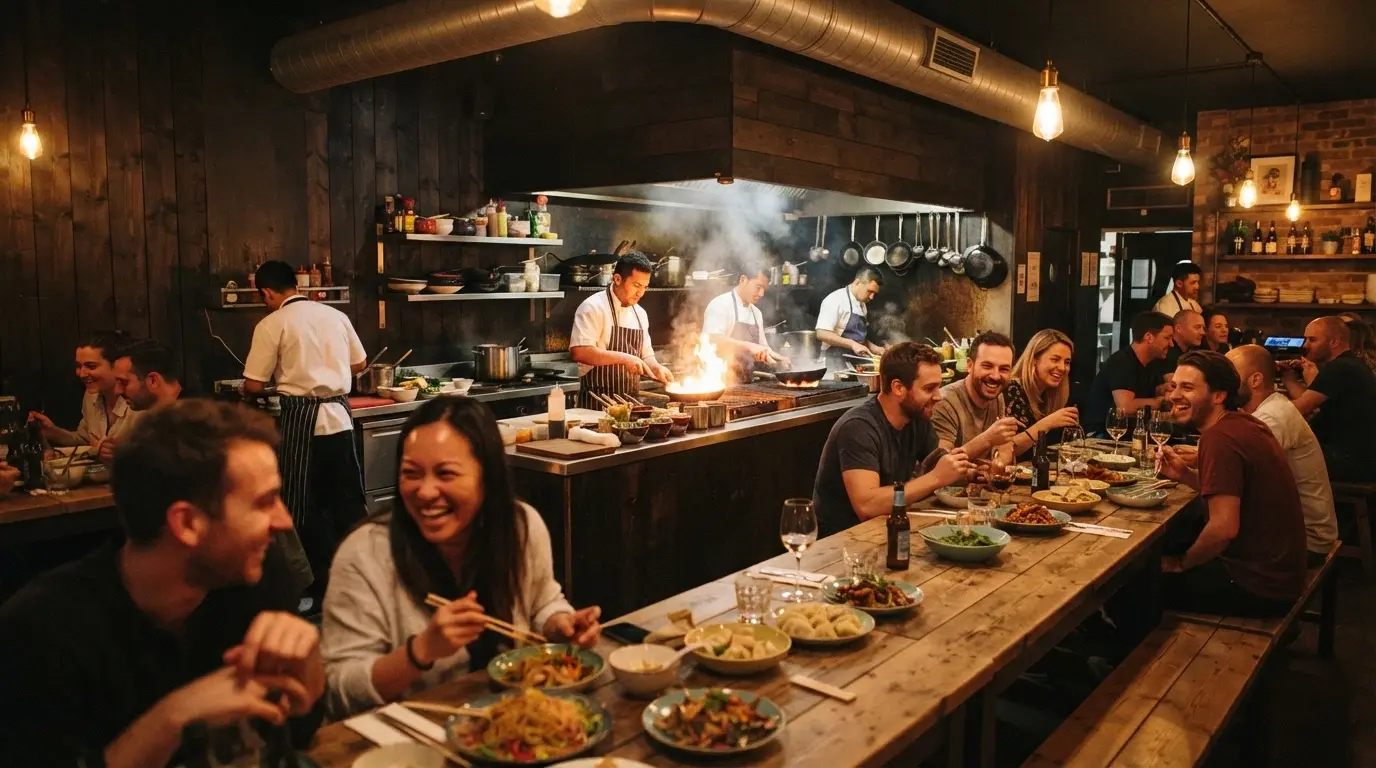
The food and beverage offering inside the complex is broader than the gaming floor alone. The signature venue is Fat Noodle, the Asian-inspired restaurant that The Star’s venues elsewhere in Australia are known for — long wooden tables, an open kitchen, a casual menu that runs from lunchtime into the late hours. The Sports Bar runs twenty-four hours a day, sitting somewhere between a pub and a sportsbook, and serves as the obvious landing spot for a visitor who wants a drink and a feed without dressing for the main floor. Beyond those two anchors, the precinct carries a number of additional bars, cafés and restaurants covering everything from casual coffees to higher-end sit-down dinners, the kind of range that lets a visitor spend an entire evening inside Queen’s Wharf without touching the gaming floor at all. Specific menus and prices change; the venue’s own site is the place to confirm a booking before walking in.
Staying over: The Star Grand and nearby hotels
The on-site hotel is The Star Grand Brisbane, a five-star property sitting in its own tower above the precinct. It has 340 rooms and is sized to host more than 700 overnight guests at full capacity — a scale that turns the casino from a night out into a weekend for visitors who want it. Visitors who prefer not to stay on-site can walk to several South Bank and CBD hotels within a few minutes; rates and availability move with conference seasons and major events at the Brisbane Convention and Exhibition Centre across the river. For a one-night visit, the obvious choice is on-site. For a longer stay with non-gambling companions, or for visitors watching the budget, the South Bank cluster is worth comparing on price and distance. There is no shortage of beds around the precinct; the constraint is more often which side of the river a visitor wants to wake up on.
Bars, entertainment and a night out at Queen’s Wharf
Queen’s Wharf has been built for evening traffic, not only for the gaming floor. The precinct carries multiple bars — some inside the casino footprint, others in the surrounding development — and live entertainment programmed across the week, from resident acts to touring shows. Specific schedules and acts vary; the venue lists its calendar on its own site. For a visitor who treats the casino as one stop of an evening rather than the only stop, the precinct itself is the bigger draw: drinks on the river, dinner, a show, and a couple of hours at the tables in any order. The 24/7 Sports Bar is the easiest place to start; the premium rooms and the riverside bars are where a longer evening tends to end up. Brisbane has never had a riverside entertainment precinct on this scale before, and that context matters for how a visitor should plan an evening out.
Parking, dress code and what to bring
Parking at Queen’s Wharf runs through the precinct’s own underground car park, with rates set by the precinct operator rather than by the casino specifically. Brisbane CBD parking is not cheap, and a weekend evening visit will run into the kind of figure that pushes some visitors towards public transport or a rideshare instead. The dress code on the main gaming floor is smart casual — closed shoes, no singlets, no workboots — though premium rooms have stricter standards, and The Sovereign Room and Oasis Room can approach business-formal after dark. Bring government-issued photo ID. The mandatory carded-play system identifies every player at the door or at the desk, so a driver’s licence or a passport is not optional. Visitors should check the venue’s own page for the precise dress code and parking rates before arriving; standards and prices can shift without much notice.
The Star Club rewards programme
The Star runs its own loyalty programme called Star Club, with three named tiers that any visitor who plays consistently will hear about at the desk. The Club is the tier reserved for Gold Members and above, the Sovereign Room is for Platinum, and the Oasis Room rounds out the top end. Each premium tier carries its own private gaming space and a private restaurant, and they are open around the clock for members. Specific earn rates — how many points a dollar spent produces, how many points a free meal costs, the cash-back percentages at each tier — are not published in a form that helps a casual visitor; the programme rewards frequent play, and the venue is the place to ask if you intend to play often enough for the maths to matter. For visitors who drop in once or twice a year, the loyalty programme is a nice-to-have rather than a deciding factor.
One real casino floor, and the sites Brisbane punters actually use
Brisbane has one licensed casino floor. Everything else that turns up when an Australian searches for “casino” online falls into one of three categories: licensed online wagering operators, who can take bets on sport and racing but cannot offer a casino game under Australian law; offshore casino sites, which take Australian traffic in defiance of the Interactive Gambling Act 2001; and the much larger group of Australians who simply do not gamble at all. The table below maps each of these against the four things a reader actually needs to know — whether the operator is licensed in Australia, whether it offers casino games, what protections apply to an Australian player, and what its market reach is. The spread tells its own story.
| Operator | Type | Licensed in Australia | Casino games | Australian player safeguards | Market or traffic share |
|---|---|---|---|---|---|
| The Star Brisbane | Land-based casino | Yes (OLGR, Casino Control Act 1982) | Yes | Mandatory carded play, $5,000 daily cash limit, OLGR oversight | — |
| Treasury Brisbane | Former land-based casino (closed Aug 2024) | Was licensed | Was | Was | — |
| SportsBet | Online wagering | Yes (NT) | No | BetStop, ACMA oversight | 19.57% market share |
| Tab | Online wagering | Yes (state-based) | No | BetStop, ACMA oversight | 11.54% market share |
| Bet365 | Online wagering | Yes (NT) | No | BetStop, ACMA oversight | 6.56% market share |
| Ladbrokes | Online wagering | Yes (NT) | No | BetStop, ACMA oversight | 4.53% market share |
| Rocket Play | Offshore online casino | No | Yes | None | 9.4% traffic share |
| Skycrown | Offshore online casino | No | Yes | None | 8.55% traffic share |
| Royal Reels | Offshore online casino | No | Yes | None | 2.51% traffic share |
| Stake | Offshore online casino and sportsbook | No | Yes | None — crypto-only deposit is a tell | 1.28% traffic share |
A few things the table makes obvious without needing commentary. Every offshore brand that takes Australian traffic offers casino games, because that is the product category the IGA prohibits and the reason they are offshore in the first place. None of them offer Australian consumer protection, because the IGA is what they are routing around. Every licensed Australian wagering brand offers no casino games, because that is what their licence permits and the line they are not permitted to cross. The two columns — “Casino games” and “Australian player safeguards” — move in opposite directions for every operator on the list. That is not an accident. It is the shape of the Australian online gambling market, drawn honestly.
The Star Brisbane — the city’s only licensed casino
The Star Brisbane sits at the licensed end of the table and the only end that exists in physical form in Brisbane. The venue holds 2,500 gaming machines on the main floor, a dedicated poker room with eight-handed cash games and a weekly tournament schedule, table games covering blackjack through to sic bo, and three premium rooms — The Club for Gold Members and above, the Sovereign Room for Platinum, and the Oasis Room for the top tier of play — each open around the clock and each with its own private restaurant. The Star Grand above the precinct adds 340 rooms for visitors who want to stay on-site. The licence is held under the Casino Control Act 1982, with the Office of Liquor and Gaming Regulation as the day-to-day regulator; the venue must undergo a suitability review at least every five years, and from 1 April 2026 the operator fee is a fixed $18 million per year plus performance incentives. Since the mandatory carded-play and $5,000 daily cash limit took effect on 19 October 2024, average daily revenue at the venue declined by 20% through to 30 June 2026 — a figure that reflects the regulatory regime working as designed, not a complaint. The Star’s Gold Coast licence remains subject to a 90-day suspension that has been deferred to 30 September 2026, which is the kind of context that explains why the Brisbane operation is the company’s primary focus. For a Brisbane reader, this is the venue to visit. There is no second option to choose from.
Treasury Brisbane — closed, gone, replaced
Treasury Brisbane was the casino that closed to make way for The Star. It occupied the old Treasury building in the CBD, a heritage site that had run as a casino for years before the licence moved. Treasury closed in August 2024, the same month The Star Brisbane opened at Queen’s Wharf. The Treasury building itself is not empty: parts of it are being repurposed for tertiary educational use and parts for a heritage hotel, which preserves the structure while removing the gambling use that defined it for two decades. The gambling licence, however, did not stay with the building — it moved with the operator to the new precinct. Treasury Brisbane is no longer a place a reader can visit, no longer a brand they can register with, and no longer a venue that responds to complaints or self-exclusion. It is a closed chapter of Brisbane’s casino history, and the only reason it appears on this page is that older readers will search for it.
SportsBet — Australia’s biggest bookie, but no casino games
SportsBet is the largest licensed wagering brand in Australia by market share, holding 19.57% of the national market under a Northern Territory licence. It is an Australian-facing sports and racing bookmaker, owned by Flutter Entertainment, and is one of the names that comes up most often in casual Australian conversation about gambling. It is also not a casino. The licence under which SportsBet operates permits pre-event sports betting and racing wagering; it does not permit online casino games, online pokies, or in-play sports betting. A SportsBet account gives a user access to sports markets, racing markets, and the betting products built around them. It does not give a user access to a blackjack table, a slot machine, or any other casino game. The distinction matters because Australians who search for a “casino” online frequently arrive at SportsBet and assume they have found one — the product is wagering, the brand is large, but the casino game category is not on the menu.
Tab — the government-owned wagering giant
Tab is the state-backed wagering brand that Australians have used for decades, and it operates in several states through government-owned or government-linked entities. The brand holds 11.54% of the national wagering market, sits behind a state-based licence structure rather than the Northern Territory model that the international bookmakers use, and offers the same product scope as the licensed international bookmakers: pre-event sports, racing, the standard wagering products. No casino. No online pokies. No table games. Tab is the wagering brand a reader is most likely to have encountered through a retail outlet at a pub or a TAB agency, but the online product is wagering only, and the digital and retail arms share the same licence terms. A Tab account is not a route into a casino game.
Bet365 — the global bookmaker, local licence
Bet365 is the international bookmaker that operates in Australia under a Northern Territory licence, holds 6.56% of the national wagering market, and is one of the more recognisable sports betting brands worldwide. The Australian product is pre-event sports and racing only. There is no casino tab, no slots, no live dealer. A reader who has used Bet365 in the United Kingdom or Europe and assumes the Australian site offers the same product range will be disappointed on this point: the Australian operation is bounded by the same IGA framework that applies to every licensed wagering brand in the country, and the parent group has not been granted any carve-out that would let it offer casino games here. Bet365 is one of the better-resourced licensed operators in Australia, but it is not a casino, and the licence it holds will not be expanded to permit casino games.
Ladbrokes — another international name, same wagering-only remit
Ladbrokes is a familiar name to British and Irish punters, and the Australian arm operates under a Northern Territory licence with 4.53% of the national wagering market. The product scope is the same as every other licensed Australian wagering operator: pre-event sports and racing, no casino games, no online pokies, no in-play betting. Ladbrokes is owned by Entain, the same parent group that runs a range of betting and gaming brands internationally, and the Australian operation is bounded by the local regulatory framework rather than by the parent’s global product range. A Ladbrokes account in Australia is a sports and racing account. The British site, for the avoidance of doubt, offers more — but the Australian site does not, and a Brisbane-based account will not be served from the British licence.
Rocket Play — the biggest offshore name Australians search for
Rocket Play is the most-trafficked offshore casino taking Australian players, with 9.4% of Australian-facing casino traffic. It is not licensed in Australia. The Interactive Gambling Act 2001 makes it an offence for any operator to provide online casino games to a person physically in this country, and the offshore status is what lets Rocket Play offer the product that licensed Australian wagering brands cannot. The practical cost of using it sits in three places. First, there is no BetStop coverage — the National Self-Exclusion Register applies to licensed Australian wagering providers, and Rocket Play is not one. Second, there is no Australian regulator to complain to if a withdrawal is refused, a bonus is voided on a technicality, or the site disappears overnight. Third, the site itself can be blocked at any time by the ACMA, which has had 1,564 illegal gambling and affiliate websites blocked since November 2019. A balance held at an offshore site the morning after a blocking order can be functionally unreachable. None of this is hypothetical; it is what the offshore market looks like in practice.
Skycrown — high traffic, zero Australian protections
Skycrown is the second-most-trafficked offshore casino among Australian users, holding 8.55% of the traffic share. The legal position is identical to Rocket Play: no Australian licence, providing online casino games in defiance of the IGA, no Australian consumer protection. The marketing is similar, the game selection is similar, and the gap between what an Australian user expects and what an Australian user is actually buying is the same. Skycrown’s prominence in the search results is partly a function of how aggressively offshore brands advertise in Australia despite the prohibition — and partly a function of the fact that there is no licensed competitor offering the same product for an Australian user to find instead. The search results reward whoever pays for the slot, licensed or not.
Royal Reels — a smaller offshore player, the same risks
Royal Reels holds 2.51% of Australian-facing offshore casino traffic — a smaller share than Rocket Play or Skycrown, but a meaningful slice. The legal and consumer-protection profile is the same: no Australian licence, no BetStop coverage, no Australian regulator, no recourse if a withdrawal is refused or a bonus is clawed back. Smaller offshore operators carry the same risks as the larger ones, with one additional exposure: a smaller operator is more likely to have liquidity problems, payment-processor disputes, or sudden closures when a blocking order lands or a banking partner pulls support. The BetStop gap is the same gap regardless of the size of the brand. So is the ACMA blocking risk. So is the absence of any Australian body a player can lodge a complaint with.
Stake — crypto and the tell that gives it away
Stake is the crypto-focused offshore casino and sportsbook that holds 1.28% of Australian-facing traffic. The legal position is the same as every other offshore brand in the table — no Australian licence, no IGA compliance, no Australian regulator. The payment-method signal is the one a reader can use to recognise an offshore operator on contact: a brand that asks for crypto deposit or credit-card payment is by definition operating outside Australian rules, because credit cards and crypto have been banned as payment methods for online wagering in Australia since 11 June 2024. A licensed Australian operator will offer debit card, bank transfer, PayID/Osko and BPAY. A brand asking for anything else is offshore, and the rest of the protections follow from that one fact. If the cashier page mentions Bitcoin, Ethereum or USDT before it mentions a bank transfer, the operator is not licensed for Australian customers.
The games you can actually play at Brisbane’s casino
The gaming floor at The Star Brisbane is structured the way large Australian casino floors usually are: a long rank of poker machines, a block of table games on the main floor, a separate dedicated poker room, and a tier of premium rooms at the back for the players who want privacy and bigger limits. The number that anchors the floor is 2,500 gaming machines — the largest concentration of pokies in the city — and every one of those sessions is tracked under Queensland’s mandatory carded-play system. Beyond the machines, the floor carries a full table-games selection and a poker room with the structure of a dedicated poker venue rather than a couple of tables in the corner.
Poker: the dedicated room, cash games and weekly tournaments
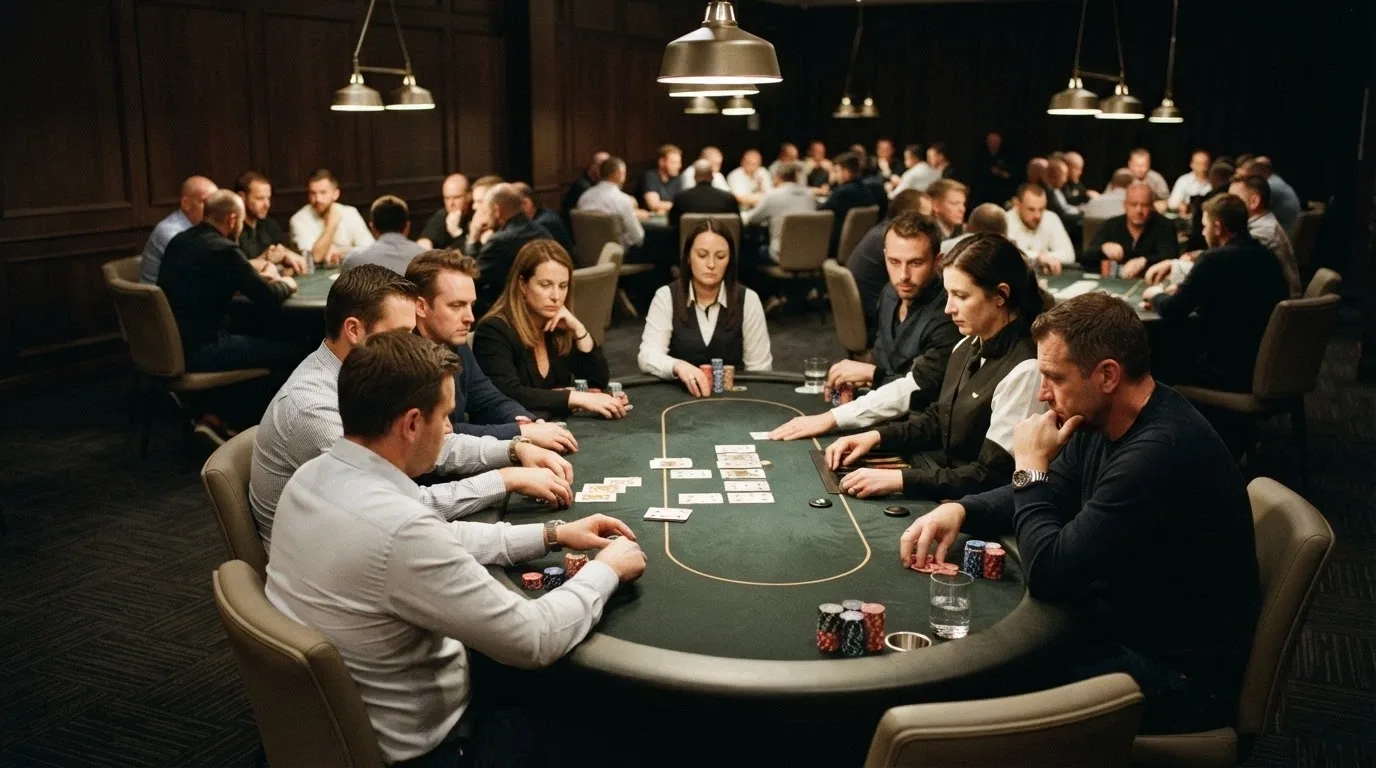
The poker room sits in its own space on the casino floor and runs cash games from midday every day. The tables are eight-handed at most, with No Limit Texas Hold’em and Pot Limit Omaha as the staple formats. Cash-game limits run from $2/$5 at the low end — buy-in between $200 and $500 — up to $25/$25 at the top end, where the buy-in stretches from $2,000 to $10,000. Rake is 10% of the pot, capped at $20 a hand. Tournaments are a separate schedule: the standard weekly No Limit Hold’em event carries a $200 buy-in, split $170 entry fee and $30 administration, and runs with a maximum field of 200 players. Higher buy-ins sit alongside it on a rotating roster. The room is a proper poker room — staffed, structured, aimed at the kind of player who knows the difference between a straddle and a button — rather than a handful of tables in the corner of the gaming floor.
Pokies and gaming machines: 2,500 ways to play
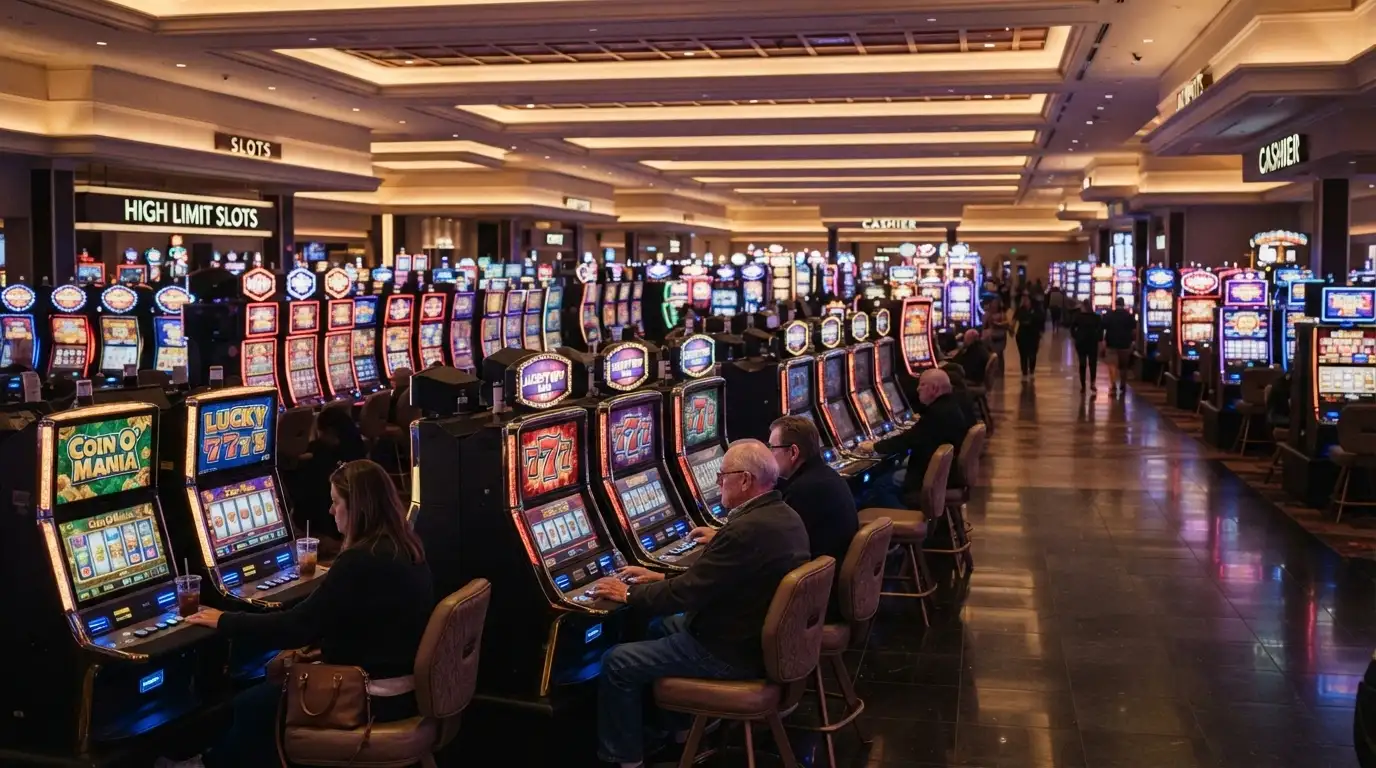
The 2,500 gaming machines on the floor cover the full range of what Australians expect — classic three-reel style games, modern five-reel video pokies, and the progressive jackpot networks that connect machines across multiple venues. Every machine is part of Queensland’s mandatory carded-play system: a player inserts their loyalty card or registers at the desk before play, and the session is logged. Time spent, money spent and breaks taken are all tracked, and the system enforces pre-commitment limits and required breaks as part of the harm-minimisation regime. For a visitor who has not played under carded play before, the change is mostly invisible in the moment and visible the next day in the form of an activity statement. The carded environment is the single largest regulatory change to the Brisbane casino floor since opening, and it is the reason average daily revenue at the venue dropped 20% in the months that followed. A player who notices the session ending earlier than they planned is not imagining it; the system is doing what it was built to do.
Table games: blackjack, roulette, baccarat and more
The table-game floor covers blackjack, craps, roulette, Caribbean Stud Poker, mini-baccarat, sic bo, money wheel and rapid roulette. The premium spaces — The Club for Gold Members and above, the Sovereign Room for Platinum, and the Oasis Room for top-tier play — sit behind the main floor and run their own tables with higher limits, each with a private restaurant attached and open around the clock. Minimum bets on the main floor vary by table and time; the premium rooms start higher. The one game that turns up in some casino guides and not here is poker — that has its own room, separate from the table-game floor — and the one niche game that surprises visitors is sic bo, which carries a dice format unfamiliar to Australian players outside the larger casino cities. Rapid roulette is the electronic-terminal version that runs faster than a traditional table, for visitors who want a quicker pace or a lower minimum than the live tables offer.
Bingo and other games at The Star
Beyond the headline games, the floor carries bingo-style sessions and the less familiar titles that round out a large casino’s range. Bingo in Brisbane runs in scheduled sessions rather than as a constant offering, and the money wheel and sic bo give the floor some visual variety that the standard blackjack-and-roulette core does not. For a visitor who has spent a couple of hours at the machines and wants to change the pace, the table-game floor and the dedicated bingo room are the obvious next stops. Specific session times for bingo are not listed in a single fixed place; the venue’s own weekly schedule is the source a visitor should check before planning around a particular session. The niche games are a small part of the floor, but they are part of why a venue with 2,500 machines still feels like a casino rather than a pokie room.
The rules every Brisbane casino visitor needs to know
A visit to The Star Brisbane happens inside a regulatory frame that has tightened visibly in the last two years. The licence that permits the casino to exist sits under the Casino Control Act 1982, the Office of Liquor and Gaming Regulation oversees the operator, and the March 2024 amendments brought in mandatory carded play, pre-commitments, time limits, enforced player breaks, and the $5,000 daily cash limit that took effect in October 2024. None of this changes what is on the floor; it changes how a player is identified, how long they can play without a break, and how much cash can leave or enter the venue in a day.
Who licences Brisbane’s casino — and what that licence demands
The licence that runs The Star Brisbane sits under the Casino Control Act 1982, with the Office of Liquor and Gaming Regulation as the regulator that oversees the venue day to day. The Act was substantially amended in March 2024 to tighten harm-minimisation and anti-money-laundering controls, and earlier reforms from 2022 had already raised the penalty ceiling: the Queensland Government can now fine a casino up to $100 million and appoint a special manager if the operator falls short of its obligations. The Act requires a suitability review at least every five years — an audit of whether the operator remains fit to hold the licence — and the licence itself comes with a fee structure that, from 1 April 2026, charges The Star a fixed annual fee of $18 million payable monthly, plus performance-based incentive fees. The framework is built around the assumption that a casino licence is a privilege the operator earns repeatedly, not a right it holds once. A reader should understand what that licence costs the operator in dollars and in regulatory obligation, because that is what shapes the venue a visitor walks into.
You must be 18: age limits and entry conditions
The minimum age for any commercial gambling in Australia is 18 — across every state, every product, every channel. At the door of The Star Brisbane, that age is enforced through the mandatory carded-play system, which identifies every player at entry. Government-issued photo ID is the standard: a driver’s licence, a passport, or a proof-of-age card. For a visitor, the practical implication is that a driver’s licence is not optional. The carded system also means the casino knows who is on the floor at any given time, and that data feeds the activity statements and the harm-minimisation regime the operator has to run. Under-18s are not permitted on the gaming floor; the surrounding precinct — restaurants, bars, hotel — has its own age rules in line with the licensing of those venues. A family visiting the precinct for a meal is fine; a family trying to walk a teenager onto the gaming floor is not.
The online casino ban: what the IGA actually says
Australia’s prohibition on online casino is the single most important legal fact for any reader searching for casino play from home. The Interactive Gambling Act 2001 makes it an offence to provide online casino games, online pokies, or in-play sports betting to a person physically in Australia. There is no licence for any of these products anywhere in the country. What is licensed is wagering on sport and racing placed before the event begins, through operators licensed by a state or territory — the Northern Territory Racing and Wagering Commission is the de facto national licensor for the larger online brands. The Australian Communications and Media Authority enforces the prohibition, has had 1,564 illegal gambling and affiliate websites blocked by Australian ISPs since November 2019, and reports that more than 225 illegal services have withdrawn from the Australian market since enforcement was strengthened in 2017. From 11 June 2024, credit cards and crypto have been banned as payment methods for online wagering; legal deposit routes are debit card, bank transfer, PayID/Osko and BPAY. The 2026 reform package — passed 19 August 2026, commencing 1 January 2027 — adds ad caps, a live-sport blackout around events, a ban on celebrity endorsement, and cooling-off restrictions on inducements after sign-up and after BetStop deregistration.
| Gambling type | Legal in Australia | Available at The Star Brisbane |
|---|---|---|
| Land-based casino gaming | Yes | Yes |
| Online casino games | No | No |
| Online pokies (slots) | No | No |
| Online sports betting (pre-event) | Yes (licensed wagering) | No |
| In-play online sports betting | No | No |
| Online wagering with credit card | No (banned 11 June 2024) | No |
| Online wagering with crypto | No (banned 11 June 2024) | No |
| Race wagering | Yes (licensed wagering) | No |
| Lotteries and keno | Yes (state-licensed) | No |
The table maps the categories a reader might search for against two questions: is the product legal anywhere in Australia at all, and is it available at the Brisbane casino specifically. The second column is the harder one. The Star Brisbane is a land-based venue operating under a casino licence — it does not offer an online product at all, and none of the online products in the table are available from inside its walls. A reader looking for a legal way to play online casino in Brisbane is not looking for something the venue can offer. They are looking for a product category that does not exist in this country, which is exactly the gap the offshore brands step into.
Where to get help: Queensland’s responsible gambling safety net
Gambling harm is real and it is measured. The Australian Institute of Health and Welfare puts the national problem-gambling rate at roughly 2.1% of adults — about 430,000 people — and the Queensland Gambling Survey 2023 put the state’s problem-gambling group at 0.64% of adults, with another 6.27% in the low-risk group and 2.60% in the moderate-risk group. State-wide gambling losses totalled $6.1 billion in 2022–23, up 36% since 2018–19. The infrastructure that exists for someone who decides to step back is not perfect — only 0.62% of gambling tax and levy revenue is funded back to harm-minimisation services, per the Queensland Audit Office — but it is in place, free, and accessible.
Self-exclusion: BetStop and venue-based options in Queensland
There are two self-exclusion routes for someone in Brisbane. The national one is BetStop, the National Self-Exclusion Register, which excludes a person from every Australian-licensed online and phone wagering service in one registration. BetStop accepts exclusions from three months to lifetime; as at 31 July 2026 it had 67,480 registrations, of which 41,290 were still active. Seventy-eight per cent of those registrants were under 40; thirty-eight per cent chose lifetime exclusion. The state-level route is Queensland’s venue-based self-exclusion, which bans a person from entering any gaming venue in the state for up to five years, carries a 24-hour cooling-off period before it takes effect, and cannot be revoked for at least a year after that. The two routes together cover most of the licensed gambling an Australian can do — but they do not cover offshore casinos. BetStop stops at the Australian border; an offshore site is not bound by an Australian exclusion, and the operator has no obligation to honour it. The same gap applies to a Queensland venue self-exclusion if the person leaves the country, which is worth knowing for a reader who travels.
How big is the problem? Gambling harm in Queensland, by the numbers
The numbers from the Queensland Gambling Survey 2023 and the Queensland Audit Office are blunt. Less than 1% of Queensland adults are in the problem-gambling group, but the low-risk and moderate-risk groups sit at 6.27% and 2.60% — together, more than 8% of adults are gambling in ways that carry some level of measurable harm. State-wide losses of $6.1 billion in 2022–23 are up 36% on 2018–19, and that growth came alongside the pandemic-era shift into online play. The treatment system runs well behind the problem: only 0.62% of gambling tax and levy revenue returns to harm-minimisation services. For a reader who treats gambling as entertainment, these figures are context. For a reader who has noticed their own play drifting into territory that worries them, they are the reason the next section exists. The state collects the revenue; the state spends very little of it back on the people the revenue costs the most.
Where to call: helplines, counselling and face-to-face support
The free services available right now start with the National Gambling Helpline on 1800 858 858 — a free, confidential line staffed twenty-four hours a day, every day. The web counterpart is Gambling Help Online, at gamblinghelponline.org.au, with chat, self-help tools and online counselling. For face-to-face support in Queensland, Gambling Help Queensland runs free phone and in-person counselling across the state. None of these services require a person to be in crisis before they call; the first conversation is the easy one to have, and the infrastructure exists because the problem is large enough to need it. A reader who recognises themselves in the figures above does not have to wait for a worst moment to pick up the phone.
How we chose Brisbane’s best casino options
The ranking on this page is not really a ranking. Brisbane has one casino, so the only ordering that matters is the contrast between The Star Brisbane and everything else an Australian who searches “casino” online will encounter. We assembled this picture from a small set of primary sources: the official Office of Liquor and Gaming Regulation register for Queensland land-based casino licensing; the Australian Communications and Media Authority for online prohibition, enforcement and site-blocking data; Star Entertainment’s ASX announcements and Annual Report for operator-level financials; and the operator’s own published information for venue-level specifics (hours, game lists, dining venues). On the operator side, we took the ten brands Australians actually search for — the licensed casino, the licensed wagering brands, and the offshore casino names — and rated each on the same four points: licence status in Australia, whether casino games are available at all, what Australian player safeguards apply, and what its reach is. The criteria are qualitative, not scored; the table earlier in the page carries the comparison, and the prose around it explains why each gap in protection exists. A reader who wants to check the source themselves can do so against the OLGR register for the land-based licence, the ACMA register for site-blocking, and the operator’s ASX disclosures for the financial figures.
What you should actually do: is Brisbane’s only casino worth visiting?
A reader who came to this page looking for a choice between Brisbane casinos will leave with one option, and that is the honest answer to the question. The Star Brisbane is what Brisbane has. For a visitor who wants a night out at a large, modern gaming floor with a full table-games selection, a proper poker room, a hotel above it, and the broader precinct to wander through, the venue delivers on every one of those. For a visitor who is looking for cheap play, anonymous play, or a competing casino across town to bargain against, there is no such alternative inside Brisbane — and the online alternatives an Australian reader might search for are running illegally under the IGA, with no Australian consumer protection, no BetStop coverage, and the real possibility that the site is blocked by the time a withdrawal is requested. The Star Brisbane is also operating under a tighter regulatory regime than it was at opening: mandatory carded play, a $5,000 daily cash limit, pre-commitments and time-out requirements, and a 20% revenue decline since the new rules came in — figures that reflect the regulatory design working as intended, not as a complaint about the venue. The house always has an edge, and the activity statements the venue now issues make that edge more visible than they used to. The venue is worth a visit from a reader who knows what they are walking into and accepts what the regime costs in pace and privacy. The offshore sites that turn up in search results are not a parallel option; they are a different category entirely, and one that costs the player every safeguard an Australian licence provides. That is the trade, in plain language, and it is the same trade whichever way the reader ends up going.
Frequently asked questions
Is The Star Brisbane open 24 hours?
Yes. The Star Brisbane operates twenty-four hours a day, seven days a week, every week of the year. There is no closure window on the main gaming floor, the poker room, or the premium rooms. The Club, Sovereign Room and Oasis Room are all open around the clock for members and qualifying play. The 24-hour Sports Bar means a visitor arriving at any hour can get a meal and a drink without a venue being shut.
What is the minimum age to enter The Star Brisbane casino?
Eighteen. The minimum age for any commercial gambling in Australia is 18, and The Star Brisbane enforces it through the mandatory carded-play system at entry. Bring government-issued photo ID — a driver’s licence, passport, or proof-of-age card — because the venue will not let a player on the floor without identifying them first. The carded system records every session for harm-minimisation purposes.
Can you play poker at The Star Brisbane?
Yes. The Star Brisbane runs a dedicated poker room with cash games from midday daily, eight-handed tables, and weekly tournaments. Cash-game limits run from $2/$5 (buy-in $200–$500) to $25/$25 (buy-in $2,000–$10,000) with 10% rake capped at $20 a hand. Tournament buy-ins start at $200, with a 200-player maximum field on the standard weekly event.
What happened to the old Treasury Casino in Brisbane?
Treasury Casino closed in August 2024 and was replaced by The Star Brisbane at the new Queen’s Wharf precinct on the river. The heritage Treasury building itself is being repurposed — parts of it for tertiary educational use and parts for a heritage hotel — but the gambling licence moved with the operator to the new precinct. The Treasury name is no longer a venue or a brand that responds to players.
Are online casinos legal in Brisbane or Australia?
No. The Interactive Gambling Act 2001 makes it an offence to provide online casino games, online pokies or in-play sports betting to a person in Australia. There is no licence for online casino anywhere in the country. What is licensed is pre-event sports and racing wagering through operators such as SportsBet, Tab, Bet365 and Ladbrokes. Offshore casinos that accept Australian players operate in defiance of the IGA.
Prepared by the PayID Casinos AU editorial staff.