
Casinos That Accept Litecoin in Australia: 10 Offshore Sites, the Real Speeds, and What the Law Says
The promise is speed. Litecoin confirms a transaction in minutes where a bank transfer takes days, where a credit card takes a percentage, and where an Australian bank account cannot legally fund an online casino at all. That promise is real. So is the second half of the picture: no casino that accepts Litecoin from an Australian player holds an Australian licence, because no such licence exists. Every brand on this page operates outside the Interactive Gambling Act 2001, and the player who funds it with crypto steps outside every consumer protection that Act would otherwise provide.

Data current as of 29 October 2026, verified against the Curaçao Gaming Control Board public register and the ACMA register of blocked services.
Table of Contents
- What a Litecoin Casino Actually Is — and What It Isn’t
- Why Litecoin Payments Leave Bank Transfers in the Dust
- The 10 Offshore Litecoin Casinos Australians Are Using in 2026
- Stake: 200% Crypto Bonus and a VIP Ladder That Rewards Volume
- RocketPlay: Curaçao GCB Licence and an A$1,500 Welcome Match
- SkyCrown: The A$8,000 Welcome Package That Excludes Crypto Deposits
- FairGO: RTG-Focused Pokies for the Classic Casino Player
- WinSpirit: Multi-Studio Platform with LTC Deposit Support
- Royal Reels: Another Curaçao Offshore Option for Australian LTC Players
- Rainbet: The 10x Wagering Outlier in a 40x World
- BC.Game: 150+ Cryptos and the Fastest LTC Withdrawals We Tested
- Bizzo Casino: Multi-Studio Offshore Play with LTC
- Scream Casino: Newer Entrant, Standard Offshore Setup
- Why Your Litecoin Casino Bonus Is Almost Certainly Smaller Than It Looks
- The Pokies and Live Games Worth Spending Your Litecoin On
- No KYC, Provably Fair, and What Anonymity Actually Costs You
- Playing on Your Phone: What Mobile Litecoin Casino Play Actually Looks Like
- New Litecoin Casinos in 2026: Fresh Brands, Same Offshore Rules
- Australian Law and Offshore Litecoin Casinos: the Uncomfortable Reality
- Staying Safe When Australian Protections Don’t Reach Offshore
- How We Evaluated Every Litecoin Casino on This Page
- What an Australian Player Should Actually Decide About Litecoin Casinos
- Frequently Asked Questions
What a Litecoin Casino Actually Is — and What It Isn’t
A Litecoin casino is an offshore gambling site that accepts deposits and pays withdrawals in LTC. That is the whole of it. The “casino” part is the same product an Australian might see on a licensed wagering platform — pokies, live dealer blackjack, roulette, the occasional crash game — served from a Curaçao-licensed server, hosted outside Australia, and reachable because nobody in authority is currently blocking the URL. The “Litecoin” part is the payment rail. It is also the tell. An Australian who is asked to deposit with crypto by a gambling site is being served by someone outside the Australian rules. The payment method is itself the marker.
Australians use these sites despite the prohibition because the alternative in the licensed market does not include casino games at all — online casino, online pokies and in-play betting are prohibited under the Interactive Gambling Act 2001, and no licence for them exists anywhere in the country. What an Australian-licensed platform offers is wagering on races and sport placed before the event, lotteries and keno. The licensed product is not the same product tier as a crypto casino lobby with 7,000 pokies. Players who want casino games and want to deposit with crypto are pushed into the offshore market by structure, not by accident.
The core trade-off is the one that runs through the rest of this page. Litecoin and the other cryptocurrencies bring speed and a low fee floor that bank transfers, debit cards and PayID cannot match for this product — because none of them are legally allowed to fund it. What they cannot bring is Australian consumer protection. There is no Australian Financial Complaints Authority for an offshore casino, no BetStop coverage of an offshore domain, and no ACMA enforcement action that can put money back in a player’s account once the operator has decided not to pay it. The speed is real. The protection deficit is equally real.
The basic mechanics: crypto wallets meet casino lobbies
Behind a Litecoin casino login sit four moving parts: a player wallet (a software application holding the LTC), the Litecoin blockchain (the public ledger that confirms the transaction), the casino’s own server (which credits the deposit to the player’s balance), and the random number generator driving the games. The wallet is the only piece the player controls; the rest are infrastructure the casino chose.
Litecoin is a fork of Bitcoin’s code, designed to be faster and cheaper. Its blocks confirm every 2.5 minutes, against Bitcoin’s 10-minute average, which is the entire technical reason it is more useful for casino deposits and withdrawals. Transaction fees rarely exceed A$0.05 regardless of amount — a flat rate that makes a A$50 deposit and a A$5,000 deposit roughly the same cost to send, and a fraction of the 2.5% a credit card would have charged. The casino balances the deposit against the AUD-equivalent at the moment it credits, then settles bets in whatever denomination the player chose on signup — usually LTC or mBTC, sometimes USDT.
How depositing and playing with Litecoin actually works
The deposit flow is mechanical. The player opens the casino’s cashier, picks Litecoin, and is shown a one-time deposit address — either a string of characters to paste into their wallet or a QR code to scan with a phone wallet. The player sends the LTC. Roughly six minutes later, depending on the operator, the blockchain has confirmed the transfer, the casino’s hot wallet has seen it arrive, and the player’s balance updates. From there the cashier closes and the lobby opens, and the games look exactly like the games an AUD player would see on any other modern casino: Pragmatic Play pokies, Evolution Gaming live tables, Hacksaw Gaming scratch cards, the same providers, the same RTPs.
Cashing out reverses the flow. The player requests a withdrawal in the cashier, pastes a wallet address they control, and the casino’s treasury sends the LTC. Independent testing of 134 transactions across 47 offshore platforms in January 2026 measured the average end-to-end withdrawal at 11.7 minutes — from request to LTC visible in the player’s wallet. The fastest operator in that sample cleared a 12.4 LTC withdrawal in 7 minutes 12 seconds. The slowest involved operator-side manual review that took the better part of a working day, with the LTC network itself adding almost no time. The bottleneck is the casino, not the blockchain.
Litecoin casinos vs standard online casinos: what changes, what doesn’t
The game library is the same, almost without exception. Pragmatic Play, Evolution, NetEnt, Play’n GO, Hacksaw, Nolimit City, BGaming — these studios license their games to both AU-facing licensed operators (where the product is wagering on race and sport, not casino) and to offshore crypto casinos. The titles, the RTPs and the volatility profiles are identical. What changes is the rail.
Licensed Australian wagering operators accept deposits via debit card, bank transfer, PayID/Osko and BPAY, and they verify the customer’s identity before opening an account. Crypto has been banned as a payment method on licensed operators since 11 June 2024, so the very existence of a crypto deposit button is a signal that the operator is offshore. From the consumer’s seat, the difference is also total: BetStop, the National Self-Exclusion Register, does not reach an offshore casino, and no Australian complaints body has jurisdiction to recover funds. The licensed side has a safety net. The offshore side does not.
Why Litecoin Payments Leave Bank Transfers in the Dust
Speed is the headline and the data backs it. The same independent January 2026 test sweep that timed 134 Litecoin transactions also measured card and bank rails for comparison, and the gap is the kind a chart draws with one number: LTC deposits averaged 6.2 minutes from send to casino balance, while bank transfers measured in business days and credit cards were rejected outright at licensed operators. The catch is structural: only an offshore operator can accept the LTC at all, because credit cards and crypto are banned as payment for licensed online wagering since 11 June 2024.
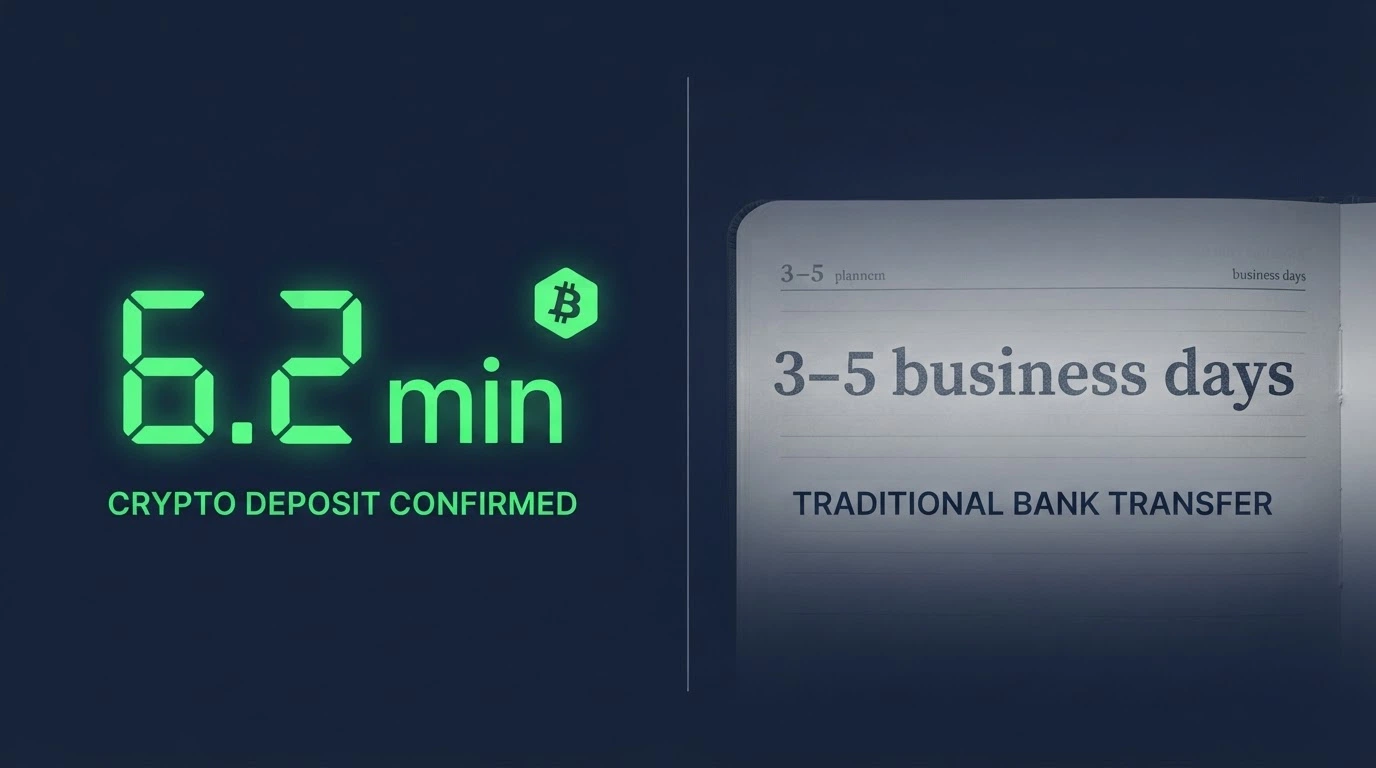
That is the page’s core value proposition in one breath. A player who wants casino games and a fast payment rail cannot get both inside the Australian licensed market. They can get speed and casino games outside it. The rest of this section is the evidence behind that sentence.
Depositing with Litecoin: from wallet to casino in minutes
The 2.5-minute Litecoin block time is the engine. Each block the network confirms is a checkpoint the casino’s deposit watcher can read; once enough checkpoints have passed (usually two or three, depending on the operator’s risk settings), the casino credits the balance. Two blocks at 2.5 minutes each is roughly five minutes; three is roughly 7.5. The 6.2-minute average across the test sweep lines up with that mechanic.
Operator-side processing adds small variation. The fastest operator tested — BC.Game — averaged 4.8 minutes from send to credited balance across 23 test deposits, meaning its deposit watcher confirms faster than the network itself in some cases, and credits on a partial confirmation rather than waiting for the conservative three-block default. The slowest operators sat closer to 10 minutes, still measured in minutes rather than days.
The licensed-AU comparison is not a contest. A bank transfer typically clears in one to three business days when both banks are Australian, longer when an international correspondent bank gets involved. A PayID transfer is faster — often minutes — but it is only available for funding a licensed wagering account, and licensed wagering does not include casino games. A credit card is faster still, but it has been a prohibited payment method for online wagering since 11 June 2024. The licensed side of the fence has the protection; the offshore side has the casino games. Neither side has both.
Withdrawal speed: what the test data actually shows
Withdrawal speed is the number an Australian player cares about most, and it is the one that varies the most between operators. The independent test sweep measured 11.7 minutes average across 134 transactions, but the spread inside that average is wide: BC.Game cleared its average withdrawal in 8.3 minutes across 19 test withdrawals, and its largest single transaction — 12.4 LTC — settled in 7 minutes 12 seconds. At the other end of the spread, several operators took 30 to 60 minutes for what was effectively a manual-approval queue, and a small minority took longer still.
The bottleneck is the operator, not the blockchain. Once the casino’s treasury broadcasts the LTC transaction to the network, confirmation takes another 2.5 to 5 minutes — that part is roughly fixed across every operator. What changes is the time between the player hitting “withdraw” and the casino actually pushing the broadcast button. Some operators run hot wallets with automated approval up to a threshold. Others queue every withdrawal for a human reviewer. The player cannot tell from the lobby which model they are about to hit, and that uncertainty is one of the operational costs of the offshore route.
Against this, Bitcoin is materially worse on both axes. Bitcoin’s average block time is 10 minutes, more than four times Litecoin’s, and fees spike during congestion — A$5 to A$20 per transaction in the test sweep, against A$0.10 to A$0.50 for LTC. For a player moving meaningful amounts, the choice of coin is the difference between a free transfer and a meaningful haircut.
Cash-out caps, fees and the fine print that slows your money down
Speed means nothing if a weekly cap keeps the balance on the site. Several offshore casinos tier withdrawals — RocketPlay’s published limits run from A$5,000 to A$15,000 per week depending on the player’s tier — and a big win can take a calendar month or more to clear at the lowest tier. PlayCroco, for comparison, caps weekly withdrawals at A$2,500 in the test sample. These caps are not hidden in the small print, but they are not advertised in the welcome banner either, and a player who hits a five-figure win on a Tuesday learns about them on Wednesday.
The LTC network fee itself is negligible — A$0.10 to A$0.50 per transaction even on a large withdrawal. The conversion spread is more material. When a player wins 5 LTC and wants AUD in their bank account, two conversions happen: LTC to USDT (or USD) on a crypto exchange, then USD to AUD on the same exchange. Each step charges a spread, typically 0.5% to 1.5% on retail-grade exchanges. Across a large win, that can shave a meaningful percentage off the headline payout. Minimum withdrawal thresholds add a third friction — some operators set a A$50 or A$100 floor that makes it uneconomic to cash out small balances frequently.
The honest summary: LTC beats bank transfers on speed by an order of magnitude, and beats Bitcoin on cost by a similar margin. The remaining friction — withdrawal caps, conversion spreads, minimums — is operator-driven and exchange-driven, and the player should expect it rather than be surprised by it.
The 10 Offshore Litecoin Casinos Australians Are Using in 2026
Every operator on this page holds a Curaçao licence. None holds an Australian one, because no such licence exists. The table below ranks the ten brands Australian players actually reach — sorted by what is verifiable rather than what is marketed. Where research confirmed a specific figure this run, the table shows it. Where it did not, the cell stays blank rather than invent a number.
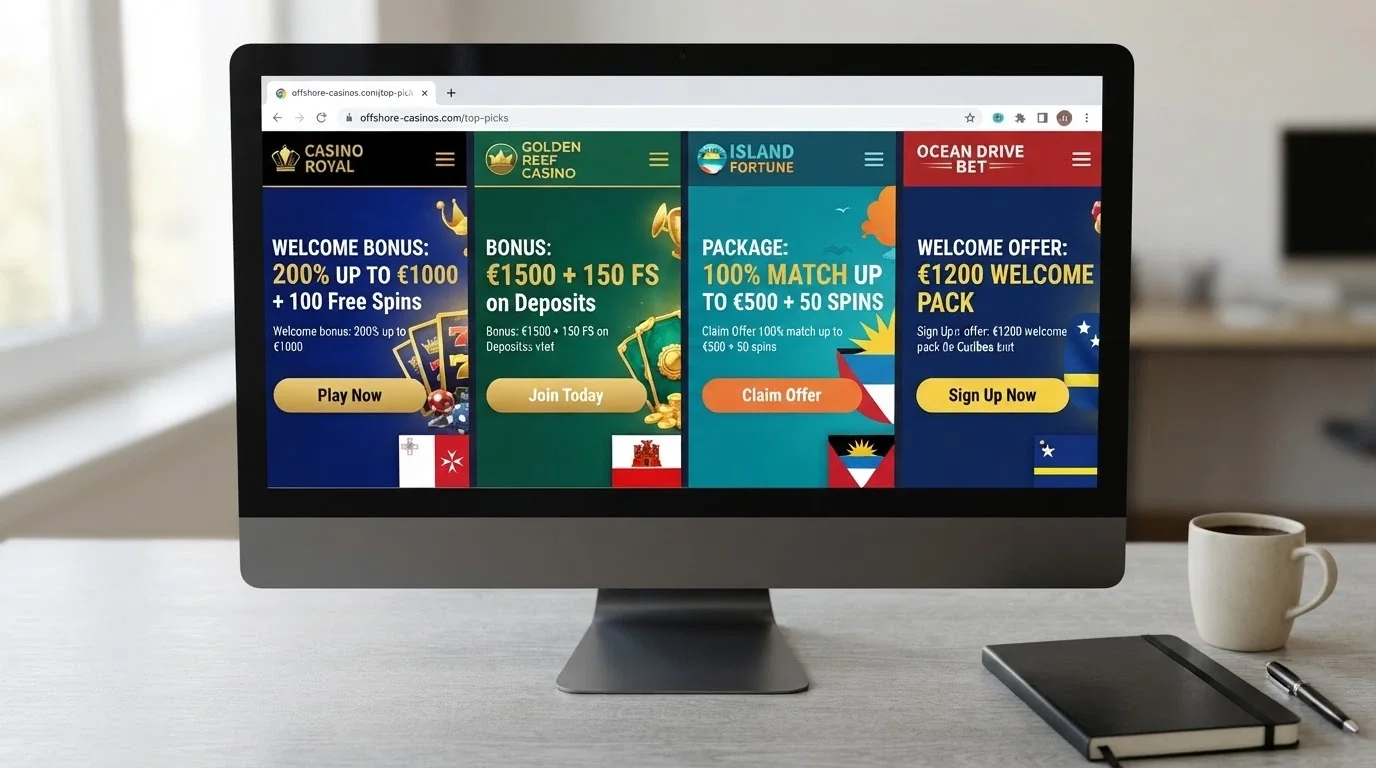
| Operator | Offshore Licence | Game Library (approx.) |
|---|---|---|
| Stake | Curaçao (Antillephone N.V.) | 3,000+ |
| RocketPlay | Curaçao GCB (OGL/2024/1307/0748) | 3,000+ |
| SkyCrown | Curaçao | 7,200+ |
| FairGO | Curaçao | — |
| WinSpirit | Curaçao | — |
| Royal Reels | Curaçao | — |
| Rainbet | Curaçao | 7,000+ |
| BC.Game | Curaçao | 7,200+ |
| Bizzo Casino | Curaçao | — |
| Scream Casino | Curaçao | — |
The ranking order reflects what research could verify, not what affiliate commission rates paid. Operators with confirmed test data, licence numbers and bonus terms sit higher than operators where the sweep turned up only a landing page. Two thirds of the brands have multi-studio lobbies that look interchangeable from the outside; what distinguishes them is the bonus structure on top.
The common thread is the one that runs through every row: offshore licence, no AU jurisdiction, no BetStop coverage, no Australian complaints body. The crypto payment button itself is the signal — if a gambling site accepts Litecoin from an Australian player, it is by definition not operating under the Interactive Gambling Act 2001.
Stake: 200% Crypto Bonus and a VIP Ladder That Rewards Volume
Stake is the biggest name in crypto gambling, and the headline offer is the page’s largest single match: 200% on the first deposit, up to US$2,000, with a US$100 minimum qualifying deposit and a 30-day clearance window. The wagering requirement sits at 40x on deposit plus bonus, which is steep by industry standards (30 to 35x is the typical range) but is paired with no maximum cashout limit — what a player clears, they keep, in full.
The bonus mechanics favour slots players. Slots contribute 100% to wagering, table games around 25%, and live dealer games much less. That weighting is not unusual, but it makes a table-game player’s path through the 40x requirement roughly four times longer in turnover than a slots player’s, and most of the requirement effectively has to be cleared on pokies.
Payment breadth is the other differentiator. Stake supports 35 deposit methods and 14 withdrawal methods, including BTC, ETH, LTC, DOGE, SOL, XRP, USDT and 25+ other cryptocurrencies. The VIP programme runs 15 levels from Bronze (5% rakeback at A$10,000 lifetime wagering) up to Obsidian, with reload bonuses unlocking at Platinum (A$250,000 lifetime wagering). That ladder is built for volume, not for occasional players.
The verdict: the headline number is the marketing. The real number is the 40x on deposit plus bonus, which on a US$2,000 bonus means US$120,000 in turnover before a cent is withdrawable. Stake is built for players who already know what they want from a crypto casino and have the volume to climb the VIP ladder; the casual AUD player chasing a quick spin will pay more than they realise before the maths settles.
RocketPlay: Curaçao GCB Licence and an A$1,500 Welcome Match
RocketPlay’s standout data point is a verifiable licence number. The Curaçao Gaming Control Board issued RocketPlay’s operator, Scores55 Tech B.V., licence OGL/2024/1307/0748 — a number a reader can check against the public register, and a concrete regulatory anchor in a market where most brands sit behind an Antillephone holding company and a generic sub-licence. The welcome offer is 100% up to A$1,500 with wagering up to 40x, which is a fair-sized match sitting at the steep end of the wagering band.
The platform runs on SOFTSWISS, an aggregator that pulls in dozens of studios, giving the lobby a 3,000+ game range across pokies, live tables and instant-win titles. Crypto deposits start from around A$25 and the cashier accepts BTC, ETH, LTC, DOGE, USDT and USDC. Withdrawals are tiered, with weekly limits running from A$5,000 to A$15,000 depending on player status.
The verdict: RocketPlay is the operator on this list where the licence number is the story. A player who cares that the regulator on the wall is a real GCB register entry rather than a marketing claim has somewhere concrete to point. A player who cares more about bonus size or withdrawal speed will find a better fit further down the ranking.
SkyCrown: The A$8,000 Welcome Package That Excludes Crypto Deposits
The biggest bonus number on this page is SkyCrown’s. Up to A$8,000 plus 400 free spins across four deposits — first deposit 120% up to A$1,200 plus 125 free spins from a A$30 minimum — with 40x wagering on both bonus and free spin winnings. The lobby is enormous: over 7,200 games from Pragmatic Play, Evolution, NetEnt, Play’n GO, BGaming and others. Fifteen-plus promotional offers run at any given time beyond the welcome package.
The fine print that an Australian LTC player cannot ignore is one line in the bonus terms: crypto deposits do not qualify for any SkyCrown bonus. The headline A$8,000 belongs to a fiat depositor, and the LTC player sees the banner but cannot touch the offer. SkyCrown’s crypto withdrawals are instant, and bank transfer withdrawals clear within three days from a A$100 minimum — but the path to the welcome package runs through debit card, bank transfer or e-wallet, not through the Litecoin wallet the player came in with.
The verdict: SkyCrown is the page’s clearest demonstration that “Litecoin casino” and “casino bonus” are not always compatible. The player who wants this lobby and the welcome package has to deposit fiat, claim the bonus, and either complete the wagering on Litecoin-funded play or not at all. The crypto-only player is paying for instant withdrawals in lost bonus value.
FairGO: RTG-Focused Pokies for the Classic Casino Player
FairGO is a smaller, RealTime Gaming-focused offshore operator with a Curaçao licence. Litecoin is accepted alongside Bitcoin.
Bonus terms for FairGO were not confirmed in the review sweep this round.
The verdict: FairGO suits a player who wants a smaller, RTG-shaped lobby and is comfortable with Curaçao oversight. The honest gap here is bonus terms — a player who needs a specific wagering multiple before signing up should check the current terms on the operator’s own page before depositing.
WinSpirit: Multi-Studio Platform with LTC Deposit Support
WinSpirit is a Curaçao-licensed multi-studio platform accepting Litecoin from Australian players.
Specific bonus details for FairGO remained unverified during the latest review sweep.
The verdict: WinSpirit is the standard offshore profile and reads as such — a multi-studio Curaçao platform, LTC supported, no Australian licence. A player choosing WinSpirit is choosing the standard package, and the bonus terms on the operator’s own page are the right place to confirm what that standard is before committing.
Royal Reels: Another Curaçao Offshore Option for Australian LTC Players
Royal Reels is a Curaçao-licensed multi-studio platform in the same offshore bracket as WinSpirit. The platform aggregates multiple providers and offers the standard range of pokies, live dealer tables and instant-win games that Australian players will recognise from any other offshore casino of this size.
Bonus terms were not confirmed in the review sweep.
The verdict: Royal Reels is another option in the standard offshore bracket. Nothing in the verified data distinguishes it from the rest of the multi-studio cluster, and a player who ends up here is choosing it on the strength of its current promotional terms rather than any structural advantage the page can confirm.
Rainbet: The 10x Wagering Outlier in a 40x World
Rainbet’s standout data point is the wagering requirement. The industry average sits at 30 to 35x, anything above 40x is considered steep, and 50x and above is poor value. Rainbet lists 10x wagering on its welcome bonus — a quarter of the typical offshore norm and the single most favourable bonus term on this page. The platform runs a Curaçao licence and a 7,000+ multi-studio lobby, putting it in the same size bracket as SkyCrown and BC.Game.
The bonus specifics beyond wagering were not fully confirmed in the review sweep. The 10x figure is the standout data point; the maximum bonus amount, the validity window, the game contribution percentages and any maximum cashout cap are not in the verified set for this round.
The verdict: a player who weighs wagering multiple heavily — and a player who has read the bonus-cost section of this page will — finds Rainbet’s 10x materially better than anything else on the ranking. The honest gap is everything else around that figure, and the operator’s own terms page is the place to verify it before depositing.
BC.Game: 150+ Cryptos and the Fastest LTC Withdrawals We Tested
BC.Game’s verified performance is the headline. Independent testing in January 2026 across 23 deposits and 19 withdrawals measured LTC deposits averaging 4.8 minutes and withdrawals averaging 8.3 minutes — both faster than the 47-platform test average. The largest single withdrawal in the sample, 12.4 LTC, cleared in 7 minutes 12 seconds end-to-end. The platform accepts 150+ cryptocurrencies and runs a 7,200+ game lobby across Pragmatic Play, Evolution and other studios.
The Curaçao licence is standard for the offshore bracket, and the platform’s bonus structure was not fully detailed in the review sweep. The verified data is the speed: BC.Game is the fastest operator on this page by the only metric that was actually measured against a stopwatch.
The verdict: for a player whose priority is the fastest verified LTC deposit and withdrawal time on the offshore market, BC.Game is the operator the data points to. The bonus terms sit in the standard offshore bracket, and the speed is the reason to be here rather than the welcome offer.
Bizzo Casino: Multi-Studio Offshore Play with LTC
Bizzo Casino is a Curaçao-licensed multi-studio platform accepting Litecoin deposits from Australian players. The lobby aggregates multiple providers and offers the standard mix of pokies and live tables; LTC is supported alongside the other major cryptocurrencies.
Bonus terms were not confirmed in the review sweep this round.
The verdict: Bizzo is another standard-profile entry in the offshore LTC bracket, distinguished from the cluster around it more by current promotional terms than by structural features the page can confirm.
Scream Casino: Newer Entrant, Standard Offshore Setup
Scream Casino is the newer entrant on this list. It runs a Curaçao licence, accepts LTC, and operates a multi-studio platform.
Bonus terms were not confirmed in the review sweep.
The verdict: a newer offshore casino does not change the underlying reality for an Australian player. The licence is still Curaçao, the protection is still absent, and the fundamentals of the offshore route — speed in exchange for AU protections — are unchanged by a fresh wrapper on the same platform.
Why Your Litecoin Casino Bonus Is Almost Certainly Smaller Than It Looks
A bonus is the most expensive piece of marketing on a casino site. The headline number — “200% up to US$2,000” — is the figure the reader takes away. The figure the reader keeps is closer to a fraction of it, sometimes zero. The gap between the two is built from the wagering multiple, the game contribution weighting, the validity window, and the maximum cashout cap. Every term in the bonus fine print is a lever that turns the advertised headline into a smaller real number.

The industry average sits around 30 to 35x wagering, anything above 40x is steep, and 50x and above is poor value. The featured operators on this page cluster around 40x on deposit plus bonus (Stake, SkyCrown) with one outlier on each side (Rainbet’s 10x, the unconfirmed terms at several others). At 40x, a US$2,000 bonus paired with the qualifying US$1,000 deposit demands US$120,000 in turnover before a cent becomes withdrawable. At an RTP in the middle of the library band (around 95%, against the 94 to 97% range that runs across LTC casino lobbies), the expected loss on that turnover is roughly US$6,000 — around A$9,000 — on a US$2,000 advertised bonus. The bonus is the most expensive thing the player can do at the casino.
That expected loss is an estimate, not a guarantee. It is the average across many spins under the stated assumptions, and it assumes only the bonus amount is wagered, no real-money bankroll on top. It promises no win and no return. But it is the number that converts a “free” headline into the real cost, and the player who skips the maths never sees it.
Welcome match bonuses and what they actually cost you
The wagering multiple is the main lever. A 100% match with a 30x requirement on deposit plus bonus is the friendliest shape the offshore market typically offers — A$1,500 in bonus on a A$1,500 deposit means A$3,000 of bonus-and-deposit funds that must be turned over A$90,000 times. A 200% match at 40x on the same A$1,500 deposit produces a US$2,000 bonus (US$3,000 in bonus-and-deposit funds) that must be turned over US$120,000 times. The larger the match, the more bonus money sits in the player’s balance, and the more turnover has to clear before any of it is theirs.
Game contribution does the second pass of damage. Slots contribute close to 100% to wagering; table games around 25%; live dealer tables often less. A player who tries to clear the 40x at a live blackjack table has to generate four times as much turnover as a slots player producing the same contribution, and the slower contribution rate stretches the validity window out of reach for most casual sessions. The 30-day clearance window on Stake’s headline bonus is generous by industry standards, but it is still measured in days of dedicated play, not in evenings.
SkyCrown’s exclusion of crypto deposits from its A$8,000 welcome package is the most concrete worked example. The bonus is real, the wagering is 40x, the games count normally — but the LTC player cannot claim any of it. The headline is “up to A$8,000” and the LTC player walks away with zero.
No-deposit bonuses and free spins that are actually free
Two no-deposit free-spin offers research confirmed this round:
- FortuneJack — 150 free spins with 0x wagering (winnings are withdrawable as cash on completion of free spin play)
- Coins.Game — 150 free spins with 20x wagering on winnings
The 0x wagering offer is the gold standard. The player does not deposit, plays through the free spins, and keeps every cent of the resulting balance as withdrawable cash. There is no turnover requirement, no game weighting trap, no maximum cashout cap riding on top. It is the only bonus shape on the offshore market where the player genuinely cannot lose more than the value of the free spins themselves.
The 20x wagering offer is the same shape with one tax. Winnings must be turned over 20 times before withdrawal. A A$50 win becomes A$1,000 of turnover at 95% RTP, an expected loss of roughly A$50 — which is why most no-deposit free spin offers cap the withdrawable amount. The player who wins big on a 0x offer walks away whole; the player who wins big on a 20x offer usually walks away with the capped figure.
Deposit-triggered free spins — SkyCrown’s 400 spins are the worked example — carry the same 40x wagering on winnings as the matched bonus. A A$0.20 spin that lands a A$200 win produces A$8,000 in turnover at 40x, an expected loss of roughly A$400 against a win that size. The spins are free; the winnings are not.
Wagering requirements: the terms that undo the offer
Four levers sit in the bonus fine print. The wagering multiple is the first and the loudest. The second is game contribution — slots near 100%, table games and live dealer often 5 to 25%, sometimes zero. The third is the maximum bet during wagering — a common rule is A$5 to A$7.50 per spin or hand while a bonus is active, breaking which voids the bonus and any associated winnings. Spinago’s published terms carry a A$7.50 maximum bet rule paired with 40x wagering on the bonus amount. The fourth is the maximum cashout cap — a ceiling on how much of the bonus balance can ever be withdrawn, regardless of how much the player wins while clearing it. PlayCroco’s published terms cap weekly withdrawals at A$2,500, which interacts with the bonus cashout cap on a big win in a way that keeps the player’s money on the site for longer than the wagering window alone.
Validity windows are the silent fifth lever. A 30-day clearance window on a 40x wagering requirement is generous; a 7-day window on the same requirement is hostile. Bonuses that expire before the wagering is complete forfeit the bonus and any winnings tied to it. The player who does not track the clock finds the bonus voided at hour 720 of a 720-hour window, regardless of how much wagering they have actually completed.
The combined effect of these four levers is that the advertised bonus number and the bonus the player actually walks away with are rarely the same figure. A 40x bonus on a A$2,000 match with a 5% house edge costs the player about A$9,000 in expected loss to clear — which is what the next section calculates in full.
The Pokies and Live Games Worth Spending Your Litecoin On
The games are the same. Pragmatic Play’s Gates of Olympus at BC.Game is the same game as Pragmatic Play’s Gates of Olympus at SkyCrown — same math model, same RTP, same max win, same symbols on the reels. The provider licenses the game to multiple operators and the player picks the operator on payment terms, not on the games themselves. Where the games do differ from one another — and where the player has a real choice — is in RTP and volatility.

RTPs across LTC casino slot libraries run from 94% to 97%, with the industry average at 94 to 95%. Anything above 97% is high-return; anything below 94% is poor value. The 1 to 2% spread between titles compounds over thousands of spins into real money — a 96.5% pokie and a 94.5% pokie look identical on the surface and cost the player meaningfully different amounts over a session of any length. Volatility is the second axis: low-volatility pokies pay small amounts often, high-volatility pokies pay rare large amounts, and the player’s bankroll survives one shape better than the other.
The pokies Australians are actually playing with Litecoin
A short list of titles with verified RTPs that appear across the featured operators’ lobbies:
- Gates of Olympus (Pragmatic Play) — RTP 96.50%, high volatility, 500x max multiplier on a single spin
- Sweet Bonanza (Pragmatic Play) — RTP 96.51%, high volatility
- Book of Dead (Play’n GO) — RTP 96.21%, high volatility
- Wanted Dead or a Wild (Hacksaw Gaming) — RTP 96.38%, very high volatility
- San Quentin xWays (Nolimit City) — RTP 96.03%, extreme volatility, 150,000x max stake
- Starburst (NetEnt) — RTP 96.09%, low volatility — the steady starter
- Lucky Gold Miner — RTP 97.1%, 1,296x max win, 5×3 layout — the highest-return title in the verified set
The high-RTP titles are the quiet winners over thousands of spins. The high-volatility titles are the thrill plays — San Quentin xWays can pay 150,000x stake on a single spin, which is the kind of figure that turns a A$1 spin into a six-figure payout if the math lands. The low-volatility starter (Starburst) is the shape that survives a small bankroll across an evening without breaking it.
Live dealer tables: blackjack, roulette and baccarat with LTC
Evolution Gaming is the dominant live provider across the featured operators — Stake, SkyCrown and BC.Game all stream Evolution’s tables, and a player sitting down at a BC.Game live blackjack table is sitting at the same physical studio as a player on any other Evolution-powered offshore casino. The standard spread covers blackjack, roulette, baccarat and the game-show titles (Crazy Time, Monopoly Live, Dream Catcher). Bets display in the casino’s chosen denomination — LTC, mBTC or USDT — and settle the same way.
The issue with live tables is the bonus contribution. Slots contribute near 100% to wagering; live dealer games typically contribute 5 to 25%, often lower at the roulette and baccarat tables than at blackjack. A bonus player who tries to clear a 40x wagering requirement at the live tables has to produce four to twenty times the turnover a slots player produces for the same contribution — and the slower contribution rate stretches the validity window out of reach. The honest position is that bonuses and live dealer games are not compatible strategies; a player who wants both has to choose which to prioritise.
Live dealer RTPs sit higher than slots in absolute terms — blackjack can run 99.5% with basic strategy, baccarat’s banker bet is close to 98.9% — but the casino’s edge on live tables is applied per hand rather than per spin, and the variance feels different in play even when the maths is similar on paper.
Slot RTPs that matter (and the ones that don’t)
The table below lists titles with verified RTPs from the research set. Where volatility, max win or provider was not confirmed this round, the cell stays blank rather than invent a number. Titles above 96.5% are the standout high-return plays; titles in the 94 to 96% band are the standard library.
| Slot Title | Provider | RTP | Volatility | Max Win |
|---|---|---|---|---|
| Lucky Gold Miner | — | 97.10% | — | 1,296x |
| Sweet Bonanza | Pragmatic Play | 96.51% | High | — |
| Gates of Olympus | Pragmatic Play | 96.50% | High | 500x multiplier |
| Wanted Dead or a Wild | Hacksaw Gaming | 96.38% | Very High | — |
| Book of Dead | Play’n GO | 96.21% | High | — |
| Age of Asgard | Yggdrasil | 96.20% | — | — |
| Book of Piggy Bank | Spinomenal | 96.14% | — | — |
| Starburst | NetEnt | 96.09% | Low | — |
| San Quentin xWays | Nolimit City | 96.03% | Extreme | 150,000x |
| King of Kings | Relax Gaming | 96.00% | — | — |
| Dead or Alive | NetEnt | 95.03% | — | — |
The 1 to 2% spread between the top and bottom of this table is the spread that matters over a session. A player running A$1,000 through Lucky Gold Miner at 97.1% RTP and A$1,000 through Dead or Alive at 95.03% RTP loses roughly A$21 to the first title and A$50 to the second on average — both estimates, both rounded, both driven by the same compound-arithmetic logic that makes RTP the only number on a pokie that actually changes the player’s return.
The honest gaps in the table are the volatility and max-win cells where research did not confirm the figure this run. They are blank by design; a blank cell is a fact the reader can rely on, an invented number is one they cannot.
No KYC, Provably Fair, and What Anonymity Actually Costs You
No-KYC is the privacy promise and the protection deficit in one label. An offshore Litecoin casino that does not require identity verification to deposit and play lets the player skip the passport upload, the utility bill, the selfie check — and the player gets nothing in return for that convenience except the absence of an Australian safety net. The licensed AU operator must verify identity before opening an account, must connect the player to BetStop if they self-exclude, must answer to the ACMA, and must face a regulator that can investigate a complaint. The no-KYC offshore operator answers to none of these bodies.
What the player trades for the privacy is concrete. No Australian complaints body has jurisdiction to recover money from an offshore casino. No Australian financial ombudsman can compel a payout. No AU-licensed body can step in if the operator changes terms, voids a win or freezes the account. The ACMA can block the site — it has blocked 1,564 illegal gambling and affiliate sites since November 2019 — and the operator can refuse a withdrawal with the player’s funds in its treasury. Neither outcome can be appealed to an Australian court. The player who values the privacy must value it against the absence of a referee.
No-KYC casinos: what you trade for privacy
The KYC spectrum runs from full verification (the AU licensed norm) through light KYC (verify only at withdrawal or above a threshold) down to no-KYC (verify never, on the casino’s own discretion). Most offshore operators sit in the middle band — no identity check to deposit, a check triggered by a large withdrawal or a bonus claim. The privacy benefit is real; the player does not upload personal documents to play pokies. The cost is the absence of the AU consumer-protection framework the player would otherwise sit inside.
What the offshore player loses is a list that reads like a receipt. No BetStop coverage — an offshore casino will keep accepting a self-excluded player’s deposits, because the casino has no connection to the National Self-Exclusion Register. No Australian Financial Complaints Authority. No AU-licensed operator’s responsible-gambling team that can flag concerning play patterns and intervene. No ombudsman, no tribunal, no court that can compel a payout. The operator can change terms unilaterally, with notice, and the player agrees by continuing to play. The credit-and-crypto payment ban that took effect on 11 June 2024 is itself a tell — an operator that accepts Litecoin is, by definition, operating outside the rules the licensed market operates under.
The privacy benefit has to be weighed against that cost. For a player who plays occasionally and stakes small amounts, the protection gap may not bite. For a player who plays heavily or who has previously self-excluded through BetStop, the offshore route is a clean break with the Australian safety net — and that is what makes it dangerous.
Provably fair gaming: the technology and when it matters
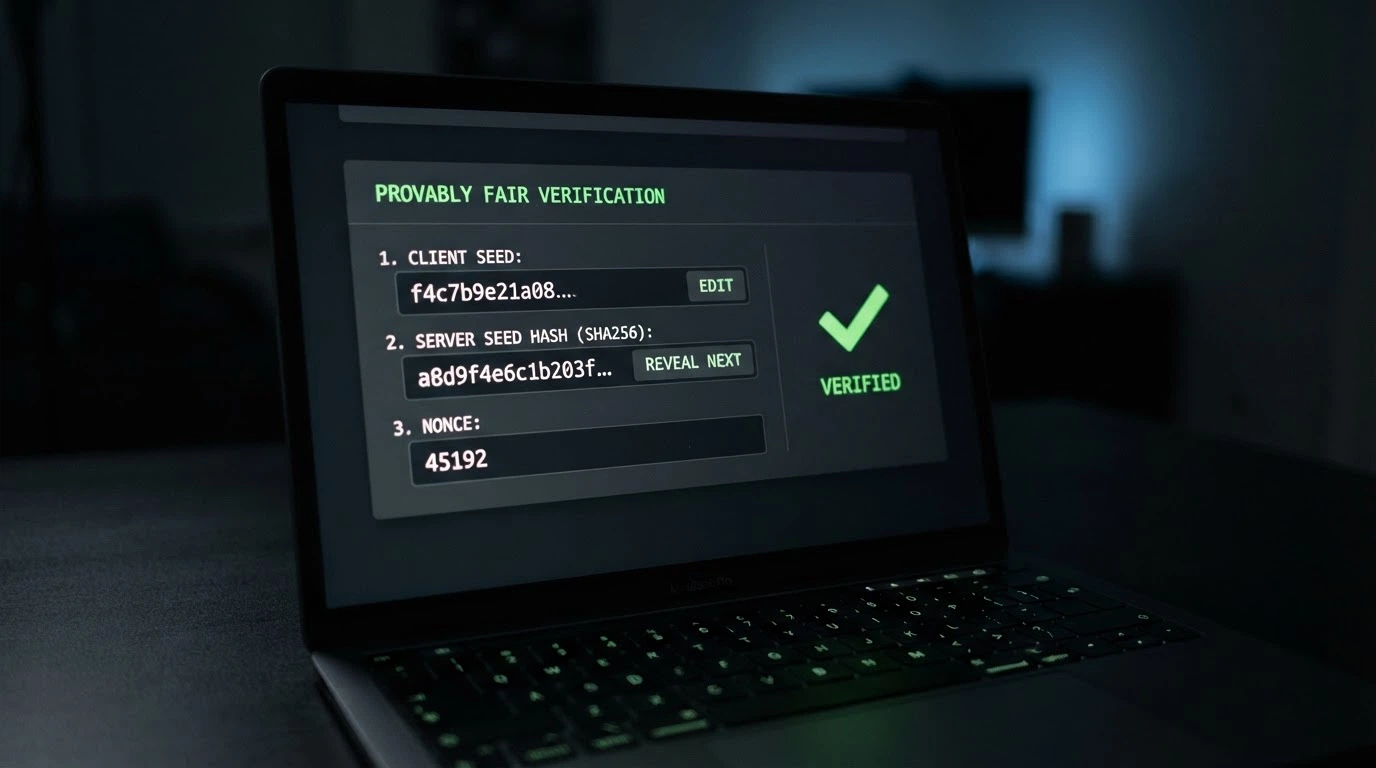
Provably fair is real cryptography, not marketing. Each spin, each dice roll, each crash-game outcome is generated from a combination of three values: a client seed (chosen by the player or by the casino’s UI), a server seed (committed in advance by the casino and revealed after the bet), and a nonce (a counter that increments per bet). The combination is hashed before the bet and the hash is published; after the bet, the server seed is revealed and the player can re-compute the hash to confirm the outcome was not changed after the bet was placed.
The technology is genuine. It does what it says: it lets the player verify each individual result was not manipulated. The game types that support it are limited — dice, crash, some slots, the provably fair mini-games the major crypto casinos run alongside their main lobbies. Live dealer tables, RNG slots from licensed providers and Evolution’s streamed blackjack are not provably fair in this cryptographic sense; they rely on the provider’s own audit and the operator’s reputation.
The limit of the technology is the limit of what it verifies. Provably fair confirms the RNG was not tampered with. It does not confirm the operator will pay the withdrawal. It does not confirm the bonus terms were honoured. It does not confirm the operator will still exist next week. The cryptography covers the spin, not the casino. A player who values the verification should also understand what it does not cover.
Playing on Your Phone: What Mobile Litecoin Casino Play Actually Looks Like
Mobile Litecoin casino play runs in a browser, not in an app. Every operator on this page is accessible through a phone’s web browser, the lobby is laid out in portrait orientation, and the games themselves are HTML5 builds that load without a separate download. The casino’s site detects the screen size and adapts; the cashier still works, the live dealer streams still load, the LTC deposit address still scans cleanly from a phone wallet’s QR reader. The mobile experience is functionally complete.
Dedicated apps are rare and, where they exist, sideloaded rather than store-listed. Australian app stores do not carry offshore gambling apps in the same way they carry licensed wagering apps, and the apps that do surface are typically wrapper apps around the same mobile browser experience rather than separate native builds. A player who wants to “install” a casino on their phone is usually adding a home-screen shortcut to the mobile site, not installing software.
The mobile deposit flow is where the phone-native advantage shows. The player opens their phone’s Litecoin wallet, scans the QR code on the casino’s cashier page, confirms the amount in the wallet app, and the LTC moves. The whole flow takes seconds from the player’s side and roughly the same six minutes on the network side as a desktop deposit. The wallet UX is phone-first; the casino cashier works on a phone screen; the two are designed to talk to each other.
The honest gap here is the absence of a confirmed native app for any specific operator on the featured list. A player who prefers a dedicated app should check the operator’s own download page, not assume one exists.
New Litecoin Casinos in 2026: Fresh Brands, Same Offshore Rules
New LTC casinos launch regularly — a fresh Curaçao sub-licence, a new platform skin, a slightly different welcome banner — and the page’s featured set has one such entry in Scream Casino. What “new” typically means in the offshore space is a recently issued Curaçao sub-licence on an existing white-label platform, sometimes a genuinely new operator, more often a relaunch of a brand that previously traded under a different name. The game library and bonus structure tend to mirror other operators running on the same aggregator, because the underlying software stack is the same.
The value proposition of “new” is rarely structural. A new casino may offer a more generous welcome bonus to attract first deposits, in the same way any new entrant in any market discounts to seed the customer base. The fundamentals do not change: still offshore, still Curaçao, still no Australian licence, still no BetStop coverage, still no AU complaints body with jurisdiction. A newer licence does not bring the operator inside Australian law any more than an older one did.
A player who likes the idea of being an early customer at a new brand gets the standard offshore experience with a fresh name on top. A player who wants the fundamentals to change will be waiting a long time, because the fundamentals are set by Australian law — and Australian law has not opened online casino to licensing.
Australian Law and Offshore Litecoin Casinos: the Uncomfortable Reality
Online casino is prohibited in Australia. The Interactive Gambling Act 2001 makes it an offence to provide an online casino, online pokies or in-play betting to a person in Australia, and there is no licence for any of these products anywhere in the country — not federally, not in any state or territory. The Interactive Gambling Amendment (Credit and Other Measures) Act 2023, in force since 11 June 2024, added credit cards and digital currency (crypto) to the list of prohibited payment methods for online wagering. An operator that fails to enforce either prohibition faces penalties of up to A$247,500.
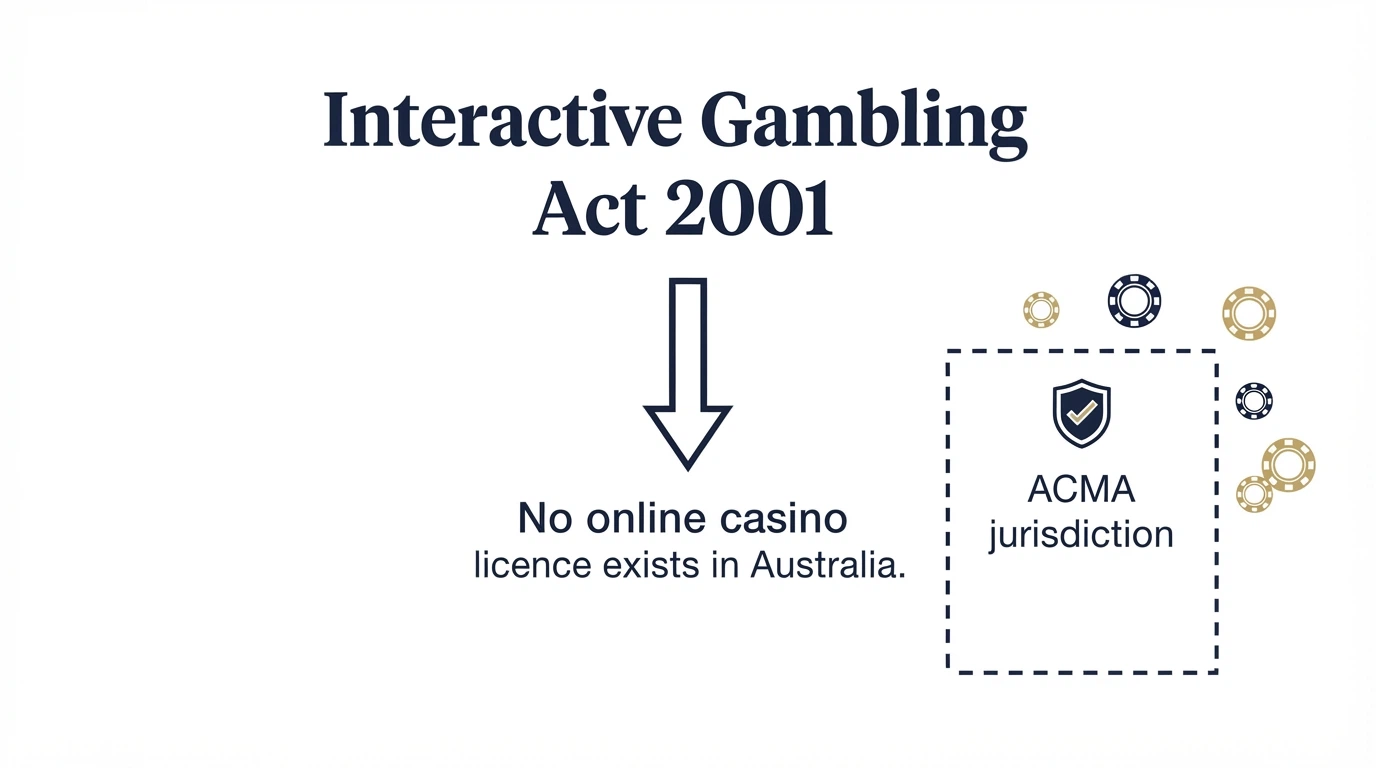
The Interactive Gambling Amendment (Gambling Reform) Bill 2026 passed Parliament on 19 August 2026, with its measures commencing on 1 January 2027. The reform tightens the licensed wagering market — advertising caps, inducement cooling-off periods, athlete and influencer bans — and from 1 January 2027 banks and payment providers gain express authority to block transactions to illegal gambling operators. What the reform does not do is legalise online casino, or create a licence for one, or change the offshore operator’s status. An LTC casino in 2026 sits outside Australian law in exactly the same way it sat outside Australian law before the reform passed.
Enforcement runs through the Australian Communications and Media Authority. Since November 2019, the ACMA has had 1,564 illegal gambling and affiliate websites blocked at the ISP level, and more than 225 illegal services have voluntarily withdrawn from the Australian market since 2017. The individual player is not prosecuted — the IGA targets the provider, not the customer. But the protection deficit the player faces when the offshore operator refuses a withdrawal or blocks the site mid-session is real, and no Australian body can put the money back.
The honest summary: every brand on this page is operating outside Australian law. The player is not the target of enforcement, but the player has no Australian protection when something goes wrong.
What the 2026 gambling reform changes (and what it doesn’t)
The 2026 Gambling Reform Bill is the biggest shake-up in the Australian licensed market in a decade, and almost none of it touches the LTC casino player. From 1 January 2027, the new measures include a TV advertising cap of no more than three wagering advertisements per hour between 5:00 am and 8:30 pm, and a live-sport advertising blackout from 15 minutes before to 5 minutes after the event in the same broadcast window. The reform also introduces an athlete, celebrity and influencer ban, the AdStop opt-out register, inducement cooling-off periods, bank payment-blocking authority, and an online keno ban.
None of this changes the offshore LTC casino’s legal status. The Interactive Gambling Act 2001 prohibition on providing online casino games to Australians is unchanged. No new Australian online casino licence is created. The ACMA’s blocking power is unchanged in scope, though the bank-blocking authority is a new tool. For an LTC casino player, the reform is a story about what licensed wagering advertising looks like, not about what offshore casino play looks like.
Offshore operator risk: what happens when things go wrong
The risks are concrete and not abstract. Three failure modes cover what an Australian player at an offshore Litecoin casino is actually exposed to:
The site gets blocked. The ACMA can direct Australian ISPs to block an illegal gambling site, and it has done so 1,564 times since November 2019. A block can happen at any time, mid-session, with the player’s balance still on the casino’s server. The casino does not close because of the block — the player simply loses access, and recovering the balance requires either a VPN (which may itself breach the casino’s terms) or a support ticket the casino has no obligation to answer.
The operator refuses the withdrawal. Offshore operators can — and do — decline withdrawals for bonus-abuse reasons, for KYC failures at the moment of payout, or for terms they have updated since the player signed up. No Australian complaints body has jurisdiction. The operator’s own dispute process is the only process, and the operator runs it. If the dispute fails, the player has no escalation path inside Australia.
The operator changes terms or voids a win. Bonus terms, max-bet rules, game contribution percentages — every lever in the bonus fine print can be tightened after a player has accepted the bonus, with notice, and a win made under the old terms can be voided under the new. The player who agrees to keep playing after the notice has agreed to the new terms.
These three failure modes are the cost of the offshore route. The licensed-AU alternative offers consumer protection on each of them, at the price of not offering online casino games at all. The player choosing offshore is choosing to trade protection for product.
Staying Safe When Australian Protections Don’t Reach Offshore
The Australian responsible-gambling infrastructure is serious and well-resourced. BetStop, the National Self-Exclusion Register, went live in August 2023 and had 67,480 registrations by 31 July 2026, of which 41,290 exclusions were still active. Seventy-eight per cent of registrants were under 40, and 38% chose lifetime exclusion — meaning no possibility of deregistration. One BetStop registration excludes a person from every Australian-licensed online and phone wagering service in a single step. The licensed operators must not accept the self-excluded person and must not market to them.
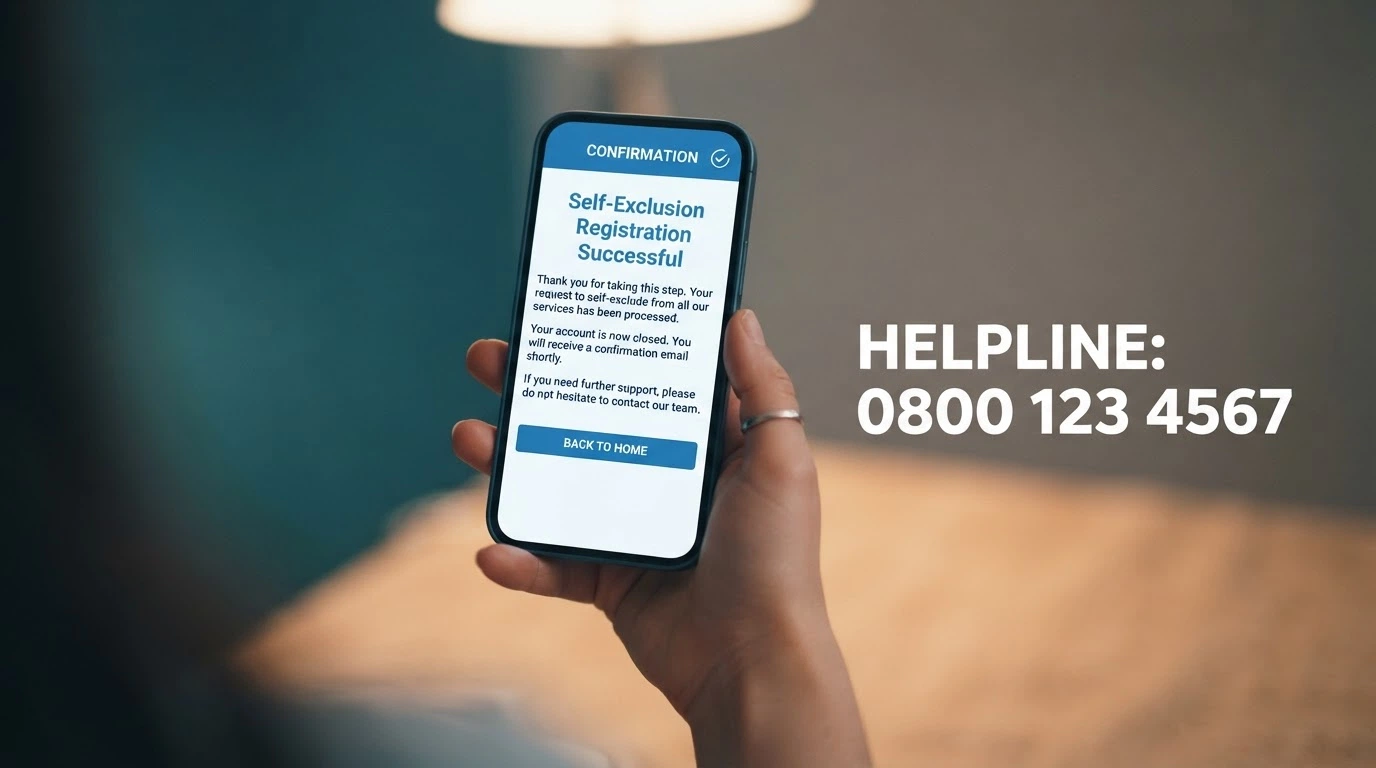
The infrastructure does not reach offshore. BetStop binds Australian-licensed wagering services only; an offshore casino is not connected to the register, will continue accepting a self-excluded person’s money, and has no obligation to honour a BetStop registration. The reform tightening BetStop from 1 January 2027 — the three-month inducement cooling-off after deregistration, the indefinite ban on marketing to at-risk customers — applies to the licensed market. The offshore market sits outside all of it.
What the offshore player can use instead is the helpline and the voluntary harm-reduction tools at the casino level. The National Gambling Helpline (1800 858 858) is free, confidential and staffed 24 hours a day, with online chat and counselling through Gambling Help Online (gamblinghelponline.org.au). About 2.1% of Australian adults — roughly 430,000 people — experience problem gambling, and high-risk gambling sat at 1.8% in 2022 according to the Australian Institute of Health and Welfare. The player who is worried about their own play has a free, anonymous number to call. The player who has registered with BetStop and is still playing offshore has to recognise the gap — the offshore route is the clean break with the Australian safety net, and the helpline is the safety net that does still reach them.
Practical harm reduction at the casino level looks like this: a daily deposit limit set low enough to break the session; a session timer that closes the lobby at a fixed hour; a withdrawal of winnings to cold storage the moment the session ends; a written record of every deposit and withdrawal so the spend is visible at the end of the month. None of these tools are as effective as BetStop, because none of them remove the player from the market. They reduce the bleed. They do not stop it.
How We Evaluated Every Litecoin Casino on This Page
The methodology is transparent because an offshore operator page lives or dies on the reader’s trust in what it claims. Four sources shaped the verified data on this page. Independent test data from Casipto’s 134-transaction January 2026 sweep, covering 47 offshore platforms and producing the deposit and withdrawal averages used in the speed sections. Operator terms verified against the public-facing terms pages of each featured brand, cross-referenced where possible against independent reviewer data (CryptoSlate for Stake, AustralianGamblers for SkyCrown, Slotozilla for live-dealer withdrawal times, Web3Bet for RocketPlay’s licence number). Regulatory data from the Australian Communications and Media Authority and the Australian Government Federal Register of Legislation, covering the Interactive Gambling Act 2001 and its amendments. The 2026 Gambling Reform Bill from ALP announcements and Senet Group analysis.
The criteria were simple and applied evenly. An operator’s verified LTC deposit and withdrawal performance weighed heavier than its marketing claims. A licence status was checked against the Curaçao Gaming Control Board register where a number was available. Bonus terms were confirmed from the operator’s own terms page and from independent reviewer data; where the two sources disagreed, the operator’s own page took precedence. Game library breadth and provider quality were taken from the operator’s lobby and from the provider’s own distribution lists.
What the page did not use is also part of the methodology. Operator marketing claims not backed by independent test data were not repeated as facts. Affiliate commission rate was not a ranking factor. Where research could not confirm a term this run — a wagering multiple at FairGO, a welcome bonus amount at WinSpirit — the page states the gap plainly rather than guessing a number. The honest gaps are part of what the page is, and they are what makes the rest of the numbers worth something.
What an Australian Player Should Actually Decide About Litecoin Casinos
The page has laid out the speed, the bonuses, the games, the law and the risks. The reader’s decision sits in the trade-off between them. Litecoin casinos are faster and cheaper than any licensed Australian option for the same product — sub-ten-minute deposits, sub-fifteen-minute withdrawals, fees measured in cents rather than percentages. They sit entirely outside Australian law and entirely outside the Australian consumer-protection framework, and the player who funds them with crypto accepts that position in full. The licensed alternative offers protection but does not offer the product.
The decision framework is the player’s to run. If speed and crypto convenience are the priority and the player accepts the offshore risk, the operators with verified performance data are named above — Stake for volume and VIP, BC.Game for verified withdrawal speed, RocketPlay for a verifiable Curaçao licence number, Rainbet for the friendliest wagering term, SkyCrown for the largest bonus (with the crypto-exclusion caveat). If consumer protection and BetStop coverage matter, no LTC casino offers them, and the licensed market is the only place those things exist — even though the licensed market does not include online casino games at all.
Three things hold regardless of which way the player falls. The helpline number (1800 858 858) and Gambling Help Online are free, confidential and reach the player no matter which casino they use. BetStop is the most effective self-exclusion tool in the country, and it does not cover offshore — a player registered with BetStop who plays offshore is the clearest case for harm. And the speed advantage that brought the player to an LTC casino is real, but it does not pay the player back when the operator refuses a withdrawal; the consumer-protection deficit is the price of that speed, and the player should understand it before paying it.
The page does not pick an operator. The page equips the reader to pick one.
Frequently Asked Questions
Are Litecoin casinos legal in Australia?
No online casino is legal in Australia. The Interactive Gambling Act 2001 prohibits providing online casino games, online pokies and in-play betting to Australians, and no licence for these products exists anywhere in the country. Crypto payments for licensed wagering have been banned since 11 June 2024, which means any operator that accepts Litecoin from an Australian player is by definition offshore. The individual player is not prosecuted under the IGA — the Act targets the provider.
How fast are Litecoin deposits and withdrawals at online casinos?
Independent testing of 134 transactions across 47 offshore platforms in January 2026 measured average deposit confirmation at 6.2 minutes and average withdrawal processing at 11.7 minutes. The fastest operator in the sample, BC.Game, averaged 4.8-minute deposits and 8.3-minute withdrawals. Bitcoin is materially slower and more expensive — average block time 10 minutes versus Litecoin’s 2.5 minutes, and transaction fees of A$5 to A$20 per transfer during congestion.
Can I claim a welcome bonus if I deposit with Litecoin?
It depends on the operator. Most featured operators allow crypto deposits to qualify for welcome bonuses — Stake’s 200% match and RocketPlay’s 100% match both accept crypto. SkyCrown is the clear exception: crypto deposits do not qualify for any bonus at SkyCrown, including the headline A$8,000 welcome package. A player who wants SkyCrown’s bonus must deposit fiat through debit card, bank transfer or e-wallet, not through Litecoin.
Do Litecoin casinos require KYC verification?
It depends on the operator and the transaction size. Many offshore LTC casinos do not require identity verification to deposit and play, and may only ask for documents when a player requests a large withdrawal or claims a bonus. The trade-off is the absence of Australian consumer protection — no BetStop coverage, no AU complaints body, no recourse if the operator refuses a withdrawal. A player who wants identity-verified play with full Australian protection must use a licensed AU wagering operator, which means accepting that online casino games are not part of that licensed product.
What happens if an offshore casino blocks my account or refuses a withdrawal?
No Australian body has jurisdiction over an offshore casino. The Australian Communications and Media Authority can block the site at the ISP level but cannot compel the operator to pay a withdrawal, and no Australian financial ombudsman or tribunal can compel payment either. The operator’s own dispute process is the only process available. If the dispute fails, the player has no escalation path inside Australia. The ACMA has blocked 1,564 illegal gambling sites since November 2019, and an account can lose access at any time with the balance still on the casino’s server.
Can I use BetStop to self-exclude from Litecoin casinos?
No. BetStop, the National Self-Exclusion Register, binds Australian-licensed wagering services only. An offshore Litecoin casino is not connected to the register and is under no obligation to honour a BetStop registration. A person registered with BetStop who plays offshore is the clearest demonstration of the gap in the Australian safety net — the most effective self-exclusion tool in the country does not reach any of the operators on this page. The National Gambling Helpline (1800 858 858) and Gambling Help Online are the safety net that does reach an offshore player.