
Where Australians Can Use USDT at Online Casinos in 2026
Data current as of 29 October 2026; licence claims verified against operator terms and the relevant regulator’s register.

Table of Contents
- What a Tether Casino Actually Is — And What It Isn’t
- 10 USDT Casinos Australian Players Can Join in 2026
- How USDT Keeps Your Casino Play Private — And Where It Doesn’t
- Why Your Tether Casino Welcome Offer Costs More Than It Pays
- How Many Minutes Your USDT Withdrawal Actually Takes
- What You Can Actually Play at a USDT Casino: Pokies, Live Dealer and More
- Tether Casinos on Your Phone: No App Needed
- The Offshore Reality: Why No USDT Casino Holds an Australian Licence
- Staying in Control: Limits, Self-Exclusion and Real Help for Australian Players
- How We Picked and Ranked These USDT Casinos
- Should You Play at an Offshore USDT Casino? What the Numbers Say
- Frequently Asked Questions
What a Tether Casino Actually Is — And What It Isn’t
Tether, traded under the ticker USDT, is a stablecoin — a digital token pegged to the US dollar on a one-to-one basis. Each USDT in circulation is supposed to be backed by a reserve of equivalent-value assets held by Tether Limited, the issuer. Unlike Bitcoin or Ethereum, the price is not supposed to move. A USDT is meant to stay worth one US dollar today, tomorrow and next month, which is why it has become the most-used stablecoin for moving money in and out of online casinos that accept crypto.
A “Tether casino” is an online casino that takes USDT deposits and pays USDT withdrawals. The games inside — pokies, live dealer tables, blackjack, roulette — are the same games you find at any other online casino, built by the same studios and running the same random-number generators. The difference is at the cashier. Instead of typing in a card number, the player copies a wallet address or scans a QR code, sends USDT across a blockchain, and sees the balance land within minutes. The casino never sees a bank account, a credit card, or the player’s full legal name through the payment.
What it is not is an Australian-licensed product. From 11 June 2024, digital currency has been banned as a payment method for online wagering licensed in Australia, and no Australian state or territory issues a licence for online casinos in any case. Every USDT casino serving Australian players sits offshore, under a Curacao, Anjouan or Tobique licence, and accepts Australian customers because it is not subject to Australian law. The federal prohibition under the Interactive Gambling Act 2001 still applies to the operators; the individual player is not prosecuted but has no Australian protection layer behind the deposit.
That distinction shapes everything that follows. USDT at a crypto casino is fast, borderless and largely free of payment-processor friction. It is also outside the reach of BetStop, ACMA complaint channels and any Australian consumer-protection regime the player might otherwise lean on. Knowing that is the starting point for choosing one.
How USDT Deposits and Withdrawals Work at an Online Casino
The flow at a USDT casino runs through a personal crypto wallet — a software wallet on a phone, a browser extension, or an account at a major exchange. To deposit, the player opens the casino cashier, picks USDT and chooses a network. The casino displays a wallet address, sometimes with a memo or destination tag. The player pastes that address into their own wallet, enters the amount and confirms. After a few confirmations on the chosen network the funds appear in the casino balance.
The same path runs in reverse for withdrawals. The player requests a payout in USDT, enters their own wallet address, and the casino broadcasts the transaction. TRC-20 on the Tron network typically confirms in one to three blocks of around three seconds each, so a TRC-20 withdrawal is usually settled in one to five minutes once the casino approves it. ERC-20 on Ethereum takes twelve confirmations, which works out to three to five minutes under normal conditions and stretches longer when the network is congested.
The single most expensive mistake a player can make at this stage is sending USDT on the wrong network. If the casino gives an ERC-20 address and the player sends TRC-20, the funds do not bounce — they arrive at a contract that no one controls, and they are lost. The networks are not interchangeable, the addresses look similar at a glance, and the recovery path from a cross-network send is essentially zero. Always match the network shown on the casino cashier to the network selected in the wallet before signing the transaction.
Crypto Casino vs Regular Online Casino: What Changes
The player-facing experience of a USDT casino and a fiat online casino is closer than the marketing makes it sound. Game lobbies carry the same Pragmatic Play, NetEnt, Evolution and Play’n GO titles, often under identical branding. The welcome offer structure — a deposit match plus free spins — is the same industry template, just denominated in USDT or its AUD equivalent rather than in dollars paid through a bank. Where the two diverge is at the edges of the experience.
Identity checks are the first divergence. A fiat online casino licensed in Australia runs KYC at signup by law, asking for a driver’s licence, a proof of address and a source-of-funds declaration before the first withdrawal. Crypto casinos typically defer this. The player can register with an email and deposit without uploading documents; verification only kicks in when withdrawal volume crosses a threshold or when the operator’s compliance team flags the account. Stake, for instance, requires KYC once cumulative withdrawals exceed US$2,000 — a line that takes most casual players months to cross.
Currency volatility is the second. Players who hold balances in BTC or ETH carry the casino’s house edge on top of the coin’s price swing; a winning session in Bitcoin can become a losing one in dollars by the time the withdrawal lands. USDT removes that second variable. The balance in USDT is the balance in dollars at any moment, which is exactly what most players want from a casino bankroll.
Bonuses are denominated in USDT or its dollar equivalent, but the wagering math does not change. A 40x wagering multiple means forty times the bonus amount in real turnover, regardless of whether the bonus was paid in dollars, AUD or USDT. The blockchain layer sits above the bonus structure; it does not soften the wagering requirements attached to it. That is the single largest thing a USDT player needs to understand before chasing a welcome offer at a crypto casino.
10 USDT Casinos Australian Players Can Join in 2026
| Operator | Licence | Welcome Offer |
|---|---|---|
| BitStarz | Curacao | Up to A$10,000 + 200 FS (40x) |
| BC.Game | Curacao | 380% up to $4,000 + 400 FS (40x, 30-day validity) |
| Stake | Curacao | No standard welcome; recurring races and raffles |
| 7Bit | Curacao | 325% up to 5.25 BTC + 250 FS (40-45x, 14-day validity) |
| FortuneJack | Anjouan | 500% across 4 deposits + 15 bonus rounds (10x per mission) |
| SkyCrown | — | — |
| Rocket Play | — | — |
| Royal Reels | — | — |
| Wild Fortune | Tobique Gaming Commission #0000064 | — |
| FairGO | — | — |
The ranking runs from the largest advertised welcome package to operators whose published footprint is thin and for whom this article can confirm licence status only. BitStarz and BC.Game sit at the top because their terms are clear and their packages are documented; Stake lands in the upper half despite the missing welcome bonus because its published withdrawal speed and minimums are unmatched; 7Bit and FortuneJack round out the bonus-heavy top five; Wild Fortune is the only Tobique-licensed brand in the set; the remaining four are included because they accept Australian players in USDT, but the public footprint on bonus terms and licence detail is too thin for the rows to carry more than an em dash.
BitStarz — Up to A$10,000 + 200 Free Spins Across the Welcome
BitStarz is the largest advertised package in the featured set: up to A$10,000 plus 200 free spins, gated by a 40x wagering multiplier that triggers on the first deposit. The operator runs under a Curacao licence and stocks one of the broader provider lobbies of the ten — NetEnt, Microgaming, Play’n GO, Pragmatic Play, BGaming, Yggdrasil, Betsoft, Quickspin and Big Time Gaming all appear on the games page, which is unusual depth for a crypto-focused casino.
The headline figure is large enough to be the kind of number that fills a banner, and it deserves a careful read. A A$10,000 bonus at 40x means A$400,000 of qualifying turnover before any of the bonus balance converts to withdrawable cash. Across a long weekend of pokies at modest stakes that is hundreds of thousands of spins, which the validity window either permits or punishes depending on its length. BitStarz’s terms page does not surface the validity period in publicly indexed snippets, so the prudent move is to confirm it in the bonus terms before depositing. The 200 free spins are a separate allocation and usually carry their own wagering on free-spin winnings.
BitStarz’s A$10,000 is the largest figure on the page; at 40x wagering and slots-only contribution, the cost-to-clear makes it expensive against the smaller packages lower in the ranking. The brand is the right fit for a player who wants a single large deposit match from a well-stocked lobby.
BC.Game — 380% Across Four Deposits and 400 Free Spins
BC.Game runs the highest free-spin count in the featured set: 400 free spins, paired with a 380% match spread across the first four deposits up to US$4,000 in total. The package triggers on each of the four deposits and carries a 40x wagering multiplier with a 30-day validity window — the longest of the standard-welcome offers in the ranking. After 30 days, an uncleared bonus is forfeit.
The Curacao-licensed operator stocks Pragmatic Play, NetEnt, Play’n GO and Evolution in the lobby, so live dealer and the popular Pragmatic slot titles are available alongside the bonus. The 400 free spins are not all dropped at once; they are allocated across the deposit sequence, which means the player is committing to four deposits before the full package is in hand. For a player who intends to play across a month, that is a fair trade. For a player who prefers a single deposit, BC.Game is the wrong shape.
BC.Game’s 30-day window is the longest in the top five and the practical reason it works. The four-deposit shape is the cost of that window, and it is the wrong fit for a single-deposit player.
Stake — No Welcome Bonus, But Weekly Races and Recurring Promos
Stake is the anomaly of the ranking. There is no standard sign-up offer. The promotional structure is a set of recurring competitions — a A$75,000 Weekly Raffle, a A$100,000 Race and similar — that run continuously and reward play rather than first deposit. For a player who plans to play across months, that is a different proposition from a one-time match bonus; for a player chasing headline numbers on a single visit, it reads as a gap.
The published details beyond the bonus are what justifies Stake’s place in the upper half. USDT TRC-20 withdrawals at Stake typically complete in around three minutes, which is faster than the tested figures published for any other operator in the set. The minimum USDT withdrawal is US$10, low enough that small wins can be cashed out without rolling them back into the casino. KYC verification kicks in at cumulative withdrawals above US$2,000 and adds 24 to 72 hours, which is the same pattern other crypto casinos follow but stated clearly here.
The Curacao licence is in line with the rest of the top five. The provider list is broad and includes Pragmatic Play, but Stake does not publish a full enumerated provider list on its public pages in a way that survives a content extraction. For an Australian player who values withdrawal speed and a low minimum over a sign-up match, Stake is the strongest fit in the ranking. For a player who wants a single fat deposit bonus, it is the wrong brand.
7Bit — 325% Match and 250 Free Spins with a 14-Day Window
7Bit’s welcome package offers a 325% match up to 5.25 BTC plus 250 free spins across the first four deposits, with wagering between 40x and 45x and a 14-day validity window. The 14-day clock is the tightest in the featured set — every other top-five welcome gives the player at least twice that — and it is the headline caveat for anyone who plans to spread the bonus across more than a fortnight.
The contribution rates are explicit. Slots count 100% toward the wagering requirement, table games 5% and live dealer games 0%. That ratio is the industry standard on the slots count and roughly standard on the rest, but it has a practical consequence for a player who was hoping to clear the bonus with blackjack or roulette: 5% means twenty times the required turnover, and 0% means the live-dealer plan is not a plan at all. Pokies are the only realistic clearing path.
The no-deposit free spins from 7Bit’s VIP managers carry a 45x wager and a 14-day expiry — a different, smaller allocation than the welcome offer, distributed by VIP hosts rather than triggered by deposit. The Curacao licence is the same framework as the rest of the top five, and the provider list is broader than most, with NetEnt, Microgaming, Pragmatic Play, Evolution, BGaming, Play’n GO and Endorphina confirmed.
The 14-day clock is the binding constraint. A player who can clear 40-45x wagering in two weeks on pokies alone will find real value at 7Bit; a player who can’t is paying full price for entertainment while the bonus clock runs out.
FortuneJack — 500% Missions-Based Bonus: A Different Kind of Welcome
FortuneJack’s welcome runs up to 500% across four deposits (100% on the first, 150% on the second, 100% on the third, 150% on the fourth) plus 15 bonus rounds. The structure is what sets it apart: rather than a single 40x wagering requirement that gates the entire bonus, FortuneJack breaks the bonus into missions. Each mission unlocks after the player wagers 10x the deposit amount, after which the corresponding bonus and free spins become available. The 10x-per-mission number is the closest thing to a low wagering requirement in the featured set.
The licence is Anjouan, which is a smaller and less-established regulator than Curacao but which has become common among crypto casinos. The provider list is not fully enumerated in publicly indexed snippets; the lobby is described as a major crypto-casino lobby with major studios, which is true in general but vague in detail. For an Australian player, the practical trade-off is that the missions structure softens the bonus cost dramatically. A A$500 deposit at 10x per mission is A$5,000 of qualifying turnover per stage, four times that across the full welcome, against a multiple of forty times the bonus that the other top-five operators apply.
The 15 bonus rounds are modest against the 200-400 free-spin totals elsewhere, but the 10x wagering is the genuine value. The 10x-per-mission structure makes FortuneJack the cheapest welcome to clear in the set by a wide margin, against the smaller regulator behind it. A player who weights cost-to-clear over regulator prestige has found their brand.
SkyCrown — Speed-Tested: 12-Minute USDT Withdrawals
SkyCrown is included on one piece of public evidence: a Betsquare test that recorded a USDT TRC-20 payout in twelve minutes. That figure is the fastest published withdrawal time for any of the ten featured operators. Beyond the test result, the public footprint is thin — licence detail, bonus terms and provider list are not surfaced in the sources consulted for this article. The operator appears to accept Australian players and is included on that basis.
Twelve minutes is a meaningful number for a player prioritising cash-out speed. Tested withdrawal times for the rest of the ranking are either network-floor figures (around three minutes for Stake’s TRC-20) or averages across multiple cycles (five hours twenty-four minutes at Wild Fortune across five cycles). SkyCrown sits closer to the network floor than the multi-cycle averages and is the only brand in the set with a published third-party test rather than an operator self-report.
Twelve minutes is the strongest single withdrawal data point in the ranking, but it is one published test at an operator with thin terms. A player who weights speed above everything else will find SkyCrown compelling; everyone else should wait for more data before depositing.
Rocket Play — A Growing USDT Casino Platform
Rocket Play is an AU-facing operator that accepts USDT and serves Australian customers, which is why it sits in the ranking. Beyond the AU-facing positioning and the USDT acceptance, the public footprint for this article is thin: licence jurisdiction, welcome bonus terms and provider list are not surfaced in the sources consulted. The brand is growing, which is consistent with a smaller operator building out its public terms over time.
For an Australian player, the question Rocket Play raises is the same one any thinly-documented brand raises: how much does the player trust the operator before the player has seen licence detail and bonus terms? Offshore casinos without a public regulator entry carry that gap regardless of how well they market themselves. The brand’s AU-facing positioning suggests it intends to keep Australian customers; what it does not yet confirm is the licence that authorises it to do so.
Rocket Play earns its place in the ranking because the topic of this article is casinos that accept Australian players in USDT, and Rocket Play is one. The honest verdict is that the public terms are too thin for this article to fill the cells the table usually carries, and a player who chooses Rocket Play is choosing it on direct knowledge of the brand, not on the comparison this article can supply.
Royal Reels — Australian-Facing Casino with USDT Support
Royal Reels is an AU-branded operator in the featured set, which is a different proposition from a brand that incidentally accepts Australian customers. The branding implies an Australian-facing product — local payment references, AUD display alongside USDT, possibly local time-zone support — and USDT acceptance is confirmed. Beyond that, the public footprint for licence jurisdiction, bonus terms and provider list is thin in the same way Rocket Play’s is.
For an Australian player, an AU-branded operator offers one practical edge over a non-AU-branded one: the cashier and the bonus terms are likely to be displayed in dollars rather than as raw USDT figures, and the support hours are more likely to overlap with Australian time. Neither of those is a substitute for a verifiable licence or a published bonus term, but they reduce the friction of using the product.
Royal Reels sits alongside Rocket Play and FairGO in the lower half, with the public data too thin to differentiate the three beyond their AU-branded positioning. The brand’s value is in the AU-facing product polish — local display, AUD reference, AU support hours — not in anything this article can confirm about licence or bonus terms.
Wild Fortune — Tobique-Licensed with Verified Withdrawal Times
Wild Fortune is the only Tobique-licensed operator in the featured set, holding Tobique Gaming Commission licence #0000064. Tobique is a smaller Canadian First Nations regulator that has licensed a handful of online casinos over the last few years; it is not a Curacao-equivalent in player-recourse terms, but it is a published regulator entry with a licence number that can be verified.
The published withdrawal data is the other reason Wild Fortune earns its place. Crypto withdrawals averaged five hours and twenty-four minutes across five cycles between February and May 2026 — substantially slower than the network floor at Stake or the twelve-minute Betsquare test at SkyCrown, but a real multi-cycle average rather than a single best-case figure. A player who weights published averages over best-case marketing claims will read that gap as honest disclosure.
Bonus terms and the full provider list are not surfaced in the public data consulted. Wild Fortune is the ranking’s only Tobique-licensed brand with a published multi-cycle withdrawal average. For a player who values regulator verification and audited payout data over headline bonus size, it is the standout in the lower half; for a player chasing welcome-offer size, the absence of a published match bonus puts Wild Fortune out of contention.
FairGO — USDT Casino Tailored to Australian Players
FairGO rounds out the ranking as another AU-branded operator with confirmed USDT acceptance. The branding suggests the same Australian-facing positioning Royal Reels carries — local display, AUD reference, and AU time-zone support — and the public footprint beyond that is thin in the same way: licence jurisdiction, bonus terms and provider list are not surfaced in the sources consulted.
FairGO’s place in the ranking is identical to Rocket Play’s and Royal Reels’: a brand that accepts Australian players in USDT and earns its inclusion on that basis alone. The comparison this article can supply ends where the public data ends, and a player who chooses FairGO is choosing it on direct knowledge of the brand rather than on anything this article can confirm.
How USDT Keeps Your Casino Play Private — And Where It Doesn’t
USDT’s privacy promise is narrower than the marketing suggests. What USDT actually hides is the bank statement and the payment-processor record. A fiat deposit at a regular online casino appears on the card statement as a merchant payment to a known gambling acquirer; the player’s bank knows where the money went. A USDT deposit moves from the player’s wallet to the casino’s wallet on a public blockchain: anyone with the transaction hash can see the addresses and the amounts, but those addresses are pseudonymous strings rather than the player’s name, and the bank sees only the on-ramp transfer from dollars to USDT at the exchange.

What USDT does not hide is the casino itself. The casino still sees the player’s email, the IP address of every session, the device fingerprint, the games played, the bets placed and the withdrawals taken. USDT obscures the financial channel, not the casino’s view of the player. A player who believes a USDT casino is anonymous has misunderstood what stablecoin payments actually buy.
The no-KYC threshold is where the privacy value is real, and it is finite. Most crypto casinos defer KYC until withdrawals cross a stated threshold. Stake’s threshold, for instance, is cumulative withdrawals above US$2,000 — under that line, a player can deposit and withdraw in USDT without uploading documents. Above it, KYC runs for 24 to 72 hours. The privacy window is therefore “until you win enough that the operator wants to know who you are,” which is a real but bounded protection.
That boundary is the practical privacy story. For deposits under a few thousand dollars in cumulative withdrawal, USDT at a crypto casino delivers most of what a privacy-seeking player wants: no bank record of gambling, no card acquirer entry on the statement, no payment-processor data broker in the loop. Above the KYC threshold, the casino collects identity documents and the financial channel becomes the only thing left hidden. Players who need full anonymity at all volumes should not expect any USDT casino in this set to provide it; the operators have to verify large withdrawals to keep their own licences in good standing.
TRC-20 vs BEP-20 vs ERC-20: Which Network Moves Your Money
USDT runs on multiple blockchains, and the network the player selects at the cashier changes the experience completely. Three networks dominate at Australian-facing USDT casinos: TRC-20 on Tron, ERC-20 on Ethereum, and BEP-20 on BNB Smart Chain.
TRC-20 is the speed play. Tron blocks confirm in roughly three seconds, and one to three blocks are usually enough to clear a deposit or settle a withdrawal. Most TRC-20 USDT transfers settle within one to five minutes end-to-end, including the casino’s internal processing. Fees on Tron are typically a fraction of a cent. The combination of speed and cost is why TRC-20 is the default choice for casino withdrawals in this market.
ERC-20 is the heavyweight option. Ethereum’s twelve-confirmation requirement takes three to five minutes under normal conditions and stretches to twenty minutes or longer when the network is busy. ERC-20 fees vary with network congestion; at quiet moments they can sit under a dollar, at peak moments they can climb above the transfer itself. The advantage of ERC-20 is that it is the original USDT network and the most universally supported.
BEP-20 sits between the two. BNB Smart Chain blocks confirm in roughly three seconds and fees are typically a few cents. Speed and cost are close to TRC-20; ecosystem depth is broader than Tron for decentralised finance but narrower for gambling-specific integrations. Casino support for BEP-20 USDT is growing but not universal.
The error that costs real money is the cross-network send. A TRC-20 transfer sent to an ERC-20 address does not bounce; the funds arrive at a contract that no one controls and are not recoverable in any practical sense. The same applies in reverse, and to BEP-20 in either direction. Always match the network the casino cashier shows to the network selected in the wallet, and always send a small test transaction first when moving to a new casino for the first time.
No-KYC Casinos: What Anonymity Actually Means for Australian Players
“No-KYC” at a crypto casino means no identity verification at registration and no document upload before the first withdrawal, up to a threshold. The player signs up with an email, deposits USDT, plays and withdraws in USDT. For most casual players, that is the entire experience. Verification kicks in only when withdrawals cross the operator’s stated threshold, when the player requests a large payout, or when the operator’s compliance team flags the account for review.
What “no-KYC” does not deliver is Australian consumer protection. BetStop, the National Self-Exclusion Register, covers licensed Australian wagering providers — sports books and lottery products licensed by state and territory regulators. It does not cover offshore casinos. A player who self-excludes through BetStop is not excluded from any brand in this ranking. ACMA can request ISP blocking of illegal sites; it does not recover money for individual players, accept complaints about offshore operators, or arbitrate disputes. There is no Australian ombudsman, no Australian dispute resolution service, and no Australian court with a straightforward jurisdiction over a Curacao-licensed brand.
The trade-off is therefore real and unavoidable. The same characteristic that makes the casino light on KYC — offshore incorporation, no Australian licence — also makes it light on Australian recourse. A player who values the KYC-light experience has to accept the recourse-light one as part of the same package.
Why Your Tether Casino Welcome Offer Costs More Than It Pays
A welcome bonus is the most expensive thing about a USDT casino, and most players never realise it. The headline number — A$10,000 at BitStarz, US$4,000 plus 400 free spins at BC.Game, 500% at FortuneJack — reads as the casino giving the player money. The arithmetic says the opposite.

The wagering requirement is the engine. At 40x, the player must turn over forty times the bonus amount in qualifying bets before any of the bonus balance converts to real, withdrawable cash. A A$10,000 bonus at 40x means A$400,000 of qualifying turnover. The math runs in two steps: first, the player must generate the turnover; second, the house edge on those bets determines what that turnover costs.
The house edge on a 96.50% RTP slot like Gates of Olympus is 3.5% — the casino keeps 3.5 cents of every dollar wagered, on average across a long session. Multiplied by the required turnover, the expected cost of clearing the bonus becomes a concrete figure. A$400,000 of turnover at a 3.5% house edge costs A$14,000 on average. That is the bonus’s real price tag: the player is paying A$14,000 in expected losses to claim a A$10,000 bonus, on a 96.50% RTP game, before counting the time the play takes and the slots-only contribution rule that disqualifies table and live dealer games from clearing the wagering.
That figure is a statistical estimate — an average over many spins and many players, not a guaranteed outcome for any individual session. A player can run above the 96.50% RTP for a stretch and lose less; a player can run below it and lose more. The 3.5% number is what the math expects across enough spins that variance washes out, and it is the most honest summary of what a bonus costs the player who clears it.
Wagering contribution is the second cost. Most USDT casinos weight slots at 100% toward wagering, table games at 5% and live dealer games at 0%. At 7Bit, the contribution rates are explicit: 100% on slots, 5% on table games, 0% on live games. A player who was planning to clear the bonus with blackjack or roulette discovers that 5% means twenty times the required turnover — A$8 million on a A$10,000 bonus at 40x — and that the live-dealer plan does not work at all. Pokies are the only realistic clearing path, and the wagering math is built around slots.
Validity window is the third cost. 7Bit’s bonus expires after 14 days. BC.Game gives 30. A tight window forces the player to chase turnover at higher stakes, which compresses variance into a small number of sessions and pushes the realised result further from the statistical average. A 30-day window gives the bonus room to be cleared at a sensible stake and lets the math approximate the long-run expectation. A 14-day window punishes a player who plays modestly, and rewards only a player who can grind through the turnover at volume.
Welcome Bonuses: The Match-Rate Illusion
The match percentage — 500% at FortuneJack, 380% at BC.Game, 325% at 7Bit — describes how much bonus money the casino adds to the deposit, not how much money the player keeps. A 500% match on a A$100 deposit is a A$500 bonus; on a A$1,000 deposit it is a A$5,000 bonus, capped at whatever ceiling the terms set. The percentage is a marketing number; the dollar value of the bonus, and the wagering multiple attached to it, is what the player is actually receiving.
The deposit-plus-bonus wagering base matters too. Most welcome bonuses in this set apply the wagering multiple to the bonus amount alone, not to the deposit plus the bonus together. A A$10,000 bonus at 40x is A$400,000 of turnover, not A$440,000. Some offers apply the multiple to the combined amount, which raises the cost proportionally. Reading the bonus terms carefully is the difference between a A$10,000 bonus and a A$10,000 bonus that is 10% more expensive to clear.
The headline number is therefore the least informative part of a welcome offer. What matters is the bonus value in dollars at a deposit the player can afford, the wagering multiple, the contribution rates, the validity window and the maximum cashout the terms allow. BitStarz’s A$10,000 is impressive; at 40x wagering, slots-only contribution and an unknown validity, the cost to clear it is high. FortuneJack’s 500% is the highest match in the set; at 10x per mission, the cost is dramatically lower for a player who treats the bonus as four separate missions rather than one large one.
No-Deposit Bonuses: Free Chips with Tight Strings
No-deposit bonuses look risk-free and are not. The Pokies 114 — not a brand in this ranking, but a useful illustration — offers A$10 in free chips plus 20 free spins on mobile sign-up, with a 35x wagering requirement on the bonus funds, a maximum withdrawal of A$150 from bonus winnings, and a seven-day validity. Another site in the same market offers 150 free spins upfront, then requires a US$10 deposit to unlock the winnings, with a 30x wagering requirement and a US$100 maximum cashout.
The mechanics are the same in every case. The casino gives the player a small amount of bonus value, attaches a wagering requirement, caps the maximum withdrawal, and sets a short validity. The cap is the load-bearing number: a player who turns A$10 into A$200 during the seven-day window withdraws A$150, not A$200, because the cap converts the excess to nothing. The wagering requirement determines whether clearing the cap is even possible; at 35x on A$10, the player needs A$350 of qualifying turnover, which is achievable on a low-volatility slot but not on a high-variance one inside a week.
No-deposit bonuses are useful as a way to test a casino’s software and payout flow without committing a deposit. They are not a path to meaningful winnings. The cap, the wagering and the validity are designed so that the expected value to the player is close to zero; the player should treat them as a free trial rather than as an income opportunity.
Free Spins: How Many You Get vs How Many You Keep
Free-spin counts in welcome offers are marketing. BitStarz offers 200 free spins as part of its welcome. BC.Game offers 400. 7Bit offers 250. The number tells the player how many slot rounds the casino is funding; it does not tell the player how much of the resulting balance converts to withdrawable cash.
What matters is the wagering on free-spin winnings and the maximum conversion cap. 7Bit’s no-deposit free spins from VIP managers carry a 45x wager with a 14-day expiry. A typical AU-facing casino offer in this market attaches a 40x wager to free-spin bonus funds and caps the conversion from free spins at A$150. A player who wins A$300 from a 40x-wagered free-spin allocation withdraws A$150, not A$300, because the cap is the ceiling.
The slot on which the free spins are allocated matters too. Free spins on a high-RTP, low-volatility slot are worth more in expected value than free spins on a low-RTP, high-volatility one, even at the same spin count. Most welcome free-spin allocations name the eligible slot in the terms; reading the slot title before claiming is worth the minute it takes.
Wagering Requirements: The Number That Decides If You Keep Anything
A wagering requirement is the multiplier the player must turn over in qualifying bets before bonus funds convert to withdrawable cash. At 40x on a A$10,000 bonus, the requirement is A$400,000 in turnover. At 10x per mission on a four-deposit welcome, the requirement is four smaller turnover thresholds, each unlocked separately.
The plain-English read is that the wagering requirement is a volume target, not a cost target. The cost is the house edge on the volume, and the house edge varies by game. Slots at a 96.50% RTP carry a 3.5% house edge; table games at 5% contribution carry a house edge that depends on the rules and the player’s strategy, but the contribution rate multiplies the required turnover by twenty for the same dollar value of bonus. Live dealer games contribute 0%, which makes them useless for clearing a bonus regardless of the player’s edge.
The validity window — 14 days at 7Bit, 30 days at BC.Game — is the second dimension. A tight window forces higher stakes to clear the volume; a long window lets the player grind at modest stakes and lets the math approximate the statistical average. A player who plans to clear a 40x wagering bonus on a A$1,000 deposit at 96.50% RTP slots needs to think about stake size, the slot’s volatility, and the validity window as a single calculation, not as three independent variables.
How Many Minutes Your USDT Withdrawal Actually Takes
The honest range for a USDT TRC-20 withdrawal at an offshore casino runs from three minutes to several hours, depending on the operator and the test methodology. The network itself is fast: TRC-20 settles in one to three blocks of around three seconds each, and most transfers confirm within a minute on-chain. The casino’s internal processing is where the variance lives.
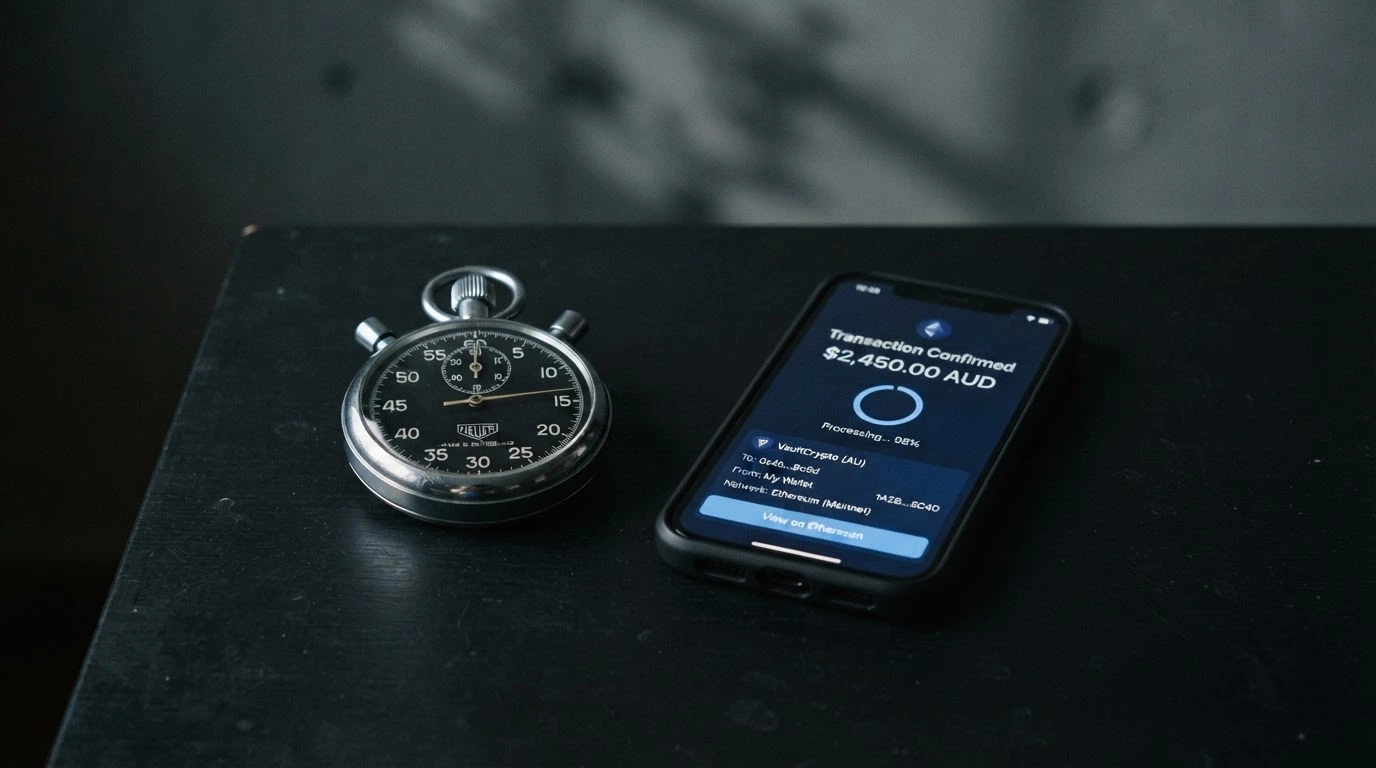
The published numbers tell a clear story. Stake records around three minutes for a typical USDT TRC-20 withdrawal — close to the network floor, with minimal internal delay. SkyCrown was tested at twelve minutes in a Betsquare payout test, which is the fastest third-party-verified figure in the set. Wild Fortune averaged five hours and twenty-four minutes across five cycles between February and May 2026, which is a multi-cycle average rather than a best case and reflects the operator’s internal processing rather than the network. Generic USDT TRC-20 withdrawals across the industry settle in one to five minutes; ERC-20 withdrawals settle in five to twenty minutes on average, longer when Ethereum is congested.
KYC verification is the delay that compounds the network time. At Stake, KYC kicks in once cumulative withdrawals exceed US$2,000 and adds 24 to 72 hours. A player who has never verified an account and requests a large withdrawal for the first time can see the casino hold the funds pending KYC, even after the on-chain transfer is technically signed. The 24-to-72-hour figure is the gap between “the casino approved the withdrawal” and “the funds reached the player’s wallet” — and it applies on top of whatever the network takes.
The practical read is that a USDT TRC-20 withdrawal at a well-run casino should land within minutes for small amounts and within a few hours for larger amounts subject to KYC. Anything beyond a day is worth a support ticket; anything beyond a week is a complaint. The 12-minute SkyCrown test and the 3-minute Stake figure are the speed benchmark; the 5-hour-plus Wild Fortune average is the realistic mid-range; the 24-to-72-hour KYC window is the upper bound for a first-time large withdrawal.
Deposit Methods and Limits: Getting USDT Into the Casino
The deposit path for an Australian player runs from a bank account to a USDT balance at an exchange, then from the exchange to the casino wallet. Most players in this market buy USDT at a major Australian-friendly exchange — a regulated platform that accepts AUD deposits and credits USDT at the prevailing rate — and then withdraw USDT to a personal wallet before sending it to the casino cashier. Some exchanges support direct casino deposits; most don’t, and routing through a personal wallet is the cleaner path.
Minimum deposits vary by operator and are not consistently published across the set. Stake’s minimum USDT withdrawal is US$10, which is the lowest floor in the published data and a useful benchmark; deposit minimums are typically similar in size or slightly higher. The exact figure is operator-specific and should be confirmed at the cashier before sending.
The AUSTRAC Travel Rule applies at A$10,000. Australian exchanges are required to collect identifying information on the sender and receiver of transfers at or above that threshold, and the rule applies to USDT transfers through exchanges regulated by AUSTRAC. A player moving large amounts in or out of a casino through an Australian exchange should expect identity verification on the exchange side, even if the casino itself never asks. For most players in this market, the rule is academic; for players moving serious volume, it shapes the choice of exchange.
What You Can Actually Play at a USDT Casino: Pokies, Live Dealer and More
| Slot | RTP | Provider | Volatility | Max Win |
|---|---|---|---|---|
| Gates of Olympus | 96.50% | Pragmatic Play | High | 5,000x |
| Sweet Bonanza | 96.51% | Pragmatic Play | High | 21,175x |
| Big Bass Bonanza | 96.71% | Pragmatic Play | Medium | 2,100x |
| Sugar Rush | 96.50% | Pragmatic Play | Very High | 5,000x |
| Starburst | 96.09% | NetEnt | Low | — |
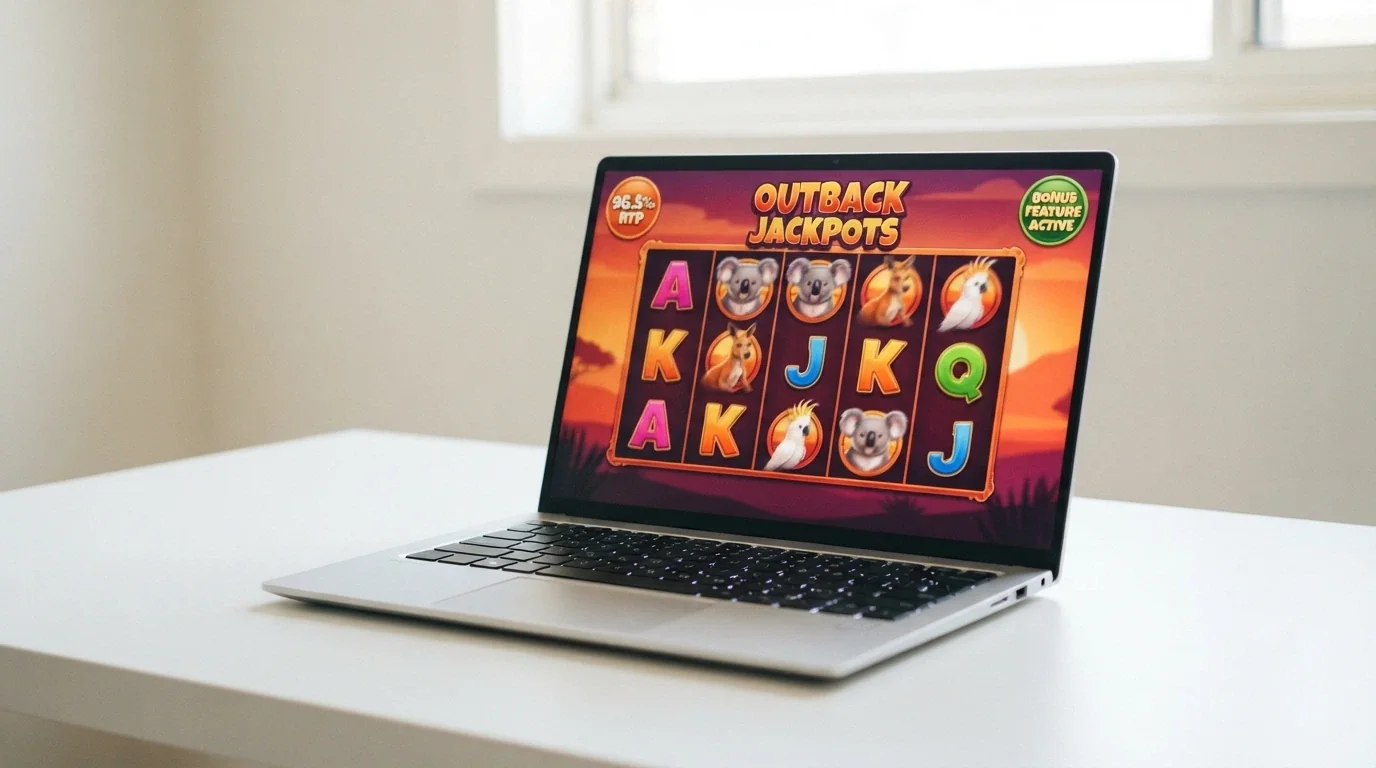
The game lobby at a USDT casino is the same lobby you find at a fiat online casino. The five titles above are popular pokies with published data; the rest of the lobby is broader than any single table can capture. The table shows what is publicly available and verifiable; the prose notes what it does not.
Pokies and Slots: The Games That Dominate Every USDT Casino Lobby
Pokies are the dominant game type at every USDT casino in the ranking. The provider mix is consistent across the set: Pragmatic Play is everywhere, NetEnt is in most lobbies, and a long tail of studios — BGaming, Yggdrasil, Betsoft, Quickspin, Big Time Gaming, Endorphina, Evolution — fills out the catalogue. The five titles with published data all sit comfortably within that mix.
The RTP range across the five is 96.09% to 96.71% — a tight band, and a typical band for online pokies. Volatility runs from Low (Starburst) to Very High (Sugar Rush). Max win ranges from a modest 2,100x on Big Bass Bonanza to an exceptional 21,175x on Sweet Bonanza. A player who weights long sessions at modest variance picks Starburst or Big Bass Bonanza; a player who wants a single large payout on a small stake picks Sweet Bonanza or Sugar Rush.
The reason pokies dominate wagering contribution is that they are the only realistic clearing path. At 7Bit, slots contribute 100% toward wagering; table games 5%; live games 0%. That contribution structure is industry-standard across the featured set. A player who wants to clear a welcome bonus has to play pokies; a player who prefers table games or live dealer is paying for the entertainment without progressing the bonus. That asymmetry shapes how the lobbies are used.
Live Dealer Tables: Real Dealers, Crypto Bets
Live dealer games — blackjack, roulette, baccarat, game shows — are available at every major USDT casino in the ranking. The provider mix is narrower than the slot mix: Evolution and Pragmatic Play Live are the dominant studios, and a handful of smaller studios fill out the back catalogue. BC.Game and 7Bit both name Evolution in their provider lists, which is a reasonable proxy for the broader set.
The crypto bet interface is the same as the fiat interface: the player chooses a chip size, places a bet on the layout, and the dealer runs the hand. The difference is at the cashier — bets are denominated in USDT rather than in dollars, and the table limits display in USDT. Most live dealer tables at crypto casinos cap below what a high-stakes fiat casino would offer, but the floor and middle of the market are well-served.
Live dealer games contribute 0% toward bonus wagering at most operators. A player who wants to clear a welcome offer cannot do it at the live tables; the games are for entertainment during the wagering window, not for clearing the wagering itself. That distinction is the most common point of confusion in bonus terms.
Table Games and RNG Titles Beyond the Pokies
RNG blackjack, roulette and baccarat are available at most USDT casinos in addition to the live dealer tables. The game selection is typically a smaller catalogue than the pokies — a few dozen RNG titles against several thousand pokies — but the core games are universally present. A player who prefers a single-player RNG table over a live dealer room finds the option, just at a smaller scale.
The wagering contribution is the limiting factor. RNG table games contribute 5% at 7Bit and a similar low rate across the rest of the set. A player who was planning to clear a A$10,000 bonus at 40x on RNG blackjack discovers that 5% contribution means twenty times the turnover — A$8 million of qualifying play, against A$400,000 on slots. The math makes RNG table play uneconomic for bonus clearing at any reasonable stake.
The practical read is that RNG table games and live dealer games are entertainment products, not bonus-clearing tools. A player who wants to play table games is paying full price for the entertainment, with the house edge as the only cost. A player who wants to clear a bonus is playing pokies, regardless of personal preference. The two goals are not compatible on the same balance, and the contribution table is the clearest statement of that.
Tether Casinos on Your Phone: No App Needed
USDT casinos work in a mobile browser. Apps are rare in this market, and the absence of an app is not a disadvantage.
- The HTML5 lobby loads in Safari, Chrome and Firefox on iOS and Android without a download, and the same game library is available on mobile as on desktop.
- Deposits and withdrawals are wallet-based, so the cashier works the same way it does on a desktop: copy the address, send from a phone wallet, scan a QR code from the exchange app.
- Game providers build pokies and live dealer tables in HTML5 first, which is why the mobile experience at a USDT casino is rarely worse than the desktop one.
- Native apps, where they exist, are convenience layers over the browser version rather than separate products. The wagering terms, the bonus terms and the licence are the same.
The practical implication is that a player can run a USDT casino entirely from a phone — wallet app for the cashier, browser for the lobby — without installing anything more than a wallet. That is a quieter, more private setup than a downloaded casino app, and it is the default for most players in this market.
The Offshore Reality: Why No USDT Casino Holds an Australian Licence
No USDT casino serving Australian players holds an Australian licence, because no Australian licence for online casinos exists. Online casino games, online pokies and in-play sports betting are prohibited to people in Australia under the Interactive Gambling Act 2001. The federal regulator, the Australian Communications and Media Authority, enforces the prohibition by requesting internet service providers to block illegal gambling and affiliate sites. Since the first blocking request in November 2019, 1,564 sites have been blocked, and more than 225 illegal services have withdrawn from the Australian market since enforcement strengthened in 2017.

The product is banned outright, which is why no licence framework exists to ban. State and territory wagering regulators licence sports betting, racing, lotteries and keno — products that are permitted and licensable under the IGA — but no regulator issues a licence for an online casino. The combination of the federal prohibition and the absence of a licensable product means every brand in this ranking operates from outside Australia, under a foreign regulator, and accepts Australian customers because the operator is not subject to Australian law.
The federal regime was tightened further in 2024. From 11 June 2024, digital currency was banned as a payment method for online wagering licensed in Australia — which closes off the on-ramp through any licensed Australian platform, even though crypto was already excluded from those platforms in practice. The Interactive Gambling Amendment (Gambling Reform) Bill 2026, passed by Parliament on 19 August 2026, layers new measures on top of that prohibition: from 1 January 2027, banks and payment providers gain express authority to block transactions to illegal gambling operators, alongside advertising restrictions and direct-marketing limits around BetStop.
For an Australian player, the legal position is stable and well-documented. The operator is acting illegally under Australian law by offering the product; the individual player is not prosecuted. The financial position is less stable: with banks gaining express blocking powers from 1 January 2027, AUD-to-USDT transfers through Australian banks to offshore casino wallets may become harder to execute. Crypto-native players who fund their casino play from existing USDT balances are less exposed to that change than players who buy USDT at an Australian exchange with a bank transfer.
What an Offshore Licence Actually Means for Your Money
Curacao is the dominant licence framework in the featured set. BitStarz, BC.Game, Stake and 7Bit all run under Curacao licences. The Curacao framework is a single master licence issued by the regulator to the operator, with sub-licences for individual brands; the regulator oversees compliance and anti-money-laundering obligations but does not provide a player-recourse mechanism comparable to a UK or Maltese licence. A dispute with a Curacao-licensed casino is, in practice, a dispute with the operator’s customer support team; the regulator is not a complaint channel for individual players.
Anjouan is the licence FortuneJack holds. Anjouan’s regulator is smaller and less established than Curacao’s, and the framework has become more common among crypto-native operators over the last few years. The player-protection profile is similar in shape — KYC and AML obligations on the operator, no individual dispute resolution — but the regulator’s track record is shorter.
Tobique Gaming Commission is the licence Wild Fortune holds. Tobique is a Canadian First Nations regulator that has licensed a small number of online operators. Licence #0000064 is verifiable in the TGC’s public register. The player-protection profile is again similar in shape, with the same absence of an individual dispute channel.
None of the three frameworks substitutes for an Australian licence. ACMA does not recover funds for players at offshore casinos; state and territory gambling regulators do not arbitrate disputes with offshore brands; Australian courts have no straightforward jurisdiction over a Curacao-licensed company. A player who needs recourse beyond the operator’s own support team should not expect to find it through any Australian channel.
What the 2026 Reforms Mean for USDT Casino Players from 2027
The Interactive Gambling Amendment (Gambling Reform) Bill 2026 was passed by Parliament on 19 August 2026. The measures in the bill commence on 1 January 2027. The most consequential change for USDT casino players is the express authority the bill gives banks and payment providers to block transactions to illegal gambling operators.
What that looks like in practice is still being implemented, but the direction is clear. Australian banks will be able to decline or delay AUD transfers they identify as going to offshore gambling operators, including the AUD leg of a bank-to-exchange-to-USDT-to-casino chain. The Travel Rule under AUSTRAC, which already requires identity collection at A$10,000 transfers, sits alongside the new blocking authority and gives exchanges an additional layer of compliance obligation.
For a player who buys USDT at an Australian exchange and sends it to a personal wallet before depositing at a casino, the new authority applies at the AUD-to-USDT step. A bank declining an AUD transfer to an exchange it has identified as serving offshore gambling customers is the most likely friction point. Players who fund their USDT balance from non-AUD sources — overseas transfers, peer-to-peer trades, balances acquired before the reforms — are less directly exposed but are still subject to AUSTRAC reporting at the A$10,000 threshold.
The honest read is that playing at an offshore USDT casino from Australia is becoming harder to do through Australian financial plumbing, even though the activity is not prosecuted at the individual level. The legal position for the player is unchanged; the practical friction at the on-ramp and off-ramp is rising. Players in this market should expect more declined transfers, longer settlement times at Australian exchanges, and a gradual shift toward crypto-native funding paths.
Staying in Control: Limits, Self-Exclusion and Real Help for Australian Players
BetStop, the National Self-Exclusion Register, launched on 21 August 2023. To the end of the third quarter of FY2025-2026, 59,830 people had registered to self-exclude from all licensed online and phone wagering providers in Australia; 37,247 active exclusions were in place as of 31 March 2026. The register covers licensed Australian wagering — sports books and lottery products licensed by state and territory regulators — and does not cover offshore casinos. A player who registers with BetStop is excluded from every licensed Australian wagering provider; the same registration does not exclude the player from any of the ten brands in this ranking.

The harm picture is mixed. Overall gambling participation in Australia declined slightly to 58.8% in 2025, according to the ANU’s Gambling in Australia 2025 survey. Risky gambling — measured on the Problem Gambling Severity Index — rose from 13.7% in 2024 to 19.4% in 2025. Problem gambling prevalence in the past twelve months sits between 0.7% and 1.0% of adults. More than half of those who gambled (56.1%) participated mainly online in 2025. Approximately 5.9% of adults reported being harmed by another person’s gambling in the past twelve months.
The Australian help services are real and accessible regardless of whether the gambling was at a licensed or offshore operator. The national gambling helpline is 1800 858 858 — free, confidential, available across Australia. Gambling Help Online provides chat and email counselling alongside self-assessment tools and information. State and territory services — including the Victorian Responsible Gambling Foundation and its equivalents — offer further counselling, financial advice and self-exclusion pathways for those who want them.
For players at offshore USDT casinos specifically, the practical self-management tools are operator-level. Most crypto casinos in the ranking offer deposit limits, session time limits and self-exclusion inside the account, but those tools are operator-scoped rather than industry-wide. A player who excludes from one brand can still play at another; a player who wants exclusion across the offshore market has to set the limit at every brand individually, or use a personal block tool like Gamban, which several Australian-facing harm-reduction services promote.
The point of this section is not to suggest that offshore play is unsafe by default. It is to make clear that the Australian harm-minimisation infrastructure does not reach the offshore market, and that the safety net players rely on at licensed operators has to be rebuilt by the player at each offshore brand. For players who recognise the early signs of risky gambling in themselves, the free, confidential Australian services are the place to start; the offshore casino will not start that conversation.
How We Picked and Ranked These USDT Casinos
The selection runs from operators with clear, publicly indexed licence and bonus terms at the top to operators whose public footprint is too thin for the comparison to carry more than a name and a brand at the bottom. The primary sources for this article were operator terms pages, regulator registers, published payout-speed tests from specialist outlets, and the ANU Gambling in Australia 2025 survey for the prevalence data. Cross-referencing against the ACMA’s blocking list and the Interactive Gambling Act 2001 informed the offshore status and the legal framework.

The ranking weights four criteria. Welcome-offer value is the first, in dollar terms and in wagering terms — the size of the bonus matters less than what it costs to clear. Licence transparency is the second, meaning whether the operator publishes its licence jurisdiction, whether the licence can be verified against a regulator’s register, and whether the regulator is one a player can read on. Withdrawal-speed data is the third, drawing on published tests and operator-stated figures to give a range rather than a single point. AU-player suitability is the fourth, capturing whether the operator accepts Australian customers in USDT and whether the cashier and terms page serve Australian time zones and currencies.
The ranking does not invent weightings. The four criteria are qualitative, and the ordering is editorial rather than mechanical. Where two operators trade places on different criteria — Stake has no welcome bonus but the fastest published withdrawal; FortuneJack has the highest match but the smaller regulator — the editorial call is documented in the operator write-up rather than in a hidden weighting.
The limits of the ranking are honest. SkyCrown, Rocket Play, Royal Reels and FairGO carry thin public data, and the comparison cells for those brands read as em dashes rather than as figures. Players choosing among those four should do so on direct knowledge of the brand rather than on the comparison this article supplies.
Should You Play at an Offshore USDT Casino? What the Numbers Say
The case for a USDT casino is concrete. A USDT TRC-20 withdrawal at the fastest operators settles in around three minutes; a tested withdrawal at SkyCrown was twelve minutes; the network floor is one to five minutes for a typical TRC-20 transfer. USDT obscures the bank-statement record of gambling, and the no-KYC threshold on most operators in the ranking lets a player deposit and withdraw below US$2,000 in cumulative withdrawals without uploading identity documents. The pokies lobby is the same Pragmatic Play and NetEnt catalogue available at any other online casino, with the same RTPs, the same bonus structure and the same provider mix.

The case against is the same shape, just on the protection side. No brand in the ranking holds an Australian licence, because no Australian online casino licence exists. ACMA does not recover money for players at offshore casinos; BetStop does not exclude players from offshore brands; Australian courts have no straightforward jurisdiction over a Curacao, Anjouan or Tobique-licensed operator. The 2026 reforms, commencing 1 January 2027, give Australian banks and payment providers express authority to block transactions to illegal gambling operators, which means the AUD leg of the funding chain may become harder to execute through Australian banks. The wagering math on welcome bonuses is the second cost: a A$10,000 bonus at 40x wagering requires A$400,000 of qualifying turnover, and the expected loss on that turnover at 96.50% RTP is approximately A$14,000 across enough spins for the average to settle.
The trade-off is therefore real and unavoidable. USDT at an offshore casino buys speed, privacy and crypto-native bonuses. It costs the player the Australian protection layer and a rising level of friction at the AUD on-ramp. For a player with a small bankroll, a taste for pokies, and a clear-eyed view of what the bonus math actually costs, the trade-off can be reasonable. For a player who is chasing losses, who is using bonuses as a substitute for income, or who would benefit from the Australian self-exclusion and harm-minimisation infrastructure, the trade-off is the wrong one. Offshore USDT casinos do not connect to that infrastructure, and no bonus term recovers the gap.
The 37,247 active BetStop exclusions as of 31 March 2026 are a reminder that the licensed Australian market has a real cohort of players who have decided that the easiest way to stop is to be locked out of every licensed product at once. None of those exclusions reach any brand in this ranking. For players who are reading this article and recognising themselves in the early signs of risky gambling, the free Australian services — 1800 858 858, Gambling Help Online — are the right starting point, and they remain the right starting point regardless of where the gambling happens.
Frequently Asked Questions
Are USDT casinos licensed in Australia, and what licence do they hold?
No USDT casino serving Australian players holds an Australian online casino licence, because no state or territory issues one. Online casino is prohibited under the Interactive Gambling Act 2001. The featured brands operate offshore under Curacao, Anjouan or Tobique Gaming Commission licences. Players are not prosecuted, but no Australian consumer-protection layer applies offshore.
How fast can I withdraw in USDT from an offshore casino, and which network should I use?
A USDT TRC-20 withdrawal lands in three minutes at the fastest operators; SkyCrown tested at twelve, Stake at around three. TRC-20 on Tron is recommended: one to three blocks, fees under a cent. ERC-20 is slower. Sending USDT on the wrong network loses the funds. KYC at Stake kicks in above US$2,000 cumulative withdrawals.
Do Australian responsible gambling protections — BetStop and Gambling Help Online — cover USDT casinos?
BetStop covers licensed Australian wagering providers only — not any offshore casino in this ranking. ACMA does not recover funds for offshore players. Gambling Help Online and the national helpline 1800 858 858 remain available regardless of where someone gambles. Self-exclusion at an offshore casino is operator-scoped and must be set at each brand individually.
What wagering requirements and maximum cashout caps are common on Tether casino bonuses?
The featured set runs 40x at BitStarz and BC.Game to 40-45x at 7Bit; 7Bit gives 14 days, BC.Game 30. FortuneJack applies 10x per mission. Slots contribute 100% to wagering at 7Bit, table 5%, live 0%. Free-spin offers cap conversion at A$150. A A$10,000 bonus at 40x requires A$400,000 turnover.
What are the risks of using an offshore Tether casino in Australia?
Principal risks are the absence of Australian consumer protection, the absence of BetStop coverage, and rising friction at the AUD funding step from 1 January 2027. ACMA has blocked 1,564 sites since November 2019; more than 225 illegal services have withdrawn since 2017. Funds at offshore casinos are not recoverable through Australian channels.
Is it legal for Australians to play at a Tether casino in 2026?
Online casino is prohibited under the Interactive Gambling Act 2001, and digital currency has been banned as payment for online wagering since 11 June 2024. The prohibition targets operators, not players; no Australian has been prosecuted for using an offshore casino. From 1 January 2027, banks gain authority to block transactions to illegal operators.
Crypto-Only vs Multi-Currency Casinos: Does It Matter?
Some operators in the set — Stake, BC.Game, FortuneJack — are crypto-only at the cashier. They accept USDT, BTC, ETH and a handful of other coins, and they pay out in crypto. Other operators sit closer to a hybrid model: BitStarz and 7Bit take USDT alongside cards and e-wallets at some regional fronts, and the AU-branded brands often display AUD balances alongside USDT figures even when the cashier itself is crypto-only.
The hybrid model is convenient for a player who wants to deposit AUD directly and convert to USDT at the cashier rather than at an exchange. The convenience carries a cost: the on-ramp fee at the casino’s payment processor is typically higher than the spread at a major exchange, and the AUD-to-USDT rate the casino offers is rarely as good as the spot rate at a retail platform. A player who already holds USDT in a personal wallet is better off depositing crypto directly; a player who is funding the casino from a bank account is paying for the convenience of not opening an exchange account.
Game and bonus differences are minimal. The lobbies carry the same providers and the same titles at crypto-only and hybrid brands; the bonus terms are denominated in USDT or its dollar equivalent regardless. The bonus structure does not soften at the crypto-only brands; if anything, the wagering requirements tend to be tighter because the operators have fewer payment rails to monetise. The choice between crypto-only and hybrid is therefore a choice about the deposit path the player prefers, not a choice about the games or the bonus economics.
Provably Fair: Can You Actually Verify a USDT Casino Game?
Provably fair is a cryptographic verification system used by some crypto casinos to let players confirm that a game’s outcome was not manipulated after the bet was placed. The mechanism runs on three pieces of data: a server seed generated by the casino before the bet, a client seed chosen or modified by the player, and a nonce that increments with each bet. The casino hashes the server seed before the bet and reveals it after, so the player can confirm that the hash matches and that the outcome was generated from the committed inputs.
In practice, provably fair verification covers a specific category of games: dice, crash, plinko, mines, and other in-house titles built by the casino itself. It does not cover third-party slots from Pragmatic Play, NetEnt or any of the other studios whose games appear in this ranking, because those games run on the studio’s own server-side random number generator and the casino does not have access to the inputs. It does not cover live dealer games, because the outcome is generated by a physical deck or wheel in a studio, not by a server seed.
A player who wants verifiable randomness has to choose the in-house provably fair games over the third-party lobby. That choice sacrifices the published RTPs of the slot catalogue for cryptographic proof that the operator did not change the result after the bet. For most players, the trade-off favours the third-party lobby; the studio-side RTPs are published and the studios are independently audited. Provably fair is a real technology for a narrow category of games, not a universal guarantee across the casino.