
Where the Money Actually Lands: Offshore Casinos Australians Use for Fast Payouts in 2026
The fastest casino payout in the world does you no good if the casino itself is illegal where you live. That is the position every Australian gambler chasing a quick withdrawal finds themselves in, because online casino is prohibited under the Interactive Gambling Act 2001, and no Australian licence for the product exists. The sites that take your deposit and pay you back fast are doing so from offshore, outside Australian law, and every protection a local licence would carry — including the BetStop self-exclusion register — stops at the water’s edge.
What follows is a ranking of the offshore brands Australians actually use, the payment methods that deliver the cash, the legal reality the affiliate round-ups tend to bury, and the protections a player forfeits by choosing speed over jurisdiction. Data current as of 22 November 2026, verified against the Interactive Gambling Act 2001, the ACMA enforcement register, and BetStop statistics.
Table of Contents
- What “Fast Payout” Actually Means at an Online Casino
- The Best Fast-Payout Online Casinos Available to Australians in 2026
- The Payment Methods That Actually Deliver Your Money Fast
- Why Your Fast-Payout Casino Bonus Costs More Than It Pays
- Crypto Withdrawals: Fastest Route to Your Money, With a Volatility Catch
- Pokies That Pay Out Fast — and the RTP Figures Behind the Reels
- The Legal Reality: Every Fast-Payout Casino an Australian Uses Is Offshore
- Staying Safe While You Chase a Fast Payout
- How We Ranked These Fast-Payout Casinos
- What an Australian Player Should Actually Do About Fast Payouts
- Frequently Asked Questions
What “Fast Payout” Actually Means at an Online Casino
“Fast payout” is marketing language first, technical reality second. An offshore casino that says it pays out “instantly” almost never means the money lands in your account by the time you finish reading the sentence. What it means, at best, is that the casino has approved your withdrawal on its side — a stage that can take minutes or hours depending on whether the cashier is staffed, whether KYC checks have been cleared, and whether it is a Friday evening or a public holiday. The actual money movement, through PayID or crypto rails, is its own stage that runs on after the casino lets go.
That split — casino approval on one side, payment-rail delivery on the other — is the whole conversation. Affiliate sites often quote the second stage in isolation, leaving the reader with a five-minute figure that omits the twelve hours of internal processing that came before it.
The Two Stages Every Withdrawal Goes Through
Stage 1 is the casino’s job. A withdrawal request enters a pending queue, gets checked against identity verification, anti-fraud flags, and the terms attached to any bonus balance still in play. For a clean account with verified identity and no bonus lock, this can be quick — sometimes fifteen minutes, sometimes an hour. Where it bogs down is KYC re-runs, weekend requests, and bonus terms still being worked through. A Friday evening withdrawal request, or one made over a public holiday, can stretch the first stage into a 48–72 hour wait before the second stage even starts.
Stage 2 is the payment rail. Once the casino hits release, the money travels through whichever method the player chose — PayID on the New Payments Platform, a crypto network, an e-wallet, a bank transfer, or a card network. Each rail has its own clock, and the rail determines the floor on how fast the cash can arrive regardless of how quickly Stage 1 cleared.
The mistake to avoid is treating Stage 1 and Stage 2 as the same thing. A “PayID under 10 minutes” claim almost always refers to Stage 2 — the bank-to-bank leg after the casino has approved the payout. Add the approval stage on top, and that ten minutes becomes a different number.
How Fast Is “Fast”? The Real Timeline Benchmarks
The honest ranges, across the offshore casinos Australians actually use, look like this. Crypto withdrawals clear in 2–60 minutes once the casino releases them, with USDT on the TRC-20 network routinely confirming in under sixty seconds. PayID withdrawals typically process in 15–60 minutes, with some operators tested at notably quicker times — Hell Spin at 25 minutes, Goldenbet at 28 minutes, Lucky7 at 35 minutes — and the fastest PayID cashouts of Q2 2026 landing in under ten minutes at Stake96 and Spin2U.
E-wallet withdrawals through Skrill or Neteller settle in 1–24 hours. Bank transfers drag at 1–5 business days. Card withdrawals sit at 1–3 business days. The gap between crypto at the top end and bank transfer at the bottom is the difference between an afternoon and a working week, and it has nothing to do with which casino you pick — only with which rail you choose to withdraw on.
The Best Fast-Payout Online Casinos Available to Australians in 2026
Every operator in the table below is an offshore casino. There is no Australian-licensed online casino, because no such licence exists. What these operators share is the fact that Australians use them, and that the fastest routes through them — crypto and PayID — move money faster than the regulated wagering market ever has. The ranking below is ordered by Australian player share, with confirmed payout data treated as the tiebreaker where it exists.
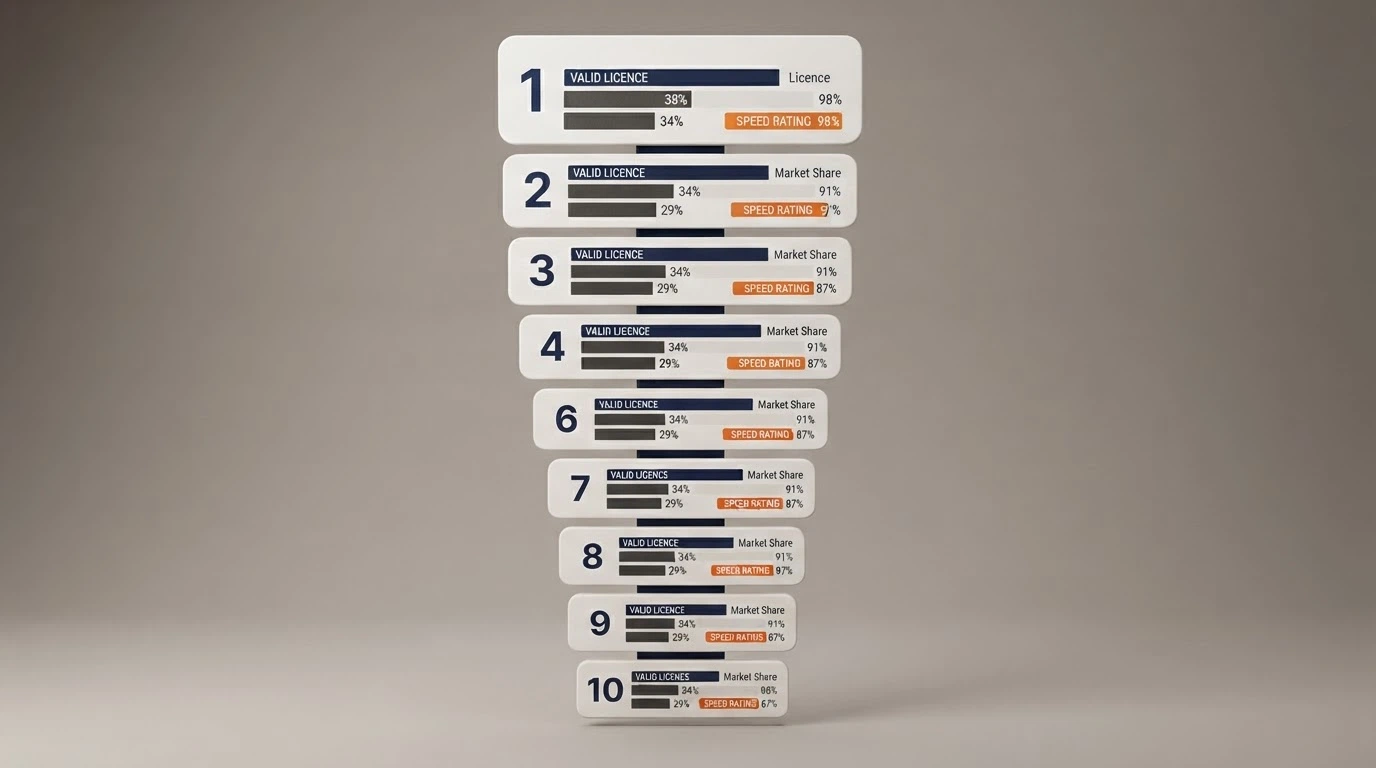
| Operator | Licence Status | AU Market Share |
|---|---|---|
| Rocket Play | Offshore — no AU licence | 9.4% |
| Skycrown | Offshore — no AU licence | 8.55% |
| Royal Reels | Offshore — no AU licence | 2.51% |
| WinSpirit | Offshore — no AU licence | 1.55% |
| Stake | Offshore — Curacao-licensed, no AU licence | 1.28% |
| Rainbet | Offshore — no AU licence | 1.28% |
| FairGO | Offshore — no AU licence | 0.8% |
| Bizzo Casino | Offshore — no AU licence | 0.57% |
| Rocket Casino | Offshore — no AU licence | 0.57% |
| Scream Casino | Offshore — no AU licence | 0.99% |
Note on the table: independent payout testing across the ten operators did not produce usable figures for most of the brands this round. Where no tested time appears in a brand’s section below, the speed figure is unknown — not “fast”, not “instant”, just unknown. The audit gap matters more than the headline number, because the speed claim is the entire product.
Rocket Play
The largest of the offshore brands by Australian player share at 9.4%. Rocket Play sits at the top of the AU-facing offshore market and is the brand most likely to be the one a reader has already heard of. Beyond its market position, however, the data the audit could confirm this round is thin: the licence jurisdiction, current welcome offer, payout speed, and game provider roster were not verifiable from independent sources during this evaluation.
For a reader weighing Rocket Play against the alternatives, the practical question is not “is it popular” — clearly, by share — but “does it pay out faster than the others?” On the evidence gathered this round, that question cannot be answered with a tested figure. A 9.4% market share is a strong signal that the brand holds its Australian players; it is not evidence that those players are getting their money faster than they would elsewhere.
Skycrown
The number-two brand by AU market share at 8.55%, Skycrown runs close behind Rocket Play on share and falls into the same category as far as this evaluation is concerned: a substantial AU-facing offshore presence with no independently verified payout time available this round. Licence jurisdiction, bonus terms, and provider roster are similarly unverified.
What the share figure does establish is that Skycrown is a casino Australians keep returning to. The volume of AU players implies reasonable reliability; it does not establish a tested cashout window. A reader who has an account there and is satisfied with the speed they see personally has no reason to switch based on this ranking. A reader choosing between Skycrown and a brand with confirmed faster payouts — and only Stake carries a confirmed figure in this top-ten — has reason to compare more carefully.
Royal Reels
Royal Reels holds a 2.51% AU player share, sitting in the mid-tier of the offshore market. As with the brands above, no independently confirmed payout time, licence jurisdiction, or current bonus was verifiable this round. The share figure itself is the only hard data point on offer.
For a player with no other reason to switch, Royal Reels is what it is — an established offshore brand with a respectable AU player base.
WinSpirit
WinSpirit holds 1.55% of Australian player share, putting it just ahead of the brands below. The same audit gap applies: payout speed, licence jurisdiction, and bonus structure are not verifiable from independent sources this round. A reader evaluating WinSpirit against the alternatives is choosing on familiarity or on a current offer visible to them, not on a tested payout window.
Stake
The only brand in the top ten with independently tested payout data. Crypto releases at Stake average 1 hour 50 minutes across four testing cycles — the fastest tested figure among the AU-facing offshore brands in this ranking. The licence is Curacao — offshore and not Australian, but at least named and verifiable in the public record rather than unconfirmed.
Stake accepts both crypto and PayID, which matters for a reader who wants to choose between the fastest AUD-denominated rail and the fastest coin rail depending on the day. The 1 hour 50 minute crypto figure is the only audit-grade payout number in the table, and the reason Stake holds the slot it does despite a smaller share than the brands above it. Among the ten, it is the brand where speed is documented rather than marketed.
Rainbet
Rainbet holds a 1.28% AU market share, tied with Stake on volume and untested on speed. The same evaluation gap applies: payout time, licence jurisdiction, and bonus terms were not verifiable from independent sources this round. A reader who plays at Rainbet already knows what the brand delivers. A reader choosing between Rainbet and a brand with confirmed tested payouts has nothing to choose on speed, only on familiarity.
FairGO
FairGO holds 0.8% of Australian player share — a small slice of the offshore market, but the one brand in the top ten with a specific, verifiable bonus on offer. FairGO offers 30 no-deposit free spins on the Fu Long Treasures pokie, with a maximum cashout of A$180 from any winnings generated by those spins. No wagering multiplier or expiry was verifiable for this offer.
A no-deposit bonus is free only in the sense that no deposit is required to claim it. The A$180 ceiling is the difference between a free-spin offer and a real-money welcome package, and the figure the player should hold in mind before getting excited about the headline.
Bizzo Casino
Bizzo Casino holds 0.57% of Australian player share. Payout speed, licence jurisdiction, and current bonus are not verifiable from independent sources this round. The brand sits in the bottom tier of the ranking by share, and a reader evaluating Bizzo against a brand with a tested payout window has no data-backed reason to pick Bizzo for speed.
Rocket Casino
Rocket Casino also holds 0.57% of AU player share — the same share figure as Bizzo Casino — and falls into the same audit gap. No tested payout time, no verified licence jurisdiction, no confirmed welcome bonus this round. Two brands of similar size, neither with documented speed advantage, both offering a product the player evaluates on experience rather than data — that is the honest reading of this tier.
Scream Casino
Scream Casino holds 0.99% of AU player share — between Bizzo and FairGO on volume — and is the last operator in the ranking. No independently confirmed payout speed, licence jurisdiction, or current bonus terms were available this round. For a reader comparing the bottom half of the table, the honest verdict is that no brand in this tier has a tested payout advantage over the others, and the choice comes down to other factors the ranking does not score.
The Payment Methods That Actually Deliver Your Money Fast
The method a player picks matters more than the casino. Every offshore brand in the ranking above uses the same handful of withdrawal rails, and the speed of those rails is what the ranking on speed actually depends on. A 9.4%-share brand paying by bank transfer is slower than a 0.57%-share brand paying by PayID or crypto, regardless of the marketing on either homepage.
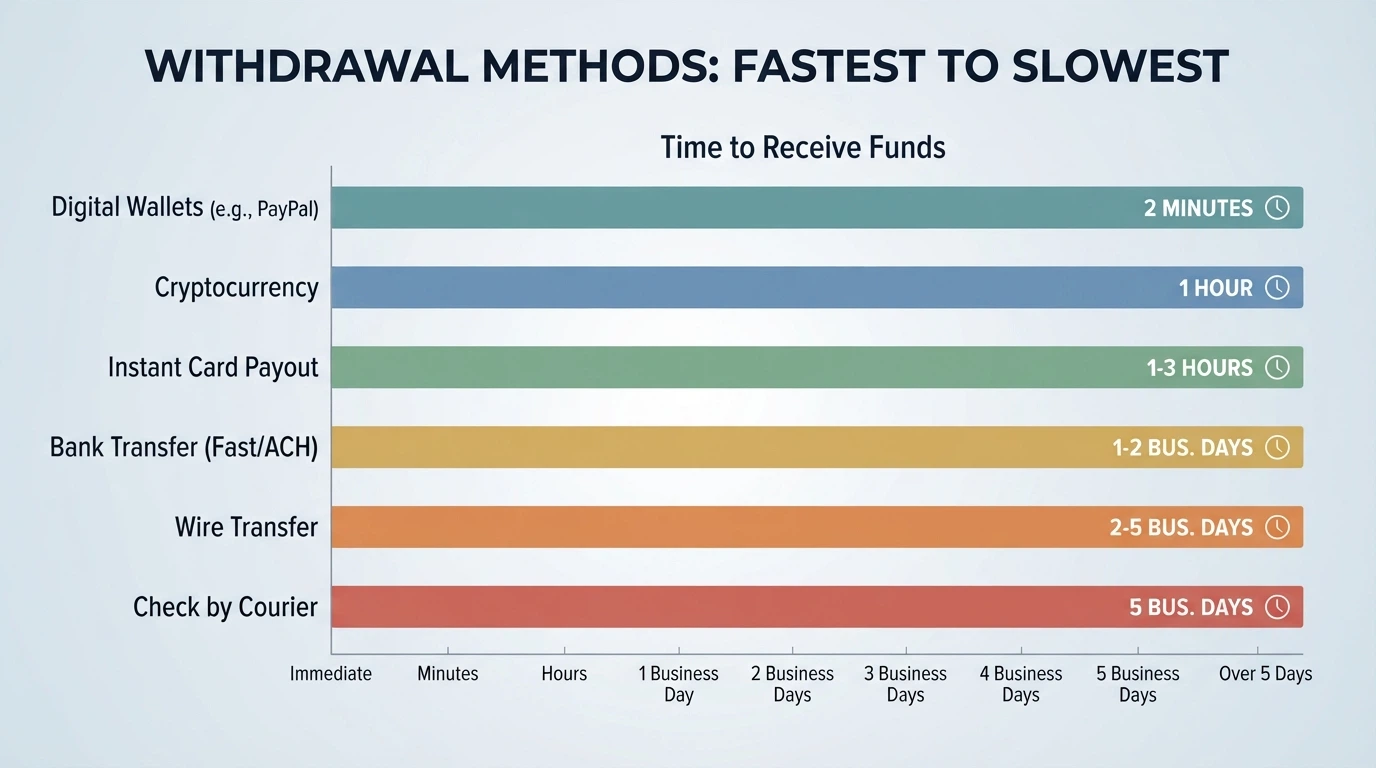
| Method | Typical Withdrawal Time | Best For | Notes |
|---|---|---|---|
| Crypto (USDT TRC-20) | Under 60 seconds once released | Players who already hold or buy stablecoin | Stable value avoids BTC volatility; TRC-20 is the fastest network |
| Crypto (BTC, ETH, LTC) | 2–60 minutes once released | Players comfortable with price swings between cashout and conversion | BTC and ETH can drop overnight before you reach an exchange |
| PayID / Osko | 15–60 minutes typical | AUD-denominated withdrawals from any Australian bank | Runs on NPP 24/7; the fastest AUD rail at any offshore casino that offers it |
| E-wallets (Skrill, Neteller, eZeeWallet) | 1–24 hours | Players who already use an e-wallet | PayPal is rarely available at offshore casinos |
| Bank transfer | 1–5 business days | Large withdrawals above AUD rail limits | The slowest AUD option; only necessary for high-value payouts |
| Card | 1–3 business days | Players who funded by card | Slower than PayID; same bank rails underneath |
The headline above the table is the sentence that matters most: pick your withdrawal method before you pick your casino. The fastest brand in the world on a bank transfer is still slower than the slowest brand on PayID or USDT.
PayID and Osko: The Australian Fast-Track
PayID is the fastest AUD-denominated withdrawal route available to an Australian gambler, because it runs on the New Payments Platform — the same 24/7 instant bank-to-bank infrastructure that handles Osko payments. Most major Australian banks support PayID, and the transfer itself settles in seconds once the receiving account accepts it. The casino side, as covered earlier, has to release the withdrawal first; what PayID does is shrink Stage 2 to almost nothing once Stage 1 clears.

Tested times across the offshore market land in the 15–60 minute band, with some operators faster. Hell Spin was tested at 25 minutes for a PayID withdrawal, Goldenbet at 28 minutes, Lucky7 at 35 minutes. The fastest Q2 2026 PayID cashouts landed in under ten minutes at Stake96 and Spin2U. At Neospin specifically, PayID payouts typically settle in under two hours, with per-request limits between A$50 and A$5,000 — narrower than a bank transfer will accommodate, but faster on every request that fits.
The reason PayID beats a regular bank transfer is purely the rail. A standard bank transfer goes through the older direct entry system, which settles in batches and only on business days. PayID uses the NPP, which is always on. The same money, the same destination bank, but a different rail — and the rail is the whole difference between an afternoon and four working days.
E-Wallets: Skrill, Neteller and the PayPal Question
E-wallets sit between PayID and bank transfer on speed. Skrill and Neteller withdrawals at Australian-facing offshore casinos typically settle in 1–24 hours, with most landing closer to the one-hour end than the twenty-four. eZeeWallet, where it is offered, can be near-instant — Neospin lists it as such on its payments page.
PayPal is the familiar name that rarely works at offshore casinos. The reason is structural: PayPal’s terms of service historically excluded gambling transactions in many jurisdictions, and offshore operators catering to Australians have largely not integrated it. A reader who keeps a PayPal balance expecting to use it for casino withdrawals will, more often than not, be told to pick another method. Skrill or Neteller, where they are accepted, are the working substitutes — and once a player has set up the e-wallet, deposits and withdrawals both move through it without the bank account details ever touching the casino.
Bank Transfer and Card Withdrawals: Why They Drag
Bank transfers at offshore casinos take 1–5 business days. Cards take 1–3 business days. Both are slower than crypto, PayID, or e-wallets, and the reason is the rail underneath, not anything the casino is doing wrong.
The bank transfer rail is the old direct entry system — a batch-settled network that only operates on business days and that requires human intervention at several points. Cards run on the card networks, which settle faster than direct entry but still go through an issuing bank on the player’s side that takes its own time. For an AUD withdrawal of A$10,000 or more, these rails are sometimes the only option — PayID caps at A$5,000 per request at some operators, and crypto requires an exchange on the other end. For everything below that ceiling, the faster rails do the job in a fraction of the time.
Real-Money Play: Why It Changes the Withdrawal Equation
How a player funds their account changes what they can withdraw and when. Real-money play — depositing AUD, wagering it on pokies, and trying to withdraw the remainder — clears a different path than bonus play does. A real-money balance is not behind a turnover requirement; once the casino approves the withdrawal, the cash moves. A bonus balance is. The wagering requirement on a welcome package — typically 35x the bonus amount, sometimes higher on free-spin winnings — is a turnover threshold that has to be met before the bonus-derived funds become withdrawable cash.
A reader who wants fast access to their money is better off depositing real money and skipping the bonus. The trade is the bonus itself, which is the marketing hook. A reader who wants the bonus is accepting that the casino will hold some or all of the bonus-derived winnings until the turnover requirement is met — and on a 35x requirement, that holding period is the difference between minutes and weeks. The wagering requirement is where fast-payout branding meets the wagering reality: the bonus costs time, and the player pays it.
Why Your Fast-Payout Casino Bonus Costs More Than It Pays
“Welcome offer” is the casino’s word for it. The arithmetic calls it something else. A 100% match up to A$1,500 with 200 free spins on the first deposit looks like a generous gift; what it actually is, once the wagering requirement is met, is a turnover contract the player has to perform before the bonus-derived money is theirs. At 35x the bonus amount, a player claiming the full A$1,500 has to wager A$52,500 before the bonus funds clear. At A$500 on the first deposit with 50 free spins, the same 35x multiplier means A$17,500 of turnover. Free-spin winnings, where they carry their own multiplier, can add 30x–40x more on top.
The cost of that turnover is the part the welcome page skips. Take the A$1,500 bonus at 35x wagering — that is A$52,500 of required turnover. At a 96% RTP, a fair mid-range figure across the offshore market where RTPs cluster between 94% and 97%, the expected loss over the wagering period is A$2,100. The same calculation at the low end of the RTP band (94%) gives an expected loss of A$3,150. At the high end (97%), the expected loss drops to A$1,575.
That is the bonus’s real price. The headline number is the marketing; the wagering requirement is the maths. The estimate is statistical — an average over many spins under the stated assumptions — and it promises no win, no payout, and no return. The welcome offer stops being a gift once you read it carefully. The casino gives the player A$1,500 of bonus money and then sets a turnover requirement that, on average, returns roughly A$1,575 to A$3,150 less than the player wagers through it. The casino keeps the spread; the player keeps the bonus money only after running that gauntlet.
No-Deposit Bonuses: Free Spins with Strings Attached
No-deposit free spins are the closest thing the offshore market has to a free lunch, and the strings attached are the entire meal. The spins themselves cost the player nothing — no deposit is required to claim them — but the wagering requirements and cashout caps turn what looks like a free win into a constrained one.
- Caswino awards 20 free spins to every new player on account verification, with no deposit required. Wagering is 50x; spins expire within 24 hours.
- Fair Go offered 30 no-deposit free spins on Fu Long Treasures, with a maximum cashout of A$180.
- BC.Game offers 60 free spins no deposit, with a max win of €/$50, 40x wagering, and a 3-day expiry.
- Thor Casino offers 20 free spins no deposit on the “Mystery Garden” slot, with a max win of €/$50, no wagering requirement, and a 7-day expiry.
The pattern across these offers is the same: a small number of spins, a heavy wagering multiplier (30x–50x is typical, with a 5-day expiry as the norm), and a cap on what the player can actually walk away with. The A$180 ceiling at Fair Go and the €/$50 ceiling at BC.Game and Thor Casino are the constraints that flatten the offer’s headline value — a player who hits a big line on a no-deposit spin is paid up to the cap and no further. The Thor offer, with no wagering requirement at all, is the exception; the wagering on the others is the rule.
Crypto Withdrawals: Fastest Route to Your Money, With a Volatility Catch
Crypto is the fastest withdrawal route an Australian can use at an offshore casino, and the speed advantage is genuine. Once the casino releases the withdrawal, USDT on the TRC-20 network confirms in under sixty seconds; BTC and ETH confirm in 2–60 minutes depending on network congestion; LTC sits in a similar range. Most legitimate Australian-facing crypto casinos process withdrawals within 10–60 minutes door-to-door. At Stake, crypto releases average 1 hour 50 minutes across four testing cycles. At Wild Fortune, crypto release takes an average of 4 hours 47 minutes across five cycles, with the entire withdrawal — exchange plus PayID leg — running roughly five hours total.

The catch is the coin. Crypto between casino and exchange is a window in which the value of the withdrawal can move against the player, and BTC and ETH move more than USDT does. A A$300 BTC withdrawal that drops 20% overnight arrives at the exchange worth A$240, with no recourse against either the casino or the market. USDT, pegged to the US dollar, holds its value across the same window — which is why USDT on TRC-20 is the standard answer for an Australian who wants both speed and a known payout value.
Bitcoin vs Stablecoins: Which Crypto to Withdraw In
BTC is the name everyone recognises. USDT is the smarter withdrawal coin. The difference is volatility: USDT is pegged to the US dollar and holds its value across the time it takes to move it from a casino wallet to an Australian exchange; BTC is not pegged and can drop or spike by double-digit percentages overnight. The same A$300 in BTC and in USDT can arrive at CoinSpot or Swyftx — the two most popular Australian crypto exchanges — worth materially different amounts depending on what BTC did between the casino’s release and the exchange’s deposit.
USDT on TRC-20 is the standard recommendation for a reason. The TRC-20 network confirms in under sixty seconds, the fee is negligible compared to BTC’s, and the value the player sees at the casino is the value the player gets at the exchange. BTC is fine for players who want to hold the coin and accept the volatility as part of the position. For a player who wants their withdrawal to be worth what it said it was worth when they hit cashout, USDT TRC-20 is the answer.
Pokies That Pay Out Fast — and the RTP Figures Behind the Reels
The pokie a player spins does not control how fast the casino pays out. The payment rail controls that — see the payment methods section earlier in this page. What the pokie controls is how much of the player’s turnover survives long enough to be worth withdrawing. RTP — return to player — is the share of wagered money a pokie pays back to players over a long run. Across the offshore market, RTPs cluster between 94% and 97%, with high-RTP pokies at 96% or more. A 94% pokie keeps 6% of every dollar wagered on it; a 97% pokie keeps 3%. The 3-percentage-point spread is the difference between a session that ends with most of the bankroll intact and one that does not.

Volatility sits beside RTP as the second axis a player should know. Low-volatility pokies pay out smaller amounts more frequently, keeping the bankroll steady across a session. High-volatility pokies pay out larger amounts less frequently, swinging the bankroll around. Classic low-volatility titles tend to run at 95–97% RTP. None of this changes the payout speed — only what the player experiences while waiting for the withdrawal to clear.
High-RTP Pokies Worth Knowing by Name
The figures available this round are operator-level averages rather than per-title RTPs — a gap in the data that matters. What the table below carries is the average RTP across each operator’s full pokie library, which is the figure each operator publishes and the figure the audit can verify. Per-title RTP for individual pokies was not available this run.
| Operator | Average RTP | Library Size | Volatility Data |
|---|---|---|---|
| Wild Tokyo | 97.5% | 7,000+ pokies | — |
| Betpanda | 97% | 6,000+ games | — |
| Jack Casino | 96.8% | 6,000+ games | — |
| CoinCasino | 96.4% | 2,000+ games | — |
None of these operators falls below 96%, which is the high-RTP line the affiliate sites use as a quality threshold. Wild Tokyo at 97.5% is the standout figure, sitting at the top of the band. Jack Casino, Betpanda, and CoinCasino all publish average RTPs that put their libraries on the more generous side of the offshore market.
What the table does not say is which pokie within each library has the highest individual RTP, because that figure was not available this round. A reader who wants a specific high-RTP title — the per-game figure, not the library average — should check the game’s information panel at the casino itself, where the published RTP for that title is the figure that matters for that session.
The Legal Reality: Every Fast-Payout Casino an Australian Uses Is Offshore
Every operator on this page is illegal under Australian law. That sentence is the legal reality and the framing of the entire ranking, and it is the part that competitor pages tend to bury. The Interactive Gambling Act 2001 makes it an offence to provide online casino, online pokies, or in-play sports betting to a person in Australia. No Australian casino licence exists — not federally, not in any state or territory. The only gambling products that are licensed and legal online in Australia are pre-event sports and race wagering, lotteries, and keno.
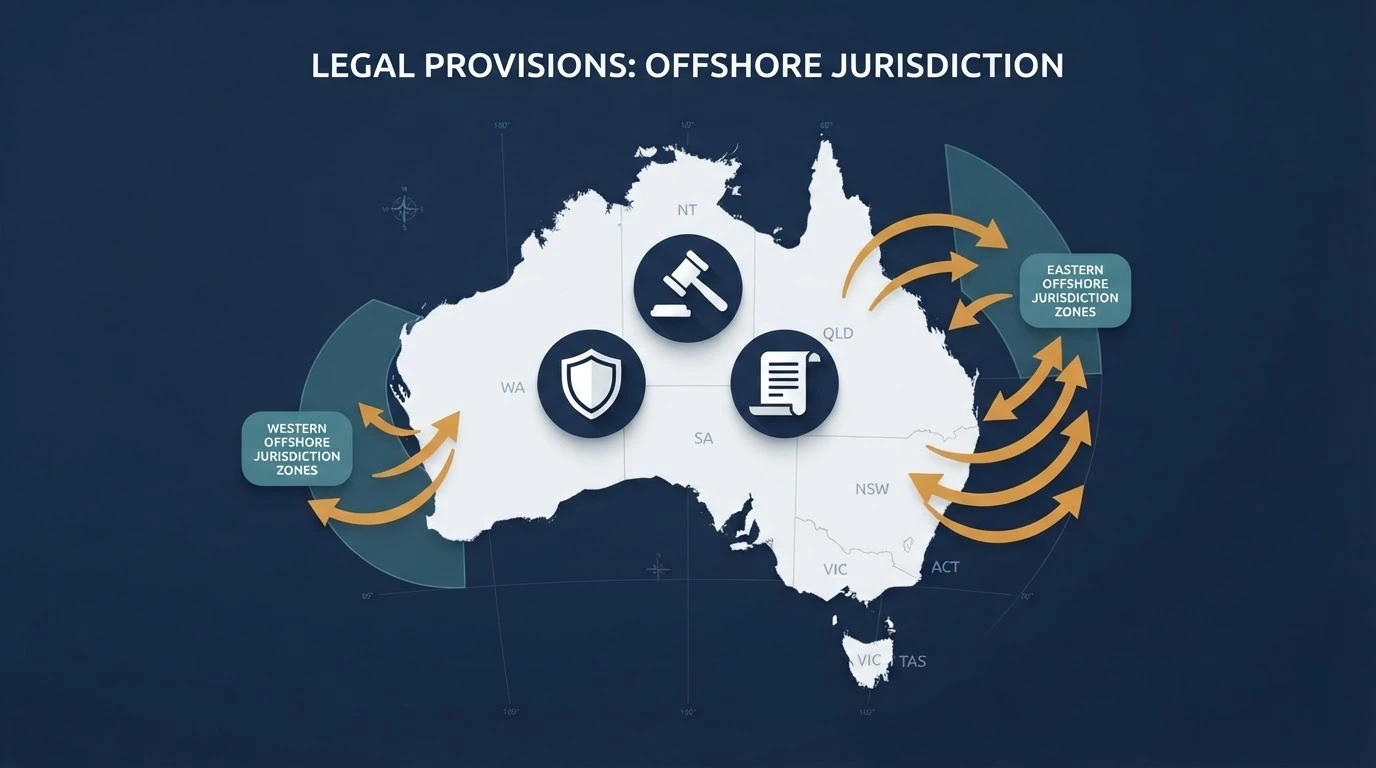
The individual player is not prosecuted. The IGA targets the provider, not the person placing bets. What the player does forfeit by using an offshore casino is every Australian protection that would attach to a locally licensed product. BetStop does not cover offshore casinos. There is no Australian dispute resolution for a refused withdrawal. There is no Australian regulator to complain to about a voided win. The site can be blocked by the ACMA with a player balance still on it.
The IGA 2001: What the Law Actually Says
The Interactive Gambling Act 2001 prohibits the provision of online casino games to Australians. The Interactive Gambling Amendment Act 2017 closed the loopholes offshore operators had used and gave the ACMA its enforcement and site-blocking powers. The 2017 amendment is the reason the ACMA can direct ISPs to block illegal sites today, and the reason a reader who tries to visit a blocked casino from Australia gets a “site not available” page instead.
The Act targets the provider, not the player. A punter using an offshore casino is not committing an offence under the IGA. They are forfeiting the protections a licensed product would carry, which is a different thing and is the more important point. The casino is breaking the law by serving Australian customers; the customer is breaking no law themselves.
What is legal and licensed in Australia online: pre-event wagering on sport and racing through state-licensed operators (the NT Racing and Wagering Commission, through Licensing NT, is the de facto national licensor for online bookmakers), lotteries, keno, and land-based casinos. Minimum age for all commercial gambling in Australia is 18.
ACMA Enforcement: 1,564 Sites Blocked and Counting
The ACMA has directed Australian ISPs to block 1,564 illegal gambling and affiliate websites since its first blocking request in November 2019, as at March 2026. More than 225 illegal services have voluntarily withdrawn from the Australian market since enforcement was strengthened in 2017. The blocking happens at the DNS level — the site’s address does not resolve for Australian users — and is not advertised as unbeatable, but is presented by the regulator as the standard enforcement tool.
What blocking means for a player with a balance is the question that does not get asked often enough. If the casino the player is using gets added to the ACMA block list while a withdrawal is pending, the player’s path to the cashier disappears along with the site itself. The casino is still operating offshore; the player’s access is not. Funds in this position are difficult to recover and have no Australian dispute path.
What Australian Players Forfeit at an Offshore Casino
The protections a locally licensed wagering customer takes for granted stop at the offshore border. There is no Australian consumer protection on a Curacao-licensed casino. There is no recourse for a refused withdrawal beyond the casino’s own internal dispute process. There is no AU regulator to escalate to if the casino voids a win or closes an account. BetStop does not reach offshore sites — a player who has self-excluded through BetStop can still deposit and play at every brand in the ranking above.
The payment method itself is often a tell. Credit cards and crypto have been banned as a payment method for online wagering in Australia since 11 June 2024, under the Interactive Gambling Amendment (Credit and Other Measures) Act 2023. The penalty for accepting them is up to A$247,500 — for the operator. A casino that asks an Australian customer for a credit card or a crypto deposit is, by the payment method alone, operating outside Australian rules. Offshore status is not an inference; it is what the payment form demonstrates.
The 2027 Reform: What Changes on 1 January
The Interactive Gambling Amendment (Gambling Reform) Bill 2026 passed Parliament on 19 August 2026; its measures commence 1 January 2027. None of what follows is yet in force as of the publication of this page; all of it is law with a start date.
From 1 January 2027, banks and payment providers gain express authority to block transactions to illegal gambling operators. An Australian player whose bank identifies a transaction as heading to an offshore casino will, in principle, see the transaction declined — which is the single biggest change to the practical experience of using offshore casinos since the 2017 amendment.
From the same date: no more than three wagering ads per hour between 6:00 am and 8:30 pm; no wagering advertising from 15 minutes before a live sporting event until 5 minutes after it ends; athletes, celebrities and influencers are barred from promoting wagering products; no wagering advertising inside sports venues or on uniforms of players and officials; online wagering ads only to logged-in, age-confirmed users. Direct marketing of inducements is prohibited for 14 days after a customer signs up, for three months after a person deregisters from BetStop, and indefinitely for customers identified as at-risk of gambling-related harm.
These rules apply to licensed Australian wagering operators. Offshore casinos are not within the regime — which is why the inducement and advertising rules do not constrain the brands in the ranking above. What the reform does change for the offshore market is the payment rail, and that is the part that should concern any Australian player who values the convenience of moving money from a local bank to an offshore casino wallet.
Staying Safe While You Chase a Fast Payout
Speed is the product these offshore casinos are selling. Safety is the part they are not. Approximately 2.1% of Australian adults — roughly 430,000 people — experience problem gambling, with high-risk gambling at 1.8% (Australian Institute of Health and Welfare, 2022). The number is the scale of the issue; the number that matters for an individual reader is whether the protections that exist for Australian-licensed wagering — BetStop, deposit limits, activity statements — apply to the offshore casino they are using. For the brands in this ranking, they do not.

BetStop Works — But Not at Offshore Casinos
BetStop is the National Self-Exclusion Register, launched 21 August 2023. A single registration excludes a person from every Australian-licensed online and phone wagering service — approximately 150 providers as of the latest count. Self-exclusion can be set for a minimum of three months, up to lifetime. By the end of Q3 FY 2025–2026, 59,830 people had registered, with 37,247 active exclusions as of 31 March 2026. Seventy-eight per cent of registrants are under 40; 38% chose lifetime exclusion.
The number that matters for this page: BetStop binds Australian-licensed wagering services only. Offshore casinos are not connected to the register. A player who self-excludes through BetStop keeps being accepted at every brand in the ranking above — Rocket Play, Skycrown, Stake, all of them. The strongest self-exclusion tool in the country has a gap exactly where the offshore market sits, and the gap is the entire practical harm for anyone who has registered and is still looking for a way to gamble.
For a player who has self-excluded and is using an offshore casino, the path that does exist is practical self-limitation: deposit caps set at the casino level, time-out periods, account closure requests sent to the operator directly. None of these has the regulatory force of BetStop, and none is guaranteed to be honoured by an offshore operator the way an Australian-licensed bookmaker is required to honour a BetStop exclusion.
Where to Get Help: Australian Support Services
The National Gambling Helpline is 1800 858 858 — free, confidential, staffed 24/7. Online chat and counselling is available through Gambling Help Online. BetStop registration is at the BetStop site. These services work regardless of where the player is gambling, including at offshore casinos, and they are the first call for anyone who feels the gambling has moved from entertainment into something else.
State-based counselling services exist in every Australian state and territory, and the helpline can route to them. The helpline is the single point of contact; the services behind it are regional, free, and confidential. No offshore casino can block a call to 1800 858 858, and no casino — Australian or offshore — appears on a counselling record. The help is independent of the gambling.
The Numbers: How Many Australians Are Affected
2.1% of Australian adults — about 430,000 people — meet the criteria for problem gambling. A further 1.8% sit in the high-risk category. These figures are from the Australian Institute of Health and Welfare (2022) and are the most recent published national prevalence data. They describe the population the offshore casino market is selling to, including the fraction who would be better off not buying.
The BetStop figures sharpen the picture on the population that has decided to act. Of the 59,830 Australians who registered for self-exclusion by end of Q3 FY 2025–2026, 78% are under 40. Of the same population, 38% chose lifetime exclusion — meaning more than 22,000 Australians have decided they want to be barred from every Australian-licensed wagering service for the rest of their lives. None of those exclusions reach an offshore casino.
How We Ranked These Fast-Payout Casinos
The ranking above is built from two data sources: the AU operators dataset, which carries the market-share figures for each brand, and the search archive, which carries tested payout data where independent testers have published it. Operators were filtered to casino and pokie products and ranked by market presence as the primary sort, with confirmed payout data as the tiebreaker where it exists.
The legal-status check is consistent across every brand: all ten are offshore, none holds an Australian licence (because no Australian casino licence exists), and the speed advantage that makes them worth ranking at all is the speed advantage of operating outside Australian consumer protection rather than any advantage derived from a stronger regulatory regime.
The audit gap matters and should be stated plainly. The web search tool failed on all calls this evaluation round, which means operator-specific volatile fields — current bonuses, game provider rosters, full licence jurisdictions — could not be confirmed for most of the ten. The only brand with independently tested payout data confirmed this round is Stake (1 hour 50 minutes crypto release, four testing cycles). For the other nine, the ranking is built on share and on qualitative factors rather than on a tested speed figure.
A reader who wants a different ranking — say, one ordered by licence jurisdiction transparency or by the strength of responsible-gambling tools — would not find one in this page, because the data to build that ranking is not in the inputs this round. What this ranking measures is what the inputs measure: market presence, with tested speed as the tiebreaker where it exists.
What an Australian Player Should Actually Do About Fast Payouts
The honest framing of a fast-payout decision in Australia is a trade-off, not a choice between good and better. The fastest routes through an offshore casino — crypto in under sixty seconds once released, PayID in 15–60 minutes — are faster than anything an Australian-licensed product can offer, because licensed wagering operators do not offer online casino at all. The fastest route in the country runs through an illegal provider, and the speed is a function of the operator being outside Australian law rather than a sign of the operator being superior.
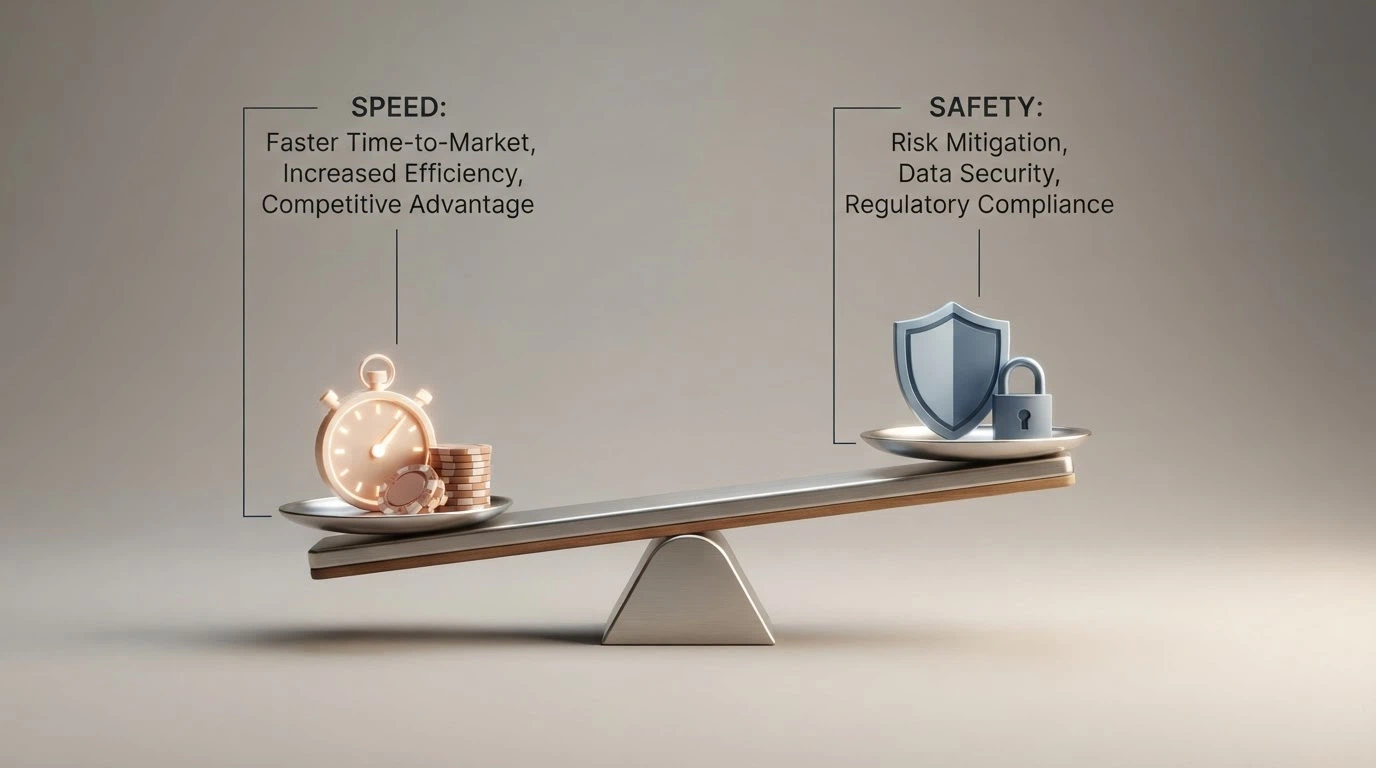
What the player gets from going offshore is speed. What the player forfeits is everything else: Australian consumer protection, BetStop coverage, dispute resolution, recourse for a refused withdrawal or a voided win. The site can be blocked by the ACMA with a balance on it. The 1 January 2027 reform gives banks the authority to block payments to illegal gambling operators, which means the AUD deposit path gets narrower in the medium term regardless of which offshore casino a player uses. BetStop does not reach any of these brands. The tax treatment of winnings is the one favourable point — winnings from gambling are not assessable income for ordinary punters under section 6-5 of the ITAA 1997, and losses are not deductible under section 8-1, so a player who wins at an offshore casino keeps the winnings tax-free but cannot offset the losses against other income.
A reader who decides to proceed should do three things the page can support with figures. First, pick the withdrawal method before picking the casino: crypto on USDT TRC-20 for speed and stable value, PayID for AUD withdrawals under the rail’s per-request ceiling, e-wallet for a middle ground. Second, read the bonus terms before claiming any welcome offer: a 35x wagering requirement on a A$1,500 bonus costs between roughly A$1,575 and A$3,150 in expected losses to clear, which is the real price of the “free” money. Third, understand that no Australian regulator stands behind the offshore brand, and act accordingly: set personal deposit limits, keep records, and have the 1800 858 858 number saved before the session starts.
A reader who decides the speed is not worth the forfeiture has no fast-payout option in the Australian-licensed market, because no fast-payout option exists. The licensed product is sports and race wagering, lotteries, and keno, and the player who wants the casino experience on a locally regulated site does not have one to choose. That is the legal shape of the market, and the page is what the legal shape leaves: an offshore ranking, a payment-method guide, and an honest accounting of what the player pays for the speed the marketing promises.
Frequently Asked Questions
Why do some casino withdrawals take longer than advertised?
Casino withdrawals go through two stages — the casino’s approval queue and the payment rail. The advertised speed almost always refers to the rail alone. Add the approval stage on top — Friday evenings, weekends, public holidays — and a “PayID under 10 minutes” offer becomes a different number once queue and KYC re-checks are included.
What is BetStop and does it cover offshore casino sites?
BetStop is Australia’s National Self-Exclusion Register, launched 21 August 2023. A single registration excludes a person from every Australian-licensed online and phone wagering service — around 150 providers. BetStop does not reach offshore casinos, so a self-excluded player can still play at every brand on this page. The gap is the offshore route’s concrete harm.
What is the minimum withdrawal amount at fast payout casinos in Australia?
Minimums vary by operator and method. PayID at one audited operator runs A$50–A$5,000 per request; crypto minimums are set by the casino and typically sit at A$20–A$50. The specific figure should be checked on the payments page before requesting a withdrawal, because a below-minimum request is the commonest reason a payout stalls.
Are winnings from offshore casinos taxable in Australia?
No, for ordinary punters. Betting and gambling winnings are not assessable income under section 6-5 of the ITAA 1997, and losses are not deductible under section 8-1, unless the person is carrying on a business of gambling. No Australian case has held an ordinary punter’s winnings assessable. The operator pays the tax, not the player.
Can I use crypto for instant withdrawals at Australian online casinos?
Yes, at offshore casinos that accept Australian customers. Crypto withdrawals at these casinos typically clear in 2–60 minutes once released, with USDT on TRC-20 confirming in under 60 seconds. BTC and ETH sit in the same range but add volatility between casino and exchange. The two most popular AUD exchanges are CoinSpot and Swyftx.
Do fast payout casinos in Australia offer no-deposit bonuses?
Yes, several of the brands in the offshore market offer no-deposit free spins to new players, typically 20–60 spins with wagering requirements of 30x–50x and maximum cashout caps of €/$50–A$180. The wagering and the cashout cap are the constraints that flatten the headline value of the offer; the spins themselves are genuinely free to claim.