
The Highest-RTP Online Pokies Available to Australian Players
The reader who lands on a page built around the phrase “best paying online pokies australia” is doing something almost no competitor site will admit out loud. They are looking for online pokies that return more of every dollar to the player, and the only operators offering those games to Australians are doing so without an Australian licence. That is the legal floor under everything that follows, and it shapes the practical answer to the headline question in ways the rest of the internet on this topic does not name.

The high-RTP numbers themselves are real and reproducible. Goblin’s Cave at 99.32% and Ugga Bugga at 99.07% are not marketing copy; they are the published theoretical return figures from Playtech, the manufacturer. What changes between those numbers and a given session is variance, which is a separate beast, and what changes between those numbers and a player’s chance of actually withdrawing winnings is the legal architecture around the games — the offshore casino that holds them, the absent Australian licence, and the absent Australian recourse when an operator declines to pay.
So this page does three things. It ranks the highest-RTP pokies available to Australian players in 2026, with the volatility and max-win figures that research actually confirms. It walks through why “best paying” is partly a long-run claim and partly a marketing word, and what the difference costs a person playing right now. And it sets out the legal reality — the Interactive Gambling Act 2001 prohibition, the ACMA enforcement record, the offshore operator landscape, and what a player can actually recover when something goes wrong.
Last updated: 22 November 2026 · Licence and registration data checked against the ACMA register and Licensing NT.
Table of Contents
- What “Best Paying” Actually Means for Players
- The Highest-Return Titles Available in 2026
- Why Your Cashout Takes Longer Than Advertised
- Every Operator Offering These Games to Australians
- The Legal Reality — No Online Casino Is Licensed Here
- When Chasing Returns Stops Being Worth It
- How We Selected and Ranked These Titles
- Your Next Move — Making an Informed Decision
- Frequently Asked Questions About Online Pokies in Australia
What “Best Paying” Actually Means for Players
RTP Is a Long-Run Number, Not a Session Promise
Return to player, the figure the industry abbreviates to RTP, is the share of every dollar wagered that a pokie is programmed to return to players across the life of the game. A pokie published at 96% RTP is, on the manufacturer-programmed maths, designed to give back A$96 of every A$100 staked — averaged across millions of spins, not across the next hundred. The 4% that does not come back is the house edge, and the house edge is what keeps the lights on at every pokie manufacturer and operator on earth.
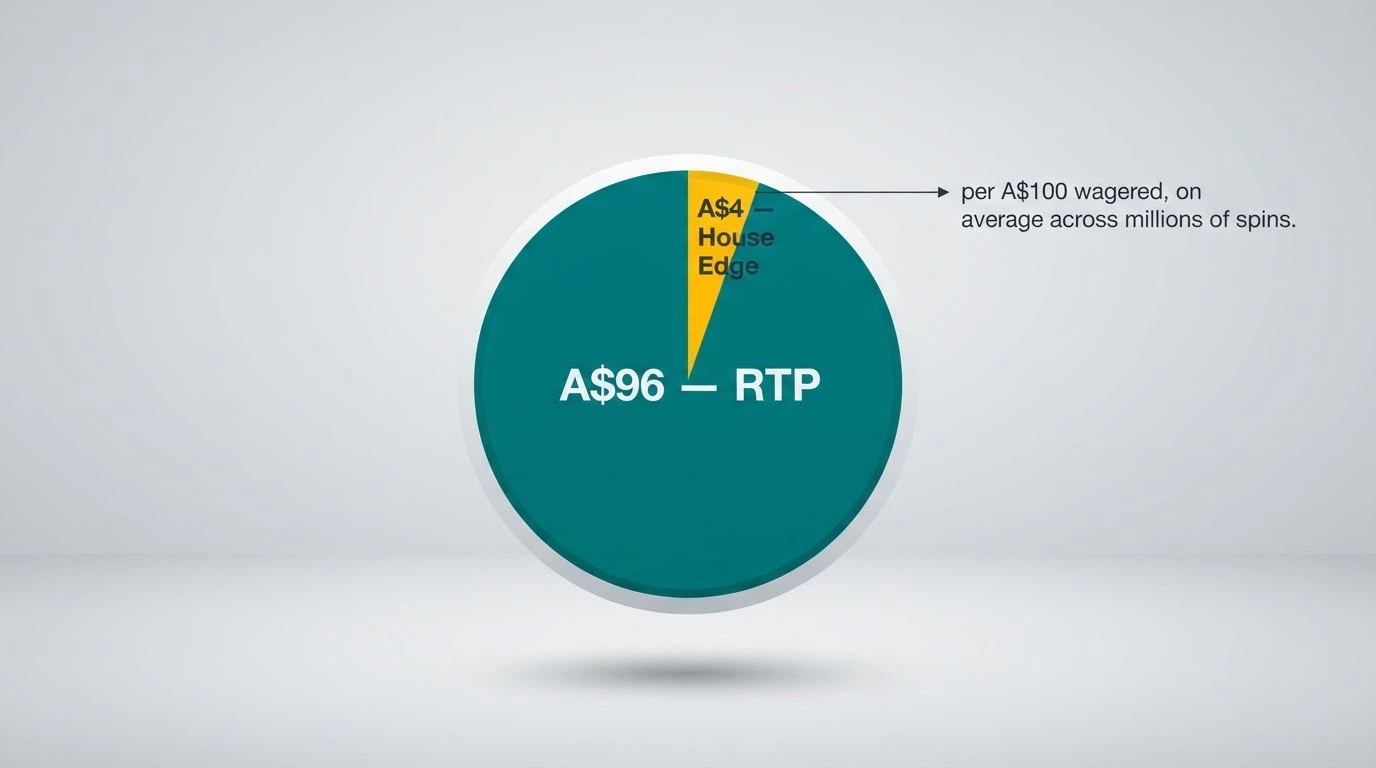
The phrasing matters. A 97% RTP does not mean a player who puts in A$100 walks away with A$97. Variance is the term for how far individual sessions stray from that average, and it is large. A player can run a 500-spin session at A$1 a spin on a 97% pokie and finish anywhere from substantially ahead to substantially behind. The arithmetic only flattens out across volumes of play that no individual session reaches. Online pokies with RTPs of 95% or higher are considered the best-paying titles in the market; the average land-based pokie in Australia sits between 85% and 90%, which is the gap that has driven so much player traffic offshore in the first place.
This is also why “best paying” in the marketing sense is doing a job the numbers do not do on their own. The highest-RTP titles compress the house edge. They do not abolish it. The maths still favours the house, just by less.
Whole-Casino Payout Rate vs Per-Game RTP — Why the Difference Matters
Affiliate pages on this topic often quote a “casino payout percentage” alongside the per-game RTP, and the two figures are not interchangeable. A whole-casino payout rate pools every game on the lobby — the high-RTP pokies, the medium-RTP pokies, the lower-RTP table games and live dealer products — and divides total payouts by total wagers. That figure tells a reader what the average return across the entire product mix was over some reporting period. It does not tell them what their session on a specific pokie is going to look like.
The number that governs a given spin is the RTP of the pokie being played. If a casino is publishing a 97% whole-casino payout rate but a player is sitting on a 94% pokie, the player is playing at the 94% rate, not the 97% rate. Per-game RTP is the figure that matters per session, and that is the figure that this page ranks. The whole-casino number is a hygiene signal — it tells you whether an operator is stocking higher or lower returning games on average — but it is not the player’s expected return on the next spin.
Real-Money Play vs Free-Play Demos — What Changes
Most offshore pokies casinos let a visitor load a game in demo mode before depositing, and the demo plays the same random number generator as the real-money version — same symbols, same paytable, same theoretical RTP. What changes is the stakes, in two senses. The bankroll is fictional in demo mode, so the player is not paying for the dead spins out of their own pocket. That removes the part of the experience that most reliably fools people about how a pokie actually feels: the cost.
Demo mode is useful for getting a feel for a game’s volatility, its bonus frequency and its visual rhythm, but it does not test a player’s own loss tolerance. The real-money session is the one that tells you whether the variance sits comfortably inside your budget, and there is no demo equivalent for that.
The Highest-Return Titles Available in 2026
The benchmark for a “best paying” pokie online is 95% RTP or higher. The titles at the top of that band push into territory land-based machines never reach — Goblin’s Cave at 99.32% and Ugga Bugga at 99.07% are the two highest published figures available to Australian players in 2026, and both are Playtech games with mechanics that look more like old-style fruit machines than modern video pokies. The cluster of 99% titles below them is dominated by the same vintage of design: Supermeter modes, hold buttons, max-bet requirements. The genuinely high-RTP pokies are not the slickest-looking games in the lobby, and that is not a coincidence.
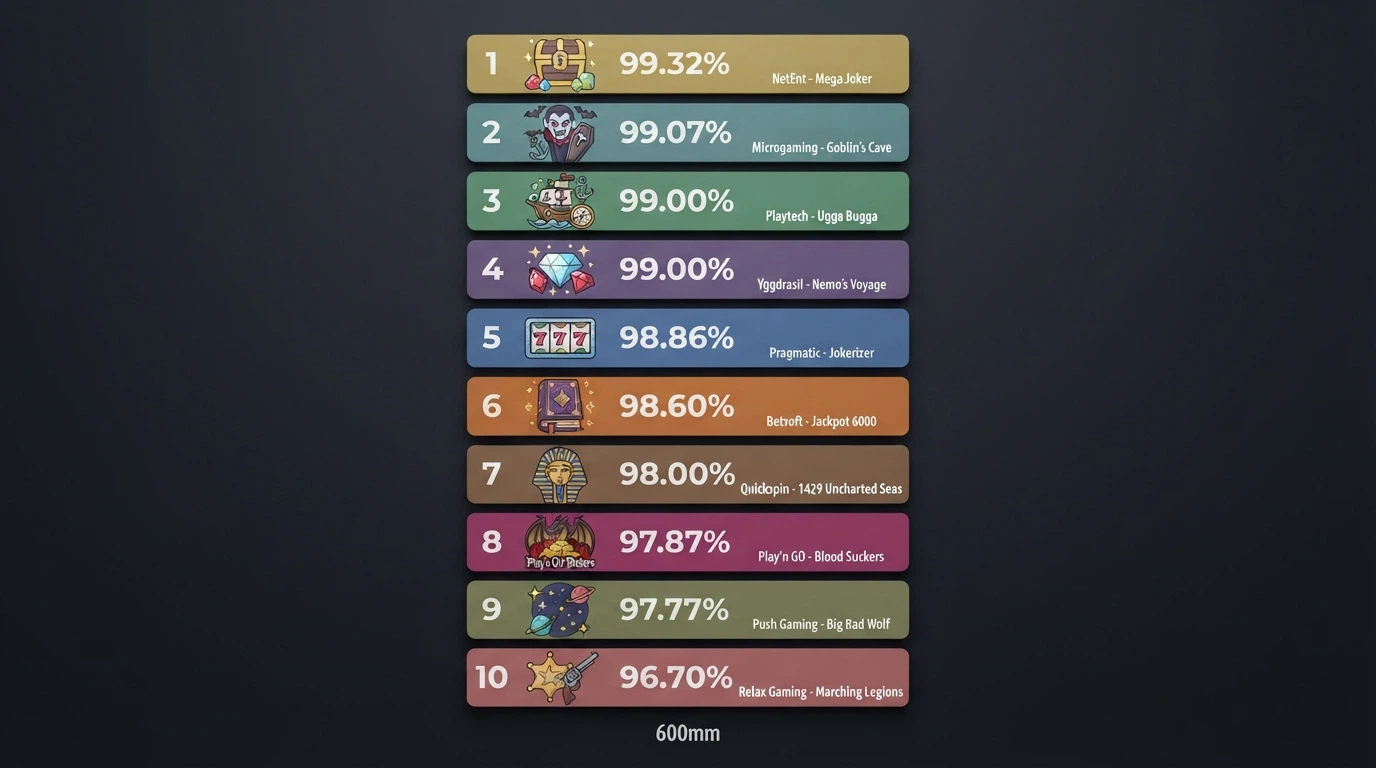
The trade-off at the top of the RTP table is feature density. Blood Suckers at 98.00% ships with low volatility and a 900x max win; White Rabbit Megaways at 97.77% ships with up to 248,832 ways to win and a far more elaborate bonus structure. The newer high-stakes titles from Pragmatic Play sit a step lower on RTP but offer max wins measured in tens of thousands of times the bet. The pokie that returns the most per spin is rarely the pokie that pays the largest single prize, and a player who chases both at once will end up choosing neither.
To anchor the comparison, a 500-spin session at A$1 a spin on a pokie published at 95% RTP costs, on average, A$25 in expectation. That is the order of magnitude a player is signing up for at the lower end of the “best paying” band — A$25 of theoretical loss across a session where the actual outcome will land somewhere on the variance curve. The maths compresses the house edge. It does not remove it.
The Highest-RTP Pokies at a Glance
| Pokie | RTP | Provider | Volatility | Max Win |
|---|---|---|---|---|
| Goblin’s Cave | 99.32% | Playtech | — | — |
| Ugga Bugga | 99.07% | Playtech | — | — |
| Mega Joker (Supermeter) | 99.00% | NetEnt | — | — |
| Book of 99 | 99.00% | Relax Gaming | — | — |
| Jackpot 6000 (max bet) | 98.86% | NetEnt | — | — |
| 1429 Uncharted Seas | 98.60% | Thunderkick | Low | 2,200x |
| Blood Suckers | 98.00% | NetEnt | Low | 900x |
| Starmania | 97.87% | NextGen Gaming | — | — |
| White Rabbit Megaways | 97.77% | Big Time Gaming | — | — |
| Big Bass Floats My Boats | 96.70% | Pragmatic Play | — | 5,000x |
The dashes are the honest cells. Volatility and max-win figures exist for Blood Suckers, 1429 Uncharted Seas and Big Bass Floats My Boats in the source material; for the rest, the manufacturer’s page or the operator’s game information panel is what a player has to consult directly. The headline RTP figures are the most cross-referenced numbers in this list.
Classic Three-Reel Pokies With the Best Published Returns
The top of the RTP table is dominated by games that look more like the pokies a parent or grandparent played than the animated video pokies that dominate modern lobbies. That is not an accident. Classic three-reel pokies with simpler bonus structures tend to return a higher share of every wager, because there are fewer features to fund.
Mega Joker from NetEnt is the clearest example. The base game runs at 76.9% RTP, which is below even land-based Australian averages, but the Supermeter mode — entered when a player collects enough jokers in the base game — runs at 99.00% RTP. The trick is that the Supermeter figure is conditional. A player who only plays the base game is playing at the lower rate, not the headline one. Jackpot 6000 is the same pattern in reverse: a max-bet requirement of 10 coins unlocks the 98.86% RTP, and anything below max bet plays a lower-returning variant.
Ugga Bugga from Playtech runs at 99.07% RTP across the board and uses a hold mechanic more familiar from video poker than from a pokie. Goblin’s Cave, also Playtech, leads the published list at 99.32%, with a hold-and-re-spin structure that lets the player lock symbols across multiple reels. Book of 99 from Relax Gaming reaches 99.00% by routing 99 book-symbol collections into a free-spins mode, which is the closest a modern mechanic gets to the classic hold-and-spin design.
What these games share is feature restraint. The bonuses are simpler than the modern video pokie equivalent, and the maths return more of every wager because the feature funding is lighter. A player who wants the highest RTP per spin is choosing, deliberately, a less elaborate game.
Video Pokies and Megaways — Where High RTP Meets Big Features
The second tier of the table is where high return meets modern feature design. Blood Suckers from NetEnt sits at 98.00% RTP with low volatility and a max win of 900x bet — modest by modern standards but tightly clustered, which is what makes it a long-running favourite for clearing bonuses. The vampire theme and the free-spins coffin-pick round are dated; the maths is not.
1429 Uncharted Seas from Thunderkick runs at 98.60% (sometimes reported as 98.50%, depending on the operator’s configuration) with low volatility and a max win of 2,200x. The art is the 15th-century cartography look; the maths is the genuinely high-RTP slot underneath it. White Rabbit Megaways from Big Time Gaming runs at 97.77% with up to 248,832 ways to win and the Feature Drop that lets a player buy into the bonus — a more elaborate feature set, a slightly lower headline RTP. Starmania from NextGen Gaming sits at 97.87% and is a more conventional video pokie without the Megaways reel mechanic.
The trade is explicit. As feature density rises — more bonus modes, more reel mechanics, more ways to win — the headline RTP sits a step lower. Blood Suckers at 98.00% is not White Rabbit at 97.77% because it is a worse game; it is because its simpler bonus structure funds less of the wager pool. Money Train 4 sits at the other end of this trade, at 96.10% RTP with a 150,000x max win and a feature set dense enough that a single bonus round can dominate a session.
Progressive Jackpot Pokies and Their RTP Trade-Off
Mega Moolah from Microgaming sits at 88.12% RTP with medium variance, and that figure has to be read with the four-tier progressive jackpot in the foreground. A portion of every spin funds the jackpot pool, which is what allows the Mega Jackpot to seed at A$1 million and to have exceeded A$20 million at peak. The 88.12% base RTP is materially below the 95%+ band that defines a “best paying” pokie, and the gap is the cost of chasing the headline prize.
The headline RTP and the session experience diverge sharply on progressive titles. A player chasing the Mega Jackpot is paying for the chance at a once-in-several-years payout, with a base-game RTP that is meaningfully worse than a non-progressive equivalent. The question is whether that chase is worth the difference, and the honest answer depends on the player’s bankroll and their reason for playing. A recreational player who wants the longest session on a given budget is poorly served by a progressive. A player who specifically wants exposure to the Mega Jackpot is paying for that exposure at a known price.
There is no published figure for how often the Mega Jackpot actually hits — Microgaming’s marketing speaks in terms of “wins every few weeks somewhere in the world,” which is true but not the same as a probability.
Pragmatic Play’s 1000 Series — New High-Stakes Titles for 2026
The newer end of the high-stakes market is dominated by Pragmatic Play’s “1000” series, three 2026 releases plus one July 2026 title that have collectively reset what an Australian-facing pokie player is being offered.
Sweet Bonanza 1000 runs at 96.53% RTP with high volatility and a 25,000x max win on the same 6×5 pay-anywhere grid as the original Sweet Bonanza, with stacked multipliers doing the heavy lifting in the free-spins round. Sugar Rush 1000 runs at 96.53% RTP with very high volatility (5/5), a 25,000x max win and a 7×7 cluster-pays grid that drops the pay-anywhere mechanic for an adjacent-symbol cluster payout. Gates of Olympus 1000 runs at 96.50% RTP with high volatility, a 15,000x max win on a 6×5 pay-anywhere grid and stacked multipliers up to 1,000x in the bonus round.
Sleeping Dragon Ultra Dark, launched 23 July 2026, runs at 96.50% RTP as the default configuration, with 95.50% and 94.50% variants also in circulation at operator-configured levels. The headline is the 20,000x max win and the 33.78% hit frequency — the share of spins that produce some kind of return. That hit-frequency figure is unusual to see published and gives a player something to anchor against: roughly one in three spins pays something, and the rest are dead.
The 1000 series sits below the 97% line that the classic high-RTP titles clear, but the max-win multipliers are an order of magnitude larger. A player who wants the highest RTP per spin is choosing differently from a player who wants the largest single payout, and the Pragmatic Play 1000 series is firmly the second of those.
How to Read a Pokie Paytable and Spot the Real RTP
The published RTP figure for a pokie sits in one of three places: the manufacturer’s game information page, the operator’s game rules overlay, or — for older games — a printed line in the paytable. Most modern pokies put the figure behind a small “i” or “?” icon in the game window, and the figure is sometimes presented as a range (e.g. “94.50% – 96.50%”) because the operator can configure the game at one of several RTP tiers.
That last point is the one to watch. A title like Sleeping Dragon Ultra Dark is in circulation at 96.50%, 95.50% and 94.50%, and the same is true of a long list of newer releases. The figure on the manufacturer’s default page may not be the figure in the lobby of the casino a player has actually opened. Before depositing, the practical check is to open the game’s information panel inside the operator and read the RTP the operator has set. If the figure is materially below the headline number, the player is playing a different game mathematically than the one described in the review.
Why Your Cashout Takes Longer Than Advertised
“Fast paying” appears across this category as a marketing claim — the word “instant” is doing a lot of work — and the practical reality is that withdrawal speed depends on three things the marketing rarely names: the operator’s pending period, the payment method, and whether the player has completed identity verification. Every one of those adds time before the money lands, and they can stack.
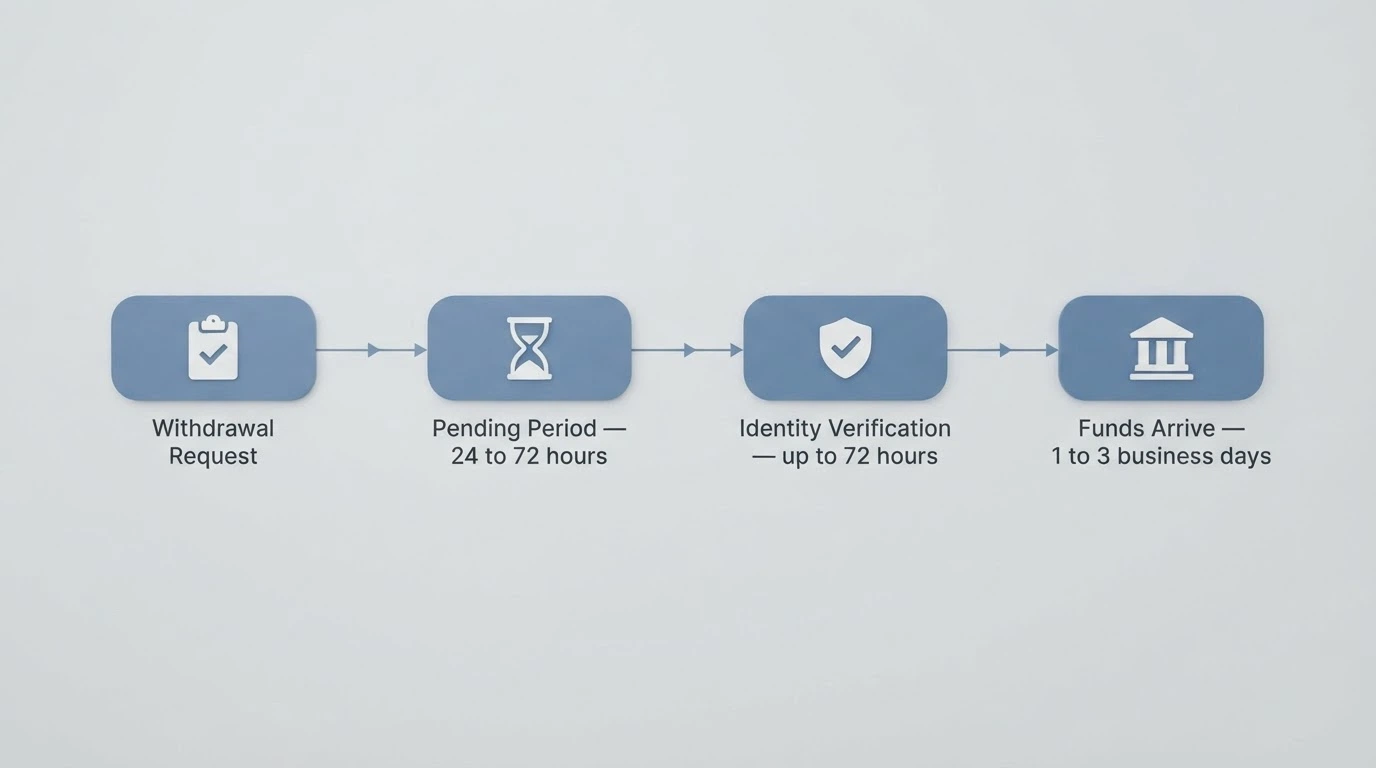
The “best paying” framing on a casino page typically ignores this entirely. A pokie with a 99% RTP is no faster to cash out than a 94% pokie on the same platform, because the payout speed is a property of the operator, not the game. A player who picks the highest-RTP pokie on a slow-paying platform has not improved their withdrawal time at all.
Withdrawal Processing Times at AU-Facing Casinos
The withdrawal path at an offshore casino runs through four stages: request, pending period, processing, and bank arrival. The pending period is the time between a player requesting a withdrawal and the operator beginning to act on it — typically 24 to 72 hours at offshore casinos, during which the request sits in a queue. The processing stage is where the operator actually moves the money, and the bank arrival stage is the time the funds take to clear into a player’s account.
PayID and Osko transfers are the fastest Australian-compatible routes, with bank arrival typically inside minutes once the processing stage completes. Bank transfers and debit card withdrawals take longer — one to three business days is common after the operator has released the funds. The POLi deposit method that used to serve Australian players was decommissioned on 30 September 2023, and what replaced it at most operators is the PayID/BPAY stack for licensed wagering and a mix of cards and crypto at offshore casinos.
The gap between “instant withdrawal” branding and actual bank arrival is mostly the pending period plus the method. Neither is under the player’s control, which is why the gap exists in the first place.
Identity Verification — Why Your First Payout Always Takes Longest
KYC — know your customer — checks are mandatory at Australian-licensed wagering operators and standard at most offshore casinos that target Australian players. The first withdrawal is the trigger. Until that point, a player can deposit and play freely; the moment a withdrawal is requested, the operator asks for the documentation that proves the player is who they claim to be.
The documentation typically includes government-issued photo ID, proof of address (a utility bill or bank statement), and sometimes proof of the payment method used to deposit. The review can take 48 to 72 hours before the withdrawal even enters the processing queue, which is why a first withdrawal always takes longer than the marketing implies. Subsequent withdrawals, once the file is on record, usually process faster — but never “instantly” in the literal sense.
The offshore wrinkle is that verification practices vary. A player at an offshore casino has no Australian consumer protection if the operator declines to verify, declines to process, or simply closes the account. The licensed-wagering standard exists precisely because the consumer-protection framework around it forces the operator to handle this properly.
Payment Methods That Work for Australian Pokies Players
The legal deposit routes for Australian wagering are debit card, bank transfer, PayID/Osko and BPAY — the channels the licensed operators use. Since 11 June 2024, credit cards, credit-related products and cryptocurrency have been banned as payment methods for online wagering in Australia, with penalties of up to A$247,500 for non-compliance. The ban targets the licensed market.
Offshore casinos accepting Australian players operate outside that ban. They still take credit cards, still take crypto, and the practical effect is that the very methods an Australian player is told not to use at home are the ones being marketed to them offshore. That is the legal seam the offshore industry is built on, and it is worth naming.
From 1 January 2027, banks and payment providers gain express authority to block transactions to illegal gambling operators, which means the credit card and crypto routes to offshore pokies become a moving target. A deposit method that worked this month may be declined next month. Players using banned methods at offshore operators carry that risk on top of the legal one.
Every Operator Offering These Games to Australians
This is where the page has to be honest about a structural problem with the category. Australian readers searching for the best paying online pokies are not, in practice, choosing between ten licensed Australian casinos. There is no such thing. The list of operators offering online pokies to Australians splits cleanly into two groups, and the two groups are not comparable products.
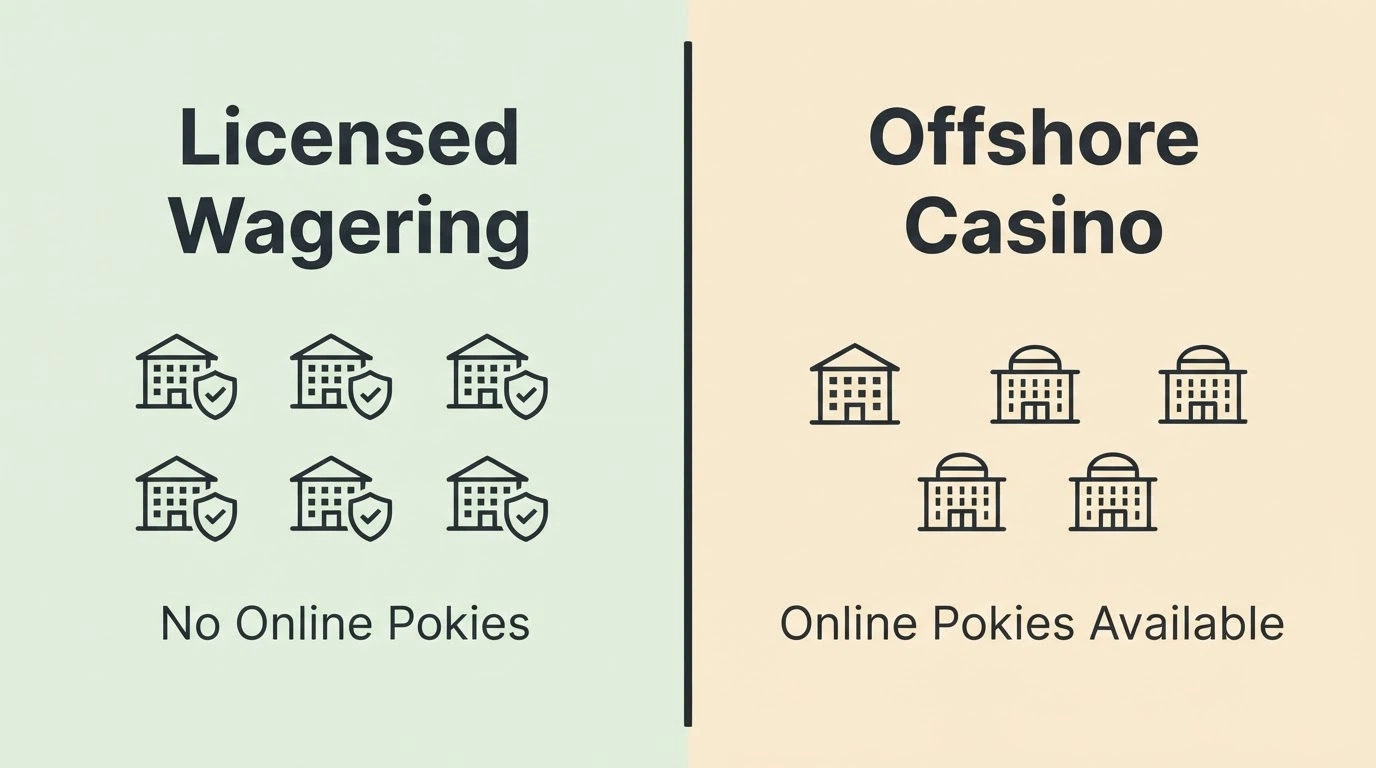
Six of the featured operators — SportsBet, Tab, Bet365, Ladbrokes, TABtouch and Neds — hold Australian state or territory wagering licences and offer sports and racing betting. None of them offers online pokies or online casino games. The Interactive Gambling Act 2001 prohibits them from doing so, and they do not do it. Four of the featured operators — Rocket Play, Skycrown, Royal Reels and Stake — are offshore casinos that offer online pokies to Australian players without holding an Australian licence. They are doing so in a regulatory grey area, and the practical consequences for the player are real.
| Operator | AU Licence Status | Product Offered | Online Pokies Available? |
|---|---|---|---|
| SportsBet | Licensed (NT) | Sports / racing wagering | No |
| Tab | Licensed (state-based) | Sports / racing wagering | No |
| Bet365 | Licensed (NT) | Sports / racing wagering | No |
| Ladbrokes | Licensed (NT) | Sports / racing wagering | No |
| TABtouch | Licensed (WA) | Sports / racing wagering | No |
| Neds | Licensed (NT) | Sports / racing wagering | No |
| Rocket Play | No AU licence (offshore) | Online casino / pokies | Yes |
| Skycrown | No AU licence (offshore) | Online casino / pokies | Yes |
| Royal Reels | No AU licence (offshore) | Online casino / pokies | Yes |
| Stake | No AU licence (offshore) | Online casino / pokies + sportsbook | Yes |
The table reads as a contradiction because it is one. The licensed Australian wagering market is real and well-regulated, but it does not offer the product the reader is searching for. The offshore market offers that product and carries no Australian regulation.
SportsBet — Licensed Bookmaker, No Online Pokies
SportsBet is Australia’s largest online wagering operator by market share and holds a Northern Territory Racing and Wagering Commission licence via Licensing NT — the de facto national licensor for online bookmakers. The product is sports and racing wagering, with state-dependent welcome offers and a heavy racing focus. SportsBet does not offer online casino games or online pokies. The Interactive Gambling Act 2001 prohibits it from doing so, and it does not try.
For a reader searching for online pokies, SportsBet is not the answer. For a reader who wants the largest Australian-licensed bookmaker on the same platform they are browsing pokies content, SportsBet is the answer — but the product mix is wagering, not casino.
Tab — State-Based Wagering Network, No Casino Product
The TAB brand runs through state and territory wagering licences and operates as the public-facing racing and sports wagering product for each jurisdiction. Licensing varies by state — TABs in Victoria, New South Wales, Queensland and other jurisdictions operate under different state-level frameworks. The product is wagering only. No TAB brand offers online pokies or online casino, and none is licensed to.
The state-based structure means welcome offers and product features vary by jurisdiction, which is a meaningful difference from the national bookmakers — a TAB customer in Victoria is not seeing the same product as a TAB customer in Western Australia.
Bet365 — Global Bookmaker With an AU Licence, No Pokies
Bet365 is one of the largest bookmakers in the world by turnover, and its Australian operation holds an NT wagering licence via Licensing NT. The Australian-facing product is sports and racing wagering only — same as SportsBet, same as Ladbrokes, same as the rest of the licensed Australian wagering stack. The global Bet365 casino product exists; it is not available to Australian customers.
For a player who is browsing from an Australian IP address, the Bet365 casino site is not the product. The Australian product is the wagering platform, and the Australian licence covers wagering, not casino.
Ladbrokes — NT-Licensed Wagering, No Online Casino
Ladbrokes is the Australian arm of a familiar UK bookmaking brand and holds an NT wagering licence via Licensing NT. The product is sports and racing wagering. State-dependent welcome offers apply, and the product set is the licensed wagering stack — no casino, no pokies, no in-play betting.
Ladbrokes Australia is a sportsbook, not a casino. For a reader who has come across the Ladbrokes name from international content, the Australian product will look narrower than expected.
TABtouch — WA’s State-Run Bookmaker, No Pokies
TABtouch is the Western Australian government-owned wagering operator, licensed in WA and operating as the racing and sports wagering product for that jurisdiction. The product is sports and racing wagering; there is no casino or pokies product, and there cannot be. TABtouch is also one of the more regionally constrained operators in the set — Western Australian customers see a different product than customers in other states.
For a WA-based reader, TABtouch is the locally licensed bookmaker. It is not a pokie operator.
Neds — Australian-Owned Wagering, No Casino Offering
Neds is an Australian-founded bookmaker operating under an NT wagering licence via Licensing NT. The product is sports and racing wagering, with state-dependent welcome offers. Neds is wagering only — no casino, no pokies.
Neds is one of the more Australia-specific operators in the licensed set, but the product it offers is the same wagering stack as the rest.
Rocket Play — Offshore Casino, Unregulated Pokies Access
Rocket Play is an offshore online casino accepting Australian players for online pokies. It does not hold an Australian licence and is not connected to Australian consumer protection, ACMA enforcement or BetStop. The game providers, bonus terms and payout specifics for Rocket Play were not confirmed in the research for this page, and the absence is the honest position rather than a guess.
For a player who specifically wants online pokies and accepts the offshore trade-off, Rocket Play is one of the options in the offshore segment. For a player who values Australian consumer protection and the ability to escalate a dispute through an Australian regulator, Rocket Play is not.
Skycrown — Offshore Casino With Confirmed Pragmatic Play Pokies
Skycrown is an offshore online casino accepting Australian players, and it is the one operator in the featured set with a game-provider confirmation in the research: Pragmatic Play is present, and the title Young Buffalo Coins is available at Skycrown at 96.04% RTP with high volatility across 20 paylines. Other providers and bonus terms at Skycrown were not confirmed this round.
Skycrown sits in the same offshore segment as Rocket Play, Royal Reels and Stake — no Australian licence, no BetStop coverage, no ACMA recovery path. The confirmation of a Pragmatic Play presence gives it one more data point than its offshore peers, but it does not change the regulatory position.
Royal Reels — Offshore Pokies Casino, No Australian Protections
Royal Reels is an offshore online casino brand targeting Australian pokies players. It does not hold an Australian licence. Game providers, bonus terms and payment-method specifics were not confirmed in the research, which means the practical recommendation has to rest on the regulatory position rather than the product detail. That position is the same as Rocket Play and Skycrown — no Australian consumer protection, no BetStop coverage, no ACMA recovery path, and the site itself is subject to ACMA blocking action at any time.
For a player who is comparing offshore options, Royal Reels sits in the same category as the other offshore casinos. The brand identity does not change the legal posture.
Stake — Offshore Casino and Sportsbook, No AU Licence
Stake is a high-profile offshore operator offering both online casino pokies and a sportsbook, and it accepts Australian players. Stake is crypto-native — it has built its product around cryptocurrency deposits and withdrawals, which is precisely the payment method that has been banned for Australian-licensed wagering since 11 June 2024. Stake sits outside the ban because it sits outside the Australian regulatory perimeter.
The offshore risk profile is the same as the rest of the offshore segment, with one added wrinkle: the crypto rails Stake relies on are precisely the ones the Australian reform is targeting. From 1 January 2027, banks and payment providers gain express authority to block transactions to illegal gambling operators. A crypto deposit does not run through an Australian bank, but a crypto on-ramp or off-ramp might, and that is where the friction will land.
The Legal Reality — No Online Casino Is Licensed Here
Every casino offering online pokies to Australians is doing so without an Australian licence, because no such licence exists. The Interactive Gambling Act 2001 makes it an offence to provide online casino games, online pokies or in-play sports betting to a person in Australia. The ban is federal. It has been in force since 2001, was strengthened in 2017 to close offshore loopholes and give the ACMA its blocking powers, and is being tightened further by the 2026 reform that commences on 1 January 2027.
This is the legal floor under the entire category, and it is the one most competitor pages on this topic do not name. The pages that rank the highest-RTP pokies and recommend a casino to play them at describe a market that does not legally exist in Australia. The pokies are real. The casino is real. The licence is not.
The Interactive Gambling Act — Why No Online Casino Is Licensed Here
The Interactive Gambling Act 2001 prohibits the provision of online casino games, online pokies and in-play betting on a sporting event to a person physically in Australia. The Interactive Gambling Amendment Act 2017 closed the offshore loophole and gave the Australian Communications and Media Authority (ACMA) the power to direct Australian ISPs to block illegal sites and to refer operators for civil penalty proceedings.
What is permitted is wagering on races and sport placed before the event begins, lotteries and keno. State and territory licensing covers those products, and in practice the Northern Territory Racing and Wagering Commission (NTRWC) — administered by Licensing NT — has become the de facto national licensor for online bookmakers. NT wagering licences run for terms of up to 20 years and are the concrete anchor for licensed Australian online wagering. The minimum gambling age in Australia is 18 for all commercial gambling.
There is no parallel licensing regime for online casino. A state or territory cannot issue an online casino licence because the federal statute prohibits the product, and the federal government has not opened a licensing path. An “Australian-licensed online casino” is not a thing that exists.
Licensed Wagering vs Offshore Casinos — The Legal Difference That Matters
An Australian punter choosing between a licensed bookmaker and an offshore casino is choosing between two different legal universes. The licensed wagering operator holds a state or territory licence, complies with Australian responsible-gambling requirements, is connected to BetStop, accepts the payment methods Australian law permits, and operates inside a dispute resolution framework an Australian player can access. The offshore casino offers none of that.
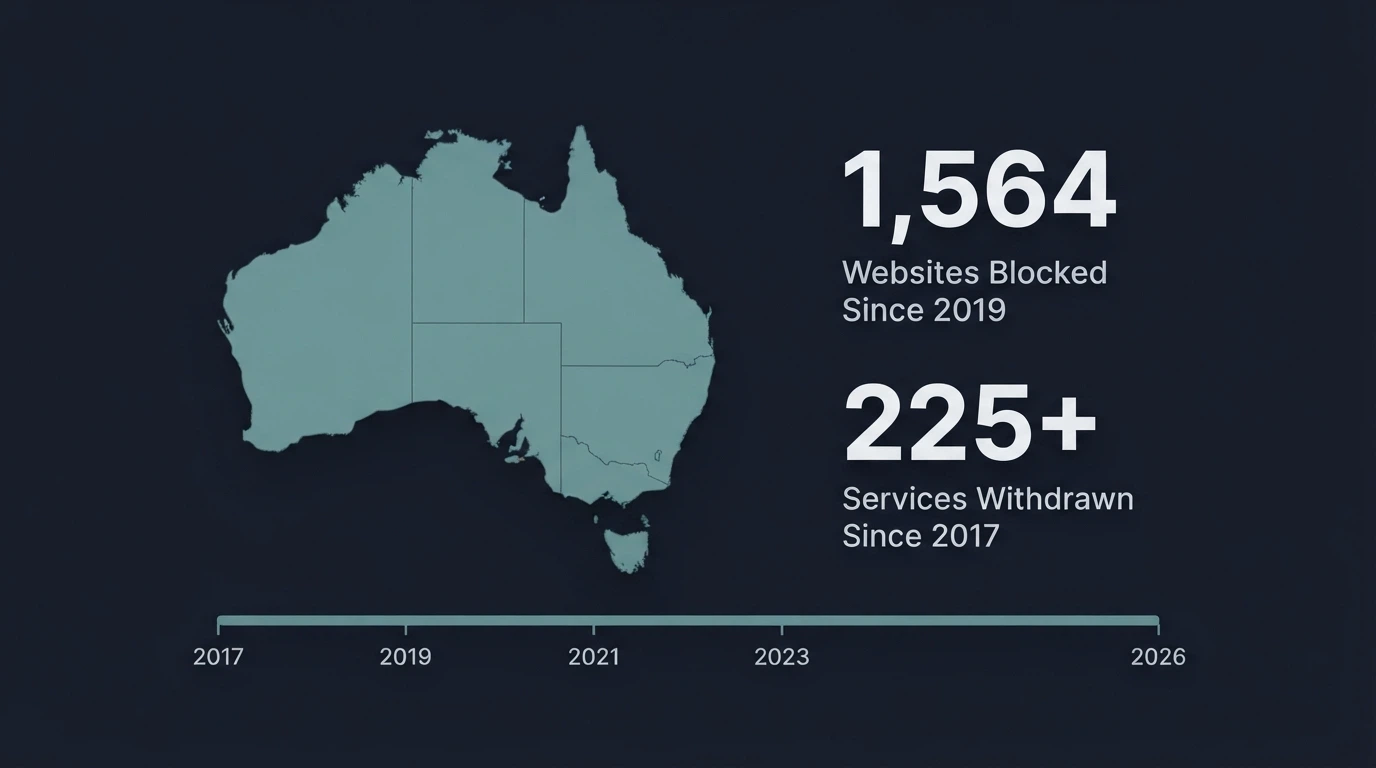
The ACMA’s enforcement record is concrete. Since November 2019, the ACMA has had 1,564 illegal gambling and affiliate websites blocked by Australian ISPs, and more than 225 illegal services have withdrawn from the Australian market since 2017. The operator is the target — the IGA prohibits providing the service, not using it. Players are not prosecuted for playing at offshore casinos. They are, however, exposed to operators that can refuse withdrawals, delay verification indefinitely, or close an account with a balance on it, with no Australian regulator to escalate to.
BetStop binds around 150 Australian-licensed wagering providers. It does not bind offshore casinos. Registration effectively closes the door to the licensed wagering market, but it offers no protection against offshore casinos, which remain free to accept deposits from self-excluded players.
What the 2026 Reforms Change for Online Gambling
The Interactive Gambling Amendment (Gambling Reform) Bill 2026 passed Parliament on 19 August 2026 and its measures commence on 1 January 2027. The reforms do not legalise online casino or online pokies — they tighten the regulatory environment around all online wagering and add specific tools to make it harder for Australians to reach the illegal market.
The advertising changes are the most visible. Wagering advertising on television and radio is capped at three ads per hour between 6:00 am and 8:30 pm, with a live-sport blackout running from 15 minutes before to 5 minutes after the event. Live odds on broadcast sport are prohibited, and celebrity or athlete endorsements of wagering are banned. The inducement marketing restrictions close the front door: direct marketing of bonuses and offers is prohibited for 14 days after a customer signs up, for three months after BetStop deregistration, and indefinitely for customers flagged as at-risk.
The payment changes are the structural ones. From 1 January 2027, banks and payment providers gain express authority to block transactions to illegal gambling operators. A bank transfer or card payment to an offshore casino becomes a target for transaction blocking, and the operator’s deposit infrastructure becomes a moving target by design.
Your Rights When an Offshore Casino Won’t Pay Out
The honest answer is that an Australian player has very few. The ACMA can investigate illegal operators and refer them for civil penalty proceedings, but it cannot compel an offshore operator to pay an individual player. Australian consumer protection law applies to Australian-licensed businesses; an offshore casino is not one. The site can be blocked at any time, including while a balance is sitting in a player’s account. There is no Australian dispute resolution body that has jurisdiction over a Curaçao- or Malta-licensed offshore operator.
The practical options are limited. A formal complaint to the operator is the first step, and a complaint to the offshore licensing body — if the operator holds one — is the second. Neither has the enforcement teeth an Australian regulator has. The only real protection is the one a player can give themselves: not depositing money with an offshore operator that they are not prepared to lose if the operator decides not to pay.
That is the structural reason the legal floor matters. The pokies ranked at the top of this page are mathematically the best-returning games available to Australian players, and every casino offering them does so without an Australian licence, an Australian dispute resolution path or an Australian guarantee that the winnings will actually be paid.
When Chasing Returns Stops Being Worth It
The maths of high-RTP pokies is a long-run claim, and the session a player is in right now is not the long run. Variance is the word for the gap between the two, and the gap is wide enough to matter.
The Australian Institute of Health and Welfare put problem gambling prevalence at around 2.1% of adults in 2022 — roughly 430,000 people — and high-risk gambling at 1.8%. More than one in ten Australians had gambled online in the previous six months, up from 8% before. Those numbers describe the population a page about high-RTP pokies is being read by, and they are the reason the responsible-gambling section of this page is not a token disclaimer.
How to Set Deposit and Session Limits That Actually Stick
A self-imposed limit works only if it is set before the session starts and on a platform that enforces it. At an Australian-licensed wagering operator, deposit limits, session time limits, take-a-break periods and activity statements are built into the platform and are difficult for the player to override in the moment. The framework exists because it works.
At an offshore casino, the responsible-gambling tools are inconsistent. Some offshore operators offer deposit limits, session reminders and self-exclusion within their own platform. Others do not. None of them are connected to BetStop. A player who sets a deposit limit at an offshore casino is relying on the operator’s own willingness to enforce that limit against its own commercial interest, which is a weaker guarantee than the licensed-wagering equivalent. The limit is what the player gives themselves; the enforcement is what the operator decides.
The practical move is to set the deposit limit and the time limit before the first session, in cold light, and to commit to walking away when the limit is hit. The high-RTP pokie does not change that. The 99.32% return figure on Goblin’s Cave is still a long-run number; the session is not the long run.
BetStop and Australia’s Real Support Infrastructure
BetStop, the National Self-Exclusion Register, launched on 21 August 2023 and is the single most useful tool an Australian punter has for closing themselves out of the licensed wagering market. One registration excludes the player from all around 150 Australian-licensed wagering providers, for a minimum of three months and up to a lifetime exclusion. As of 31 March 2026, 59,830 people had registered and 37,247 active exclusions were in force. Seventy-eight per cent of registrants were under 40, and 38% chose lifetime exclusion.
The national counselling infrastructure is concrete. The National Gambling Helpline — 1800 858 858 — is free, confidential and staffed 24 hours a day, 7 days a week. Gambling Help Online, at gamblinghelponline.org.au, offers live chat, email support and self-help tools. Financial counselling through DSS gambling support services is available for people affected by gambling harm.
The limitation that matters: BetStop binds Australian-licensed wagering services only. An offshore casino is not connected to the register. A self-excluded player’s money remains accessible to prohibited operators, and the offshore market does not enforce the exclusion. That is a meaningful gap, and it is the gap the 2026 reform begins to address by empowering banks to cut off payment channels to these operators starting 1 January 2027.
Spotting When a Pokie Session Has Crossed the Line
The transition from entertainment to harm does not announce itself. The clearest signals are behavioural: chasing losses after a run of dead spins, betting beyond the session budget on the rationale that “the RTP has to come back,” time distortion where continuous-play pokies compress the sense of how long the session has run, and the slow drift from “I am playing a pokie” to “I have to win this back.”
The RTP figure does not help in the moment. The 96% return rate is the same whether the player is up or down. Variance is doing the work the maths cannot predict, and the longer a session runs past the planned budget, the more likely the session has crossed from a calculated punt to something else. The decision to walk away is one a player makes before the session, not during it, which is why the limits in the section above are set before the first spin.
The 2.1% problem gambling prevalence figure describes roughly 430,000 Australians. The 1.8% high-risk figure describes more. The 11% online gambling figure describes almost three million. A page about the highest-RTP pokies is a page being read by a population that includes some of those numbers, and naming the support infrastructure is not a footnote — it is part of the answer to the headline question.
How We Selected and Ranked These Titles
The ranking on this page was built from a defined pool of sources, a defined operator set and a defined set of ranking criteria. The methodology matters because the “best paying” claim is doing a job the numbers do not do on their own, and the methodology is what a reader can check the claim against.
The sources used to compile the RTP data include Payoutverdict, Gambling Insider, Esports Insider, Casino Review AU, Best Online Pokies, Blackjack Review, AudPlay, Cozee LLC and CrazyVegas AU. These are affiliate and industry sites that publish RTP, volatility and max-win data for online pokies, with varying degrees of cross-referencing back to manufacturer pages. The sources are not academic, not regulator-published and not peer-reviewed, and that limitation is named here rather than glossed over.
The operator set was checked against the ACMA’s published register and against the Northern Territory licensing register via Licensing NT, plus a sweep of offshore casino brands active in AU-facing affiliate content. The split between licensed wagering operators and offshore casinos was not a ranking decision — it was a finding. The licensed Australian wagering operators do not offer online pokies. The offshore casinos that do are not licensed in Australia.
Our RTP Data Sources and How We Verified Them
Where multiple sources carried an RTP figure, the headline number on this page is the one that recurred across at least two of the consulted sites. Where only one source carried the figure, the figure is included with that source named implicitly through the game name and provider. The Megajoker Supermeter figure at 99.00%, the Blood Suckers figure at 98.00% and the Ugga Bugga figure at 99.07% all recur across multiple sources and are the most cross-referenced figures on the page.
The hard ceiling on verification is that manufacturer-published RTP figures are defaults, and an operator may configure a game at a lower variant. The Sleeping Dragon Ultra Dark entry at 96.50% is the clearest case: the same title is in circulation at 95.50% and 94.50% at operator-configured levels. The page carries the headline default and names the variants; the player has to check their own operator’s configuration before treating the figure as the rate they are playing.
The Criteria That Ordered This Ranking
Published RTP is the primary sort. The list is ordered from highest published RTP downward, with the band running from 99.32% at Goblin’s Cave to 96.70% at Big Bass Floats My Boats. Where RTP figures tie, provider reputation and recency of the source data are the secondary criteria.
Provider reputation is a quality signal rather than a ranking criterion in itself — a NetEnt or Playtech RTP figure carries the same authority regardless of where in the list it sits. Volatility and max-win data are not ranking criteria; they are supporting context, included only where the sources carry them. The cells without those data points are marked as such, because a table that pretended to volatility and max-win coverage across all ten titles would be carrying invented figures.
Recency matters because the 1000 series from Pragmatic Play is the new high-stakes market in 2026, and the ranking reflects that. The Pragmatic Play titles sit below the 97% RTP line that the classic high-RTP titles clear, but their inclusion is correct — they are the new release set the reader is being offered, and excluding them would have produced a page that named a market the reader cannot actually access.
The operator ranking is a separate exercise and is ordered differently — by licence status, by product offered, and by what the research actually confirmed. The titles ranking and the operator ranking do not share an ordering logic, and a reader expecting one to imply the other is reading more into it than the page carries.
Your Next Move — Making an Informed Decision
The page has given the reader three things: the highest-RTP pokies available to Australian players in 2026, the legal reality that every operator offering them does so without an Australian licence, and the support infrastructure that exists if play becomes a problem. The decision that follows from these is the reader’s to make.

For a player who specifically wants online pokies and accepts the offshore trade-off — no Australian consumer protection, no ACMA recovery path, no BetStop coverage, and the standing risk that the site can be blocked at any time — the highest-RTP titles on this page are still the highest-RTP titles. Goblin’s Cave at 99.32% is the best-returning published game available, regardless of who is hosting it. Mega Joker at 99.00% in Supermeter mode is the second most favourable figure, with the caveat that the Supermeter mode is conditional on a base-game trigger. The Pragmatic Play 1000 series is the highest-stakes end of the market, with max wins in the tens of thousands of times the bet at the cost of a slightly lower headline RTP.
For a player who values Australian consumer protection and the ability to escalate a dispute through an Australian regulator, the highest-RTP pokies on this page are not available through any Australian-licensed operator, because no Australian-licensed operator offers online pokies. That is the legal floor, and it is the answer no competitor page on this topic names.
The maths is real. The legal architecture is real. The choice between them is the reader’s, and naming both sides of it without recommending either is the honest version of an answer.
For a player who wants to set a deposit limit, self-exclude or talk to someone, the infrastructure exists. BetStop at betstop.gov.au, the National Gambling Helpline at 1800 858 858, and Gambling Help Online at gamblinghelponline.org.au are the three concrete points. The first one closes the door at every Australian-licensed wagering provider in a single registration. The second is a 24/7 line staffed by people who understand the situation. The third offers chat, email and self-help tools.
The decision is whether the highest-RTP pokies on this page are worth reaching through the operators that host them. That is the question. The data is what it is.
Frequently Asked Questions About Online Pokies in Australia
Which single pokie returns the most to Australian players in 2026?
Goblin’s Cave from Playtech, at a published RTP of 99.32%, is the highest-returning pokie available to Australian players. Ugga Bugga at 99.07% sits second, with Mega Joker’s Supermeter mode at 99.00% third. All three are available at offshore casinos accepting Australian players, since no Australian-licensed operator offers online pokies.
What is the difference between RTP and volatility in pokies?
RTP is the share of every dollar wagered that a pokie returns to players on average across millions of spins. Volatility is how widely individual sessions vary from that average. A high-RTP, low-volatility pokie pays out often in small amounts; a high-RTP, high-volatility pokie pays out rarely in larger amounts. Both can return 97% over the long run; the path looks nothing alike.
Can I play pokies for real money on my phone in Australia?
Yes, at offshore casinos — but not at any Australian-licensed operator, because no Australian licence for online casino exists. Offshore casinos offer mobile-optimised sites and apps with the same game catalogue as their desktop platforms, and the RTP does not change between devices. Australian players are accessing prohibited services when they do so.
How does BetStop self-exclusion work for online pokies players?
BetStop is the National Self-Exclusion Register, free, and a single registration excludes the player from all around 150 Australian-licensed wagering providers for a minimum of three months up to lifetime. The critical limitation for pokies players is that BetStop binds licensed wagering services only — offshore casinos are not connected to the register, and a BetStop registration does not stop an offshore operator from accepting deposits.
Do high-RTP pokies guarantee I will win more money?
No. RTP is a long-run theoretical figure averaged across millions of spins, and a single session of a few hundred spins can land anywhere on the variance curve. A 99% pokie played for an hour can return more or less than the player staked. The maths favours the house by less; it does not flip the house edge. A recreational session does not “test” the RTP — the RTP tests itself over volumes of play no individual session reaches.
What can I do if an unlicensed casino withholds my withdrawal?
The honest answer is that the options are limited. There is no Australian regulator that can compel an offshore casino to pay. A formal complaint to the operator is the first step, and a complaint to the offshore licensing body — if the operator holds one — is the second. Beyond those, the practical reality is that the only protection is the deposit a player never made in the first place. The site can also be blocked by the ACMA at any time, including with a balance sitting in an account, and the player has no recourse in that scenario either.
Mobile Pokies vs Desktop — Does the Device Change the Payout?
No. The RTP of a pokie is set in the game file, baked into the maths by the manufacturer, and it does not change with the device that loads it. A player spinning the same Blood Suckers title on a smartphone browser, on a tablet app, or on a desktop computer will be playing the same 98.00% theoretical return figure. The reel outcomes come from the same random number generator regardless of the screen.
What does change between devices is the experience, and to some extent the catalogue. A mobile-optimised pokie will play more cleanly on a phone than a pokie designed first for desktop, and the operator’s mobile app or mobile browser lobby is not always a perfect mirror of the desktop lobby. Some games appear on desktop only, others on mobile only, and the practical question for an Australian player is whether the high-RTP titles they want to play are present in the mobile version of the operator they have chosen. That is a coverage question, not a payout question.