
Highest Payout Online Casinos in Australia: A 2026 Ranking Built on Tested RTP and Real Withdrawal Times
“Highest payout” in the Australian market carries two meanings, and the search results that rank these casinos rarely tell you which one they measured. One is return to player — the share of every dollar wagered that a pokie returns over millions of spins, which is the long-run statistical edge the house keeps. The other is withdrawal speed — the time between clicking “cash out” and the money landing in a bank account, which is the operator’s promise of how fast your winnings reach you. The two numbers measure different things, and an Australian player looking for the best deal needs both: a 97% RTP pokie at a casino that takes two weeks to pay out loses its edge to a slower competitor that runs the same game at 96.5%.
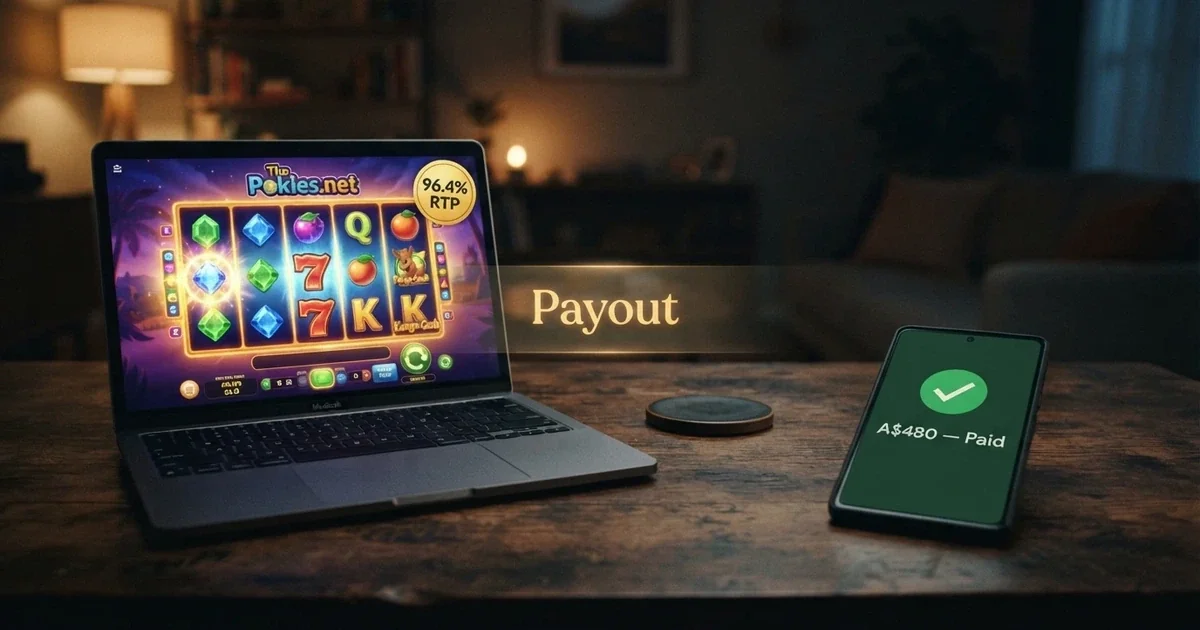
This page ranks ten AU-facing offshore operators on both dimensions, using tested data from the first half of 2026. Across 38 AU-facing operators evaluated in 2026, the industry average platform RTP sits at 95.81%. A casino running 1% above that is genuinely better; a casino running at the average is average. Withdrawal speed is even more volatile: the same withdrawal method can land in nine minutes at one operator and forty-eight hours at another, and the payment rail sets the floor while the operator’s processing queue decides the actual time.
A note on what these casinos are, and are not. Online casino games are prohibited in Australia under the Interactive Gambling Act 2001. No licence for online casino exists anywhere in the country — not federally, not in any state or territory. Every operator reviewed on this page is offshore, unlicensed in Australia and outside every local protection. That is not a footnote. It is the frame every other fact on this page sits inside, and the section on the law covers what a player gives up by depositing at any of them.
Current as of 22 November 2026 · operator licence claims verified against the Curaçao Gaming Control Board, Anjouan Gaming Authority, Tobique Gaming Commission and Kahnawake Gaming Commission public registers where applicable.
Table of Contents
- What RTP Actually Tells You (and What It Hides)
- Payout Speed: the Other Half of the Promise
- Online vs Onshore: Why the Distinction Changes Everything
- The Offshore Casinos Australian Players Use: 2026 Payout Rankings
- How Fast Your Money Actually Comes Back: Withdrawal Speed Compared
- Crypto Payouts at Offshore Casinos: Faster Money, Fewer Questions, Real Risk
- The Pokies That Pay the Most: High-RTP Titles Every Australian Player Should Know
- The Law Says No: What Australia’s Gambling Prohibition Means for Your Payout
- Playing Safe When There’s No Safety Net: Responsible Gambling at Offshore Casinos
- How We Evaluated and Ranked These Operators
- Your Move: What This Means for Where You Play
- Frequently Asked Questions
What RTP Actually Tells You (and What It Hides)
Return to player is a percentage of total wagered money that a game returns to players over millions of spins. A 96% RTP pokie returns A$96 for every A$100 wagered across its lifetime; the house keeps the remaining A$4. The number is a long-run statistical average. Over a few hundred spins, a player can be ahead or behind by enormous margins, and the casino does not lose money when a single punter hits a big payout — the average is calculated across everyone who ever played the game.
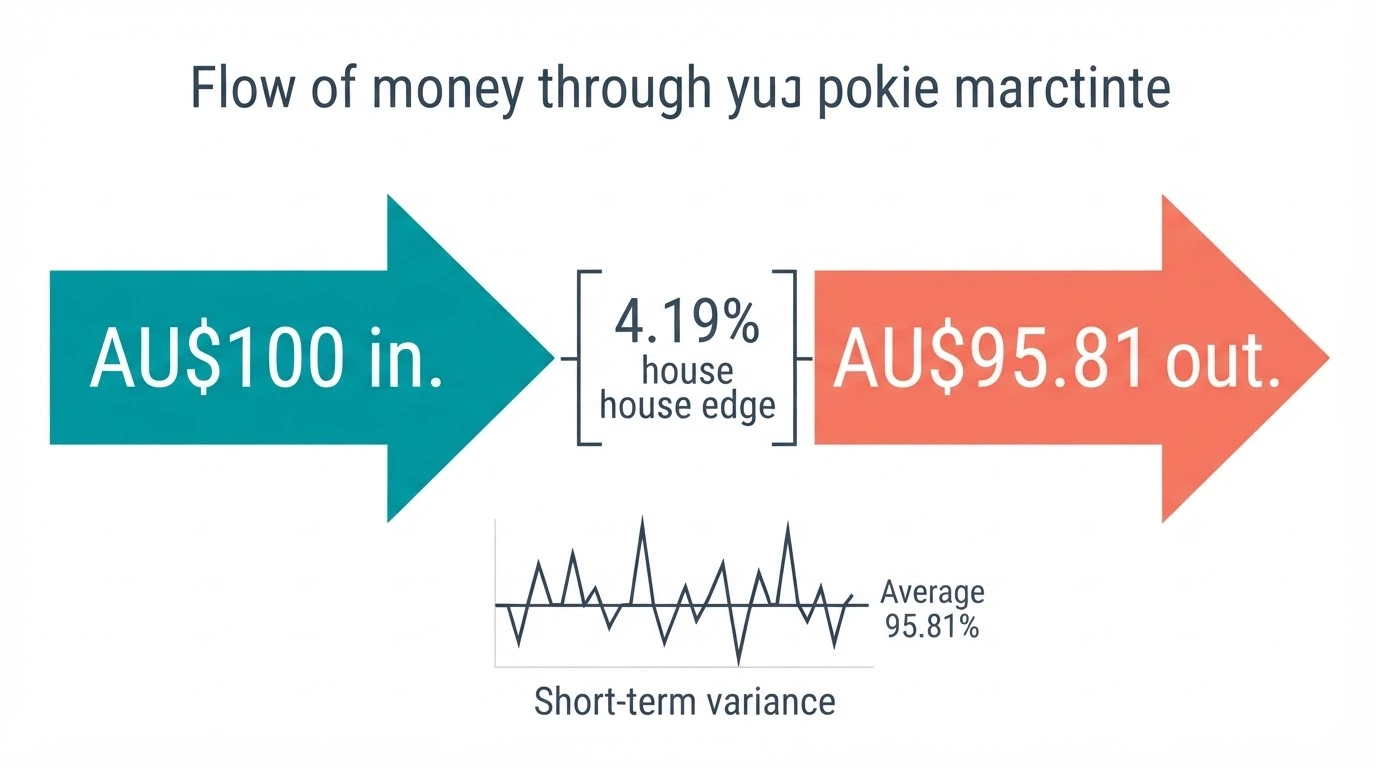
Two things the published number hides. The first is short-term variance: a 96% pokie can pay out 200% in one session and 40% in the next, and neither outcome tells you anything about the long-term return. The second is operator choice. Game studios ship multiple RTP configurations for the same title, and the operator picks which version to load. Sweet Bonanza, for example, ships with at least four RTP versions — 96.51%, 95.45%, 94.51% and 91.51% — and the operator chooses which one runs. The same pokie title can therefore return 5% less of every dollar at one casino than at another, and the player has no way to tell from the lobby which version is loaded.
A casino 1% above the industry average of 95.81% is genuinely better — over thousands of spins, that gap compounds. A casino advertising 97% RTP is not running a different kind of pokie; it is running the same games as everyone else, just configured at a higher return. Most are not.
Payout Speed: the Other Half of the Promise
A high RTP means nothing if the winnings take two weeks to arrive. Withdrawal speed is the second dimension of “payout,” and it depends on three things: the payment rail, the operator’s processing queue, and the player’s verification status.
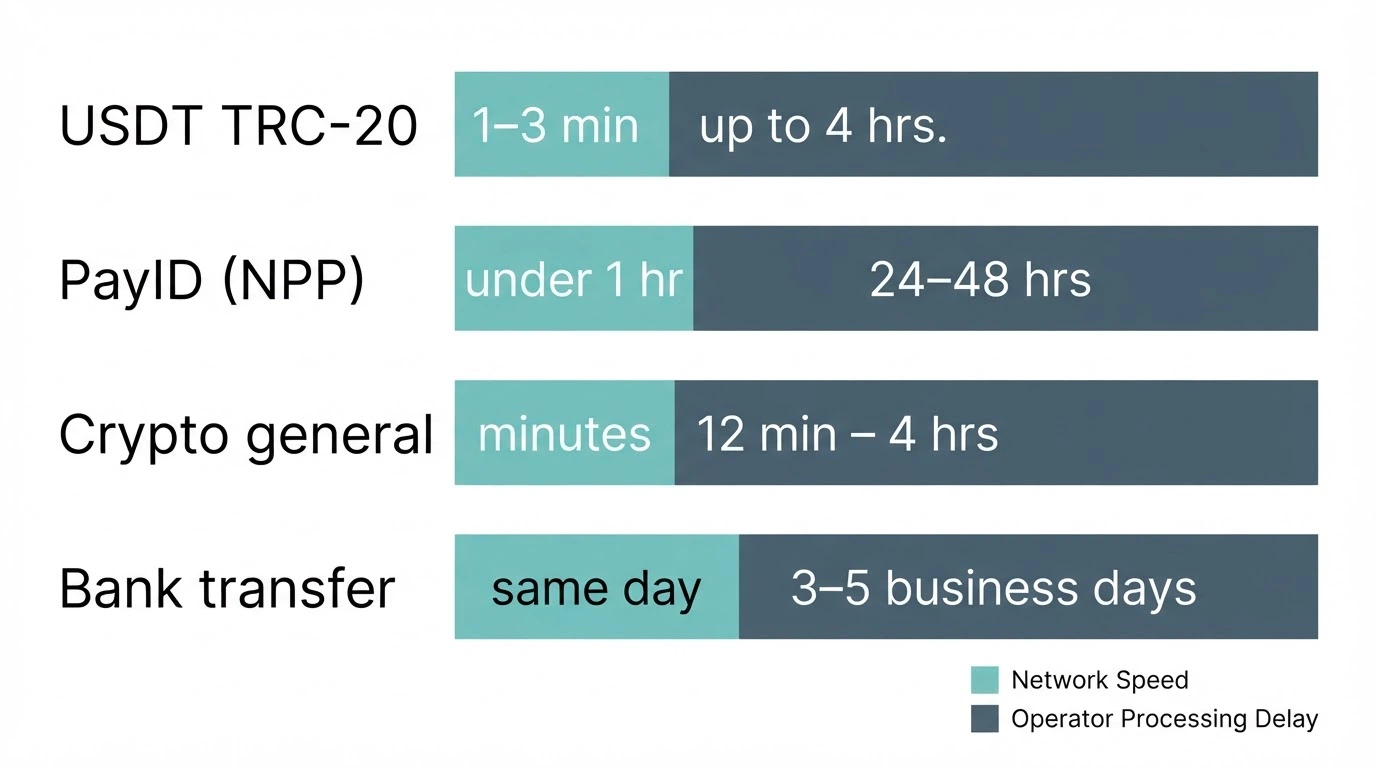
The fastest rail in the Australian market in 2026 is USDT on the TRC-20 (Tron) network, with network confirmation in 1–3 minutes and fees under A$2. That is the network speed. Operator-side processing adds time on top: BitStarz processes crypto in 12–30 minutes, Stake in 1–2 hours, Wild Fortune in 3–4 hours. The payment rail is the floor; the operator is the variable.
PayID, which runs on Australia’s New Payments Platform (NPP), is the fastest fiat option. The NPP runs 24/7 and PayID transfers settle in under an hour at best-case operators. At most operators, however, end-to-end PayID withdrawal takes 24–48 hours, with 12–18 hours of that being operator-side processing. The bank’s incoming PayID batch window adds the rest. Bank transfers remain the slowest at 3–5 business days regardless of operator.
The spread between best and worst on the same payment method is where the real comparison lives. SkyCrown’s PayID payouts averaged 9 minutes across 14 tests, with a fastest single result of 4 minutes. Royal Reels’ PayID settled in 4 hours 12 minutes during testing. The payment method is the same; the operator’s processing queue is not.
Online vs Onshore: Why the Distinction Changes Everything
Every casino on this page is offshore, and that is not a technicality — it is the frame the rest of the page sits inside. The Interactive Gambling Act 2001 prohibits online casino games, online pokies and in-play betting. There is no online casino licence anywhere in Australia. “Australian-facing” means an offshore operator accepts Australian players and deposits in AUD, not that the operator holds any Australian approval.
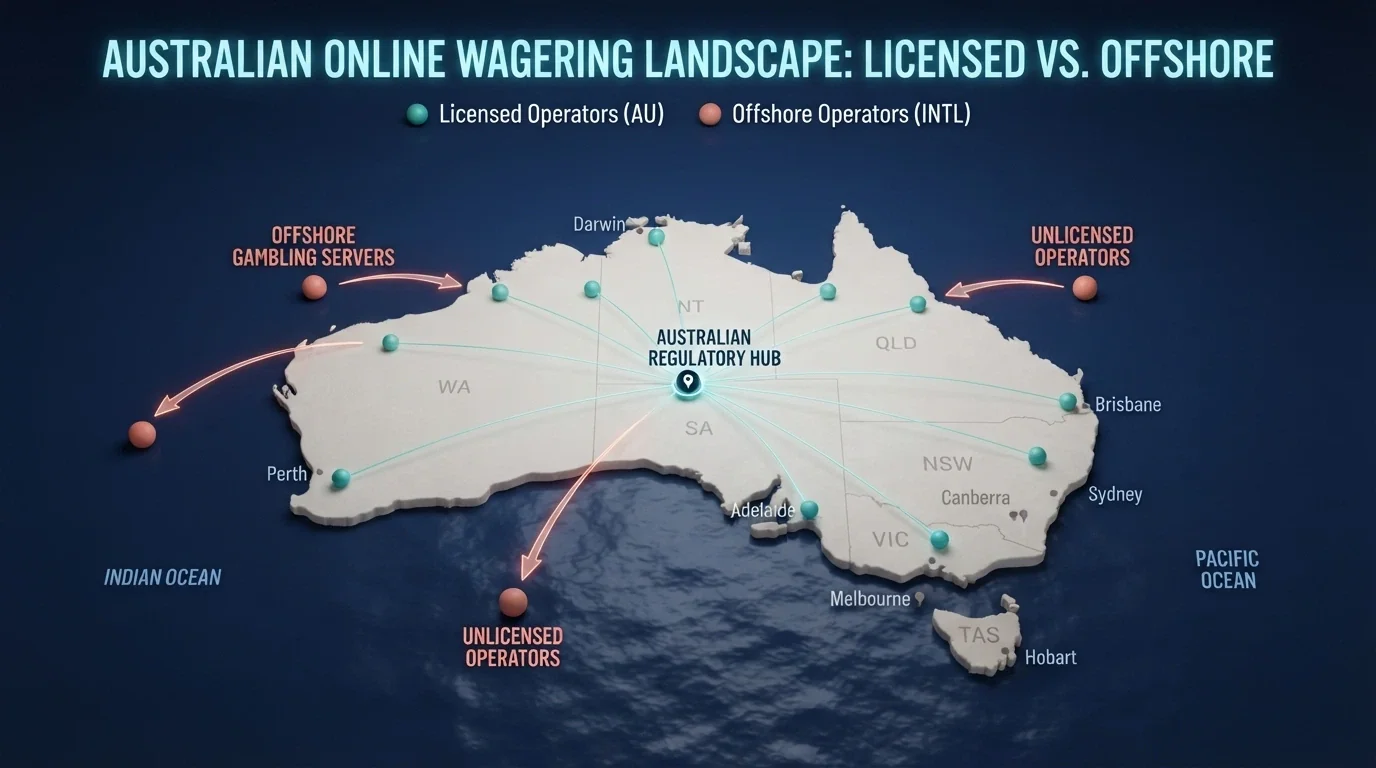
The IGA targets the provider, not the player. No Australian has been prosecuted for using an offshore casino. What the player loses by playing offshore is more concrete: no BetStop coverage, no Australian consumer protection, no complaints body to escalate a dispute to, no guaranteed withdrawal if the operator decides to withhold funds, and the very real risk that the site gets DNS-blocked by the ACMA while a balance is still on deposit.
A crypto deposit request is itself a tell. Credit cards and digital currency have been banned as payment for licensed online wagering in Australia since 11 June 2024. Any operator asking an Australian for a credit card or a crypto deposit is, by definition, operating outside Australian rules—a “tell” confirming the site is ignoring Australian law, as the Regulation skill (AU backbone) notes.
The offshore frame is revisited throughout the page, because every claim about RTP, withdrawal speed or welcome bonus has to be read against the absence of Australian recourse when the operator does not deliver.
The Offshore Casinos Australian Players Use: 2026 Payout Rankings
The table below ranks ten operators on the data available — tested platform RTP where sampled, published RTP where stated, and the welcome package each one offers. Each operator’s own section covers the withdrawal speed evidence and the licence details. The ranking reflects the payout data the evaluations turned up; it is not a universal claim about which operator is “best” in any other dimension. The full legal context sits in the section on the law.
Expected loss on the largest bonus in the table — Royal Reels’ A$2,500 welcome pack at 35x bonus-only wagering, played at the 95.81% industry-average RTP — comes to A$2,500 × 35 = A$87,500 in required turnover, with an expected loss of A$87,500 × (1 − 0.9581) = A$3,666 over the clear-down. That is the bonus’s statistical cost to a player who only wagers the bonus amount itself, and it is the price paid before any winnings are withdrawable.
| Operator | Licence | Welcome Bonus | Free Spins | Pokies Count | Game Providers |
|---|---|---|---|---|---|
| SkyCrown | Curaçao | Multi-deposit bundle (120% up to A$600 + extras) | 150 FS | 4,200+ | Pragmatic Play, Hacksaw Gaming, Play’n GO |
| RocketPlay | Curaçao (Dama N.V.) | Up to A$6,000 across multiple deposits | 300 FS | — | Multiple providers |
| Royal Reels | Offshore (jurisdiction not specified) | A$2,500 across 3 deposits | 50 FS | 1,800 (1,400 pokies) | Pragmatic Play, Play’n GO, Nolimit City, Hacksaw Gaming |
| Fair Go | Curaçao eGaming (Deckmedia N.V.) | 100% up to A$200 × 5 (total A$1,000) | — | 300+ | RTG (Realtime Gaming) |
| Bizzo | Curaçao (8048/JAZ2017-067) + Kahnawake | Up to A$7,750 across 4 deposits | 175 FS | 3,000+ | 70+ providers |
| Stake | Curaçao | No traditional welcome bonus | — | — | Proprietary + multiple |
| Rainbet | Anjouan (ALSI-152406029-FI2) | — | — | — | — |
| WinSpirit | Offshore (jurisdiction not specified) | 200% up to A$1,000 | 100 FS | — | — |
| Wild Fortune | Tobique Gaming Commission #0000064 (Metlait SRL) | 225% (stated in CA$) | 250 FS (0x wagering) | 3,800+ | 90+ providers |
| Lucky Dreams | Curaçao | Up to A$10,000 across 5 deposits | 500 FS | 14,000+ | — |
SkyCrown — the Highest Tested RTP in the Set, With PayID Cashouts Averaging 9 Minutes
SkyCrown is the standout on tested RTP and the fastest PayID withdrawals in the evaluation. Across a 50-pokie sample, the platform averaged 96.42%, which sits 0.61 percentage points above the 38-operator industry average of 95.81%. PayID withdrawals averaged 9 minutes across 14 timed tests, with a fastest single result of 4 minutes. USDT-TRC20 crypto withdrawals averaged 4 minutes across 12 tests. The welcome package includes a 120% match up to A$600 plus extras, with 150 free spins on top; game providers include Pragmatic Play, Hacksaw Gaming and Play’n GO across 4,200+ titles.
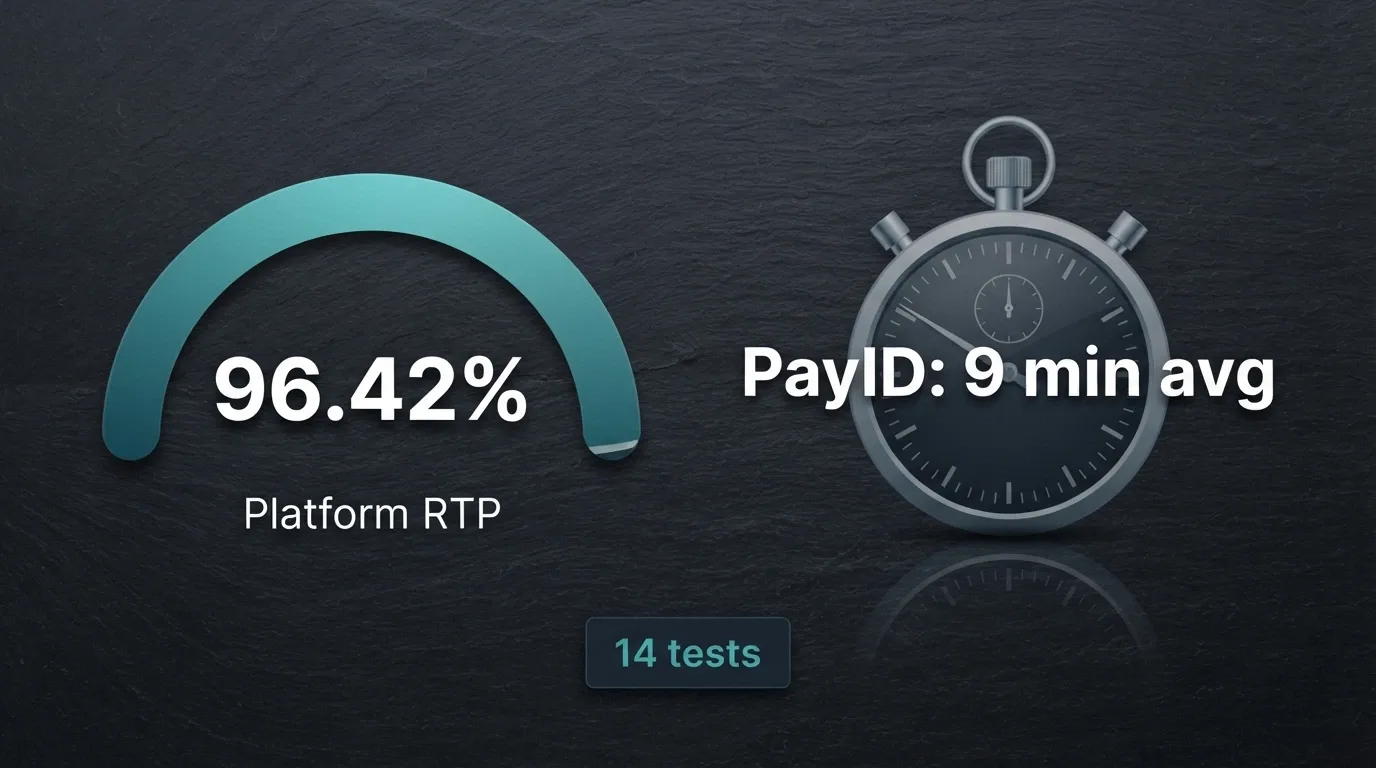
For an Australian player prioritising fast AUD withdrawals without crypto, SkyCrown is the strongest data point in the set. The 96.42% tested RTP is not a marketing claim; it is the result of sampling 50 pokies at the operator, and 0.61% above the industry average compounds over any serious play. The licence is Curaçao, and the usual offshore caveats apply.
Lucky Dreams — 14,000+ Games and a Stated 96.20% Average RTP
Lucky Dreams has the largest game library in the set at 14,000+ titles, with a stated average RTP of 96.20% across the catalogue. Cashouts recorded during testing averaged under 10 minutes. The welcome package runs up to A$10,000 across five deposits, with 500 free spins attached. The licence is Curaçao.
A 14,000-title library is large enough that a player who gets bored easily will not run out of options. The 96.20% stated RTP is the operator’s own figure, not an independent sample — it is worth treating as a claim, while SkyCrown’s 96.42% carries independent verification behind it. The 500 free spins are the highest free-spin allocation in the set, and the welcome package stretches across five deposits, which spreads the wagering load.
Royal Reels — 96.4% RTP Across the Top 50 Pokies, PayID Under Five Hours
Royal Reels runs a tighter library of 1,800 titles (roughly 1,400 pokies), with an average RTP of 96.4% across the top 50 most-played pokies — close enough to SkyCrown that the difference is noise. PayID withdrawals settled in 4 hours 12 minutes during testing. The welcome pack is A$2,500 across three deposits plus 50 free spins, with 35x wagering on bonus only and an A$5 per-spin cap during clear-down. Providers include Pragmatic Play, Play’n GO, Nolimit City and Hacksaw Gaming. The licence jurisdiction is not specified in available data.
The 35x bonus-only wagering is materially lighter than the 40x most of the set carries — only the bonus amount must be turned over, not the deposit plus bonus. That single specification is the difference between a bonus that costs A$3,666 in expected loss and one that costs significantly more. The A$5 spin cap during clear-down is a constraint to read before claiming, and the licence gap is a transparency gap the operator has not closed.
Fair Go — an Established RTG Casino With a Published 96.17% RTP
Fair Go is operated by Deckmedia N.V. under a Curaçao eGaming licence, runs exclusively on Realtime Gaming (RTG) software, and carries a published average RTP of 96.17% across its 300+ pokies. The welcome offer is a 100% match up to A$200, redeemable five times for a total of A$1,000. Withdrawal limits are A$100 minimum and A$2,500 per-transaction ceiling, with payouts typically released within 24–48 hours.
Fair Go is the longest-running AU-facing brand in the set, and the RTG-only library is part of its identity — a player who knows the RTG catalogue knows what to expect, and the smaller game count is not the gap it looks like if the titles are the ones the player already plays. The 96.17% RTP is the lowest published figure in the set, but the spread from the highest is 0.25 percentage points, and that gap over thousands of spins is real but not enormous. The A$2,500 per-transaction ceiling is the constraint that matters most for a big win.
Bizzo — Dual-Licenced With the Largest Welcome Package in the Set
Bizzo Casino is operated by TechSolutions Group N.V. and holds two licences: Curaçao (8048/JAZ2017-067) and a Kahnawake Gaming Commission licence, the only operator in the set with dual regulatory coverage. The library runs 3,000+ games from 70+ providers, and the welcome package runs up to A$7,750 plus 175 free spins across four deposits, with 40x wagering and a A$6.50 max bet during wagering.
The dual licence is a real differentiator. Two regulators means two sets of compliance obligations, and the Kahnawake Gaming Commission adds a layer of oversight the Curaçao-only operators do not carry. The A$7,750 welcome is the headline number, but 40x wagering with an A$6.50 max bet during clear-down is the spec that decides whether the headline is worth claiming — a player who bets above the cap risks voided bonus winnings. A$100,000 per transaction is the highest max-cashout figure in the set.
RocketPlay — Dama N.V. Operator With a 300-Spin Welcome Bundle
RocketPlay is operated by Dama N.V. under a Curaçao licence and offers a welcome package of up to A$6,000 plus 300 free spins across multiple deposits, with 30x–40x wagering on most bonuses. Withdrawal limits are A$2,500 per day, A$7,500 per week and A$15,000 per month.
The 300 free spins are the second-largest allocation in the set, behind Lucky Dreams’ 500. The 30x–40x wagering range means the actual multiplier depends on which bonus tier is claimed, and the terms deserve a close read before the deposit. The withdrawal caps are the binding constraint for a player who hits a substantial win: at A$2,500 per day, a A$15,000 monthly win takes six days to clear, and that is only if the operator processes every request promptly.
Wild Fortune — 0x Wagering Free Spins Under a Tobique Licence
Wild Fortune is the only operator in the set with no wagering requirement on its welcome free spins, under a Tobique Gaming Commission licence (#0000064, operated by Metlait SRL). The library runs 3,800+ pokies from 90+ providers, and the welcome offer is a 225% match with 250 free spins carrying zero wagering. Fastest verified crypto payouts averaged 5 hours 24 minutes.
Zero wagering on free spins is a different offer from the standard package. Winnings from those spins are withdrawable without a turnover requirement, which removes the entire expected-loss calculation that the other operators’ welcome packages imply. The Tobique licence is a smaller jurisdiction than Curaçao, and the verified crypto payout time of 5h24m is slower than the fastest in the set — the trade is a cleaner bonus structure for a slower payout rail.
Stake — the Crypto-Native Operator With No Traditional Welcome Bonus
Stake is a crypto-first platform operating under a Curaçao licence, and it skips the traditional welcome bonus entirely. Crypto withdrawals are processed in 1–2 hours. Two operational realities shape the experience for Australian players: intermittent access due to DNS blocks by some Sydney ISPs, and KYC re-verification triggered during testing. The game library mixes proprietary titles with third-party providers, but exact counts and a platform-wide RTP are not stated in available data.
A player who wants a matched deposit bonus is in the wrong place — Stake is built for the player who prefers rakeback, reloads and crypto-native promotions over a sign-up match. The DNS blocks and KYC re-verification are the friction the other operators in the set do not impose, and they are the price of operating in a market the ACMA actively blocks.
WinSpirit — a 200% Match for First-Time Australian Players
WinSpirit offers a 200% welcome bonus up to A$1,000 plus 100 free spins. The licence jurisdiction is not specified in available data, and other terms are not stated. The 200% match is one of the higher percentage offers in the set, and the A$1,000 cap sits in the middle of the pack.
With no licence detail and no stated wagering multiplier, the offer is a number without the rest of the terms. Before depositing, the questions worth asking are the ones research did not answer: who issues the licence, what is the wagering requirement, what is the maximum bet during clear-down, what are the withdrawal limits, and which game providers are integrated. An offer that looks generous can carry conditions that change the calculation entirely.
Rainbet — Anjouan-Licenced With a Verified 2026 Permit
Rainbet holds an Anjouan licence (ALSI-152406029-FI2, issued 14 June 2024, expiring 13 June 2027) through RBGAMING N.V., verified on the official Anjouan Gaming Authority register on 18 July 2026. Bonus terms and game-library specifics are not stated in available data. The licence verification is the concrete thing to take from this operator — a regulator’s register confirming a current permit, checked within the last twelve months, is more than most offshore operators offer.
The Anjouan Gaming Authority is a smaller jurisdiction than Curaçao or Kahnawake, and a verified permit there is not equivalent to a Curaçao licence in terms of compliance depth. It is, however, a permit that can be looked up, and that is the part of the picture most of the offshore market does not provide. The lack of stated bonus terms, game count and provider list means the offer side of Rainbet is essentially unverified beyond the licence itself.
How Fast Your Money Actually Comes Back: Withdrawal Speed Compared
Withdrawal speed depends on three things, and the fastest of them is the one that gets advertised. The payment rail sets the floor: USDT TRC-20 settles on the Tron network in 1–3 minutes with fees under A$2; PayID uses Australia’s NPP rails which run 24/7; bank transfers are locked to business days at 3–5 days regardless of operator. The floor is the optimistic case. The actual time is the floor plus the operator’s processing queue, and the operator’s queue is where the hours disappear.
| Method | Network Speed | Typical End-to-End Time | Fees | Best For |
|---|---|---|---|---|
| USDT TRC-20 | 1–3 min | 12 min – 4 hours (operator-dependent) | Under A$2 | Crypto-comfortable players wanting the fastest rail |
| PayID (NPP) | Under 1 hour (best case) | 24–48 hours typical; 9 min at SkyCrown | None | AUD withdrawals without crypto |
| Crypto (general) | Minutes | 12 min (BitStarz) – 4 hours (Wild Fortune) | Network-dependent | Players who already hold crypto |
| Bank transfer | Same day (initiation) | 3–5 business days | Possible bank fees | Large withdrawals where speed is not critical |
The gap between the network speed and the end-to-end time is the operator’s processing window. PayID at SkyCrown averaged 9 minutes across 14 tests; PayID at most operators takes 24–48 hours. The same payment rail, the same Australian banking infrastructure, two completely different experiences.
PayID: the Fastest Fiat Withdrawal Route for Australians
PayID runs on Australia’s New Payments Platform, the real-time settlement infrastructure that operates 24/7 — including weekends and public holidays, when bank transfers and BPAY are closed. At the best operators, PayID withdrawal settles in under an hour. At SkyCrown, it averaged 9 minutes across 14 tests with a fastest single result of 4 minutes. At most operators, however, end-to-end PayID takes 24–48 hours, with 12–18 hours of that being operator-side processing and the remainder the bank’s incoming batch window.
PayID avoids the card-reversal window that makes credit-card cashouts unreliable, and it does not carry the international wire delays that affect some offshore operators. For an Australian player who wants AUD without crypto, PayID is the rail to push for, and the operator’s PayID processing time is the spec to check before depositing.
Crypto Withdrawals: Speed, Volatility and the Real Trade-Off
Crypto is fast at the network level, but the coin chosen determines whether the withdrawal holds its value between approval and the wallet. USDT on TRC-20 is the clearest answer for Australian players: network confirmation in 1–3 minutes, fees under A$2, and a USD-pegged value that does not move while the transfer is in flight. BTC, ETH and other volatile coins introduce a different problem — as PokiesAustralia.com notes, “nobody wants to discover their AU$300 withdrawal is now worth AU$240 because BTC dropped 20% overnight.” The rail was fast; the value did not survive the speed.
Operator-side crypto processing is the second variable. BitStarz clears crypto in 12–30 minutes; Stake takes 1–2 hours; Wild Fortune averages 3–4 hours. Stake’s processing time is competitive, but the operator carries intermittent AU access via DNS blocks and triggers KYC re-verification during testing. The fastest crypto experience is the combination of USDT TRC-20 on a network that confirms in minutes, at an operator that processes in minutes on top of that.
The Hidden Brakes on Your Payout: KYC, Limits and Processing Windows
Even the fastest payment rail cannot beat an operator that sits on the withdrawal for three days of “pending.” Three mechanisms add the hours that the network speed does not.
KYC re-verification. Most operators trigger identity re-verification on the first withdrawal or when a withdrawal exceeds a threshold. Stake’s KYC re-verification during testing is a documented example; the response time depends on document quality and operator workload, and the player cannot accelerate it.
Withdrawal caps. Daily, weekly and monthly limits throttle large wins into multiple transactions. RocketPlay caps at A$2,500 per day, A$7,500 per week and A$15,000 per month. A A$30,000 win at RocketPlay takes two months to clear at the monthly cap, and that is assuming every request is approved on the first try. Fair Go’s A$2,500 per-transaction ceiling works the same way, with a A$100 minimum to boot.
Processing windows. Operator-side queues run on business days, not the 24/7 the payment rail offers. A withdrawal requested Friday evening may not enter the queue until Monday morning, and the payment rail’s speed advantage evaporates over the weekend. The research on PayID’s 24–48 hour end-to-end time at most operators reflects exactly this: the network is instant, the operator is not.
The three mechanisms stack. A player who hits a big win at an operator with a low daily cap, a 48-hour processing queue, and a KYC re-trigger on the first withdrawal is looking at weeks, not minutes — and the operator that advertised “instant withdrawals” is the same one running the queue.
Crypto Payouts at Offshore Casinos: Faster Money, Fewer Questions, Real Risk
Crypto is the default payout rail at offshore casinos, and the dominance is structural. No Australian bank sits between the player and the operator; no AUD conversion adds a day; the operator stays outside the formal banking system that licensed Australian wagering must use. That is why every operator on this page accepts crypto, and that is also why accepting crypto from an Australian is itself a signal that the operator is outside Australian rules.
Since 11 June 2024, credit cards and digital currency have been banned as payment for licensed online wagering in Australia. The ban applies to licensed operators; an offshore operator asking for a credit card or a crypto deposit from an Australian player is, by definition, not subject to that ban — because the operator is not subject to any Australian rule. As the Regulation skill (AU backbone) notes, “the payment method is itself a tell” about whether the operator is ignoring Australian law.
The trade-off is sharp. Crypto delivers the fastest withdrawals in the market, with USDT TRC-20 settling in 1–3 minutes on the network. The cost is the loss of every Australian consumer protection that would apply to a licensed transaction: no ACMA recourse, no Australian consumer law coverage, no complaints body, no guaranteed payout if the operator refuses. From 1 January 2027, banks and payment providers gain express authority to block transactions to illegal gambling operators — a direct new risk for offshore deposits, including crypto on/off-ramps that touch Australian banks.
USDT on TRC-20: the Withdrawal Method That Solves the Volatility Problem
USDT is a USD-pegged stablecoin — each token is designed to hold a value of one US dollar — and TRC-20 is the token standard on the Tron network. The combination delivers network confirmation in 1–3 minutes with fees under A$2, and the value does not move between the operator’s approval and the wallet landing. That is the spec that solves the volatility problem the research names: a player who picks BTC for the speed ends up with a withdrawal whose dollar value shrank overnight, and the speed was not the point.
The TRC-20 network is the choice, not just the token. USDT also runs on Ethereum (ERC-20) and other chains, where fees and confirmation times are higher. TRC-20’s fee structure keeps the cost of moving USDT under A$2 even on small withdrawals, and the 1–3 minute confirmation is faster than Ethereum’s typical several-minute window. Operator-side processing still adds hours on top of the network speed, but the floor is the floor, and USDT TRC-20’s floor is the lowest in the market.
The Pokies That Pay the Most: High-RTP Titles Every Australian Player Should Know
A pokie’s published RTP is its maximum configuration, not a guarantee. Studios ship multiple RTP versions of the same title, and the operator picks which one to load — so the same pokie name at two different casinos can return materially different percentages of every dollar wagered. The titles below are the highest-RTP pokies available to Australian players in 2026, with the verified RTPs and the volatility that determines what those numbers feel like at the table.
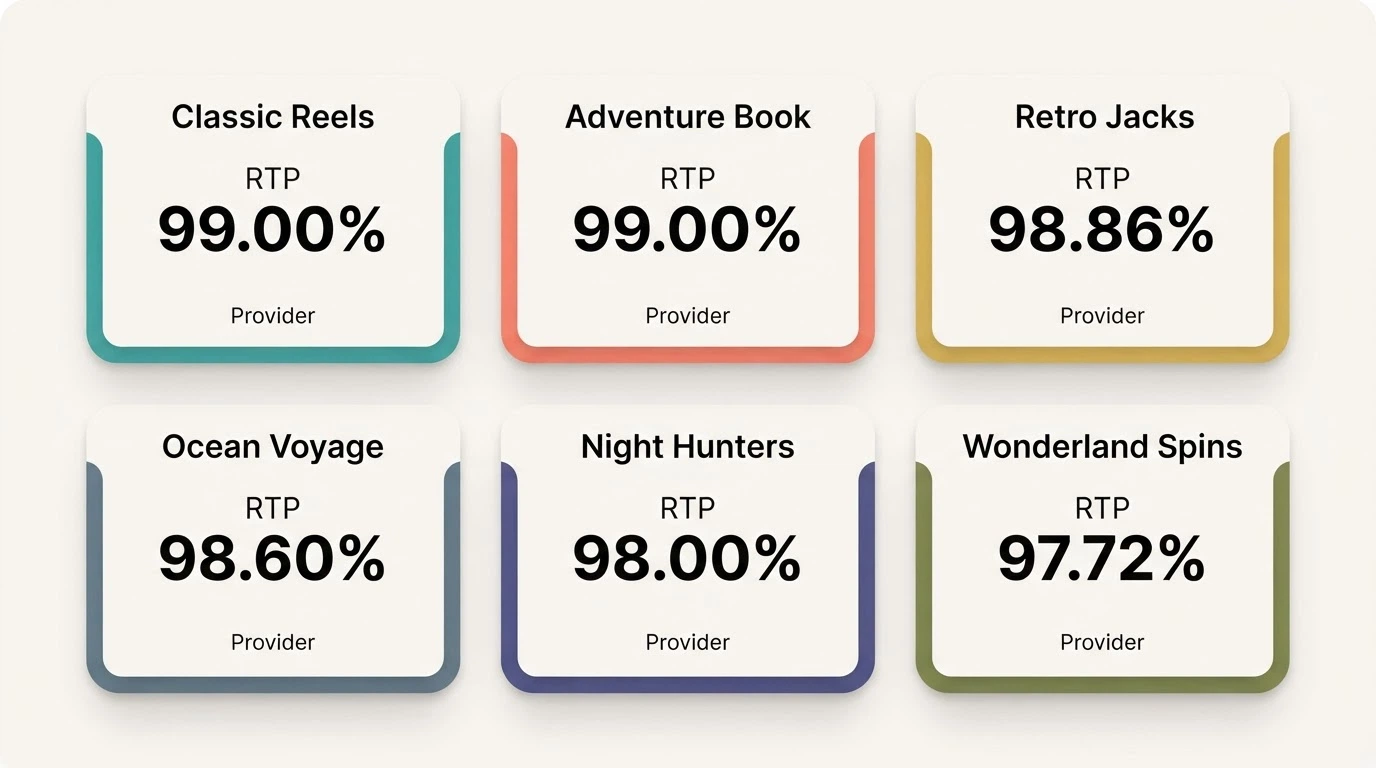
Even the best pokie returns less than 100%. The house always has an edge, and the gap between 99% and 98% is a measure of how small that edge can be made, not whether it exists. Picking a high-RTP pokie is the easy half; getting the highest-RTP version of it is the half that depends on which operator you are at.
| Pokie Title | RTP | Provider | Volatility | Max Win |
|---|---|---|---|---|
| Mega Joker | 99.00% (Supermeter mode) | NetEnt | Low (Supermeter) / Medium (base) | 2,000x (Supermeter jackpot) |
| Book of 99 | 99.00% | Relax Gaming | High | 5,000x |
| Jackpot 6000 | 98.86% (Supermeter mode) | NetEnt | Medium | — |
| 1429 Uncharted Seas | 98.60% | Thunderkick | Low–Medium | — |
| White Rabbit Megaways | 97.72% | Big Time Gaming | High | 13,029x |
| Blood Suckers | 98.00% | NetEnt | Low | 900x |
| Dead or Alive 2 | 96.82% | NetEnt | Very High | 111,111x |
| Razor Shark | 96.70% | Push Gaming | Very High | 25,000x |
| Big Bass Bonanza | 96.71% | Reel Kingdom / Pragmatic Play | High | 2,100x |
| Gates of Olympus | 96.50% | Pragmatic Play | High | 5,000x |
| Gates of Olympus 1000 | 96.50% | Pragmatic Play | High | 15,000x |
| Sugar Rush 1000 | 96.53% | Pragmatic Play | High (5/5) | 25,000x |
| Book of Dead | 96.21% | Play’n GO | High | 5,000x |
| Starburst | 96.09% | NetEnt | Low | 500x |
| Sweet Bonanza | 96.51% (highest config) | Pragmatic Play | Medium–High | 21,100x |
The 99% Club: Mega Joker and Book of 99 (and the Catch)
Only two pokies reach 99.00% RTP. Both require conditions the casual player may never trigger.
Mega Joker’s 99.00% is the Supermeter mode RTP with full optimal strategy at maximum bet. Base play returns 76.9–85.1% — well below most standard pokies. A player who drops a few spins into Mega Joker at minimum bet and walks away has not played the 99% game; they have played a 76–85% game dressed up in a famous number. The 99% requires engaging the Supermeter mechanic, betting at the top of the range, and executing the strategy chart. Most players do not.
Book of 99 from Relax Gaming is fixed at 99.00% RTP without a Supermeter-style trigger. The catch is the operator: the published RTP is the studio’s specification, and whether the operator loads the 99% version or a reduced configuration is a separate question. The same operator-choice problem that applies to Sweet Bonanza’s four RTP versions applies to every pokie on this list.
Why the Same Pokie Pays Less at a Different Casino: RTP Versions Explained
Game studios ship multiple RTP configurations and the operator picks which one to load. Sweet Bonanza is the clearest example: it ships with at least four RTP versions — 96.51%, 95.45%, 94.51% and 91.51% — and the operator chooses which to deploy. The same pokie title can therefore return 5% less of every dollar wagered at one casino than at another, and the lobby does not advertise which version is loaded. Book of Dead runs at 96.21% default but 94.25% in a reduced configuration; Starburst ships with at least three versions from approximately 92% to approximately 96%; Gates of Olympus has a 96.50% default with 95.51% and 94.50% variants available.
The practical consequence is that picking a high-RTP pokie by name is not enough. The same title at two different casinos can return materially different percentages, and the player has no way to verify the configuration from the lobby. The 5% spread between Sweet Bonanza’s 96.51% and 91.51% versions is the difference between losing A$3.49 and losing A$8.49 per A$100 wagered, and that gap is the operator’s choice.
High Volatility vs High RTP: Which Matters More for Your Bankroll
A 98% RTP low-volatility pokie plays completely differently from a 96.5% RTP high-volatility one. Volatility is the frequency and size of win distributions — independent of RTP — and it determines how a bankroll survives the dry spells between payouts. Blood Suckers at 98.00% RTP with low volatility pays out frequently in small amounts, with a 900x max win. Dead or Alive 2 at 96.82% RTP with very high volatility can go hundreds of spins without a meaningful payout, then deliver a 111,111x max win. Razor Shark at 96.70% RTP with very high volatility carries a 25,000x max win. White Rabbit Megaways at 97.72% RTP with high volatility runs a 13,029x ceiling.
A high-RTP, low-volatility pokie preserves a bankroll across longer sessions. A high-volatility pokie needs a deeper bankroll to survive the variance, and the max win only matters if the bankroll is deep enough to reach it. The research notes that most high-RTP pokies in the AU-facing market are high or very-high volatility, which means the headline RTP is real but the variance that comes with it is the cost. For a player with a small bankroll, a 96.5% low-volatility pokie outperforms a 98% high-volatility one over the same session, because the low-volatility game pays out often enough to keep the bankroll alive.
Can You Practise for Free? Demo Mode and Play-Money Pokies at Offshore Casinos
Demo mode lets a player test a pokie’s feel — its volatility, its bonus frequency, its real pacing across 100–200 spins — without risking a cent. It is also the only way to gauge which RTP version a casino has loaded, because the in-game information panel typically shows the active RTP when the game is in demo mode.
Availability varies by operator and by game provider. Most offshore casinos offer play-money versions of the popular pokies, but the catalogue in demo mode is often narrower than the real-money library, and some providers (notably certain live-dealer studios) do not support demo at all. The check is straightforward: open the pokie in demo before depositing, and look for the RTP display in the game’s information or paytable section. If the operator does not offer demo, that is a transparency gap worth noting alongside the licence and the withdrawal terms.
The Law Says No: What Australia’s Gambling Prohibition Means for Your Payout
Online casino is prohibited in Australia. The Interactive Gambling Act 2001 makes it an offence to provide online casino games, online pokies or in-play sports betting to a person physically in Australia, and there is no online casino licence anywhere in the country — federally or in any state or territory. The Australian Communications and Media Authority (ACMA) is the federal regulator that enforces the prohibition. The Interactive Gambling Amendment Act 2017 closed the loopholes offshore operators had used and gave ACMA its enforcement and site-blocking powers. The Interactive Gambling Amendment (Gambling Reform) Bill 2026 passed Parliament on 19 August 2026, and its measures commence 1 January 2027.

Every operator on this page is offshore and unlicensed in Australia. None holds an Australian casino licence because no such licence can exist. The page describes them because Australian players use them, and the data is what it is — but the legal reality is the frame the data sits inside, and the section on responsible gambling covers the help infrastructure that exists regardless of where a player chooses to play.
Since November 2019, the ACMA has requested that Australian ISPs block 1,518 illegal gambling and affiliate websites, and over 220 illegal services have withdrawn from the Australian market since 2017. Civil penalties for providing illegal online gambling services can reach A$2,475,000 per day for an individual and A$12,375,000 per day for a corporation. The IGA targets the provider, not the player — no Australian has been prosecuted for using an offshore casino — but the player loses every Australian protection that would apply to a licensed transaction: no ACMA complaints recourse, no Australian consumer law coverage, no guaranteed withdrawal, no complaints body, and the real risk that the site gets DNS-blocked with a balance still on deposit.
What the Interactive Gambling Act 2001 Actually Prohibits (and What It Doesn’t)
The IGA prohibits online casino games, online pokies, in-play sports betting and the advertising of prohibited services. What remains legal is wagering on races and sport placed before the event begins, lotteries and keno — through operators licensed by a state or territory. Online wagering licensing concentrates in the Northern Territory Racing and Wagering Commission (NTRWC) administered through Licensing NT. The minimum age is 18 for all commercial gambling.
The 2017 amendment closed the loopholes offshore operators had used — the “click-to-call” and “in-play” workarounds — and gave ACMA the civil penalties, infringement notices and site-blocking powers that have produced 1,518 blocked URLs and 220+ withdrawn services. On 16 January 2026, the ACMA issued 8 infringement notices to Tabcorp, each for A$19,800, totalling A$158,400, for BetStop-related contraventions — a concrete demonstration that the regulator pursues licensed operators too.
BetStop Won’t Save You Here: What Offshore Play Costs an Australian Punter
BetStop — the National Self-Exclusion Register — launched on 21 August 2023 and is the gold-standard self-exclusion tool in Australian gambling. As of 31 December 2025, 54,859 people had registered, with 35,135 active exclusions. A BetStop registration excludes the person from all approximately 150 licensed wagering providers in Australia in a single step, with exclusion periods from 3 months to lifetime.
BetStop does not cover offshore casinos. An offshore operator is not connected to the register and will continue accepting a self-excluded person’s money. The protections a self-excluded Australian loses by playing offshore are the same protections an offshore player loses regardless: no ACMA complaints recourse, no Australian consumer law coverage, no guaranteed withdrawal, no disputes body, no recourse if the operator refuses a withdrawal or closes the account, and the site can be DNS-blocked at any time with funds still on deposit. A BetStop registration is a strong step for an Australian who wagers with licensed operators, and it does nothing at the sites reviewed on this page.
The 2026 Reform: What Changes on 1 January 2027
The Interactive Gambling Amendment (Gambling Reform) Bill 2026 passed Parliament on 19 August 2026, and its measures commence 1 January 2027. The headline changes for wagering advertising are a cap of no more than three wagering ads per hour between 6:00 am and 8:30 pm, a live-sport blackout on wagering advertising, a ban on athletes, celebrities and influencers promoting wagering, and a prohibition on wagering advertising inside sports venues or on player uniforms. BetStop’s operation is strengthened, and direct marketing of inducements is banned for three months after a person deregisters from BetStop.
The change with the most direct impact on offshore play is a new authority for banks and payment providers to block transactions to illegal gambling operators. From 1 January 2027, the Australian banking system gains express power to refuse or reverse transactions identified as flowing to unlicensed gambling operators. For a player funding an offshore casino account, that means a deposit that worked yesterday may not work tomorrow, and the bank is the one refusing the transaction. The offshore operator is the same one it was; the channel is narrower.
Playing Safe When There’s No Safety Net: Responsible Gambling at Offshore Casinos
Offshore casinos sit outside every Australian responsible-gambling safeguard, and the gap is not theoretical. BetStop does not cover them, the ACMA cannot recover funds from them, and the operator has no Australian responsible-gambling obligation. What exists regardless of where the player plays is the help infrastructure: the National Gambling Helpline on 1800 858 858, free, confidential and staffed 24/7, and Gambling Help Online at gamblinghelponline.org.au, with free chat and email counselling and self-assessment tools.
The numbers make the section necessary. As of March 2026, 13.0% of the Australian adult population — an estimated 2,857,000 people — were experiencing some form of gambling harm from their own gambling behaviours, and 15.1% (3,320,000 people) when including harm from others’ gambling. The Australian Institute of Health and Welfare put problem gambling at 2.1% of adults (approximately 430,000 people) in 2022, with another 1.8% at high risk. The offshore channel adds a layer of harm because the operator has no Australian responsible-gambling obligation and no BetStop connection — a self-excluded person is not stopped at the door.
The Gambling Harm Numbers Australia Doesn’t Discuss Enough
The Roy Morgan Gambling Harm Index for March 2026 shows 13.0% of adults — 2,857,000 people — experiencing gambling harm from their own behaviours, and 15.1% — 3,320,000 people — when harm from others’ gambling is included. The AIHW 2022 figure puts problem gambling at 2.1% of adults (roughly 430,000 people) with 1.8% at high risk. The gap between the Roy Morgan figure and the AIHW figure is the gap between “experiencing harm” and “problem gambling” as a clinical category — a wider net catches more people, and the wider net is the one the research carries forward.
The offshore channel compounds the harm. An Australian playing at a licensed operator has BetStop, ACMA complaints recourse, an activity statement from the operator, and a customer-set deposit limit. An Australian playing at an offshore casino has none of those. The harm numbers do not separate the two channels, and the offshore part of the picture is the part with the fewest safeguards.
The Tools You Have (and the Gap Where BetStop Should Be)
BetStop is the strongest tool in the Australian responsible-gambling infrastructure. Launched 21 August 2023, it had 54,859 registrations with 35,135 active exclusions as of 31 December 2025, and it excludes a person from all approximately 150 licensed wagering providers in a single step. The minimum exclusion period is 3 months; the maximum is lifetime. A self-excluded person who tries to open a new account with a licensed operator is stopped at the door.
BetStop does not cover offshore casinos. An offshore operator is not connected to the register, and a self-excluded Australian can deposit and play at any of the operators reviewed on this page without BetStop raising an alert. The offshore operators may offer their own deposit limits, timeouts and self-exclusion tools, but those are voluntary and carry no Australian regulatory enforcement — the operator sets the rules and the operator enforces them.
The tools that work regardless of where a player plays are the help lines. The National Gambling Helpline (1800 858 858) is free, confidential and staffed 24/7, with online chat and email counselling through Gambling Help Online at gamblinghelponline.org.au. Self-assessment tools are available on the Gambling Help Online site, and professional counsellors can be reached without going through the operator at all. The National Framework for Online Wagering includes voluntary opt-out pre-commitment and monthly activity statements, but only for licensed operators — the offshore channel sits outside the framework entirely.
How We Evaluated and Ranked These Operators
The ranking is built on tested RTP sampling, timed withdrawal runs, licence verification against official registers, and a qualitative assessment of transparency. No percentage weightings were applied; the order reflects the payout data the evaluations turned up, not a universal claim.
Sources for the payout data include PayoutVerdict.com, which reported 217 timed test withdrawals and 50+ pokies sampled per casino across a February to May 2026 testing window, and Slotspeak.net, which evaluated 38 AU-facing operators with a 50-pokie RTP sample per casino. Tech-Insider.org, ClearCasinos.com and the listed research sources contributed operator-specific data. Operators were checked against the official ACMA register (for the prohibition status that applies to all of them) and against the licence authority registers for Curaçao, Anjouan, Tobique and Kahnawake where the operator claims a licence from one of those jurisdictions. Rainbet’s Anjouan permit is the clearest example: licence ALSI-152406029-FI2, issued 14 June 2024, expiring 13 June 2027, verified on the official Anjouan Gaming Authority register on 18 July 2026.
The ranking criteria, qualitatively, are: RTP data availability and the level of independent verification behind it, withdrawal-speed test results and the spread between best and typical times, licence transparency and whether the licence can be verified on the regulator’s own register, and game-library depth and provider quality. Every operator listed is offshore and unlicensed in Australia, because no Australian online casino licence exists.
The audit acknowledges gaps. WinSpirit’s licence jurisdiction is not specified in available data; Royal Reels’ jurisdiction is also unspecified. Rainbet’s bonus terms and game-library specifics are not stated in research. Where a number is missing, the operator write-up says so rather than substituting a guess.
Your Move: What This Means for Where You Play
The data shows clear differences in RTP, withdrawal speed and licence transparency, and the prohibition means those differences carry real financial consequences with no Australian safety net. The best tested platform RTP in the set is 96.42% (SkyCrown, across a 50-pokie independent sample); the lowest published is 96.17% (Fair Go). The 0.25 percentage-point gap is small per spin but compounds across thousands of spins, and the gap between the best tested figure and the worst published figure is the gap between the best and the rest of the market.

Withdrawal speed spans 4 minutes — SkyCrown’s fastest PayID result — to 3–5 business days for the bank transfer baseline. The payment rail sets the floor; the operator’s processing queue decides the actual time. A player who picks an operator with a 48-hour processing queue and a 3–5 day bank transfer is looking at up to a week, and that is before any KYC re-verification or withdrawal-cap throttling.
The RTP version a casino loads matters more than the pokie title picked. A pokie running its 91.51% version returns less than half what the 99% version does per dollar wagered, and the same title at two different casinos can return materially different percentages. The lobby does not advertise which version is loaded; the player has to find the RTP in the game’s information panel, and the only reliable way to confirm it is in demo mode before depositing.
The prohibition is the frame. No BetStop coverage, no ACMA recourse, no Australian consumer protection, and from 1 January 2027 a banking system with express authority to block transactions to illegal gambling operators. The single most important thing a player can do is know exactly what is being given up before the deposit. This page does not recommend any operator. The decision sits with the reader, armed with the data above and the legal reality it sits inside.
Frequently Asked Questions
What is the highest RTP pokie available to Australian players in 2026?
Two pokies reach 99.00% RTP: Mega Joker from NetEnt and Book of 99 from Relax Gaming. Mega Joker’s 99% only applies in Supermeter mode with full optimal strategy at maximum bet; base play returns 76.9–85.1%. Book of 99’s 99% is fixed. After them, Jackpot 6000 sits at 98.86%, 1429 Uncharted Seas at 98.60%, and Blood Suckers at 98.00%. The published RTP is the maximum configuration; the operator picks which version to load, and the player should verify the active RTP in the game’s information panel or in demo mode.
What protections do I lose by playing at an offshore casino instead of a licensed operator?
No Australian online casino licence exists, and every offshore casino is outside Australian rules. Specifically: no BetStop coverage (the offshore operator is not connected to the National Self-Exclusion Register), no ACMA complaints recourse (the regulator cannot recover funds from an unlicensed operator), no Australian consumer law coverage, no disputes body, no guaranteed withdrawal if the operator refuses, and the real risk that the site is DNS-blocked while a balance remains on deposit. From 1 January 2027, banks and payment providers gain express authority to block transactions to illegal gambling operators.
Do I have to pay tax on online casino winnings in Australia?
No. Betting and gambling winnings are not assessable income under section 6-5 of the ITAA 1997, and gambling losses are not deductible under section 8-1, unless the person is carrying on a business of betting or gambling under the ATO criteria in IT 2655. The exception is narrow — a professional punter whose gambling constitutes a business — and no Australian case has held ordinary punter winnings assessable. The position is the same for offshore casino winnings as for licensed Australian wagering.
What is the best payment method for fast casino payouts in Australia — PayID or crypto?
USDT on the TRC-20 (Tron) network is the fastest rail in the market, with network confirmation in 1–3 minutes and fees under A$2, and the USD-pegged value avoids the volatility that can shrink a BTC withdrawal overnight. For AUD withdrawals without crypto, PayID via the NPP is the fastest fiat option, settling in under an hour at best-case operators and 24–48 hours at most. The rail sets the floor; the operator’s processing queue decides the actual time, so the comparison is really rail + operator, not rail alone.
How do casinos choose which RTP version of a pokie to run, and does it affect my odds?
Game studios ship multiple RTP configurations for the same title and the operator picks which one to load. Sweet Bonanza ships with at least four RTP versions — 96.51%, 95.45%, 94.51% and 91.51%; Book of Dead has a 96.21% default and a 94.25% reduced version; Starburst runs from approximately 92% to 96%. The choice affects odds directly: the same pokie title can return 5% less of every dollar wagered at one casino than at another, and the player cannot tell from the lobby which version is loaded. The verification path is the in-game information panel in demo mode, where the active RTP is typically displayed.